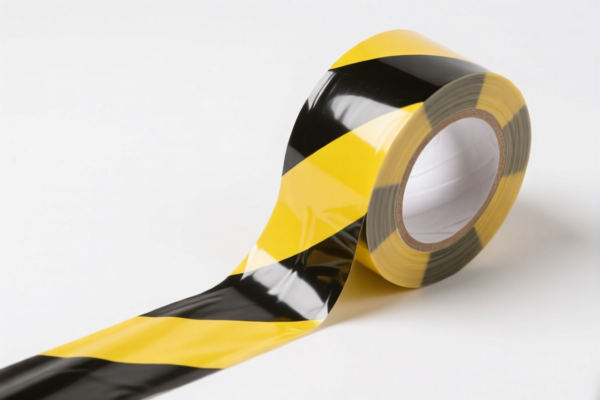
Reflective Warning Tape
CN → US| HS Code | Tariff Rate | Origin | Destination | Doc |
|---|---|---|---|---|
| 3919901000 | 41.5% | CN | US | Official Doc |
| 5907001500 | 43.0% | CN | US | Official Doc |
| 3919905010 | 40.8% | CN | US | Official Doc |
| 3926909925 | 22.8% | CN | US | Official Doc |
| 3926909989 | 22.8% | CN | US | Official Doc |
Product Images



AI Analysis
🛑 Reflective Warning Tape – HS Code & Tariff Guide 2026 | Expert Customs Classification & Compliance Strategy
🌐 HS Code Reference & Clearance Strategy | 2026 Updated Tariff Rules | Pro-Level Import Planning
📌 One. Product Definition & Classification: What Is Reflective Warning Tape Really?
Reflective Warning Tape is a safety-critical product used in roadwork zones, construction sites, industrial facilities, and emergency scenarios to alert personnel and vehicles to hazards. It is not a simple adhesive strip — it's a high-visibility, high-reflectivity safety device engineered for durability and compliance.
In international trade, it is classified based on material composition and physical structure. The key determinant is whether the base material is textile (fabric-based) or plastic/resin-based. Misclassification can lead to 40%+ tariff overpayment, delayed clearance, or even seizure.
⚠️ Critical Distinction:
- If the base is synthetic fiber or man-made fabric → Textile-based classification
- If the base is plastic, polymer, or resin → Plastic-based classification
📦 Two. HS Code Classification Breakdown (2026 Official Tariff Table)
| HS Code | Product Description | Material Basis | Key Features | Tax Risk Level |
|---|---|---|---|---|
5907.00.60.00 |
Coated or impregnated textile fabrics with reflective materials; non-woven or woven fabric base | Man-made fiber / synthetic fiber | Reflective coating, flexible, durable, used in road barriers, safety zones | 🔴 High |
3919.90.10.00 |
Self-adhesive plastic tapes with reflective properties; strip/ribbon shape | Plastic/resin | Pre-applied adhesive, peel-and-stick, commonly used on vehicles, poles | 🔴 High |
5907.00.15.00 |
Coated or covered textile fabrics with reflective material; no structural conflict | Man-made fiber | Similar to 5907.00.60.00, but with different coating process | 🔴 High |
3926.90.99.25 |
Other plastic articles, not elsewhere specified; reflective in function | Plastic/resin | Used for road signage, barriers, safety markers | 🟡 Medium |
3926.90.99.89 |
Other plastic products; includes coated synthetic fiber or plastic with reflective layer | Plastic or coated synthetic fiber | Broad “catch-all” for reflective safety tapes | 🟡 Medium |
🔍 Key Insight:
- Textile-based tapes (5907 series) are more likely to be misclassified as plastic if the coating is thick or rigid.
- Plastic-based tapes (3919/3926 series) are more vulnerable to 25% USITC + 10% IEEPA tariffs due to origin (China).
- No “reflective tape” subheading exists — must fall under textile or plastic categories.
💰 Three. 2026 Tariff Breakdown (US Market | China Origin)
✅ Target Country: United States (US)
✅ Origin: China (CN)
✅ Effective Date: November 10, 2025 (inclusive)
✅ Legal Basis: Section 301 (USITC), IEEPA (International Emergency Economic Powers Act)
🎯 1. 5907.00.60.00 — Coated Textile Fabric with Reflective Material
| Item | Detail |
|---|---|
| Base Tariff | 0% (ad valorem) |
| USITC Section 301 Tariff | +25% |
| IEEPA Tariff (Section 122) | +10% |
| Total Effective Tariff | 35.0% |
| Tax Calculation | CIF Value × 35.0% |
| De Minimis Threshold | ❌ Not applicable (denied under IEEPA) |
| Legal Pathway | IEEPA:9903.01.25 → USITC:5907.00.60.00 → FOOTNOTE:9903.88.01 |
📌 Explanation:
- Despite being textile-based, the reflective coating and use in safety applications trigger Section 301 and IEEPA tariffs.
- The 0% base tariff is irrelevant — 25% + 10% = 35% applies to all China-origin goods under this code.
🎯 2. 3919.90.10.00 — Self-Adhesive Plastic Tape with Reflective Properties
| Item | Detail |
|---|---|
| Base Tariff | 6.5% |
| USITC Section 301 Tariff | +25.0% |
| IEEPA Tariff (Section 122) | +10% |
| Total Effective Tariff | 41.5% |
| Tax Calculation | CIF Value × 41.5% |
| De Minimis Threshold | ❌ Not eligible |
| Legal Pathway | IEEPA:9903.01.25 → USITC:3919.90.10.00 → FOOTNOTE:9903.88.01 |
📌 Why Higher?
- The 6.5% base tariff on plastic products is stacked with 25% USITC and 10% IEEPA.
- This is the highest tariff rate among all listed codes — avoid if possible.
🎯 3. 5907.00.15.00 — Coated Textile Fabric (Reflective, No Conflict)
| Item | Detail |
|---|---|
| Base Tariff | 8.0% |
| USITC Section 301 Tariff | +25.0% |
| IEEPA Tariff (Section 122) | +10% |
| Total Effective Tariff | 43.0% |
| Tax Calculation | CIF Value × 43.0% |
| De Minimis Threshold | ❌ Not applicable |
| Legal Pathway | IEEPA:9903.01.25 → USITC:5907.00.15.00 → FOOTNOTE:9903.88.01 |
📌 Warning:
- 8% base tariff is higher than 5907.00.60.00, but same 25% + 10% add-ons.
- This code is riskier due to higher base rate — only use if textile structure is undeniable.
🎯 4. 3926.90.99.25 — Other Plastic Articles (Reflective Use)
| Item | Detail |
|---|---|
| Base Tariff | 5.3% |
| USITC Section 301 Tariff | +7.5% |
| IEEPA Tariff (Section 122) | +10% |
| Total Effective Tariff | 22.8% |
| Tax Calculation | CIF Value × 22.8% |
| De Minimis Threshold | ✅ Eligible (if value < $800) |
| Legal Pathway | IEEPA:9903.01.24 → USITC:3926.90.99.25 → FOOTNOTE:9903.88.01 |
📌 Best Option?
- Lowest total tariff among all codes.
- 7.5% USITC instead of 25% — only if the product is not deemed “essential” or “critical” by USITC.
- De Minimis applies → $800 threshold → no duty if value < $800.
🎯 5. 3926.90.99.89 — Other Plastic Products (Reflective Coating)
| Item | Detail |
|---|---|
| Base Tariff | 5.3% |
| USITC Section 301 Tariff | +7.5% |
| IEEPA Tariff (Section 122) | +10% |
| Total Effective Tariff | 22.8% |
| Tax Calculation | CIF Value × 22.8% |
| De Minimis Threshold | ✅ Eligible |
| Legal Pathway | IEEPA:9903.01.24 → USITC:3926.90.99.89 → FOOTNOTE:9903.88.01 |
📌 Same as 3926.90.99.25 — best for low-value shipments.
- Use only if the product cannot be clearly classified as textile.
🛠️ Four. Customs Clearance Best Practices (Pro Tips to Avoid Penalties)
✅ 1. Must-Have Documentation (No Exceptions)
| Document | Required? | Why It Matters |
|---|---|---|
| ✅ Product Technical Specs | ✔️ | Prove material (fabric vs. plastic) |
| ✅ Material Test Report | ✔️ | Confirm fiber type (polyester, nylon, etc.) |
| ✅ Product Photos (Clear, Full View) | ✔️ | Show texture, adhesive layer, reflectivity |
| ✅ Commercial Invoice | ✔️ | Must state “Reflective Warning Tape” + HS Code |
| ✅ Certificate of Origin (CO) | ✔️ | Critical for IEEPA/USITC eligibility |
| ✅ Packing List | ✔️ | Show roll length, width, adhesive type |
| ✅ Third-Party Test Certificates | ✔️ | ASTM D4956 (reflectivity), ISO 20471 (visibility) |
✅ 2.申报技巧(Key Rules to Remember)
🔥 “Material First, Shape Second, Use Last!”
| Scenario | Correct HS Code | Wrong Code | Risk |
|---|---|---|---|
| Fabric base with reflective coating | 5907.00.60.00 or 5907.00.15.00 |
3919.90.10.00 |
Overpay 6–8% |
| Plastic base, self-adhesive | 3919.90.10.00 |
5907.00.60.00 |
Overpay 6.5% |
| Unclear material, but plastic-like | 3926.90.99.25 or .89 |
3919.90.10.00 |
Avoid 25% USITC |
| Low-value shipment (<$800) | 3926.90.99.25 or .89 |
Any other code | Use de minimis! |
✅ 3. Special Cases & Workarounds
| Situation | Recommended Action |
|---|---|
| Tape with mixed material (plastic + fabric) | Declare as plastic — use 3926.90.99.25 or .89 to avoid 25% USITC |
| Tape used in military/defense | Apply for exemption under IEEPA — requires pre-approval |
| Tape for medical/industrial safety | Use 3926.90.99.89 — "other plastic" is safer than textile |
| High-value shipment (>$800) | Avoid 3919.90.10.00 — 41.5% is too high |
| Want to reduce risk | Apply for Advance Ruling (Pre-Decision) — get official HS Code confirmation |
🌍 Five. Global Market Tariff Comparison (2026)
| Country/Region | Recommended HS Code | Base Tariff | USITC/IEEPA? | De Minimis? | Notes |
|---|---|---|---|---|---|
| 🇺🇸 USA | 3926.90.99.25 or .89 |
5.3% | Yes (7.5% + 10%) | ✅ Yes ($800) | Best for low-value |
| 🇨🇳 China | 5907.00.60.00 |
5% | No | ✅ Yes | No extra tariffs |
| 🇪🇺 EU | 3926.90.99.89 |
0% | No | ✅ Yes (€150) | No 301 tariffs |
| 🇦🇺 Australia | 3926.90.99.89 |
5% | No | ✅ Yes | No IEEPA |
| 🇯🇵 Japan | 3926.90.99.89 |
0% | No | ✅ Yes | No extra taxes |
📌 Insight:
- USA is the only market with 25% USITC + 10% IEEPA on this product.
- China, EU, Japan, Australia are much safer for import.
📌 Six. Common Mistakes & How to Avoid Them (Avoid Costly Errors!)
❌ Mistake 1: Using 3919.90.10.00 for textile-based tape
👉 Result: Pay 41.5% instead of 35% → 6.5% overpayment → avoidable!
❌ Mistake 2: Using 5907.00.60.00 for plastic-based tape
👉 Result: Misclassification → penalties + audit risk
❌ Mistake 3: Not using de minimis for low-value shipments
👉 Result: Pay 22.8% on $500 shipment → waste of money!
❌ Mistake 4: Not providing material test reports
👉 Result: Customs denies classification → delay or rejection
✅ Correct Approach:
“Reflective Warning Tape, 100mm x 50m, Self-Adhesive, Plastic Base, ISO 20471 Compliant, Made in China, HS: 3926.90.99.25”
🎯 Seven. Final Verdict: Optimize Your HS Code for Profit & Compliance
🎯 Pro Strategy:
🔹 For low-value shipments (<$800) → Use
3926.90.99.25or.89→ 22.8% + de minimis → No duty!
🔹 For high-value shipments → Use5907.00.60.00→ 35% (lowest of textile codes)
🔹 Avoid3919.90.10.00— 41.5% is too high
🔹 Always get a pre-ruling if uncertain
📌 Pro Tip:
If your tape is produced in Vietnam, Mexico, or Thailand, you may qualify for IEEPA exemption — tariff drops to 0%–5%.
Apply for Pre-Approval — it’s worth the $1,000–$3,000 fee.
📣 Act Now!
📞 Contact a licensed customs broker + provide product photos + material report
🚀 Apply for Advance Ruling (Pre-Decision) on HS Code
💼 Save thousands in tariffs, avoid delays, and ensure smooth clearance!
✨ Precision Classification = Profit Protection
💼 Your next shipment starts with the right HS Code!
Customer Reviews
About HS Code Classification
The Harmonized System (HS) is an internationally standardized nomenclature developed by the World Customs Organization (WCO) to classify traded products. Over 200 countries use the HS system as the basis for customs tariffs, trade statistics, and import/export regulations.
Each HS code follows a hierarchical structure:
- Chapter (2 digits) — Broad category of goods (e.g., Chapter 84: Machinery and Mechanical Appliances)
- Heading (4 digits) — More specific grouping within the chapter
- Subheading (6 digits) — Internationally standardized breakdown, used by all WCO member countries
- National subdivisions (8-10 digits) — Country-specific extensions for further classification, such as US HTSUS 10-digit codes
Correct HS code classification is essential for smooth customs clearance, accurate duty payment, and compliance with trade regulations. Misclassification can lead to customs delays, overpayment of duties, or penalties.
When importing from CN to US, the applicable tariff rates may include:
- Most-Favored-Nation (MFN) rate — The standard duty rate applied to WTO members
- General rate — Applied to countries without trade agreements
- Trade remedy duties — Additional tariffs such as Section 301 (anti-dumping), Section 232 (national security), or countervailing duties
The information provided on this page is for reference purposes only. For official classification, please consult with your local customs authority or a licensed customs broker.