Reflectorized Plastic Reflector Sticker
CN → US| HS Code | Tariff Rate | Origin | Destination | Doc |
|---|---|---|---|---|
| 3919905010 | 40.8% | CN | US | Official Doc |
| 3919101010 | 41.5% | CN | US | Official Doc |
| 5903102090 | 35.0% | CN | US | Official Doc |
| 5903102010 | 35.0% | CN | US | Official Doc |
| 3921110000 | 40.3% | CN | US | Official Doc |
Product Images
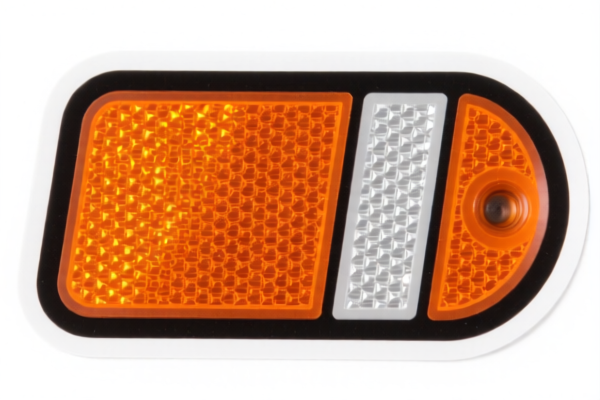
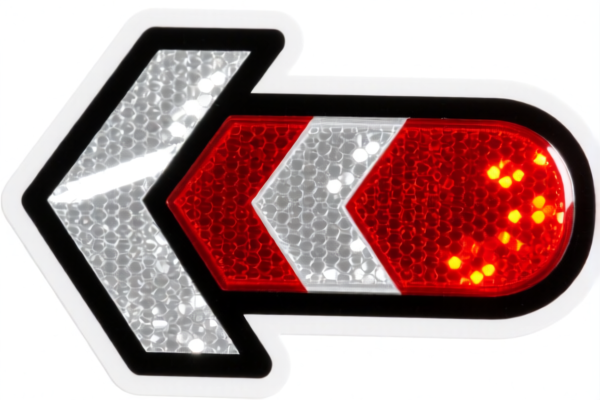

AI Analysis
🌟 Reflectorized Plastic Reflector Stickers (反光材料贴)
🌐 HS Code Reference & Customs Clearance Guide | 2026 Latest Tariff Analysis | Professional Clearance Strategy
📌 I. Product Definition & Classification: What Exactly Are "Reflectorized Stickers"?
Reflectorized Plastic Reflector Stickers are adhesive security or visibility products made primarily from plastic/polymer materials. They often feature reflective layers (such as glass beads or micro-prisms) laminated or coated onto plastic films, fabrics, or polymer-coated substrates.
In international trade, their classification depends heavily on: 1. Material Composition: Pure plastic film vs. plastic-coated textile/fabric. 2. State of Processing: Self-adhesive sheet/film vs. impregnated/coated fabric. 3. Physical Form: Sticker, tape, or film.
⚠️ Key Distinction Points:
- If it is a plastic film with adhesive backing → It is generally classified under Chapter 39 (Plastics).
- If it is a textile/fabric impregnated with plastic → It may be classified under Chapter 59 (Impregnated Textiles).
- The presence of reflective properties does not automatically change the HS code unless it falls under specific optical or safety gear chapters (which is rare for simple stickers).
📦 II. HS Code Classification Details (2026 Latest Tariff Alignment)
Based on the provided data, here are the five possible HS Codes for Reflectorized Plastic Reflector Stickers, along with their total tax rates and details.
| HS Code | Product Summary | Physical Form | Total Tax Rate |
|---|---|---|---|
3919.90.50.10 |
Reflectorized sticker, plastic material | Self-adhesive sheet/film | 40.8% |
3919.10.10.10 |
Reflectorized sticker, plastic/film material | Self-adhesive piece/sticker | 41.5% |
5903.10.20.90 |
Reflectorized sticker, plastic/polymer coating | Impregnated/coated textile/film | 35.0% |
5903.10.20.10 |
Reflectorized sticker, functional coated film/fabric | Impregnated with plastic characteristics | 35.0% |
3921.11.00.00 |
Reflectorized sticker, plastic (polymer film) | Strip/film | 40.3% |
🔍 Critical Insight:
- The difference between Chapter 39 (Plastics) and Chapter 59 (Impregnated Textiles) is the base material.
- If the backing is purely plastic film → HS 39xx.
- If the backing is textile/fabric with a plastic coating → HS 5903.
- Chapter 59 options (5903.10.20.10/90) offer the lowest tax rate (35.0%), potentially saving 5-6% compared to pure plastic adhesive stickers.
💰 III. 2026 Latest Tariff Rate Breakdown (Including Surtaxes & Policy Surcharges)
✅ Applicable Country: United States (US)
✅ Origin: China (CN)
✅ Effective Date: From November 10, 2025 (including subsequent imports)
🎯 1. 3919.90.50.10 – Reflectorized Sticker, Plastic Material (Self-Adhesive Sheet/Film)
| Item | Content |
|---|---|
| Base Tariff | 5.8% |
| Surtax (Section 301) | +25.0% |
| 122 Clause Surtax | +10.0% |
| Total Tax Rate | 40.8% |
| Tax Calculation | CIF Value × 40.8% |
| De Minimis Exemption | ❌ Not Eligible (deny_de_minimis) |
| Legal Basis Path | Base Tariff → 301 Surtax → 122 Clause Surtax |
📌 Explanation:
- Base Tariff (5.8%): Standard MFN rate for self-adhesive plastic plates, sheets, film, tape, and other flat shapes of plastics.
- Surtax (25%): Added by the US under Section 301 of the Trade Act of 1974 for Chinese-origin goods.
- 122 Clause Surtax (10%): Specific surcharge applied to certain Chinese plastic products.
- Total: 5.8% + 25% + 10% = 40.8%. This is a high-cost category.
🎯 2. 3919.10.10.10 – Reflectorized Sticker, Plastic/Film (Self-Adhesive Piece)
| Item | Content |
|---|---|
| Base Tariff | 6.5% |
| Surtax (Section 301) | +25.0% |
| 122 Clause Surtax | +10.0% |
| Total Tax Rate | 41.5% |
| Tax Calculation | CIF Value × 41.5% |
| De Minimis Exemption | ❌ Not Eligible (deny_de_minimis) |
| Legal Basis Path | Base Tariff → 301 Surtax → 122 Clause Surtax |
📌 Note:
- Slightly higher than3919.90.50.10due to a higher base tariff (6.5% vs 5.8%).
- Both fall under self-adhesive plastics, so the surtaxes are identical.
🎯 3. 5903.10.20.90 & 5903.10.20.10 – Reflectorized Sticker, Plastic-Coated Textile/Film
| Item | Content |
|---|---|
| Base Tariff | 0.0% |
| Surtax (Section 301) | +25.0% |
| 122 Clause Surtax | +10.0% |
| Total Tax Rate | 35.0% |
| Tax Calculation | CIF Value × 35.0% |
| De Minimis Exemption | ❌ Not Eligible (deny_de_minimis) |
| Legal Basis Path | Base Tariff (0%) → 301 Surtax → 122 Clause Surtax |
📌 Optimization Tip:
- Lowest Tax Rate: At 35.0%, these codes save you 5.5%–6.5% compared to pure plastic adhesive stickers.
- Condition: The product must be classified as textile or fabric impregnated with plastic (e.g., reflective tape on a cloth backing).
- Base Tariff is 0%: This is a significant advantage, as only the surcharges apply.
🎯 4. 3921.11.00.00 – Reflectorized Sticker, Plastic (Polymer Film Strip/Film)
| Item | Content |
|---|---|
| Base Tariff | 5.3% |
| Surtax (Section 301) | +25.0% |
| 122 Clause Surtax | +10.0% |
| Total Tax Rate | 40.3% |
| Tax Calculation | CIF Value × 40.3% |
| De Minimis Exemption | ❌ Not Eligible (deny_de_minimis) |
| Legal Basis Path | Base Tariff → 301 Surtax → 122 Clause Surtax |
📌 Note:
- Falls under "Plastics and articles thereof" but as a distinct item (plastic plates, sheets, film, etc., not self-adhesive).
- Base tariff is lower (5.3%) than other self-adhesive options, but still higher than Chapter 59.
🛠️ IV. Customs Clearance Practical Advice (Real-World Pitfall Avoidance)
✅ 1. Preparation Checklist (Essential Documents)
| Document | Required | Explanation |
|---|---|---|
| ✅ Product Specification Sheet | ✔️ | Must detail material composition: Is the backing plastic, fabric, or polymer-coated? |
| ✅ Material Composition Declaration | ✔️ | Explicitly state % of plastic vs. textile/fabric. Critical for Chapter 39 vs. 59 classification. |
| ✅ Product Photos (Clear) | ✔️ | Show cross-section if possible to identify backing material. |
| ✅ Commercial Invoice | ✔️ | Clearly describe as "Reflectorized Sticker" or "Reflective Tape" with HS Code. |
| ✅ Packing List | ✔️ | Ensure weight and dimensions match invoice. |
| ✅ Third-Party Test Report | ✔️ | Reflectivity performance data (optional but helpful for clarity). |
✅ 2. Declaration Strategy (Key Tips)
🔥 "Material Determines Chapter, Form Determines Subheading!"
| Scenario | Correct Declaration | Wrong Approach |
|---|---|---|
| Plastic film backing with adhesive | 3919.90.50.10 or 3919.10.10.10 |
Misclassifying as textile → Risk of penalty. |
| Fabric backing with plastic coating | 5903.10.20.10 or 5903.10.20.90 |
Misclassifying as pure plastic → Higher tax (40%+ vs 35%). |
| Plain plastic film (no adhesive) | 3921.11.00.00 |
Claiming as self-adhesive when it isn't. |
| Mixed materials (e.g., paper + plastic) | Consult expert | Likely 3921 or 3919 depending on primary material. |
✅ 3. Special Considerations
| Situation | Recommendation |
|---|---|
| OEM Custom Stickers | Provide customer order + design files to prove material specs. |
| Reflective Tape vs. Sticker | "Tape" often implies continuous roll; "Sticker" implies cut pieces. Ensure description matches physical form. |
| High Value Shipment | Consider applying for Advance Ruling to confirm Chapter 39 vs. 59 classification. |
| De Minimis Risk | ❗ Do NOT rely on De Minimis ($800) for these goods. They are explicitly denied due to surcharges. Always declare properly. |
🌍 V. Global Market Comparison (2026 Update)
| Country/Region | Recommended HS Code | Approx. Tariff (China Origin) | Notes |
|---|---|---|---|
| 🇺🇸 USA | 5903.10.20.10 (Optimal) |
35.0% | Lowest rate due to 0% base tariff. |
| 🇨🇳 China | 3919.90.50.10 |
~10-15% (varies) | Import tariffs differ; check local customs. |
| 🇪🇺 EU | 3919.90 |
~6.5% | No Section 301 or 122 surcharges. |
| 🇬🇧 UK | 3919.90 |
~6.5% | Post-Brexit tariff applies. |
📌 Conclusion:
- USA is the most expensive market due to Section 301 (25%) + 122 Clause (10%) surcharges.
- Optimizing HS Code to Chapter 59 (5903.10.20.10/90) can save 5-6% in duties if the product contains textile backing.
- No De Minimis exemption for these goods from China to the USA.
📌 VI. Common Errors & Pitfall Guide (Lessons Learned)
❌ Error 1: Assuming all "plastic" stickers go to 3919.
👉 Consequence: If the backing is textile, you miss the 0% base tariff opportunity. Overpay by 5.8%.
❌ Error 2: Declaring under De Minimis ($800).
👉 Consequence: Shipment rejected or seized. These HS codes are explicitly flagged for surcharges.
❌ Error 3: Vague description "Reflective Sticker" without material details.
👉 Consequence: Customs may inspect and reclassify, leading to delays and potential penalties.
❌ Error 4: Confusing 3921 (non-adhesive film) with 3919 (adhesive).
👉 Consequence: Incorrect classification if the product has adhesive backing.
✅ Best Practice:
"Clearly state: 'Self-adhesive reflective sticker, 100% plastic backing' OR 'Reflective tape, fabric backing with PVC coating'."
🎯 VII. Conclusion: Professional Classification for Cost Efficiency
🎯 Remember the Rule:
🔹 "Check the Backing: Plastic? → 3919 (40.8%). Fabric? → 5903 (35.0%)."
🔹 "No De Minimis for China-origin surtaxed goods. Always declare."
🔹 "Save 5-6% by optimizing HS Code to Chapter 59 if applicable."
📌 Pro Tip:
If your product exclusively contains plastic, you are stuck with the 40-41% rate.
If you can modify the product design to include a textile/fabric backing, you can potentially drop to 35%.
Recommendation: Consult a customs broker for pre-classification before shipping large volumes.
📣 Take Action Now:
📞 Contact a licensed customs broker
📄 Prepare detailed material composition sheets
🚀 Apply for Advance Ruling if importing large quantities
✨ Professional Customs Clearance Starts with Accurate Classification!
💼 Every Percent Saved in Duties is Pure Profit!
Customer Reviews
About HS Code Classification
The Harmonized System (HS) is an internationally standardized nomenclature developed by the World Customs Organization (WCO) to classify traded products. Over 200 countries use the HS system as the basis for customs tariffs, trade statistics, and import/export regulations.
Each HS code follows a hierarchical structure:
- Chapter (2 digits) — Broad category of goods (e.g., Chapter 84: Machinery and Mechanical Appliances)
- Heading (4 digits) — More specific grouping within the chapter
- Subheading (6 digits) — Internationally standardized breakdown, used by all WCO member countries
- National subdivisions (8-10 digits) — Country-specific extensions for further classification, such as US HTSUS 10-digit codes
Correct HS code classification is essential for smooth customs clearance, accurate duty payment, and compliance with trade regulations. Misclassification can lead to customs delays, overpayment of duties, or penalties.
When importing from CN to US, the applicable tariff rates may include:
- Most-Favored-Nation (MFN) rate — The standard duty rate applied to WTO members
- General rate — Applied to countries without trade agreements
- Trade remedy duties — Additional tariffs such as Section 301 (anti-dumping), Section 232 (national security), or countervailing duties
The information provided on this page is for reference purposes only. For official classification, please consult with your local customs authority or a licensed customs broker.