Reflectorized Plastic Warning Sign
CN → US| HS Code | Tariff Rate | Origin | Destination | Doc |
|---|---|---|---|---|
| 3926909925 | 22.8% | CN | US | Official Doc |
| 3926909989 | 22.8% | CN | US | Official Doc |
| 3920991000 | 41.0% | CN | US | Official Doc |
| 3920591000 | 41.0% | CN | US | Official Doc |
| 3919101050 | 41.5% | CN | US | Official Doc |
Product Images


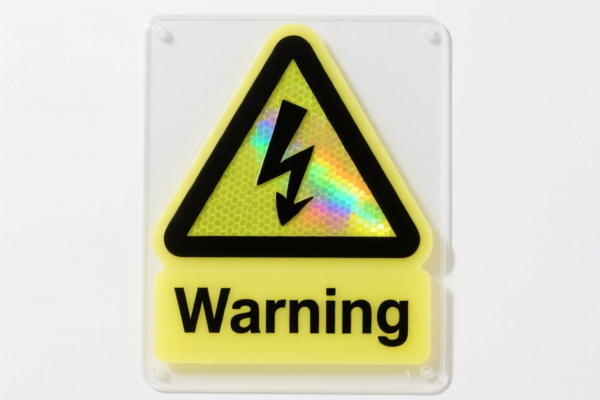

AI Analysis
🛡️ Reflectorized Plastic Warning Sign (Plastic Reflective Label/Signage)
🌐 HS Code Reference & Customs Clearance Guide | 2026 Latest Tariff Analysis | Professional Strategy for US Import
📌 I. Product Definition & Classification: What is a "Reflectorized Plastic Sign"?
A Reflectorized Plastic Warning Sign is a safety or informational device made primarily of plastic, featuring a retroreflective surface (often with glass beads or microprisms) to enhance visibility in low-light conditions. In international trade, its classification depends heavily on its physical form (sheet, plate, membrane, or finished label) and specific application.
Key distinctions in customs adjudication: * Finished Sign vs. Raw Material: Is it a pre-cut, ready-to-use sign with adhesive backing? Or is it a roll of reflective plastic film/sheet? * Plastic Type: Is it a generic plastic composite, an acrylic polymer plate, or a specific pressure-sensitive label?
⚠️ Critical Classification Point:
- If the item is a generic plastic sheet/plate with reflective coating → Often classified under 3920 (Plates, Sheets, etc.).
- If the item is a finished sign/label without specific technical function beyond signaling → Often classified under 3926 (Other plastic articles) or 3919 (Self-adhesive plates).
- If the material is specifically Acrylic (PMMA) in sheet form → May fall under 3920.59.
📦 II. HS Code Classification Details (2026 Tariff Schedule)
Based on the provided data, here are the five possible HS Codes for "Reflectorized Plastic Warning Sign," ranging from general plastic articles to specific plates and labels.
| HS Code | Product Description | Application Scenario | Key Classification Logic |
|---|---|---|---|
3926.90.99.25 |
Plastic Reflective Signboard | Generic finished plastic signs, reflective markers. | "Perfect match" for finished plastic reflective signs not elsewhere specified. |
3926.90.99.89 |
Plastic Reflective Signboard | Unspecified other plastic products; generic reflective signs. | "Unlisted other plastic products"; used when the specific description for .25 does not fit. |
3920.99.10.00 |
Plastic Reflective Signboard | Plastic board/sheet/film composite; structural reflective signs. | Classified as "Other plastic plates/sheets/films" with reflective coating. |
3920.59.10.00 |
Plastic Reflective Signboard | Acrylic polymer (plastic) sheets/plates with reflective properties. | Specific to Acrylic (PMMA) material in plate/sheet form. |
3919.10.10.50 |
Reflective Plastic Safety Label | Flat, strip-shaped, or sheet-like adhesive labels with glass beads. | Classified as Self-adhesive plates/rolls with reflective surface. |
🔍 Key Distinction:
- 3926 Codes: Focus on the article itself (the sign as a finished product). - 3920 Codes: Focus on the material form (plastic sheets/plates), regardless of whether it's cut into a sign. - 3919 Code: Focus on the adhesive/self-adhesive nature and flat/strip form (often used for labels/stickers).
💰 III. 2026 Latest Tariff Rate Breakdown (Including Surcharges)
✅ Applicable Country: United States (US)
✅ Country of Origin: China (CN)
✅ Effective Date: From November 10, 2025 (and subsequent imports)
🎯 1. HS Codes 3926.90.99.25 & 3926.90.99.89
Category: Other Plastic Articles (Finished Signs)
| Item | Details |
|---|---|
| Base Tariff Rate | 5.3% |
| Section 301 Surcharge | +7.5% |
| Section 122 Tariff | +10.0% |
| Total Tariff Rate | 22.8% |
| Tax Calculation | CIF Value × 22.8% |
| De Minimis Exemption | ❌ Not Eligible (Section 301 and 122 tariffs generally negate de minimis benefits for Chinese goods) |
| Legal Basis Path | Base: HTSUS 3926 → Section 301: HTSUS 9903.01.03 → Section 122: HTSUS 9903.02.01 |
📌 Explanation:
- These codes are for finished plastic signs.
- The 22.8% rate is a combination of the base MFN rate, the additional 301 tariff (7.5% for these specific subheadings), and the Section 122 tariff (10%).
- Risk: High scrutiny on whether the item is truly "plastic" and not a metal sign with a plastic reflective layer.
🎯 2. HS Codes 3920.99.10.00 & 3920.59.10.00
Category: Plastic Plates, Sheets, Film (Unworked or Simply Worked)
| Item | Details |
|---|---|
| Base Tariff Rate | 6.0% |
| Section 301 Surcharge | +25.0% |
| Section 122 Tariff | +10.0% |
| Total Tariff Rate | 41.0% |
| Tax Calculation | CIF Value × 41.0% |
| De Minimis Exemption | ❌ Not Eligible |
| Legal Basis Path | Base: HTSUS 3920 → Section 301: HTSUS 9903.01.25 → Section 122: HTSUS 9903.02.01 |
📌 Explanation:
- If the sign is classified as a plastic sheet/plate (even if cut), the tariff jumps to 41.0%.
- 3920.59 is specific to Acrylic (PMMA) plates. If your sign is acrylic, use this.
- 3920.99 is for other plastic sheets.
- Warning: This is a high-cost classification. Importers often try to avoid this by proving the item is a "finished article" (3926) rather than a "raw material/form" (3920).
🎯 3. HS Code 3919.10.10.50
Category: Self-Adhesive Plastic Plates, Sheets, Film, Tape, Strip and Other Forms
| Item | Details |
|---|---|
| Base Tariff Rate | 6.5% |
| Section 301 Surcharge | +25.0% |
| Section 122 Tariff | +10.0% |
| Total Tariff Rate | 41.5% |
| Tax Calculation | CIF Value × 41.5% |
| De Minimis Exemption | ❌ Not Eligible |
| Legal Basis Path | Base: HTSUS 3919 → Section 301: HTSUS 9903.01.25 → Section 122: HTSUS 9903.02.01 |
📌 Explanation:
- This code applies if the sign is a self-adhesive label/strip with a reflective surface (e.g., glass-bead adhesive tape).
- It carries the highest tariff (41.5%) among the options.
- Use this only if the product is definitively a self-adhesive label/strip and not a rigid plastic sign.
🛠️ IV. Customs Clearance Practical Advice (Real-World Pitfalls)
✅ 1. Documentation Checklist (Mandatory)
| Document | Required? | Purpose |
|---|---|---|
| ✅ Product Specification Sheet | ✔️ | Must state: Material (e.g., PVC, Acrylic, PET), Thickness, Reflective Type (Glass Bead/Microprism), Adhesive Type. |
| ✅ Product Photos | ✔️ | Show the sign from front, back, and side. Clearly show if it is rigid (sign) or flexible (label). |
| ✅ Commercial Invoice | ✔️ | Describe as "Plastic Reflective Sign" or "Reflective Plastic Label," not generic "Plastic Sheet." |
| ✅ HS Code Justification Memo | ✔️ | Explain why it fits 3926 (finished article) vs. 3920 (sheet). Cite GRI 3(a) or 3(c). |
| ✅ Material Composition Report | ✔️ | Confirm % of plastic content. If <50% plastic, it may not be Chapter 39. |
✅ 2. Classification Strategy & Tax Optimization
| Scenario | Recommended HS Code | Tax Rate | Strategy |
|---|---|---|---|
| Rigid Plastic Sign (PVC/Acrylic board) | 3926.90.99.25 |
22.8% | Preferred. Argue it is a "finished article" for safety signaling, not just a plastic sheet. |
| Acrylic Sheet with Reflective Film | 3920.59.10.00 |
41.0% | Use only if it’s sold as a raw material sheet for further manufacturing. |
| Self-Adhesive Reflective Label | 3919.10.10.50 |
41.5% | Use only if it’s a flexible, adhesive-backed label. Avoid if it has a rigid backing. |
| Unspecified Plastic Sign | 3926.90.99.89 |
22.8% | Fallback if 3926.90.99.25 is rejected. Same tax rate, broader description. |
📌 Pro Tip:
- Avoid3920and3919if possible! The 41%+ tariff is significantly higher than the 22.8% for finished plastic articles (3926).
- To qualify for3926, the product should be cut to shape, printed, and ready for use. If it’s just a roll of plastic film with reflective coating, it will likely be3920.
✅ 3. Special Handling & Compliance
| Issue | Solution |
|---|---|
| Section 122 Tariff | Apply to all imports of Chinese plastic products. Ensure your broker is aware of the 10% add-on. |
| Section 301 Tariff | 7.5% for 3926, 25% for 3920/3919. Verify the correct footnote. |
| De Minimis (Section 321) | Not available for these codes from China. Do not attempt to ship via low-value courier to avoid tariffs. |
| Customs Inquiry | If asked, explain that the product is a finished safety sign (GRI 1), not a material form. |
🌍 V. Global Market Comparison (2026)
| Country/Region | Recommended HS Code | Tariff (China Origin) | Notes |
|---|---|---|---|
| 🇺🇸 United States | 3926.90.99.25 |
22.8% | Best option. Avoid 3920 (41%). |
| 🇨🇳 China | 3926.90.99.25 |
~5-7% | No Section 301/122. |
| 🇪🇺 European Union | 3926.90.99 |
~6.5% | No Section 301. CE Marking may be required. |
| 🇨🇦 Canada | 3926.90.99 |
~5.5% | No Section 301. |
| 🇲🇽 Mexico | 3926.90.99 |
~0-5% | Under USMCA, if origin requirements met. |
📌 Conclusion:
- The US market is the most costly due to Section 301 and 122 tariffs.
- Classification is critical: Choosing3926over3920saves ~18% in tariffs.
- Ensure your product is described and structured as a finished sign to qualify for the lower rate.
📌 VI. Common Mistakes & Pitfalls (Lessons Learned)
❌ Mistake 1: Classifying a finished sign as 3920 (Plastic Sheet).
👉 Result: Tariff jumps from 22.8% to 41.0%.
👉 Fix: Provide photos showing the sign is cut, printed, and ready for use.
❌ Mistake 2: Using 3919 for a rigid sign.
👉 Result: Tariff increases to 41.5%.
👉 Fix: 3919 is for self-adhesive flexible labels/tapes. Rigid signs go to 3926.
❌ Mistake 3: Ignoring Section 122.
👉 Result: Underpayment of 10% tariff.
👉 Fix: Ensure your broker applies the 10% Section 122 tariff to all Chinese plastic imports.
✅ Correct Approach:
"Plastic Reflective Warning Sign, PVC material, pre-cut, with adhesive backing, for industrial safety use."
→ HS Code:3926.90.99.25
→ Total Tariff: 22.8%
🎯 VII. Conclusion: Smart Classification, Smarter Savings
🎯 Remember the Golden Rule:
🔹 "Finished Sign = 3926 (22.8%)"
🔹 "Raw Sheet = 3920 (41.0%)"
🔹 "Self-Adhesive Label = 3919 (41.5%)"
📌 Actionable Tips:
1. Product Design: If possible, design the sign as a finished, cut-to-shape article with clear safety markings.
2. Documentation: Always include photos and specifications proving it is a finished product, not a raw sheet.
3. Broker Communication: Explicitly state the intended use (safety sign) and material (plastic) to avoid misclassification.
4. Tariff Engineering: If importing large volumes, consider if acrylic sheets (3920) can be imported and locally cut/printed in the US to reduce duties (though this adds labor cost).
📣 Immediate Next Steps:
📞 Contact your customs broker with product photos and specifications.
📄 Request an Advance Ruling from US Customs (CBP) for definitive classification.
🚀 Optimize your supply chain by choosing the correct HS Code (3926.90.99.25) to save 18%+ in tariffs.
✨ Professional Classification = Lower Costs = Higher Profits!
💼 Don’t let misclassification cost you 20% of your product value!
Customer Reviews
About HS Code Classification
The Harmonized System (HS) is an internationally standardized nomenclature developed by the World Customs Organization (WCO) to classify traded products. Over 200 countries use the HS system as the basis for customs tariffs, trade statistics, and import/export regulations.
Each HS code follows a hierarchical structure:
- Chapter (2 digits) — Broad category of goods (e.g., Chapter 84: Machinery and Mechanical Appliances)
- Heading (4 digits) — More specific grouping within the chapter
- Subheading (6 digits) — Internationally standardized breakdown, used by all WCO member countries
- National subdivisions (8-10 digits) — Country-specific extensions for further classification, such as US HTSUS 10-digit codes
Correct HS code classification is essential for smooth customs clearance, accurate duty payment, and compliance with trade regulations. Misclassification can lead to customs delays, overpayment of duties, or penalties.
When importing from CN to US, the applicable tariff rates may include:
- Most-Favored-Nation (MFN) rate — The standard duty rate applied to WTO members
- General rate — Applied to countries without trade agreements
- Trade remedy duties — Additional tariffs such as Section 301 (anti-dumping), Section 232 (national security), or countervailing duties
The information provided on this page is for reference purposes only. For official classification, please consult with your local customs authority or a licensed customs broker.