Refractory Brick Mortar
CN → US| HS Code | Tariff Rate | Origin | Destination | Doc |
|---|---|---|---|---|
| 3816002050 | 38.0% | CN | US | Official Doc |
| 3816002010 | 38.0% | CN | US | Official Doc |
| 2522200000 | 35.0% | CN | US | Official Doc |
| 6902905020 | 35.0% | CN | US | Official Doc |
| 6902205020 | 35.0% | CN | US | Official Doc |
Product Images
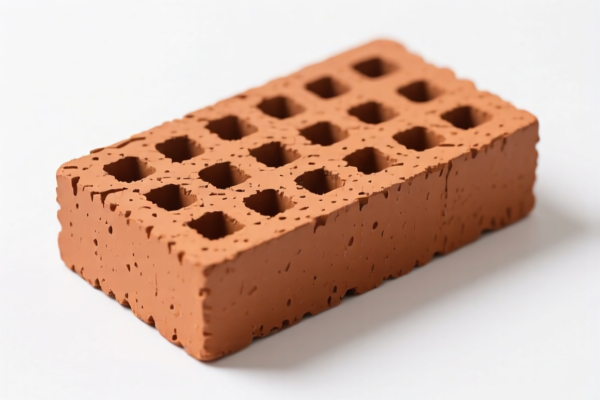
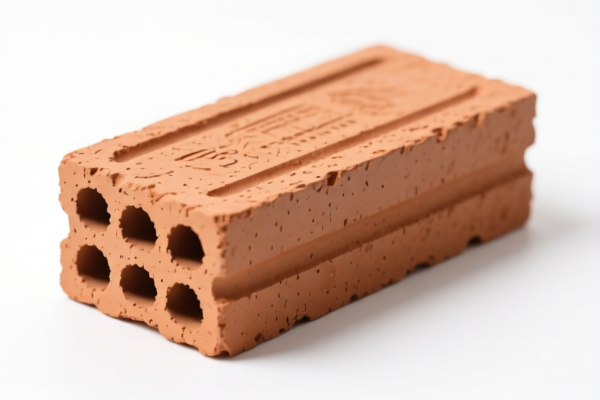
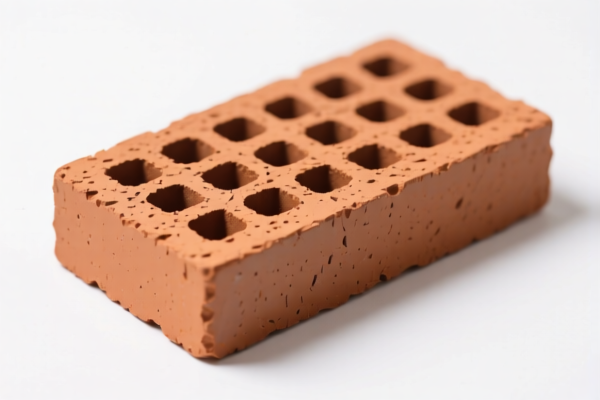
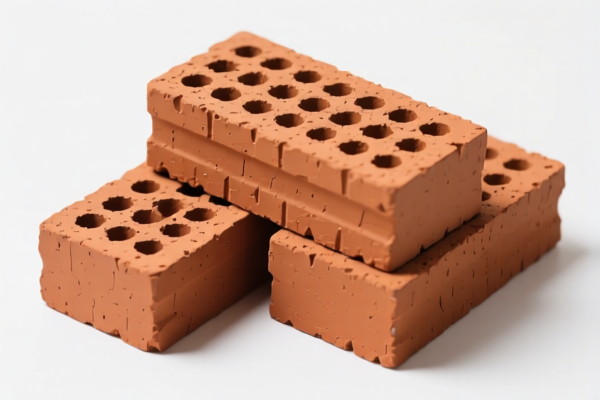
AI Analysis
🧱 Refractory Brick Mortar: The Ultimate Classification & Tariff Guide (2026 Update)
🌐 HS Code Reference & Customs Clearance Guide | 2026 Latest Tariff Analysis | Professional Entry Strategy
📌 I. Product Definition & Classification: Do You Really Understand "Refractory Brick Mortar"?
Refractory Brick Mortar is a specialized cementitious material used for laying, jointing, and repairing high-temperature refractory bricks in kilns, furnaces, and industrial furnaces. Unlike standard construction mortar, it must withstand extreme thermal shock and chemical corrosion.
In international trade, its classification is contentious because it sits at the intersection of chemical preparations, inorganic chemicals, and ceramic building materials. The correct HS Code depends entirely on its primary function and chemical composition.
⚠️ Key Distinction Point:
- If it is primarily a chemical preparation (e.g., for heat resistance or chemical stability) → Look at Chapter 38.
- If it contains lime/Calcium Oxide as a binder → Look at Chapter 25.
- If it is considered a refractory ceramic building material (similar to bricks/tiles) → Look at Chapter 69.
📦 II. HS Code Classification Details (2026 Latest Tariff Authority Comparison)
| HS Code | Product Description | Application Scenario | Key Classification Logic |
|---|---|---|---|
3816.00.20.10 |
Mortar/cement for heat resistance (Clay-free) | Refractory mortar, non-clay based, chemical prep focus | ✅ Classified as "Mortar-like products" under Heat-Resistant Preparations |
2522.20.00.00 |
Burnt Lime & Hydraulic Lime | Mortar with high Lime (CaO/Ca(OH)₂) content | ✅ Classified based on "Lime" constituent material |
6902.90.50.20 |
Other Refractory Bricks, Blocks, Tiles | Mortar viewed as a "配套" (supporting) refractory ceramic material | ✅ Classified by "Refractory Nature" & Ceramic Form |
6902.20.50.20 |
Refractory Ceramic Building Materials | Mortor viewed as part of the Refractory Ceramic category | ✅ Classified by "Ceramic Building Material" attribute |
3816.00.20.50 |
Other Mortar/Cement (Non-Clay) | Refractory cement/mortar, fitting "Other" definition | ✅ Classified as "Other types of mortar/cement" |
🔍 Key Reminder:
- Customs officers often struggle with this product because it looks like cement but acts like a chemical.
- Clay content is critical: If it contains significant clay, it might lean towards ceramics (Ch 69). If it is synthetic/chemical, it leans towards Ch 38.
- Lime content: High lime content pushes classification towards Ch 25.
💰 III. 2026 Latest Tariff Rate Details (Including Additional Taxes, Policy Surcharges)
✅ Applicable Country: United States (US)
✅ Country of Origin: China (CN)
✅ Effective Date: From November 10, 2025 (and subsequent imports)
🎯 1. 3816.00.20.10 —— Refractory Mortar (Clay-free, Chemical Prep Focus)
| Item | Content |
|---|---|
| Base Tariff | 3.0% (ad valorem) |
| USITC Additional Duty | +25% (Section 301) |
| IEEPA Additional Duty | +10% (China-specific, from Nov 10, 2025) |
| Total Tariff Rate | 38.0% |
| Tax Calculation | CIF Value × 38% |
| De Minimis Eligibility | ❌ No (deny_de_minimis) |
| Legal Basis Path | IEEPA:9903.01.25 → IEEPA:9903.01.24 → USITC:3816.00.20.10 → FOOTNOTE:9903.88.01 |
📌 Explanation:
- The 25% is the standard Section 301 tariff on many chemical preparations from China.
- The 10% is the new IEEPA surcharge effective late 2025.
- Base 3% applies to the core chemical classification.
- Total 38% is high, so accurate documentation is vital.
🎯 2. 2522.20.00.00 —— Burnt Lime / Hydraulic Lime
| Item | Content |
|---|---|
| Base Tariff | 0.0% |
| USITC Additional Duty | +25% (Section 301) |
| IEEPA Additional Duty | +10% (China-specific, from Nov 10, 2025) |
| Total Tariff Rate | 35.0% |
| Tax Calculation | CIF Value × 35% |
| De Minimis Eligibility | ❌ No (deny_de_minimis) |
| Legal Basis Path | IEEPA:9901.25 → IEEPA:9903.01.24 → USITC:2522.20.00.00 → FOOTNOTE:9903.88.01 |
📌 Note:
- If your mortar is lime-based (e.g., for masonry or specific refractory applications using lime binders), this code may apply.
- Base tax is 0%, making the total 35%. This is slightly cheaper than the 38% chemical route.
🎯 3. 6902.90.50.20 & 6902.20.50.20 —— Refractory Ceramic Materials
| Item | Content |
|---|---|
| Base Tariff | 0.0% |
| USITC Additional Duty | +25% (Section 301) |
| IEEPA Additional Duty | +10% (China-specific, from Nov 10, 2025) |
| Total Tariff Rate | 35.0% |
| Tax Calculation | CIF Value × 35% |
| De Minimis Eligibility | ❌ No (deny_de_minimis) |
| Legal Basis Path | IEEPA:9901.25 → IEEPA:9903.01.24 → USITC:6902.xx.xx.xx → FOOTNOTE:9903.88.01 |
📌 Explanation:
- Both6902.90.50.20(Other refractory bricks/blocks) and6902.20.50.20(Refractory ceramic building materials) carry the same 35% total rate.
- Classification here hinges on whether Customs views the mortar as a "brick-like" or "building material" ceramic rather than a chemical.
🎯 4. 3816.00.20.50 —— Other Refractory Mortar/Cement
| Item | Content |
|---|---|
| Base Tariff | 3.0% |
| USITC Additional Duty | +25% (Section 301) |
| IEEPA Additional Duty | +10% (China-specific, from Nov 10, 2025) |
| Total Tariff Rate | 38.0% |
| Tax Calculation | CIF Value × 38% |
| De Minimis Eligibility | ❌ No (deny_de_minimis) |
| Legal Basis Path | IEEPA:9903.01.25 → IEEPA:9903.01.24 → USITC:3816.00.20.50 → FOOTNOTE:9903.88.01 |
📌 Note:
- This is a "catch-all" for refractory mortars/cements that don't fit the specific3816.00.20.10description.
- Same 38% rate as the first code. Ensure your product specs don't fit3816.00.20.10more accurately.
🛠️ IV. Customs Clearance Practical Advice (Battle-Tested Pitfall Guide)
✅ 1. Documentation Checklist (Non-negotiable)
| Document | Must Provide | Explanation |
|---|---|---|
| ✅ Product Spec Sheet | ✔️ | Detailed chemical composition (Lime %, Clay %, Alumina %, Silica %), curing temperature, fire resistance rating. |
| ✅ Material Safety Data Sheet (MSDS) | ✔️ | To prove chemical nature vs. ceramic nature. |
| ✅ Product Photos (Packaging & Content) | ✔️ | Show bag labeling, color, texture (powder vs. paste). |
| ✅ Commercial Invoice | ✔️ | Must clearly state "Refractory Brick Mortar" or "Refractory Cement," NOT just "Construction Mortar." |
| ✅ Certificate of Origin (CO) | ✔️ | Essential for applying any potential duty drawbacks or verifying origin for surcharges. |
| ✅ Packing List | ✔️ | Weight, dimensions, net/gross weight. |
✅ 2. Declaration Tips (Key Mantra)
🔥 "Composition Dictates Code, Function Clarifies Risk!"
| Scenario | Correct Declaration | Incorrect Practice |
|---|---|---|
| High Lime Content | Declare as 2522.20.00.00 (Lime Product) |
Declaring as "Cement" → Misclassification Risk |
| Chemical/Additive Heavy | Declare as 3816.00.20.10 or .50 (Chemical Prep) |
Declaring as "Brick" → Delays |
| Ceramic/Clay Based | Declare as 6902.xx.xx.xx (Refractory Ceramic) |
Declaring as "General Construction Mortar" |
| Mixed/Undefined | Provide detailed COA (Certificate of Analysis) | Vague description like "Industrial Material" |
✅ 3. Special Case Handling
| Scenario | Handling Advice |
|---|---|
| OEM Custom Mortar | Provide client specs + formulation sheet. Avoid generic names. |
| Sample Imports | Still subject to full duties. Declare accurately. No de minimis. |
| Refractory Mortar for Kiln Lining | Emphasize "Refractory" and "High-Temp" in description. Supports Ch 38 or Ch 69. |
| Lime-Based Mortar | Provide lab test for CaO/Ca(OH)₂ content. Supports Ch 25 (35% tariff). |
🌍 V. Global Market Clearance Comparison (2026 Latest)
| Country/Region | Recommended HS Code | Tariff | Certification | Notes |
|---|---|---|---|---|
| 🇺🇸 USA | 3816.00.20.10 / 6902.xx |
35%-38% | None required for clearance (but COA vital) | High Surcharges Apply |
| 🇨🇳 China | 2522.20.00.00 / 6902.xx |
0% - 5% | GB Standards | No extra surcharges |
| 🇪🇺 EU | 2522.20 / 6902.90 |
0% - 6.5% | REACH Registration | No Section 301/IEEPA |
| 🇯🇵 Japan | 2522.20 / 6902.90 |
0% - 5% | JIS Standards | No extra surcharges |
📌 Conclusion:
- USA is the only market with massive additional tariffs (35-38%) due to Section 301 + IEEPA.
- China Origin significantly impacts cost in the US. Consider supply chain diversification if margins are tight.
📌 VI. Common Errors & Pitfall Guide (Lessons Learned)
❌ Error 1: Declaring as "Construction Mortar" (e.g., 3004.90)
👉 Consequence: Wrong HS Code. If audited, you may be reclassified to Ch 38/69/25 with penalties.
❌ Error 2: Ignoring IEEPA 10% surcharge
👉 Consequence: Underpayment by 10%. Customs will demand back payment + interest.
❌ Error 3: Vague Description "Refractory Cement"
👉 Consequence: CBP may request further info, causing port delays. Provide chemical breakdown.
❌ Error 4: Assuming De Minimis Applies
👉 Consequence: Packages under $800 will be seized or taxed if they fall under these HS codes (deny_de_minimis).
✅ Correct Approach:
"Refractory Brick Mortar, High-Temp Resistant, Chemical Composition: CaO 40%, SiO₂ 30%, Al₂O₃ 20%, Clay 10%. For Industrial Furnace Lining."
🎯 VII. Conclusion: Professional Declaration, Save Cost, Ensure Speed!
🎯 Remember the Mantra:
🔹 "Check the Binders: Lime goes to 25, Chemical to 38, Ceramic to 69."
🔹 "Total Tax is 35% or 38%, No De Minimis, Be Precise!"
🔹 "HS Code Determines Fate, 3% Difference Saves Thousands, Wrong Decl, Pay More!"
📌 Pro Tip:
If your product is originally from Vietnam, Thailand, Malaysia, or Mexico, you may qualify for IEEPA exemptions or lower Section 301 rates.
Recommendation: Apply for a Customs Ruling (Advance Ruling) before shipping to lock in the HS Code and avoid disputes.
📣 Immediate Action:
📞 Contact a licensed customs broker + Provide Product Spec Sheet + Request HS Code Pre-Ruling
🚀 Let your Refractory Brick Mortar pass smoothly, export efficiently, and maximize profits!
✨ Professional Clearance Starts with Accurate Classification!
💼 Every Dollar of Duty Cost Deserves Precise Calculation!
Customer Reviews
About HS Code Classification
The Harmonized System (HS) is an internationally standardized nomenclature developed by the World Customs Organization (WCO) to classify traded products. Over 200 countries use the HS system as the basis for customs tariffs, trade statistics, and import/export regulations.
Each HS code follows a hierarchical structure:
- Chapter (2 digits) — Broad category of goods (e.g., Chapter 84: Machinery and Mechanical Appliances)
- Heading (4 digits) — More specific grouping within the chapter
- Subheading (6 digits) — Internationally standardized breakdown, used by all WCO member countries
- National subdivisions (8-10 digits) — Country-specific extensions for further classification, such as US HTSUS 10-digit codes
Correct HS code classification is essential for smooth customs clearance, accurate duty payment, and compliance with trade regulations. Misclassification can lead to customs delays, overpayment of duties, or penalties.
When importing from CN to US, the applicable tariff rates may include:
- Most-Favored-Nation (MFN) rate — The standard duty rate applied to WTO members
- General rate — Applied to countries without trade agreements
- Trade remedy duties — Additional tariffs such as Section 301 (anti-dumping), Section 232 (national security), or countervailing duties
The information provided on this page is for reference purposes only. For official classification, please consult with your local customs authority or a licensed customs broker.