Refractory Castable (Aluminate Cement Based)
CN → US| HS Code | Tariff Rate | Origin | Destination | Doc |
|---|---|---|---|---|
| 3816002010 | 38.0% | CN | US | Official Doc |
| 3816002050 | 38.0% | CN | US | Official Doc |
Product Images
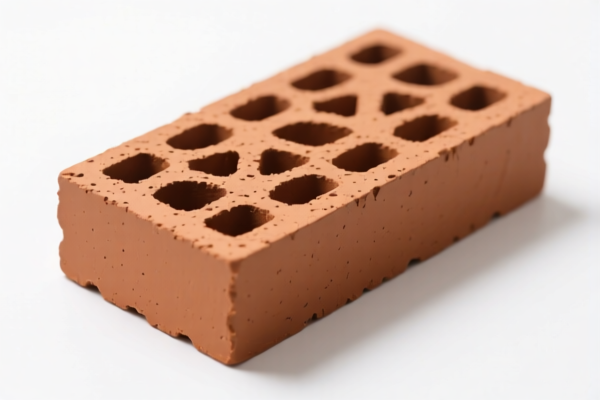
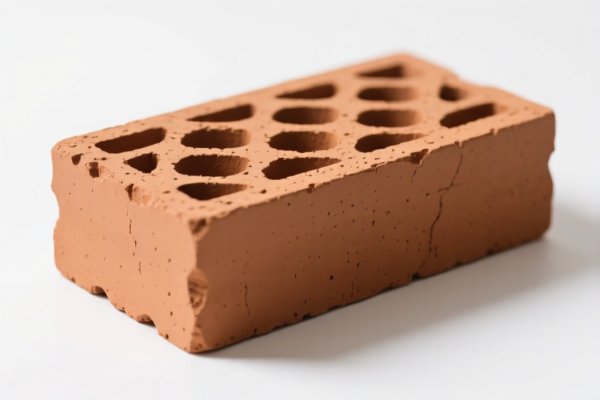
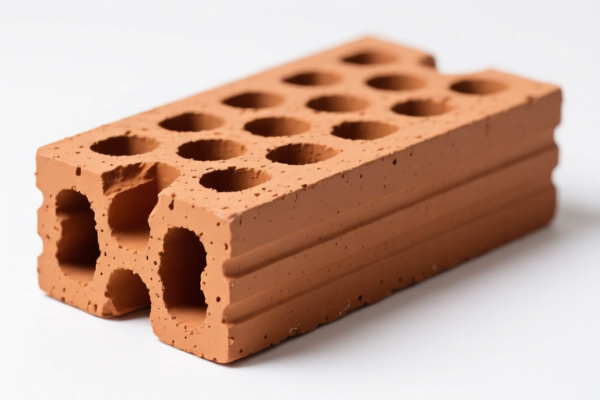
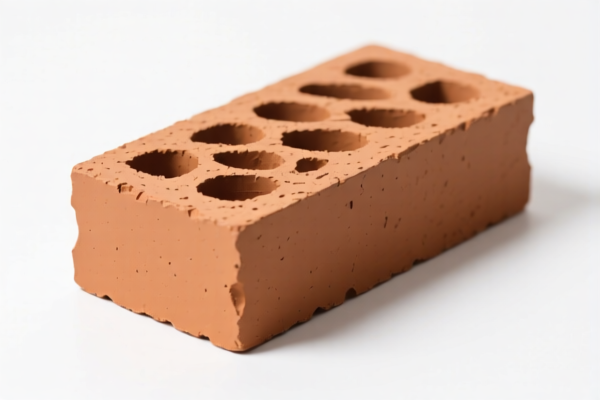
AI Analysis
🧱 Refractory Castable (Aluminate Cement Based)
🌐 HS Code Reference & Customs Clearance Guide | 2026 Latest Tariff Analysis | Professional Compliance Strategy
📌 I. Product Definition & Classification: Do You Understand "Refractory Castable"?
Refractory Castables, specifically those based on Aluminate Cement, are pre-mixed dry hydraulic binders used to line high-temperature industrial furnaces, kilns, and reactors. They are poured or vibrated into place, where they cure and then undergo thermal treatment to form a solid, refractory concrete structure.
In international trade, these products are strictly distinguished from raw materials (like Heading 3801 dolomite) and other industrial mixtures. Under the Harmonized System, they fall under Heading 3816, which covers "Refractory cements, mortars, concretes and similar compositions."
⚠️ Key Distinction Point:
- If the product is a refractory cement/mortar/concrete (including aluminate cement based mixes) → It falls under HS Code 3816.
- It is explicitly NOT Heading 3801 (Dolomite/Raw Materials).
- The classification depends on the specific formulation and origin, leading to two distinct HS codes with significantly different tax implications.
📦 II. HS Code Classification Details (2026 Latest Tariff Authority Comparison)
| HS Code | Product Description | Applicable Scenario | Origin/Tax Implication |
|---|---|---|---|
3816.00.20.10 |
Refractory cements, mortars, concretes and similar compositions, including dolomite ramming mix, other than products of heading 3801: Other Clay | Refractory mixes not subject to heavy trade restrictions; often non-China origin or specific exempt categories | ✅ 0.0% Total Tax |
3816.00.20.50 |
Refractory cements, mortars, concretes and similar compositions, including dolomite ramming mix, other than products of heading 3801: Other Other | Most common classification for China-origin Aluminate Cement-based castables; subject to additional tariffs | ✅ 28.0% Total Tax |
🔍 Critical Reminder:
- Aluminate Cement Based Castables typically fall under 3816.00.20.50 if imported from China to the US.
- The term "Other Other" in the tariff schedule captures general refractory mortars/concretes that are not specifically "Clay" or other exempt categories.
- Do not misclassify as ceramic raw materials (Chapter 69) or simple cement (Chapter 25/3801). It is a refractory composition.
💰 III. 2026 Latest Tariff Rate Breakdown (Including Additional Duties & Policy Surcharges)
✅ Applicable Country: United States (US)
✅ Origin: China (CN) (Assumed for Context of 28% Total Tax)
✅ Effective Date: 2025-2026 Tariff Schedule
🎯 1. 3816.00.20.50 —— Refractory Castable (General/Other)
| Item | Content |
|---|---|
| Base Duty Rate | 3.0% (ad valorem) |
| Section 301 Additional Duty | +25.0% |
| Total Duty Rate | 28.0% |
| Tax Calculation | CIF Value × 28.0% |
| De Minimis Exemption | ❌ Not Applicable (High-value industrial chemical/refractory goods are generally excluded from de minimis benefits under current enforcement trends) |
| Legal Basis Path | USITC:3816.00.20.50 → USITC:Footnote:301-China → Section 301 Tariff List |
📌 Explanation:
- The 3.0% base rate reflects the standard Most Favored Nation (MFN) duty for refractory mortars/concretes.
- The 25.0% additional duty is imposed under Section 301 of the Trade Act of 1974 against goods originating from China.
- Total Cost Impact: For every $10,000 CIF value of aluminate cement castable, you must pay $2,800 in duties.
- No Exemptions: Unlike some consumer electronics, refractory industrial materials do not currently qualify for broad exclusions under Section 301.
🎯 2. 3816.00.20.10 —— Refractory Castable (Other Clay/Special Category)
| Item | Content |
|---|---|
| Base Duty Rate | 0.0% |
| Additional Duty | 0.0% |
| Total Duty Rate | 0.0% |
| Tax Calculation | CIF Value × 0% |
| De Minimis Exemption | ❌ Not Applicable (Still subject to strict customs verification) |
| Legal Basis Path | USITC:3816.00.20.10 |
📌 Note:
- This code is reserved for specific formulations (often labeled "Other Clay" in tariff text, though technically distinct from pure clay bricks).
- If your aluminate cement-based product can be legally argued to fit this "Other Clay" or exempt category (e.g., specific non-China origin or special industrial classification), the tax burden is eliminated.
- Caution: Misclassifying a standard China-origin aluminate castable as this code can lead to severe penalties.
🛠️ IV. Customs Clearance Practical Advice (Real-World Pitfall Guide)
✅ 1. Required Documentation Checklist (No Exceptions)
| Document | Required | Description |
|---|---|---|
| ✅ Technical Data Sheet (TDS) | ✔️ | Must specify: Aluminate Cement content %, Refractory Aggregate type, Maximum Service Temperature. |
| ✅ Ingredient Statement | ✔️ | Detailed breakdown of binders and aggregates to prove it is NOT raw dolomite (Heading 3801). |
| ✅ Commercial Invoice | ✔️ | Must clearly state "Refractory Castable, Aluminate Cement Based, HS 3816.00.20.50". |
| ✅ Certificate of Origin (CO) | ✔️ | Critical to determine if Section 301 tariffs apply. |
| ✅ Safety Data Sheet (SDS) | ✔️ | For handling safety (aluminates are caustic). |
| ✅ Packing List | ✔️ | Show net weight and gross weight accurately. |
✅ 2. Declaration Strategy (Key Mnemonic)
🔥 "Refractory ≠ Raw Cement; Aluminate → HS 3816; Check Origin for 28%!"
| Scenario | Correct Declaration | Wrong Practice |
|---|---|---|
| Standard China-Origin Aluminate Castable | 3816.00.20.50 (28% Tax) |
Misclassify as 3801 (Dolomite) → Audit Risk + Penalties |
| Non-China Origin (e.g., India, Turkey) | 3816.00.20.50 (0% Section 301) |
Assume all refractories are taxed equally → Missed Savings |
| Mixed with Raw Clay Brick Parts | Split Declaration | Combine into one line → Confusion & Delay |
| "Refractory Mortar" vs "Concrete" | Use generic term "Refractory Composition" | Use vague terms like "Building Material" → Customs Rejection |
✅ 3. Special Cases Handling
| Situation | Handling Advice |
|---|---|
| OEM Custom Mix | Provide formula sheet; if binder > 50% aluminate, it’s still 3816, but verify aggregate classification. |
| Pre-packaged for Retail vs. Industrial Bulk | Same HS Code, but ensure packaging description matches intended use. |
| Disputed Origin (Transshipment) | If loaded in Vietnam but from China, DO NOT claim Vietnam origin. Strict enforcement on "transshipment evasion." |
| High-Alumina Content (>50%) | Still falls under 3816 if it’s a castable/mortar. Do not misclassify as ceramic products (6902). |
🌍 V. Global Market Customs Comparison (2026 Latest)
| Country/Region | Recommended HS Code | Duty Rate (China Origin) | Certification/Remarks |
|---|---|---|---|
| 🇺🇸 USA | 3816.00.20.50 |
28.0% (3% Base + 25% 301) | Section 301 applies strictly. |
| 🇨🇳 China (Import) | 3816.00.20.50 |
0% - 5% (Varies by FTAs) | Domestic trade may not need HS code. |
| 🇪🇺 EU | 3816.00.00 |
~0% - 6% | No equivalent "Section 301" surcharge. |
| 🇮🇳 India | 3816.00.00 |
~0% - 5% | Check specific IGST rules. |
📌 Conclusion:
- USA is the highest-cost market due to the additive 25% tariff.
- EU and India offer significantly better duty rates for similar products.
- Consider supply chain diversification (e.g., sourcing from non-China countries) if shipping to the US is cost-prohibitive.
📌 VI. Common Errors & Pitfall Guide (Blood & Tears Lessons)
❌ Error 1: Classifying as Heading 3801 (Dolomite/Raw Material)
👉 Consequence: Customs will reject because aluminate cement is a chemical mixture/binder, not a raw mineral. Penalty + Back Tax + Interest.
❌ Error 2: Ignoring Section 301 on China-origin goods
👉 Consequence: Under-declaring duty by 25%. Audit triggered upon data match.
❌ Error 3: Vague Description "Building Material"
👉 Consequence: Customs asks for clarification → Port Detention + Demurrage Fees.
❌ Error 4: Confusing "Refractory Brick" (6902) with "Refractory Castable" (3816)
👉 Consequence: Different duty rates and regulatory reviews. Castables are hydraulic; bricks are fired.
✅ Correct Declaration Example:
"REFRACTORY CASTABLE CONCRETE, ALUMINATE CEMENT BASED, FOR FURNACE LINING, HS CODE 3816.00.20.50, ORIGIN: CHINA"
🎯 VII. Conclusion: Professional Classification Saves Millions!
🎯 Remember the Mnemonic:
🔹 "Castable = 3816, Not 3801. China Origin = 28% Total. Aluminate Cement = Hydraulic Refractory."
🔹 "HS Code Defines Tax. 28% vs 0% is a Huge Gap. Declare Accurately or Pay the Price!"
📌 Pro Tip:
If your aluminate cement castable is produced in India, Turkey, or Vietnam, you can avoid the 25% Section 301 tariff.
Recommendation: For large-volume imports to the US, pre-ruling with CBP is highly advised to confirm the "Other Other" vs "Other Clay" classification and origin rules.
📣 Immediate Action:
📞 Contact a Licensed Customs Broker
📄 Provide TDS and Origin Proof
🚀 Optimize Supply Chain to Minimize 28% Tax Burden
✨ Professional Customs Compliance Starts with Accurate Classification!
💼 Every Percent of Duty Saved is Direct Profit Added!
Customer Reviews
About HS Code Classification
The Harmonized System (HS) is an internationally standardized nomenclature developed by the World Customs Organization (WCO) to classify traded products. Over 200 countries use the HS system as the basis for customs tariffs, trade statistics, and import/export regulations.
Each HS code follows a hierarchical structure:
- Chapter (2 digits) — Broad category of goods (e.g., Chapter 84: Machinery and Mechanical Appliances)
- Heading (4 digits) — More specific grouping within the chapter
- Subheading (6 digits) — Internationally standardized breakdown, used by all WCO member countries
- National subdivisions (8-10 digits) — Country-specific extensions for further classification, such as US HTSUS 10-digit codes
Correct HS code classification is essential for smooth customs clearance, accurate duty payment, and compliance with trade regulations. Misclassification can lead to customs delays, overpayment of duties, or penalties.
When importing from CN to US, the applicable tariff rates may include:
- Most-Favored-Nation (MFN) rate — The standard duty rate applied to WTO members
- General rate — Applied to countries without trade agreements
- Trade remedy duties — Additional tariffs such as Section 301 (anti-dumping), Section 232 (national security), or countervailing duties
The information provided on this page is for reference purposes only. For official classification, please consult with your local customs authority or a licensed customs broker.