Refractory Castable (Self Compacting)
CN → US| HS Code | Tariff Rate | Origin | Destination | Doc |
|---|---|---|---|---|
| 3824994900 | 41.5% | CN | US | Official Doc |
| 3824500050 | 35.0% | CN | US | Official Doc |
| 3824992100 | 35.0% | CN | US | Official Doc |
| 3824500050 | 35.0% | CN | US | Official Doc |
| 3824994900 | 41.5% | CN | US | Official Doc |
Product Images
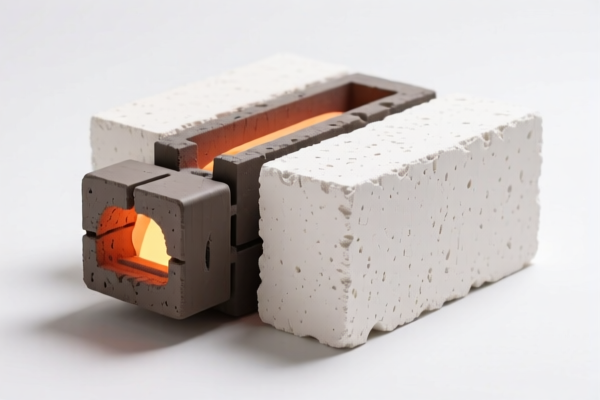
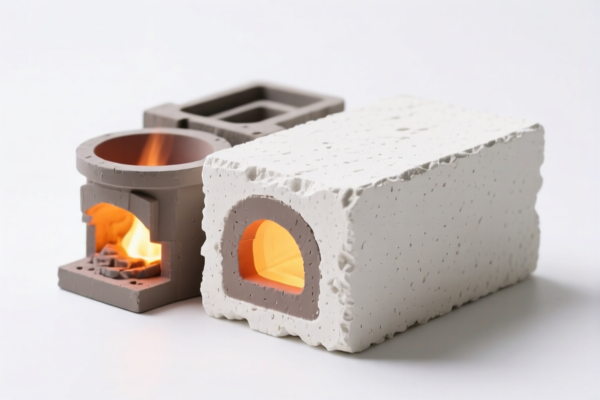
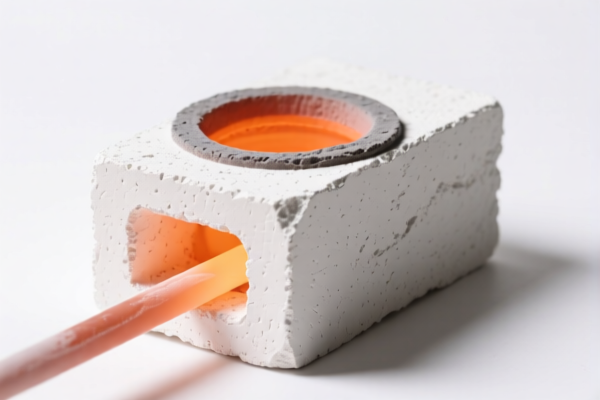
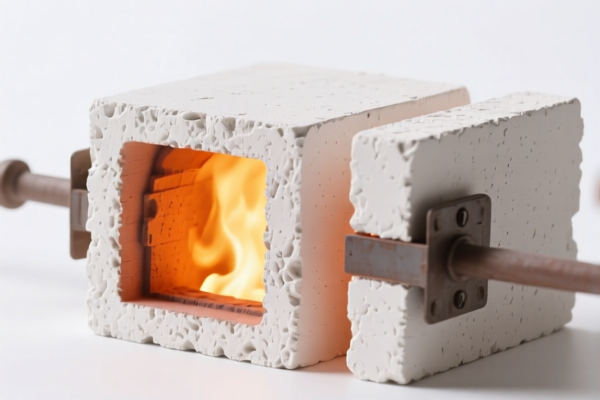
AI Analysis
🔥 Refractory Castable (Self Compacting) – US Customs Classification & Tax Strategy
🌐 HS Code Reference & Clearance Guide | 2026 Latest Tariff Analysis | Professional Compliance Strategy
📌 1. Product Definition & Classification: What Exactly Is "Self Compacting Refractory"?
Refractory Castable (Self Compacting), often referred to as Self-Flow or Self-Leveling Castable, is a high-performance monolithic refractory material. Unlike traditional castables that require mechanical vibration to remove air pockets, self-compacting castables rely on fluid dynamics and chemical additives to achieve flow and density under gravity.
In international trade, these materials are primarily classified based on their chemical composition and binding mechanism. They are generally treated as chemical preparations, mixtures, or industrial compounds, falling under Chapter 38 of the Harmonized Tariff Schedule (HTSUS).
⚠️ Critical Distinction:
- If the product is a basic phosphate-bonded mixture, it may fall under 3824.50.00.50.
- If the product is a general-purpose chemical mixture/compound (including calcium aluminate cement-based blends with specific additives), it is often classified under 3824.99.49.00.
- The exact classification depends on the dominant chemical nature and whether it fits the "other" catch-all provisions vs. specific chemical product definitions.
📦 2. HS Code Classification Details (2026 Latest Tariff Reference)
Based on the provided data, the classification for Refractory Castable (Self Compacting) and related types falls into two primary HTSUS codes. Note that the tax burden differs significantly between them due to base tariff rates.
| HS Code | Product Description | Key Attribute | Applicable Scenario |
|--------|--------------------------|---------------|
| 3824.99.49.00 | Refractory Castable (Self Compacting) | Chemical Industrial Preparation/Mixture | General self-flow castables; high base tariff impact |
| 3824.50.00.50 | Other Chemical Preparations (Refractory) | Chemical Substance/Mixture (Catch-all "Other") | Specific chemical compositions fitting "other" category |
🔍 Important Note:
-3824.99.49.00is characterized as a "Chemical Industrial Preparation/Mixture." It carries a 6.5% base tariff, which, when combined with surcharges, results in a higher total tax.
-3824.50.00.50is categorized under "Other" chemical preparations. It has a 0.0% base tariff, making it significantly more tax-efficient despite the same surcharges.
- Do not confuse with traditional vibration-packed castables if the chemical binding agent differs significantly (e.g., phosphate-bonded vs. cement-bonded), as this may shift the classification.
💰 3. 2026 Latest Tariff Rate Breakdown (Including Surcharges & Policy Add-ons)
✅ Applicable Country: United States (US)
✅ Country of Origin: China (CN)
✅ Effective Date: From November 10, 2025 (and subsequent imports)
🎯 1. HS Code 3824.99.49.00 – Refractory Castable (Self Compacting)
Classification: Chemical Industrial Preparation/Mixture
| Item | Detail |
|---|---|
| Base Tariff | 6.5% (Ad Valorem) |
| Section 301 Surcharge | +25.0% (USITC Footnote 9903.88.01) |
| IEEPA Surcharge (122 Clause) | +10.0% (Targeting China-origin products) |
| Total Effective Tax Rate | 41.5% |
| Tax Calculation Basis | CIF Value × 41.5% |
| De Minimis Eligibility | ❌ Not Eligible (deny_de_minimis) |
| Legal Authority Path | USITC:3824.99.49.00 → FOOTNOTE:9903.88.01 → IEEPA:9903.01.25 |
📌 Explanation:
- The 6.5% base tariff is unique to this subheading compared to the 0% base rate in 3824.50.00.50.
- The 25% Section 301 tariff applies to nearly all Chinese-origin chemical preparations.
- The 10% IEEPA tariff is an additional layer for specific Chinese industrial goods.
- Total 41.5% is a very high cost. Importers must verify if their specific chemical formulation qualifies for the lower base rate under3824.50.00.50.
🎯 2. HS Code 3824.50.00.50 – Other Chemical Preparations (Refractory)
Classification: Chemical Substance/Mixture (Catch-all)
| Item | Detail |
|---|---|
| Base Tariff | 0.0% (Ad Valorem) |
| Section 301 Surcharge | +25.0% (USITC Footnote 9903.88.01) |
| IEEPA Surcharge (122 Clause) | +10.0% (Targeting China-origin products) |
| Total Effective Tax Rate | 35.0% |
| Tax Calculation Basis | CIF Value × 35.0% |
| De Minimis Eligibility | ❌ Not Eligible (deny_de_minimis) |
| Legal Authority Path | USITC:3824.50.00.50 → FOOTNOTE:9903.88.01 → IEEPA:9903.01.24 |
📌 Explanation:
- The 0% base tariff makes this code 6.5% more favorable than3824.99.49.00.
- This code is a "catch-all" for chemical preparations not specified elsewhere.
- If the self-compacting castable is deemed a "specialized chemical mixture" rather than a general industrial compound, this classification saves $6,500 per $100,000 CIF value.
🛠️ 4. Customs Clearance Practical Advice (Pitfall Avoidance Guide)
✅ 1. Document Checklist (Mandatory)
| Document | Required | Notes |
|---|---|---|
| ✅ Product Specification Sheet | ✔️ | Must detail chemical composition, binding agents (e.g., phosphate, cement), and flow properties. |
| ✅ Material Safety Data Sheet (MSDS) | ✔️ | Essential for chemical classification verification. |
| ✅ Commercial Invoice | ✔️ | Clearly state: "Refractory Castable, Self Compacting, Chemical Mixture." |
| ✅ Origin Certificate (CO) | ✔️ | Crucial for determining surcharge applicability (China origin = high tax). |
| ✅ Packaging List | ✔️ | Confirm net/gross weight for accurate valuation. |
✅ 2. Declaration Tips (Key Strategy)
🔥 “Chemical Nature First, Application Second”
| Scenario | Correct Declaration | Incorrect Declaration |
|---|---|---|
| Self-Compacting Castable | 3824.50.00.50 (if chemically distinct) |
3824.99.49.00 (higher tax) |
| Phosphate-Bonded Castable | 3824.50.00.50 or 3824.99.21.00 |
Generic "Refractory Material" |
| General Purpose Castable | 3824.99.49.00 |
3824.50.00.50 (risk of misclassification) |
| Mix with Other Goods | Do NOT split | Splitting leads to higher combined tax |
📌 Critical Insight:
- If the product contains phosphate bonding agents, it may qualify for3824.99.21.00(Total Tax: 35.0%).
- If it is a generic cement-based self-flow castable, it likely falls under3824.99.49.00(Total Tax: 41.5%) unless it can be argued as a specialized chemical preparation under3824.50.00.50(Total Tax: 35.0%).
- Always aim for the 35.0% rate by proving the chemical specificity.
✅ 3. Special Cases
| Case | Recommendation |
|---|---|
| OEM/Private Label | Provide formulation data to support 3824.50.00.50 classification. |
| Mixed Shipment | Ensure refractory castables are not mixed with non-refractory tools in a way that triggers mixed-rate penalties. |
| High Additive Content | If >50% of value is chemical additives, emphasize chemical nature for 3824 classification. |
🌍 5. Global Market Comparison (2026 Latest)
| Country/Region | Recommended HS Code | Tariff (China Origin) | Notes |
|---|---|---|---|
| 🇺🇸 USA | 3824.50.00.50 |
35.0% | Best case; 3824.99.49.00 is 41.5% |
| 🇨🇳 China | 3824.50.00.50 |
~10-15% (Import) | No Section 301/IEEPA surcharges |
| 🇪🇺 EU | 3824.99.99 |
~6.5% | No Section 301/IEEPA; lower base rate |
| 🇯🇵 Japan | 3824.90.00 |
~5-8% | No additional surcharges |
📌 Conclusion:
- The US market is the most expensive due to Section 301 and IEEPA surcharges.
- Classification strategy is critical: A difference between3824.50.00.50and3824.99.49.00is a 6.5% cost difference.
- No other major market applies these punitive surcharges, so supply chain diversification may be necessary for US-bound goods.
📌 6. Common Errors & Pitfalls (Lessons Learned)
❌ Error 1: Classifying self-compacting castable as 3824.99.49.00 without justification.
👉 Consequence: Paying 41.5% instead of 35.0%. Loss of $6,500 per $100k shipment.
❌ Error 2: Ignoring the IEEPA 10% surcharge.
👉 Consequence: Underpayment of duties, leading to penalties, interest, and potential seizures.
❌ Error 3: Declaring as "Construction Material" instead of "Chemical Preparation."
👉 Consequence: Customs may reclassify, causing delays and back-taxes.
❌ Error 4: Assuming all refractory materials have the same HS code.
👉 Consequence: Misclassification due to different binding agents (phosphate vs. cement vs. silicate).
✅ Correct Approach:
"Refractory Castable, Self-Compacting, Chemical Mixture, Phosphate/Cement Bonded, for Industrial Furnace Lining, Model XYZ, Made in China."
🎯 7. Conclusion: Precision Classification, Cost Savings!
🎯 Remember the Motto:
🔹 "Chemical Nature Dictates Code; 35% is Better than 41.5%.
🔹 "Section 301 + IEEPA = 35% Minimum. Don't Pay Extra!"
📌 Pro Tip:
- If your product is phosphate-bonded, consider
3824.99.21.00(35.0% total).- If generic, argue for
3824.50.00.50to secure the 35.0% rate over 41.5%.- Apply for an Advance Ruling from CBP to lock in the 35.0% classification before shipment.
📣 Immediate Action:
📞 Consult a US Customs Broker
📄 Provide Chemical Formulation & MSDS
🚀 Secure the 35.0% Tax Rate for your Refractory Castable!
✨ Professional Clearance Starts with Accurate Classification!
💼 Your Margins Depend on Every Percent!
Customer Reviews
About HS Code Classification
The Harmonized System (HS) is an internationally standardized nomenclature developed by the World Customs Organization (WCO) to classify traded products. Over 200 countries use the HS system as the basis for customs tariffs, trade statistics, and import/export regulations.
Each HS code follows a hierarchical structure:
- Chapter (2 digits) — Broad category of goods (e.g., Chapter 84: Machinery and Mechanical Appliances)
- Heading (4 digits) — More specific grouping within the chapter
- Subheading (6 digits) — Internationally standardized breakdown, used by all WCO member countries
- National subdivisions (8-10 digits) — Country-specific extensions for further classification, such as US HTSUS 10-digit codes
Correct HS code classification is essential for smooth customs clearance, accurate duty payment, and compliance with trade regulations. Misclassification can lead to customs delays, overpayment of duties, or penalties.
When importing from CN to US, the applicable tariff rates may include:
- Most-Favored-Nation (MFN) rate — The standard duty rate applied to WTO members
- General rate — Applied to countries without trade agreements
- Trade remedy duties — Additional tariffs such as Section 301 (anti-dumping), Section 232 (national security), or countervailing duties
The information provided on this page is for reference purposes only. For official classification, please consult with your local customs authority or a licensed customs broker.