Refractory Castable (Self leveling)
CN → US| HS Code | Tariff Rate | Origin | Destination | Doc |
|---|---|---|---|---|
| 3824500050 | 35.0% | CN | US | Official Doc |
| 3824994900 | 41.5% | CN | US | Official Doc |
Product Images
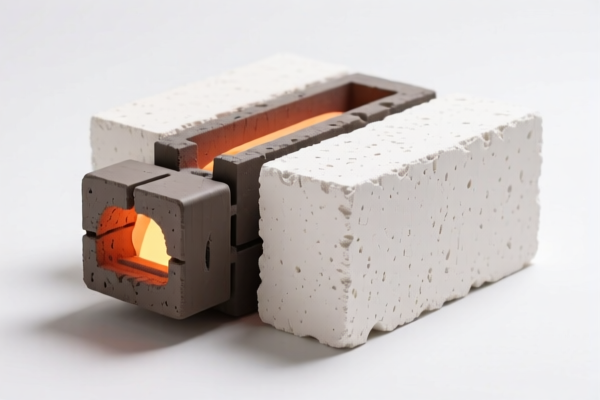


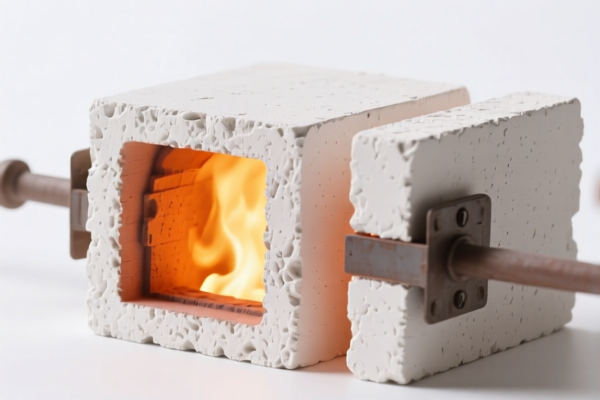
AI Analysis
🏗️ Refractory Castable (Self-Leveling)
🌐 HS Code Reference & Customs Clearance Guide | 2026 Latest Tariff Analysis | Professional Logistics Strategy
📌 I. Product Definition & Classification: What is "Refractory Castable"?
Refractory Castable is a pre-mixed, dry mixture of refractory aggregates, powders, and binders designed for installation in furnaces, kilns, and industrial vessels. It is mixed with water and poured or vibrated into place, where it hardens through chemical reaction or sintering at high temperatures.
Key Distinction: * Self-Leveling Castable: A specific subtype that flows easily without vibration due to superplasticizers, creating a smooth, dense surface. * Non-Refractory vs. Refractory: This is the critical classification pivot. * If the product contains refractory materials (e.g., alumina, silica, magnesia) designed to withstand high heat, it typically falls under Chapter 68 (Articles of stone or of other mineral substances). * If the product is primarily a chemical binder or preparation for mold cores used in general foundry operations (not necessarily high-temp refractory in the material science sense, but the function as a binder), it may fall under Chapter 38.
⚠️ Critical Classification Point for this Dataset:
The provided data points exclusively to Chapter 38 (Chemical Products). This implies the customs authority or specific product composition classifies these castables primarily as "Prepared binders for foundry molds or cores" or "Other chemical products/preparations" rather than as mineral articles (Chapter 68). We must adhere strictly to the provided<DATA>constraints.
📦 II. HS Code Classification Details (Based on Provided Data)
| HS Code | Product Description | Tax Rate (Total) | Applicable Scenario |
|---|---|---|---|
3824.50.00.50 |
Prepared binders for foundry molds or cores; other chemical products/preparations: Nonrefractory mortars and concretes; Other | 25.0% | General prepared binders; Nonrefractory mortars/concretes used in mold/core preparation. |
3824.99.49.00 |
Prepared binders for foundry molds or cores; other chemical products/preparations: Other: Other: Mixtures derived from petroleum, shale oil, or natural gas | 31.5% | Castables containing significant petroleum/gas-derived hydrocarbons (e.g., phenolic resins, asphalt binders). |
🔍 Key Insight from Data:
The dataset explicitly excludes "Refractory" items under Chapter 68 and places these specific formulations under 3824.50 and 3824.99. This suggests the specific "Self-Leveling" products in question are either nonrefractory (used for low-temp molds) or their binding agent composition triggers the chemical/organic classification.
💰 III. 2026 Latest Tariff Rate Breakdown
✅ Applicable Country: United States (US)
✅ Origin: China (CN)
✅ Effective Date: Based on current trade policies (2025-2026 context)
🎯 1. 3824.50.00.50 —— Prepared Binders for Foundry Molds/Cores
| Item | Details |
|---|---|
| Base Duty Rate | 0.0% (Ad Valorem) |
| Additional Duty (Section 301) | +25.0% |
| Total Tax Rate | 25.0% |
| Tax Calculation | CIF Value × 25.0% |
| De Minimis Exemption | ❌ Not Applicable |
| Legal Basis Path | USITC:3824.50.00.50 → Section 301 Tariff List |
📌 Explanation:
- The base duty for "Other" chemical preparations in this subheading is often 0% or low, but the Section 301 tariff adds 25%.
- This classification covers nonrefractory mortars and concretes and general prepared binders. If your castable is used for general mold making and not extreme heat resistance (>1000°C with specific refractory aggregates), this may be the correct code.
🎯 2. 3824.99.49.00 —— Mixtures Derived from Petroleum/Shale Oil/Gas
| Item | Details |
|---|---|
| Base Duty Rate | 6.5% |
| Additional Duty (Section 301) | +25.0% |
| Total Tax Rate | 31.5% |
| Tax Calculation | CIF Value × 31.5% |
| De Minimis Exemption | ❌ Not Applicable |
| Legal Basis Path | USITC:3824.99.49.00 → Section 301 Tariff List |
📌 Explanation:
- This code applies if the castable contains hydrocarbons derived from petroleum, shale oil, or natural gas (e.g., organic binders like phenolic or furan resins common in foundry cores).
- The 6.5% base rate + 25% additional duty results in a 31.5% total tax.
- Crucial for Self-Leveling Castables: Many self-leveling castables use organic additives or binders to improve flow. If these are petroleum-derived, this code applies.
🛠️ IV. Customs Clearance Practical Advice
✅ 1. Essential Documentation Checklist
| Document | Required? | Notes |
|---|---|---|
| Technical Data Sheet (TDS) | ✅ Mandatory | Must specify chemical composition, especially organic vs. inorganic binders. |
| Safety Data Sheet (SDS) | ✅ Mandatory | Classify hazard properties; helps customs determine if it's a "chemical preparation." |
| Commercial Invoice | ✅ Mandatory | Clearly state: "Refractory Castable (Self-Leveling), Pre-mixed Powder." |
| Bill of Lading / Air Waybill | ✅ Mandatory | Weight and volume details. |
| Certificate of Origin | ✅ Recommended | To prove Chinese origin for accurate Section 301 assessment. |
| Formula/Composition Disclosure | ✅ Highly Recommended | To justify the 3824 classification vs. 6804/6815. If >10% organic binder from petroleum, lean towards 3824.99.49.00. |
✅ 2. Declaration Strategy (Key Tactics)
🔥 "Binders First, Minerals Second. Organic Content Dictates Tax."
| Scenario | Correct HS Code | Wrong Approach | Consequence |
|---|---|---|---|
| Castable with inorganic binders (e.g., cement, sodium silicate) | 3824.50.00.50 |
Declaring as 6804 (Whetstones) | Possible misclassification, audit, penalty. |
| Castable with organic/petroleum-based binders | 3824.99.49.00 |
Declaring as 3824.50.00.50 |
Underpayment of 6.5% base duty → Back taxes + Interest. |
| Pure Refractory Bricks (not castable) | 6804 or 6815 |
Declaring as 3824 |
Wrong chapter entirely → Seizure or Return. |
| Liquid Resin Binders only | 3907 or 3824 |
Declaring as Castable Powder | Weight discrepancy, customs hold. |
✅ 3. Special Considerations for "Self-Leveling"
- Flow Agents: Self-leveling properties often come from superplasticizers (chemical admixtures). If these are petrochemical-derived, they reinforce the use of
3824.99.49.00. - Packaging: Ensure packaging states "Dry Mix" or "Powder" to avoid confusion with liquid resins.
- Usage Statement: Specify "For use in foundry molds/cores" to align with the
3824heading description ("Prepared binders for foundry molds or cores").
🌍 V. Global Market Comparison (2026 Context)
| Country/Region | Recommended HS Code | Estimated Duty | Notes |
|---|---|---|---|
| 🇺🇸 USA | 3824.50.00.50 or 3824.99.49.00 |
25.0% - 31.5% | Section 301 tariffs apply heavily. |
| 🇨🇳 China | 3824.50 or 3824.99 |
0% - 6.5% | Low base duty; no Section 301 retaliation on imports. |
| 🇪🇺 EU | 3824.50 or 3824.99 |
~6.5% | Standard EU MFN duty; no punitive tariffs. |
| 🇲🇽 Mexico | 3824.50 or 3824.99 |
5% - 10% | USMCA may apply if originated in North America. |
| 🇯🇵 Japan | 3824.50 or 3824.99 |
~6.5% | Low base duty; CEPA benefits if applicable. |
📌 Conclusion:
- USA is the most expensive market due to the 25-31.5% total tariff.
- China and EU are relatively cheaper for importers.
- Supply Chain Strategy: If sourcing for the US, consider if the product can be reclassified or if organic content can be minimized to qualify for the lower3824.50.00.50bracket (25% vs 31.5%).
📌 VI. Common Mistakes & Pitfalls
❌ Mistake 1: Classifying as 6804 (Whetstones/Grinding Tools)
👉 Why it's wrong: Castables are pre-mixed binders/preparations, not finished abrasive tools.
👉 Result: Misclassification, penalty.
❌ Mistake 2: Ignoring the Organic Binder Content
👉 Why it's wrong: If petroleum-derived binders are present, 3824.99.49.00 (31.5%) is more accurate than 3824.50.00.50 (25%).
👉 Result: Underpayment of 6.5% base duty.
❌ Mistake 3: Declaring as "Construction Mortar" under 3006
👉 Why it's wrong: "Foundry molds/cores" is a specific use case listed in 3824. If the product is marketed for foundry use, 3824 is preferred.
👉 Result: Customs may challenge the use-case declaration.
✅ Correct Declaration Example:
"Refractory Self-Leveling Castable, Pre-mixed Powder, For Foundry Molds, Contains Organic Binder"
HS Code:3824.99.49.00
🎯 VII. Conclusion: Professional Declaration, Cost Optimization
🎯 Key Takeaways:
🔹 "Check the Binder": Inorganic =
3824.50.00.50(25%); Organic/Petroleum =3824.99.49.00(31.5%).
🔹 "Foundry Use": Explicitly state "For Foundry Molds/Cores" to justify Chapter 38.
🔹 "USA Tariff Alert": Budget for 25-31.5% total duty. No de minimis exemption.
📌 Pro Tip:
If your product contains both organic and inorganic binders, consult a customs broker to determine the essential character. If the organic binder is >10% by weight, lean towards 3824.99.49.00 to be safe and avoid audits.
📣 Immediate Action:
📞 Provide TDS/SDS to your customs broker
🔍 Verify binder composition
🚀 Accurate classification saves money and prevents delays!
✨ Precision in Classification, Profit in Logistics!
💼 Every percentage point of duty matters!
Customer Reviews
About HS Code Classification
The Harmonized System (HS) is an internationally standardized nomenclature developed by the World Customs Organization (WCO) to classify traded products. Over 200 countries use the HS system as the basis for customs tariffs, trade statistics, and import/export regulations.
Each HS code follows a hierarchical structure:
- Chapter (2 digits) — Broad category of goods (e.g., Chapter 84: Machinery and Mechanical Appliances)
- Heading (4 digits) — More specific grouping within the chapter
- Subheading (6 digits) — Internationally standardized breakdown, used by all WCO member countries
- National subdivisions (8-10 digits) — Country-specific extensions for further classification, such as US HTSUS 10-digit codes
Correct HS code classification is essential for smooth customs clearance, accurate duty payment, and compliance with trade regulations. Misclassification can lead to customs delays, overpayment of duties, or penalties.
When importing from CN to US, the applicable tariff rates may include:
- Most-Favored-Nation (MFN) rate — The standard duty rate applied to WTO members
- General rate — Applied to countries without trade agreements
- Trade remedy duties — Additional tariffs such as Section 301 (anti-dumping), Section 232 (national security), or countervailing duties
The information provided on this page is for reference purposes only. For official classification, please consult with your local customs authority or a licensed customs broker.