Refractory Castable Self Compacting
CN → US| HS Code | Tariff Rate | Origin | Destination | Doc |
|---|---|---|---|---|
| 2530908015 | 10.0% | CN | US | Official Doc |
| 6810110010 | 38.2% | CN | US | Official Doc |
| 3824500010 | 35.0% | CN | US | Official Doc |
| 2530908050 | 10.0% | CN | US | Official Doc |
| 6810195000 | 38.9% | CN | US | Official Doc |
Product Images
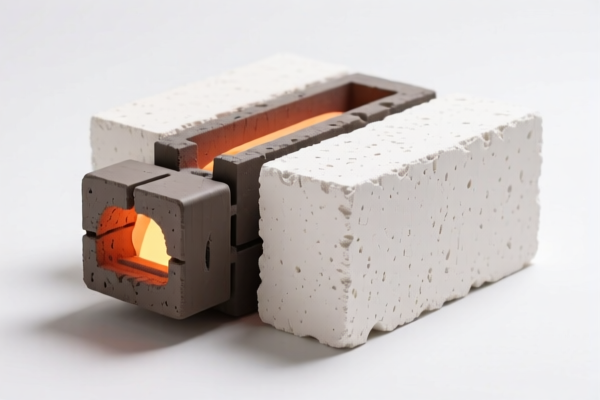
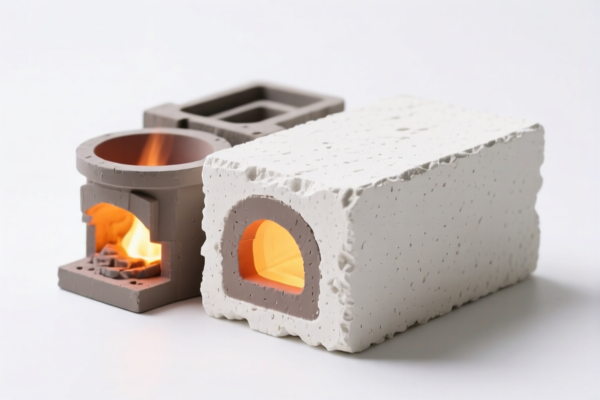
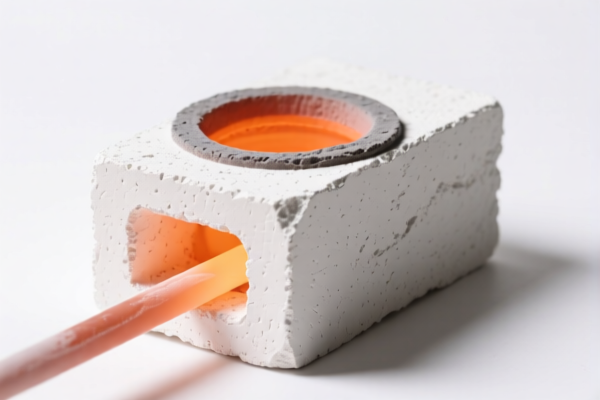
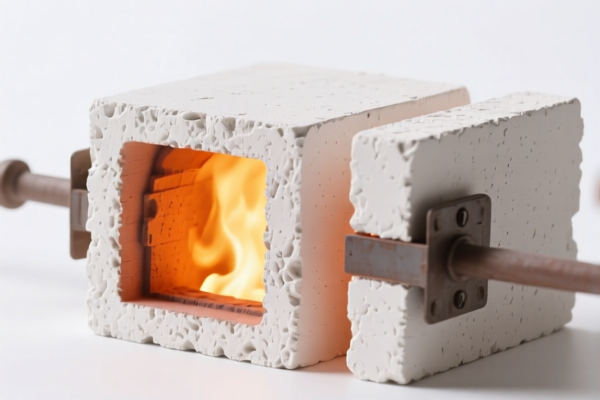
AI Analysis
🔥 Refractory Castable Self-Compacting (RCS)
🌐 HS Code Reference & Customs Clearance Guide | 2026 Latest Tariff Analysis | Professional Clearance Strategy
📌 I. Product Definition & Classification: What Exactly is "Refractory Castable Self-Compacting"?
Refractory Castable Self-Compacting (RCS) is a high-performance, pre-mixed refractory material designed for industrial kilns, furnaces, and reactors. Unlike traditional castables that require vibration to remove air pockets, RCS flows and consolidates under its own weight due to optimized particle packing and superplasticizers.
In international trade, it is often classified under ambiguous categories depending on its primary chemical composition and intended use. The data provided highlights three distinct potential classifications based on material nature:
⚠️ Key Distinction Point:
- If viewed as a mineral substance (raw or minimally processed) → 2530.90.80.15 / 2530.90.80.50
- If viewed as a cementitious/concrete product (binders + aggregates) → 6810.11.00.10 / 6810.19.50.00
- If viewed as a chemical preparation/mortar → 3824.50.00.10
📦 II. HS Code Classification Details (2026 Latest Tariff Authority Comparison)
Based on the provided data, here are the five most relevant HS Codes for Refractory Castable Self-Compacting, with their corresponding tax implications:
| HS Code | Product Description | Application Scenario | Key Attribute |
|---|---|---|---|
2530.90.80.15 |
Other mineral substances (pigments/mineral materials) | Raw mineral powder forms; mineral-based additives | ✅ Mineral substance |
2530.90.80.50 |
Other unlisted mineral substances | Inorganic mineral derivatives; primary mineral forms | ✅ Mineral substance |
6810.11.00.10 |
Cement, concrete, or artificial stone articles (refractory) | Magnesia-based refractories; cementitious binders | ✅ Cementitious/Concrete |
6810.19.50.00 |
Other cement, concrete, or artificial stone articles | Self-compacting refractory concrete; non-specific refractory | ✅ Cementitious/Concrete |
3824.50.00.10 |
Non-refractory mortars and concretes; chemical preparations | Chemical additives; wet-state mortar characteristics | ✅ Chemical/Mortar |
🔍 Important Reminder:
- If the product is primarily mineral-based without complex chemical binding agents, it may fall under 2530.
- If it contains cement, magnesium oxide, or concrete-like binders, it falls under 6810.
- If it is classified as a chemical mixture or wet mortar, it may fall under 3824.
- Misclassification can lead to significant tariff differences (10% vs. 38.9%)!
💰 III. 2026 Latest Tariff Rate Breakdown (Including Surtaxes & Policy Surcharges)
✅ Applicable Country: United States (US)
✅ Origin: China (CN)
✅ Effective Date: From November 10, 2025 (including subsequent imports)
🎯 1. 2530.90.80.15 — Other Mineral Substances
| Item | Content |
|---|---|
| Base Tariff | 0% |
| Section 301 Surtax | 0% |
| 122-Clause Tariff | +10% |
| Total Rate | 10.0% |
| Tax Calculation | CIF Value × 10% |
| De Minimis Eligibility | ❌ No (denied) |
| Legal Basis Path | 122-Clause:10% → HS:2530.90.80.15 |
📌 Explanation:
- This classification treats the product as a mineral substance.
- Only the 122-Clause Tariff (10%) applies.
- Total rate: 10% — relatively low compared to other classifications.
🎯 2. 2530.90.80.50 — Other Unlisted Mineral Substances
| Item | Content |
|---|---|
| Base Tariff | 0% |
| Section 301 Surtax | 0% |
| 122-Clause Tariff | +10% |
| Total Rate | 10.0% |
| Tax Calculation | CIF Value × 10% |
| De Minimis Eligibility | ❌ No |
| Legal Basis Path | 122-Clause:10% → HS:2530.90.80.50 |
📌 Note:
- Similar to the previous code, this treats the product as an inorganic mineral derivative.
- Total rate: 10% — same low tariff as2530.90.80.15.
🎯 3. 6810.11.00.10 — Cement/Concrete Articles (Refractory, Magnesia-based)
| Item | Content |
|---|---|
| Base Tariff | 3.2% |
| Section 301 Surtax | +25% |
| 122-Clause Tariff | +10% |
| Total Rate | 38.2% |
| Tax Calculation | CIF Value × 38.2% |
| De Minimis Eligibility | ❌ No |
| Legal Basis Path | 301:25% → 122-Clause:10% → HS:6810.11.00.10 |
📌 Explanation:
- This classification treats the product as a cementitious/concrete product with refractory properties (e.g., magnesia-based).
- Section 301 Surtax (25%) and 122-Clause Tariff (10%) apply.
- Total rate: 38.2% — significantly higher.
🎯 4. 6810.19.50.00 — Other Cement/Concrete Articles (Refractory, Self-Compacting)
| Item | Content |
|---|---|
| Base Tariff | 3.9% |
| Section 301 Surtax | +25% |
| 122-Clause Tariff | +10% |
| Total Rate | 38.9% |
| Tax Calculation | CIF Value × 38.9% |
| De Minimis Eligibility | ❌ No |
| Legal Basis Path | 301:25% → 122-Clause:10% → HS:6810.19.50.00 |
📌 Note:
- This is for refractory concrete with self-compacting features.
- Total rate: 38.9% — the highest among all classifications.
🎯 5. 3824.50.00.10 — Non-Refractory Mortars & Chemical Preparations
| Item | Content |
|---|---|
| Base Tariff | 0% |
| Section 301 Surtax | +25% |
| 122-Clause Tariff | +10% |
| Total Rate | 35.0% |
| Tax Calculation | CIF Value × 35.0% |
| De Minimis Eligibility | ❌ No |
| Legal Basis Path | 301:25% → 122-Clause:10% → HS:3824.50.00.10 |
📌 Explanation:
- This classification treats the product as a chemical preparation or wet-state mortar.
- Total rate: 35.0% — moderate compared to other cementitious codes.
🛠️ IV. Customs Clearance Practical Advice (Avoiding Pitfalls)
✅ 1. Required Documentation Checklist
| Document | Mandatory | Notes |
|---|---|---|
| ✅ Product Specification Sheet | ✔️ | Must include composition, particle size, binding agents |
| ✅ Material Safety Data Sheet (MSDS) | ✔️ | Required for chemical/industrial products |
| ✅ Product Photos (Label & Bulk) | ✔️ | Show packaging, markings, and physical state |
| ✅ Third-Party Test Report | ✔️ | Refractoriness, compressive strength, chemical composition |
| ✅ Commercial Invoice | ✔️ | Clearly state "Refractory Castable Self-Compacting" |
| ✅ Packing List | ✔️ | Indicate net/gross weight, number of bags |
| ✅ Certificate of Origin (CO) | ✔️ | If non-Chinese origin, may qualify for preferential rates |
✅ 2. Declaration Strategy (Key Mantra)
🔥 “Mineral vs. Cementitious: Know Your Base!”
| Scenario | Correct Declaration | Wrong Practice |
|---|---|---|
| Product is primarily mineral powder | 2530.90.80.15 or 2530.90.80.50 |
Misdeclare as cement → 38.9% |
| Product contains cement/magnesia binder | 6810.11.00.10 or 6810.19.50.00 |
Misdeclare as mineral → 10% |
| Product is chemical additive/mortar | 3824.50.00.10 |
Misdeclare as cement → 38.9% |
✅ 3. Special Cases Handling
| Scenario | Handling Advice |
|---|---|
| OEM Custom Refractory | Provide customer order + formulation sheet to avoid "non-standard" classification |
| High-Magnesia vs. High-Alumina | Specify chemical composition clearly; magnesia may fall under 6810.11, alumina under 6810.19 |
| Pre-mixed vs. Raw Material | Pre-mixed = 6810 or 3824; Raw = 2530 |
| Used in Steel vs. Cement Kilns | End-use may influence classification if "specialty" codes exist |
🌍 V. Global Market Clearance Comparison (2026 Latest)
| Country/Region | Recommended HS Code | Tariff | Certification Requirements | Notes |
|---|---|---|---|---|
| 🇺🇸 USA | 2530.90.80.15 |
10% | MSDS, Test Report | 38.9% if misclassified as cement |
| 🇨🇳 China | 2530.90.80.15 |
5-10% | GB Standards | Lower surtaxes |
| 🇪🇺 EU | 6810.19.50.00 |
0-5% | REACH, CLP | No surtaxes |
| 🇦🇺 Australia | 2530.90.80.15 |
5% | No special certification | Low tariffs |
| 🇯🇵 Japan | 6810.19.50.00 |
0-5% | JIS Standards | No surtaxes |
📌 Conclusion:
- USA has the highest tariff risk due to Section 301 and 122-Clause surtaxes;
- Mineral classification (2530) saves ~28% in tariffs compared to cementitious classification (6810);
- Correct chemical composition declaration is critical for accurate HS Code assignment.
📌 VI. Common Mistakes & Pitfalls (Lessons Learned)
❌ Mistake 1: Declaring "Refractory Castable" as generic "Construction Material"
👉 Consequence: Unclear classification → Delays or reclassification to higher tariff (38.9%)
❌ Mistake 2: Ignoring chemical composition (e.g., MgO vs. Al₂O₃ content)
👉 Consequence: Misclassification between 2530 and 6810 → Tariff difference of 28-30%
❌ Mistake 3: Not providing MSDS or test reports
👉 Consequence: Customs inability to verify chemical nature → Detention or audit
❌ Mistake 4: Using vague terms like "Industrial Powder"
👉 Consequence: Customs may assign worst-case scenario tariff → 38.9%
✅ Correct Approach:
“Refractory Castable, Self-Compacting, Magnesia-Based, Pre-Mixed, Bagged, Refractoriness >1500°C, HS Code 6810.11.00.10”
🎯 VII. Conclusion: Precise Classification Saves Money!
🎯 Remember the Mantra:
🔹 “Mineral is 10%, Cement is 38%, Chemical is 35%!”
🔹 “HS Code determines tax, 28% difference is huge! Declare accurately, save big!”
📌 Pro Tip:
If your product is originally from Vietnam, Mexico, Thailand, or Malaysia, you may apply for IEEPA/301 Exclusion, reducing tariffs to 0-5%.
Recommend applying for Advance Ruling (Pre-classification) from US Customs to avoid clearance risks.
📣 Immediate Action:
📞 Contact professional customs broker + Provide product specs + Apply for HS Code Advance Ruling
🚀 Ensure smooth clearance, efficient export, and maximized profit margins!
✨ Professional clearance starts with precise classification!
💼 Every cent of cost deserves accurate calculation!
Customer Reviews
About HS Code Classification
The Harmonized System (HS) is an internationally standardized nomenclature developed by the World Customs Organization (WCO) to classify traded products. Over 200 countries use the HS system as the basis for customs tariffs, trade statistics, and import/export regulations.
Each HS code follows a hierarchical structure:
- Chapter (2 digits) — Broad category of goods (e.g., Chapter 84: Machinery and Mechanical Appliances)
- Heading (4 digits) — More specific grouping within the chapter
- Subheading (6 digits) — Internationally standardized breakdown, used by all WCO member countries
- National subdivisions (8-10 digits) — Country-specific extensions for further classification, such as US HTSUS 10-digit codes
Correct HS code classification is essential for smooth customs clearance, accurate duty payment, and compliance with trade regulations. Misclassification can lead to customs delays, overpayment of duties, or penalties.
When importing from CN to US, the applicable tariff rates may include:
- Most-Favored-Nation (MFN) rate — The standard duty rate applied to WTO members
- General rate — Applied to countries without trade agreements
- Trade remedy duties — Additional tariffs such as Section 301 (anti-dumping), Section 232 (national security), or countervailing duties
The information provided on this page is for reference purposes only. For official classification, please consult with your local customs authority or a licensed customs broker.