Refractory Cement
CN → US| HS Code | Tariff Rate | Origin | Destination | Doc |
|---|---|---|---|---|
| 6810110010 | 38.2% | CN | US | Official Doc |
| 3816002010 | 38.0% | CN | US | Official Doc |
| 6810110070 | 38.2% | CN | US | Official Doc |
| 3816001000 | 35.0% | CN | US | Official Doc |
| 6902901010 | 35.0% | CN | US | Official Doc |
Product Images
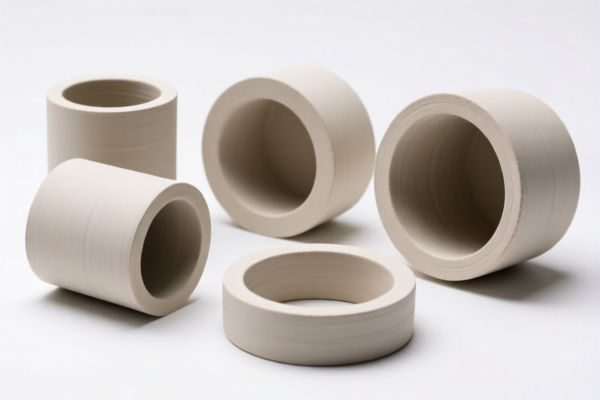
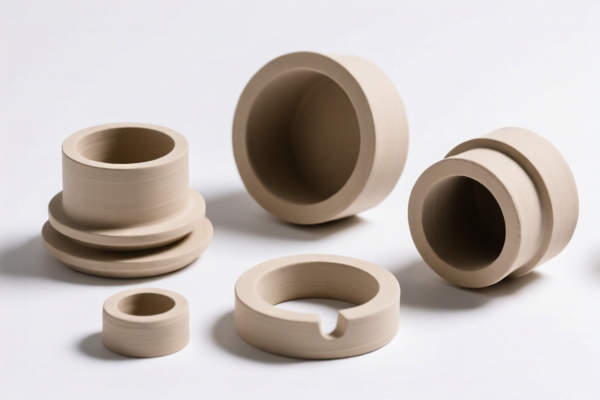
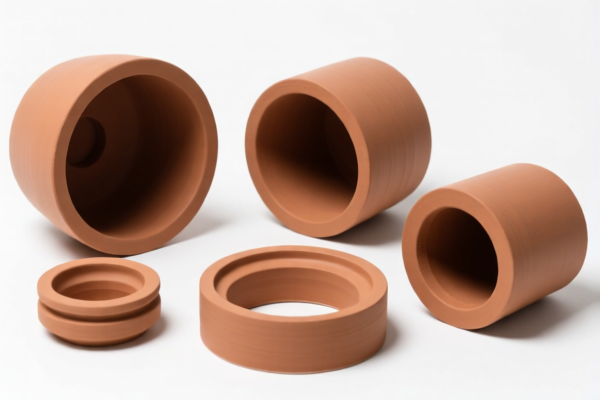

AI Analysis
🔥 Refractory Cement (耐火水泥)
🌐 HS Code Reference & Customs Clearance Guide | 2026 Latest Tariff Analysis | Professional Clearance Strategy
📌 I. Product Definition & Classification: Do You Truly Understand "Refractory Cement"?
Refractory cement is a specialized binding material used in the construction of high-temperature industrial equipment, such as furnaces, kilns, and boilers. It is not ordinary Portland cement. Its primary characteristic is heat resistance, often containing magnesium oxide (MgO), alumina, or other refractory aggregates.
In international trade, it is narrowly classified based on its chemical composition and specific function:
Refractory Cements (Chapter 38): Chemical products specifically formulated for refractory purposes. This is the most precise classification if the product is explicitly labeled and formulated as a "refractory cement."
Building Blocks/Bricks of Refractory Material (Chapter 68/69): If the product is sold as a pre-formed brick or block rather than a bulk powder/binder, it falls under ceramic or concrete制品. However, for "Cement" in powder form, Chapter 38 is generally preferred if it meets the specific chemical definition.
⚠️ Key Distinction Point:
- If the product is a powder/binder explicitly described as "Refractory Cement" with specific chemical properties → Chapter 38 (HS 3816).
- If the product is a general cement/concrete used for general construction but has some heat resistance without meeting specific refractory chemical criteria → Chapter 68 (HS 6810).
- If the product is a pre-formed brick/block → Chapter 69 (HS 6902) or 6810.
📦 II. HS Code Classification Details (2026 Latest Tariff Authority Comparison)
Based on the provided data, here are the valid HS Codes for "Refractory Cement" imported from China to the US:
| HS Code | Product Description | Application Scenario | Key Classification Logic |
|---|---|---|---|
3816.00.10.00 |
Refractory Cements | Refractory binders, kiln linings, industrial furnaces | ✅ Best Match: Exact name match. Specific chemical refractory product. |
6810.11.00.10 |
Articles of Cement, Concrete or Artificial Stone | Building blocks/bricks made of cement/concrete | ⚠️ Secondary Match: Inferred as cement/concrete product. If not specifically "refractory cement" chemically, but a general cement block. |
6810.11.00.70 |
Other Articles of Cement, Concrete or Artificial Stone | General cement/concrete refractory items | ⚠️ Secondary Match: Cement/concrete material, refractory function, but not specific chemical category. |
3816.00.20.10 |
Other Refractory Cements | Specialized refractory binders | ✅ Best Match: Name explicitly includes "Refractory Cement". |
6902.90.10.10 |
Other Refractory Brick, Block, Tile and Similar Refractory Brick of Siliceous Fossil Meals or of Similar Siliceous Earths | Refractory ceramic bricks/blocks | ⚠️ Inferred Match: If the product is actually a ceramic brick rather than a cement binder, this applies. |
🔍 Important Reminder:
-3816.00.10.00is the most accurate for "Refractory Cement" because the name matches exactly. It has the lowest base tariff (0%).
-6810and6902are used if the product is considered a "building material" (brick/block) rather than a "chemical binder." They have a higher base tariff (3.2% or 0% but different legal paths).
- Do NOT split the shipment into "cement" and "refractory additive" if it is a single pre-mixed product.
💰 III. 2026 Latest Tariff Rate Breakdown (Including Additional Taxes & Policy Surcharges)
✅ Applicable Country: United States (US)
✅ Country of Origin: China (CN)
✅ Effective Date: November 10, 2025 onwards
🎯 1. 3816.00.10.00 —— Refractory Cements (Most Recommended)
| Item | Details |
|---|---|
| Base Tariff | 0.0% (ad valorem) |
| Section 301 Tariff (USITC) | +25.0% (Added in 2018, still in effect) |
| Section 122 Tariff (IEEPA) | +10.0% (For Chinese products, effective from Nov 10, 2025) |
| Total Tariff Rate | 35.0% |
| Tax Calculation | CIF Value × 35% |
| De Minimis Exemption | ❌ Not Applicable (deny_de_minimis) |
| Legal Authority Path | IEEPA:9903.01.25 → USITC:3816.00.10.00 → FOOTNOTE:301 |
📌 Explanation:
- This code has a 0% base duty, making it the most cost-effective option if the product qualifies as a specific "refractory cement."
- The 25% Section 301 and 10% Section 122 are mandatory for Chinese-origin goods.
- Total burden: 35%.
🎯 2. 3816.00.20.10 —— Other Refractory Cements
| Item | Details |
|---|---|
| Base Tariff | 3.0% |
| Section 301 Tariff (USITC) | +25.0% |
| Section 122 Tariff (IEEPA) | +10.0% |
| Total Tariff Rate | 38.0% |
| Tax Calculation | CIF Value × 38% |
| De Minimis Exemption | ❌ Not Applicable |
| Legal Authority Path | IEEPA:9903.01.25 → USITC:3816.00.20.10 |
📌 Note:
- Slightly higher base duty (3%) than3816.00.10.00.
- Used if the product is a "other refractory cement" not specifically listed under.10.
🎯 3. 6810.11.00.10 & 6810.11.00.70 —— Cement/Concrete Articles
| Item | Details |
|---|---|
| Base Tariff | 3.2% |
| Section 301 Tariff (USITC) | +25.0% |
| Section 122 Tariff (IEEPA) | +10.0% |
| Total Tariff Rate | 38.2% |
| Tax Calculation | CIF Value × 38.2% |
| De Minimis Exemption | ❌ Not Applicable |
📌 Note:
- If customs does not accept the "Refractory Cement" classification (Chapter 38), they may reclassify it as a general cement article (Chapter 68).
- Higher total tariff (38.2%) compared to the best case (35%).
- Avoid this unless the product is definitely a pre-formed block and not a binder.
🎯 4. 6902.90.10.10 —— Other Refractory Bricks
| Item | Details |
|---|---|
| Base Tariff | 0.0% |
| Section 301 Tariff (USITC) | +25.0% |
| Section 122 Tariff (IEEPA) | +10.0% |
| Total Tariff Rate | 35.0% |
| Tax Calculation | CIF Value × 35% |
| De Minimis Exemption | ❌ Not Applicable |
📌 Note:
- Same total rate as the best Chapter 38 option.
- Only applicable if the product is a ceramic brick/block, not a powder cement.
🛠️ IV. Customs Clearance Practical Advice (Pitfall Avoidance Guide)
✅ 1. Required Documentation Checklist
| Document | Must Provide | Explanation |
|---|---|---|
| ✅ Product Specification Sheet | ✔️ | Must explicitly state "Refractory Cement," heat resistance temperature (e.g., 1200°C), and chemical composition (e.g., MgO content). |
| ✅ Safety Data Sheet (SDS) | ✔️ | Critical for chemical classification. Confirm it is not classified as a hazardous chemical under GHS. |
| ✅ Product Photos (Label & Packaging) | ✔️ | Show "Refractory Cement" clearly on the bag. Avoid ambiguous terms like "High-Temp Concrete." |
| ✅ Commercial Invoice | ✔️ | Use precise description: "Refractory Cement for Furnace Lining, Chemical Binder, HS 3816.00.10.00." |
| ✅ Certificate of Origin (CO) | ✔️ | To prove Chinese origin and apply appropriate tariffs. |
| ✅ Packing List | ✔️ | Detail net/gross weight. Do not mix with general building materials. |
✅ 2. Declaration Tips (Key Mantras)
🔥 "Name Precise, Chemical Specific, Chapter 38 First!"
| Situation | Correct Declaration | Incorrect Practice |
|---|---|---|
| Powder Binder for High-Temp Use | 3816.00.10.00 (Refractory Cement) |
Misreport as "General Cement" → 38.2% + Risk of Audit |
| Pre-formed Refractory Brick | 6902.90.10.10 or 6810 |
Reporting as "Cement" → Misclassification |
| General Construction Cement | 3002 or 2523 |
Using "Refractory" falsely → Fraud Risk |
| Mixed Shipment (Cement + Additives) | Separate Declaration | Combining into one HS Code → Higher Tax on Whole Shipment |
✅ 3. Special Cases
| Situation | Handling Advice |
|---|---|
| OEM Custom Refractory Cement | Provide client order + technical data sheet. Emphasize chemical formulation. |
| Product with "Concrete" in Name | If it is a binder, still try for 3816. If it is a pre-mixed concrete block, use 6810. |
| Refractory Material for Kiln Lining | Clearly state end-use: "Industrial Kiln Lining." Helps justify Chapter 38. |
| Sample Shipment | Even samples are subject to 35% duty. Do not assume de minimis ($800) applies to Chinese goods post-Nov 2025 if Section 122/301 applies. |
🌍 V. Global Market Comparison (2026 Latest)
| Country/Region | Recommended HS Code | Tariff (China Origin) | Certification Requirements | Remarks |
|---|---|---|---|---|
| 🇺🇸 USA | 3816.00.10.00 |
35% (25% Sec301 + 10% Sec122) | SDS, Safety Data | Highest barrier. 35% is mandatory. |
| 🇨🇳 China | 3816.00.10.00 |
0% (Domestic) | N/A | No import duty. |
| 🇪🇺 EU | 3816.00.10.00 |
0% (Most FTA) | REACH Compliance | No Section 301/122 equivalent. |
| 🇦🇺 Australia | 3816.00.10.00 |
5% | No special tariff | No Section 301. |
| 🇯🇵 Japan | 3816.00.10.00 |
0% | JIS Standard | No Section 301. |
📌 Conclusion:
- USA is the most difficult market for Chinese refractory cement due to Section 301 (25%) and Section 122 (10%).
- Total 35% tariff must be factored into pricing.
- EU, Japan, Australia offer lower or zero tariffs, making them more attractive for exports if origin is China.
📌 VI. Common Errors & Pitfall Guide (Lessons Learned)
❌ Error 1: Reporting "Refractory Cement" as "General Building Cement" (2523 or 3002)
👉 Consequence: Customs may reclassify to 3816 with a higher base rate or impose penalties for misdeclaration.
❌ Error 2: Using "Cement" without specifying "Refractory"
👉 Consequence: Customs may assign a default higher tariff code. Must be specific.
❌ Error 3: Assuming De Minimis ($800) applies
👉 Consequence: Section 122 and 301 tariffs APPLY to shipments under $800 from China. No exemption!
❌ Error 4: Mixing Refractory Cement with Non-Refractory Building Materials
👉 Consequence: The entire shipment may be audited, or non-refractory items may be taxed at higher rates.
✅ Correct Practice:
"Refractory Cement, Chemical Binder for Furnace Lining, MgO-based, Heat Resistant up to 1500°C, HS Code 3816.00.10.00"
🎯 VII. Conclusion: Precise Classification Saves Money!
🎯 Key Takeaway:
🔹 "Chapter 38 is King for Refractory Cement."
🔹 "Base 0%, Total 35% for US."
🔹 "No De Minimis for China under Section 122."
📌 Tips:
- If your product is OEM private label, ensure the technical data sheet matches the HS Code definition of "Refractory Cement."
- Apply for an Advance Ruling from CBP if the product is borderline between Chapter 38 and 68.
- Factor 35% into your FOB price for US shipments.
📣 Immediate Action:
📞 Contact a licensed customs broker + Provide SDS + Confirm HS Code 3816.00.10.00
🚀 Ensure smooth clearance, avoid penalties, and protect your margins!
✨ Professional Clearance Starts with Accurate Classification!
💼 Every percent of tariff matters!
Customer Reviews
About HS Code Classification
The Harmonized System (HS) is an internationally standardized nomenclature developed by the World Customs Organization (WCO) to classify traded products. Over 200 countries use the HS system as the basis for customs tariffs, trade statistics, and import/export regulations.
Each HS code follows a hierarchical structure:
- Chapter (2 digits) — Broad category of goods (e.g., Chapter 84: Machinery and Mechanical Appliances)
- Heading (4 digits) — More specific grouping within the chapter
- Subheading (6 digits) — Internationally standardized breakdown, used by all WCO member countries
- National subdivisions (8-10 digits) — Country-specific extensions for further classification, such as US HTSUS 10-digit codes
Correct HS code classification is essential for smooth customs clearance, accurate duty payment, and compliance with trade regulations. Misclassification can lead to customs delays, overpayment of duties, or penalties.
When importing from CN to US, the applicable tariff rates may include:
- Most-Favored-Nation (MFN) rate — The standard duty rate applied to WTO members
- General rate — Applied to countries without trade agreements
- Trade remedy duties — Additional tariffs such as Section 301 (anti-dumping), Section 232 (national security), or countervailing duties
The information provided on this page is for reference purposes only. For official classification, please consult with your local customs authority or a licensed customs broker.