Refractory Cement (Sulfur)
CN → US| HS Code | Tariff Rate | Origin | Destination | Doc |
|---|---|---|---|---|
| 6815910011 | 35.0% | CN | US | Official Doc |
| 3824999361 | 40.0% | CN | US | Official Doc |
| 3824993990 | 35.0% | CN | US | Official Doc |
| 6815994110 | 35.0% | CN | US | Official Doc |
| 3816002010 | 38.0% | CN | US | Official Doc |
Product Images
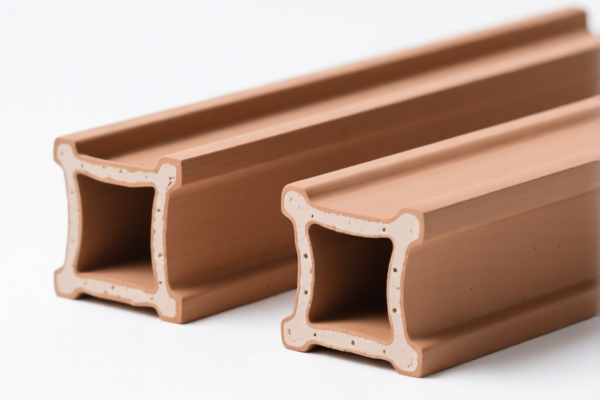
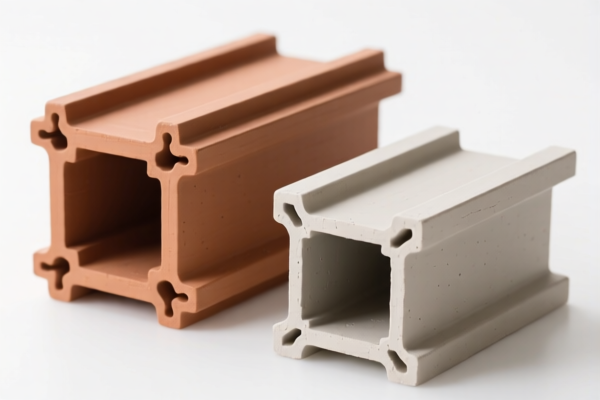
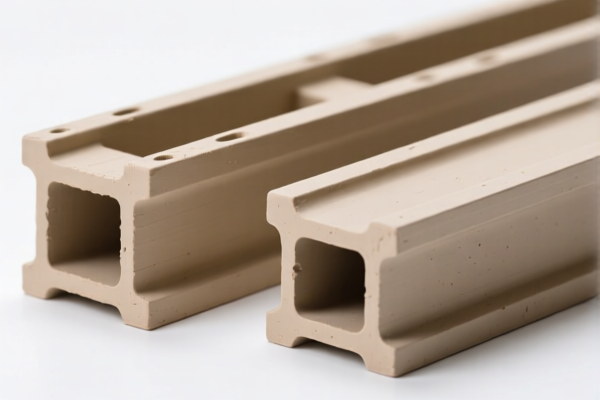
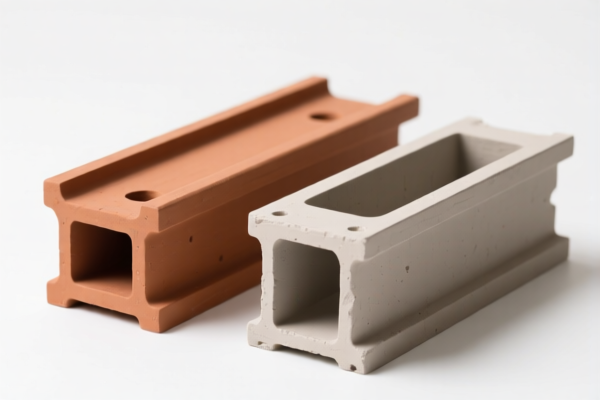
AI Analysis
🔥 Refractory Cement (Sulfur) — The “Heat-Resistant Glue” of Industrial Kilns
🌐 HS Code Reference & Customs Clearance Guide | 2026 Latest Tariff Analysis | Professional-Level Compliance Strategy
📌 I. Product Definition & Classification: Do You Really Understand “Sulfur-Based Refractory Cement”?
Refractory cement, specifically Sulfur-based, is a specialized binding material used in high-temperature industrial applications such as steel mills, foundries, and ceramics. Unlike traditional phosphate or aluminosilicate cements, sulfur cement relies on molten sulfur as the primary binder, offering rapid hardening and corrosion resistance.
In international trade, it is classified based on its chemical composition and primary function:
Chemical Preparations (HS Chapter 38): If classified as a mixture of sulfur with additives for binding, it falls under chemical preparations.
Mineral Products (HS Chapter 68): If primarily composed of mineral aggregates mixed with sulfur as a binder, it may fall under mineral products.
⚠️ Key Distinction Point:
- If the product is primarily a chemical mixture of sulfur and other agents for bonding →归入 HS Code 38xx
- If it is a mineral composite where sulfur is a minor binder →归入 HS Code 68xx
📦 II. HS Code Classification Details (2026 Latest Tariff Authority Comparison)
| HS Code | Product Description | Application Scenario | Binding Agent | Tax Rate (Total) |
|---|---|---|---|---|
6815.91.00.11 |
Phosphate Refractory Cement classified as mineral material制品 | Used in high-temp kilns, furnace linings | Phosphate (Mineral) | 35.0% |
3824.99.93.61 |
Sulfur-based Refractory Cement classified as chemical preparation | Industrial bonding, corrosion-resistant coatings | Sulfur + Additives | 40.0% |
3824.99.39.90 |
Refractory Phosphate Cement classified as chemical industry preparation | General refractory applications | Phosphate Mixture | 35.0% |
6815.99.41.10 |
Refractory Phosphate Cement classified as mineral/inorganic制品 | Furnace construction, industrial refractories | Phosphate (Mineral) | 35.0% |
3816.00.20.10 |
Refractory Concrete classified as refractory concrete | Heavy-duty industrial flooring, linings | Cementitious/Sulfur blend | 38.0% |
🔍 Key Reminder:
- “Sulfur-based” cement often falls under3824.99.93.61if it is chemically formulated as a sulfur mixture.
- “Phosphate-based” cements are typically classified under6815.91.00.11or3824.99.39.90depending on whether they are viewed as mineral or chemical products.
- Refractory concrete (3816.00.20.10) is a distinct category for ready-mix or pre-blended refractory aggregates.
💰 III. 2026 Latest Tariff Rate Breakdown (Including Additional Duties & Policy Surcharges)
✅ Applicable Country: United States (US)
✅ Origin: China (CN)
✅ Effective Date: November 10, 2025 onwards
🎯 1. 3824.99.93.61 —— Sulfur-Based Refractory Cement (Chemical Preparation)
| Item | Content |
|---|---|
| Base Tariff | 5.0% (ad valorem) |
| USITC Additional Duty | +25.0% (Section 301 Duties) |
| IEEPA Additional Duty | +10.0% (China-specific, effective Nov 2025) |
| Total Tariff Rate | 40.0% |
| Tax Calculation | CIF Value × 40% |
| De Minimis Exemption Available? | ❌ No (deny_de_minimis) |
| Legal Basis Path | IEEPA:9903.01.25 → IEEPA:9903.01.24 → USITC:3824.99.93.61 → FOOTNOTE:9903.88.01 |
📌 Explanation:
- The 25% USITC duty is under Section 301 of the Trade Act for Chinese goods.
- The 10% IEEPA duty is a separate national security tariff on Chinese products.
- Total 40% is a high-cost entry barrier; accurate classification is critical.
🎯 2. 6815.91.00.11 —— Phosphate Refractory Cement (Mineral Product)
| Item | Content |
|---|---|
| Base Tariff | 0.0% |
| USITC Additional Duty | +25.0% |
| IEEPA Additional Duty | +10.0% |
| Total Tariff Rate | 35.0% |
| Tax Calculation | CIF Value × 35% |
| De Minimis Exemption Available? | ❌ No (deny_de_minimis) |
| Legal Basis Path | IEEPA:9903.01.25 → IEEPA:9903.01.24 → USITC:6815.91.00.11 → FOOTNOTE:9903.88.01 |
📌 Note:
- Although the base tariff is 0%, the 35% total still represents a significant cost.
- This classification applies if the product is deemed a mineral制品 rather than a chemical preparation.
🎯 3. 3816.00.20.10 —— Refractory Concrete
| Item | Content |
|---|---|
| Base Tariff | 3.0% |
| USITC Additional Duty | +25.0% |
| IEEPA Additional Duty | +10.0% |
| Total Tariff Rate | 38.0% |
| Tax Calculation | CIF Value × 38% |
| De Minimis Exemption Available? | ❌ No (deny_de_minimis) |
| Legal Basis Path | IEEPA:9903.01.25 → IEEPA:9903.01.24 → USITC:3816.00.20.10 → FOOTNOTE:9903.88.01 |
📌 Note:
- Refractory concrete is a pre-mixed product, distinct from liquid or powder cements.
- Higher base tariff (3%) compared to pure cements, but still subject to same additional duties.
🛠️ IV. Customs Clearance Practical Advice (Battle-Tested Pitfall Avoidance Guide)
✅ 1. Required Documentation Checklist (Non-Negotiable)
| Document | Mandatory | Description |
|---|---|---|
| ✅ Product Specification Sheet | ✔️ | Must list chemical composition, sulfur content, binding agents, and melting point |
| ✅ Safety Data Sheet (SDS) | ✔️ | Critical for sulfur products (flammable hazard class) |
| ✅ Product Photos (with Label) | ✔️ | Clear view of packaging, batch number, and hazard warnings |
| ✅ Third-Party Test Report | ✔️ | ASTM, ISO, or equivalent standards for refractory performance |
| ✅ Commercial Invoice | ✔️ | Must state “Refractory Cement (Sulfur-Based)” precisely |
| ✅ Certificate of Origin (CO) | ✔️ | If non-China origin, may qualify for preferential treatment |
| ✅ Packing List | ✔️ | Detail gross/net weight, dimensions, and stacking instructions |
✅ 2. Declaration Tips (Key Mnemonic)
🔥 “Sulfur is Chemical, Phosphate is Mineral, Concrete is Mixed!”
| Scenario | Correct Declaration | Incorrect Action |
|---|---|---|
| Pure Sulfur-based binder | 3824.99.93.61 |
Misdeclare as mineral → 35% (underpayment risk) |
| Phosphate cement powder | 6815.91.00.11 |
Misdeclare as chemical → 40% (overpayment risk) |
| Pre-mixed refractory concrete | 3816.00.20.10 |
Split into components → 89.5% per item |
| Raw sulfur blocks (not cement) | 2503.00.00.00 |
Declare as cement → Wrong classification |
✅ 3. Special Circumstances Handling
| Scenario | Handling Advice |
|---|---|
| OEM Custom Formulation | Provide client order + formulation ratio to prove chemical nature |
| High-Sulfur Content (>50%) | Emphasize “Chemical Preparation” to justify 3824 |
| Mineral Aggregate Dominant | Emphasize “Mineral Product” to justify 6815 |
| Flammable Hazard | Declare UN Number (e.g., UN 1345) for shipping safety compliance |
🌍 V. Global Market Comparison (2026 Latest)
| Country/Region | Recommended HS Code | Tariff | Certification Requirement | Notes |
|---|---|---|---|---|
| 🇺🇸 USA | 3824.99.93.61 |
40% (China origin) | OSHA SDS, DOT Hazardous | Highest duty among major markets |
| 🇨🇳 China | 3824.99.93.61 |
5% | GB Standards | No additional duties |
| 🇪🇺 EU | 3824.99.93 |
6.5% | REACH, CLP | Moderate duty |
| 🇦🇺 Australia | 3824.99.93 |
5% | Australian Standard | No additional duties |
| 🇯🇵 Japan | 3824.99.93 |
6% | JIS Standards | No additional duties |
📌 Conclusion:
- USA imposes the highest total tariff (40%) due to Section 301 and IEEPA duties.
- China and EU markets are more favorable for sulfur cement exports.
- Consider supply chain diversification if targeting US market exclusively.
📌 VI. Common Errors & Pitfalls (Lessons Learned)
❌ Error 1: Declaring sulfur cement as “Phosphate Cement”
👉 Consequence: Wrong HS code → Potential penalty for misdeclaration
❌ Error 2: Ignoring hazardous material classification
👉 Consequence: Shipment rejected by carrier or customs → Delays and storage fees
❌ Error 3: Failing to provide SDS for sulfur-based products
👉 Consequence: Customs holds shipment for safety review → 2-4 weeks delay
❌ Error 4: Splitting pre-mixed concrete into individual components
👉 Consequence: Each component taxed separately → Total duty up to 89.5%
✅ Correct Approach:
“Refractory Cement, Sulfur-Based, High-Temperature Binding Agent, UN 1345, HS 3824.99.93.61, Origin: China”
🎯 VII. Conclusion: Professional Declaration, Save Time, Reduce Costs!
🎯 Remember the Mnemonic:
🔹 “Sulfur = Chemical (40%), Phosphate = Mineral (35%), Concrete = Mixed (38%)!”
🔹 “HS Code Determines Fate, 5% Difference, Declaration Mistake, Thousands in Penalty!”
📌 Pro Tip:
If your sulfur cement is originated from Vietnam, Mexico, Thailand, or Malaysia, you may apply for IEEPA Exemption, reducing tariff to 0%~5%.
Recommend Advance Ruling before shipment to avoid clearance risks.
📣 Immediate Action:
📞 Contact Professional Customs Broker + Provide Product Spec Sheet + Apply for HS Code Advance Ruling
🚀 Let your refractory cement, Clear Customs Smoothly, Export Efficiently, Profit Maximized!
✨ Professional Clearance Starts with Accurate Classification!
💼 Every Cent of Your Cost Deserves Precise Calculation!
Customer Reviews
About HS Code Classification
The Harmonized System (HS) is an internationally standardized nomenclature developed by the World Customs Organization (WCO) to classify traded products. Over 200 countries use the HS system as the basis for customs tariffs, trade statistics, and import/export regulations.
Each HS code follows a hierarchical structure:
- Chapter (2 digits) — Broad category of goods (e.g., Chapter 84: Machinery and Mechanical Appliances)
- Heading (4 digits) — More specific grouping within the chapter
- Subheading (6 digits) — Internationally standardized breakdown, used by all WCO member countries
- National subdivisions (8-10 digits) — Country-specific extensions for further classification, such as US HTSUS 10-digit codes
Correct HS code classification is essential for smooth customs clearance, accurate duty payment, and compliance with trade regulations. Misclassification can lead to customs delays, overpayment of duties, or penalties.
When importing from CN to US, the applicable tariff rates may include:
- Most-Favored-Nation (MFN) rate — The standard duty rate applied to WTO members
- General rate — Applied to countries without trade agreements
- Trade remedy duties — Additional tariffs such as Section 301 (anti-dumping), Section 232 (national security), or countervailing duties
The information provided on this page is for reference purposes only. For official classification, please consult with your local customs authority or a licensed customs broker.