Refractory Concrete (Alkali Resistant)
CN → US| HS Code | Tariff Rate | Origin | Destination | Doc |
|---|---|---|---|---|
| 3816002050 | 38.0% | CN | US | Official Doc |
| 6903900050 | 35.0% | CN | US | Official Doc |
| 6810110010 | 38.2% | CN | US | Official Doc |
| 6810990080 | 35.0% | CN | US | Official Doc |
| 3816002010 | 38.0% | CN | US | Official Doc |
Product Images
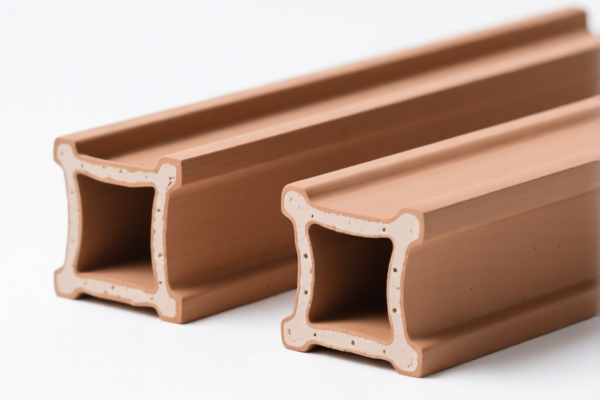
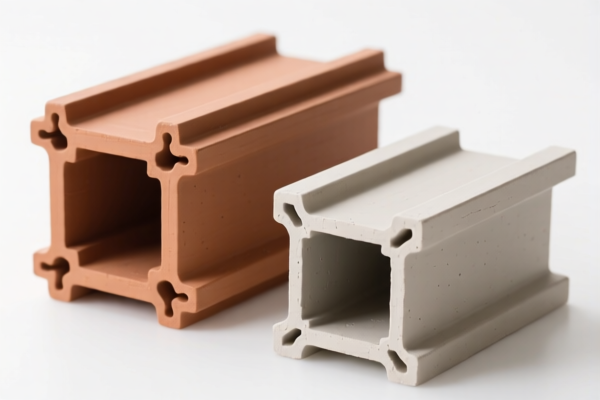
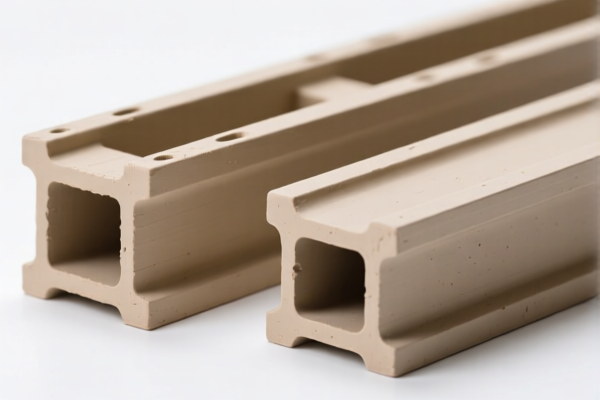
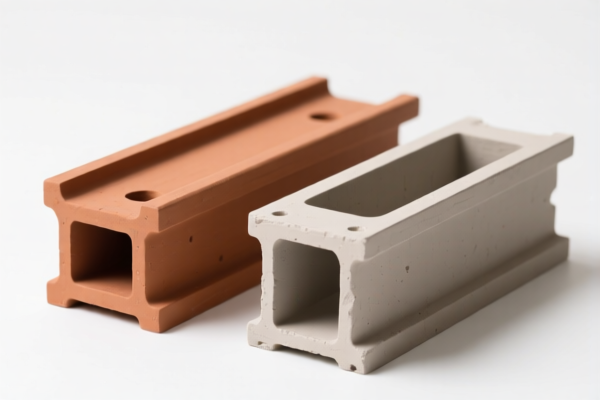
AI Analysis
🏗️ Refractory Concrete (Alkali Resistant)
🌐 HS Code Reference & Customs Clearance Guide | 2026 Latest Tariff Analysis | Professional Clearance Strategy
📌 I. Product Definition & Classification: What Exactly is "Refractory Concrete"?
Refractory Concrete (specifically Alkali Resistant) is a specialized construction material designed to withstand extreme temperatures and corrosive chemical environments. Unlike standard Portland cement concrete, this material is composed of refractory aggregates and a chemical binder (often cementitious or hydraulic) formulated to resist alkali attack.
In international trade, it is categorized based on its primary material attribute and form. It sits at the intersection of "Chemical Products" (Refers to refractory cements) and "Ceramic/Cement Products" (Refers to pre-mixed concrete/mortar blocks).
⚠️ Critical Distinction Point:
- If classified as a "Refractory Cement/Paste": Falls under 3816 (Chemical preparations for making cements).
- If classified as "Refractory Ceramic Articles": Falls under 6903 (Ceramics).
- If classified as "Cement/Concrete Blocks": Falls under 6810 (Cement/Concrete articles).
📦 II. HS Code Classification Details (2026 Latest Tariff Authority Comparison)
Based on the product description "Refractory Concrete (Alkali Resistant)", here are the four potential HS Codes with precise explanations for their classification logic:
| HS Code | Product Description | Classification Logic (Why?) | Material Attribute |
|---|---|---|---|
3816.00.20.50 |
Refractory Concrete (Refractory Cement) | Logic: Classified under "Refractory cements, mortars, concretes". Matches the "Concrete" material attribute directly. | ✅ Refractory Cement/Mortar |
6903.90.00.50 |
Other Refractory Ceramic Articles | Logic: Classified as "Refractory material". Matches the "Other refractory ceramic articles" material property. | ✅ Refractory Ceramic |
6810.11.00.10 |
Cement, Concrete or Artificial Stone Articles: Blocks, Bricks | Logic: "Concrete" corresponds to cement/concrete; "Refractory" matches the material feature of building blocks/bricks. | ✅ Cement/Concrete Block |
6810.99.00.80 |
Cement, Concrete or Artificial Stone Articles: Other | Logic: Material is refractory concrete, falling under the category of "Cement, concrete or artificial stone articles", fitting the "Other" definition. | ✅ Other Cement/Concrete Product |
3816.00.20.10 |
Refractory Concrete (Specific Refractory) | Logic: The product name "Refractory Concrete" matches the material "Refractory... Concrete" exactly. | ✅ Refractory Concrete (Specific) |
🔍 Key Reminder:
- The choice of HS Code depends heavily on the physical form (powder vs. pre-mixed blocks) and the binder type (chemical vs. cementitious).
- 3816 is often used for dry mixes or specialized refractory cements.
- 6903 is used if the product is fired ceramic-based.
- 6810 is used if it is a pre-formed cement/concrete structure (blocks/pipes).
💰 III. 2026 Latest Tariff Rate Details (Including Surtaxes, Policy Add-ons)
✅ Applicable Country: United States (US)
✅ Country of Origin: China (CN)
✅ Effective Time: 2025/2026 (Current Regulations)
🎯 1. HS Code 3816.00.20.50 & 3816.00.20.10 —— Refractory Concrete/Cement
| Item | Content |
|---|---|
| Base Tariff | 3.0% (Ad Valorem) |
| Section 301 Surtax | +25.0% (Trade Act of 1974, Section 301) |
| Section 122 Tariff | +10.0% (Specific 122 Clause for Certain Chemicals/Refractories) |
| Total Tax Rate | 38.0% |
| Tax Calculation | CIF Value × 38.0% |
| De Minimis Eligibility | ❌ No (Deny De Minimis) |
| Legal Basis Path | USITC:3816.00.20.XX → FOOTNOTE:301(25%) + 122 Clause(10%) |
📌 Explanation:
- The 3.0% is the standard Most Favored Nation (MFN) duty.
- The 25% is the Section 301 tariff imposed on Chinese chemical products.
- The 10% is an additional specific tariff under "122 clauses" targeting refractory materials.
- Total: 38%. This is a high-cost category. Accurate classification is vital to avoid overpayment or penalties.
🎯 2. HS Code 6903.90.00.50 —— Other Refractory Ceramic Articles
| Item | Content |
|---|---|
| Base Tariff | 0.0% (Ad Valorem) |
| Section 301 Surtax | +25.0% |
| Section 122 Tariff | +10.0% |
| Total Tax Rate | 35.0% |
| Tax Calculation | CIF Value × 35.0% |
| De Minimis Eligibility | ❌ No |
| Legal Basis Path | USITC:6903.90.00.50 → FOOTNOTE:301(25%) + 122 Clause(10%) |
📌 Note:
- Base duty is 0%, which is advantageous.
- However, the 25% + 10% surtaxes still apply, bringing the total to 35%.
- Savings: 3% lower than3816codes. If the product can be legally justified as a "Ceramic" article, this is the preferred code.
🎯 3. HS Code 6810.11.00.10 —— Cement/Concrete Blocks
| Item | Content |
|---|---|
| Base Tariff | 3.2% (Ad Valorem) |
| Section 301 Surtax | +25.0% |
| Section 122 Tariff | +10.0% |
| Total Tax Rate | 38.2% |
| Tax Calculation | CIF Value × 38.2% |
| De Minimis Eligibility | ❌ No |
| Legal Basis Path | USITC:6810.11.00.10 → FOOTNOTE:301(25%) + 122 Clause(10%) |
📌 Explanation:
- This code applies if the product is pre-formed blocks or bricks.
- The base rate is slightly higher (3.2%) than3816, resulting in the highest total rate (38.2%).
- Use only if the product is physically a block/brick and not a mix/cement.
🎯 4. HS Code 6810.99.00.80 —— Other Cement/Concrete Articles
| Item | Content |
|---|---|
| Base Tariff | 0.0% (Ad Valorem) |
| Section 301 Surtax | +25.0% |
| Section 122 Tariff | +10.0% |
| Total Tax Rate | 35.0% |
| Tax Calculation | CIF Value × 35.0% |
| De Minimis Eligibility | ❌ No |
| Legal Basis Path | USITC:6810.99.00.80 → FOOTNOTE:301(25%) + 122 Clause(10%) |
📌 Note:
- Similar to6903, this code has a 0% base rate.
- Total rate is 35%.
- Applicable for "Other" cement/concrete products that are not blocks (e.g., pipes, special shapes).
🛠️ IV. Customs Clearance Practical Advice (Battle-Tested Pitfall Guide)
✅ 1. Preparation Checklist (Non-Negotiable)
| Document | Required | Description |
|---|---|---|
| ✅ Product Specification Sheet | ✔️ | Must detail chemical composition, alkali resistance level, refractory temperature rating. |
| ✅ Material Safety Data Sheet (MSDS) | ✔️ | Crucial for chemical products (HS 3816) to confirm hazardous/non-hazardous status. |
| ✅ Product Photos | ✔️ | Show form: Is it a powder bag? Pre-mixed blocks? Pipe sections? |
| ✅ Commercial Invoice | ✔️ | Must clearly state "Refractory Concrete (Alkali Resistant)" and HS Code. |
| ✅ Certificate of Origin (CO) | ✔️ | Required to verify Chinese origin for surtax calculations. |
| ✅ Packaging List | ✔️ | Detail net/gross weight, volume, and number of units. |
✅ 2. Declaration Tips (Key Mantras)
🔥 “Form Dictates Code, Name Dictates Rate!”
| Scenario | Correct Declaration | Wrong Practice |
|---|---|---|
| Dry Mix Powder | 3816.00.20.50 (Refractory Cement) |
Declaring as "Ceramic" (6903) → Risk of reclassification + penalty. |
| Pre-formed Blocks | 6810.11.00.10 (Concrete Blocks) |
Declaring as "Cement" (3816) → Unjustified base duty difference. |
| Ceramic-Based Refractory | 6903.90.00.50 (Refractory Ceramic) |
Declaring as "Cement" → Higher base duty. |
| Special Shapes (Pipes) | 6810.99.00.80 (Other Concrete) |
Declaring as "Blocks" (6810.11) → Classification error. |
✅ 3. Special Circumstances Handling
| Situation | Handling Advice |
|---|---|
| Alkali Resistance Proof | Provide lab test reports (e.g., ASTM C1260) to justify "Alkali Resistant" claim. |
| Mixed Containers | If container has both powder and blocks, split declaration is mandatory. Mixed codes increase inspection risk. |
| OEM Customization | Provide customer specifications to prove intended use (e.g., "for steel furnace lining"). |
| Labeling | Ensure English labels include "Refractory", "Alkali Resistant", and technical specs. |
🌍 V. Global Market Clearance Comparison (2026 Latest)
| Country/Region | Recommended HS Code | Tariff (CN Origin) | Certification Req. | Notes |
|---|---|---|---|---|
| 🇺🇸 USA | 3816.00.20.50 / 6903.90.00.50 |
35% - 38.2% | None specific | High surtaxes (301 + 122). |
| 🇨🇳 China | 3825.49.00.00 / 6903.20.00.00 |
0% - 5% | GB Standards | Low import duty, high technical bar. |
| 🇪🇺 EU | 3824.71.00 / 6903.90.00 |
0% - 2.7% | REACH / CLP | Strict chemical registration. |
| 🇬🇧 UK | 3824.71.00 / 6903.90.00 |
0% - 2.7% | UKCA | Post-Brexit alignment with EU. |
| 🇯🇵 Japan | 3824.71.00 / 6903.90.00 |
0% - 5.3% | JIS Standards | High quality scrutiny. |
📌 Conclusion:
- USA is the most expensive market due to Section 301 and Section 122 surtaxes.
- EU/UK/Japan have lower base tariffs but stricter chemical/environmental regulations (REACH, etc.).
- China has low duties but high technical barriers for domestic sales.
📌 VI. Common Errors & Pitfall Guide (Lessons Learned)
❌ Error 1: Declaring "Refractory Concrete" as "Standard Cement" (3016)
👉 Consequence: Wrong HS Code → Reclassification penalty + Back taxes. Standard cement has different duties and regulations.
❌ Error 2: Ignoring "Alkali Resistant" specification
👉 Consequence: Customs may classify as "Standard Concrete" (6810) if specs are unclear → Higher base duty (3.2%).
❌ Error 3: Misclassifying "Dry Mix" as "Ceramic" (6903)
👉 Consequence: If not fired ceramic, it will be rejected → Demurrage charges + Return.
❌ Error 4: Missing "Section 122" Tariff Awareness
👉 Consequence: Underestimating total cost by 10% → Profit margin erosion.
✅ Correct Approach:
"Refractory Concrete Mix, Alkali Resistant, For Industrial Furnace Lining, Powder Form, HS 3816.00.20.50"
🎯 VII. Conclusion: Professional Declaration, Cost Optimization
🎯 Remember the Mantra:
🔹 "Powder = 3816, Blocks = 6810, Ceramic = 6903"
🔹 "Surtax is 35-38%, Declare Accurately, Avoid Penalties"
🔹 "Alkali Resistant? Prove It! Specs are King."
📌 Pro Tip:
If your product is not made in China (e.g., Vietnam, Thailand), you may avoid Section 301 tariffs (25%) and Section 122 tariffs (10%).
Recommendation: Apply for a Pre-Import Ruling from US CBP to confirm the HS Code and duty rate before shipment. This ensures certainty and avoids surprise costs at customs.
📣 Take Action Now:
📞 Contact a Customs Broker + Provide MSDS & Specs + Apply for Pre-Ruling
🚀 Ensure Smooth Clearance, Optimize Costs, Expand Markets!
✨ Professional Clearance Starts with Accurate Classification!
💼 Every Percent of Duty Matters!
Customer Reviews
About HS Code Classification
The Harmonized System (HS) is an internationally standardized nomenclature developed by the World Customs Organization (WCO) to classify traded products. Over 200 countries use the HS system as the basis for customs tariffs, trade statistics, and import/export regulations.
Each HS code follows a hierarchical structure:
- Chapter (2 digits) — Broad category of goods (e.g., Chapter 84: Machinery and Mechanical Appliances)
- Heading (4 digits) — More specific grouping within the chapter
- Subheading (6 digits) — Internationally standardized breakdown, used by all WCO member countries
- National subdivisions (8-10 digits) — Country-specific extensions for further classification, such as US HTSUS 10-digit codes
Correct HS code classification is essential for smooth customs clearance, accurate duty payment, and compliance with trade regulations. Misclassification can lead to customs delays, overpayment of duties, or penalties.
When importing from CN to US, the applicable tariff rates may include:
- Most-Favored-Nation (MFN) rate — The standard duty rate applied to WTO members
- General rate — Applied to countries without trade agreements
- Trade remedy duties — Additional tariffs such as Section 301 (anti-dumping), Section 232 (national security), or countervailing duties
The information provided on this page is for reference purposes only. For official classification, please consult with your local customs authority or a licensed customs broker.