Refractory Concrete High Density
CN → US| HS Code | Tariff Rate | Origin | Destination | Doc |
|---|---|---|---|---|
| 6810110010 | 38.2% | CN | US | Official Doc |
| 6902901010 | 35.0% | CN | US | Official Doc |
| 6810110070 | 38.2% | CN | US | Official Doc |
| 3816001000 | 35.0% | CN | US | Official Doc |
| 3816002050 | 38.0% | CN | US | Official Doc |
| 6902905010 | 35.0% | CN | US | Official Doc |
Product Images
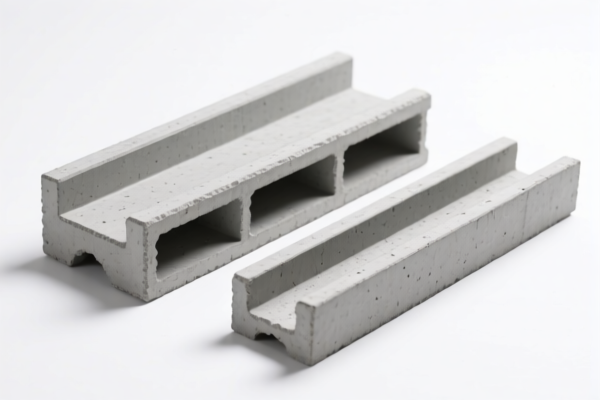
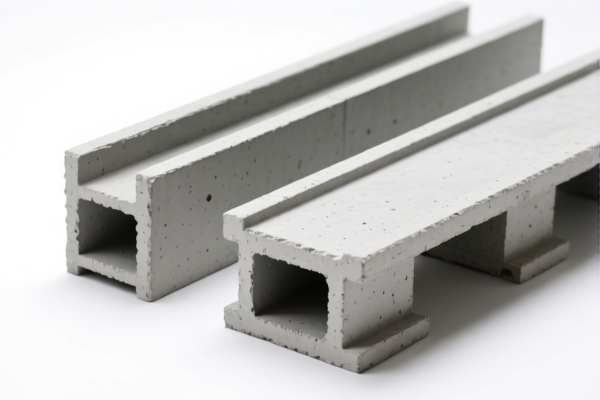
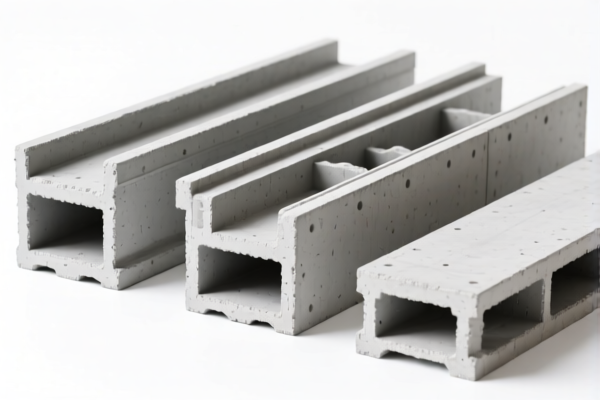
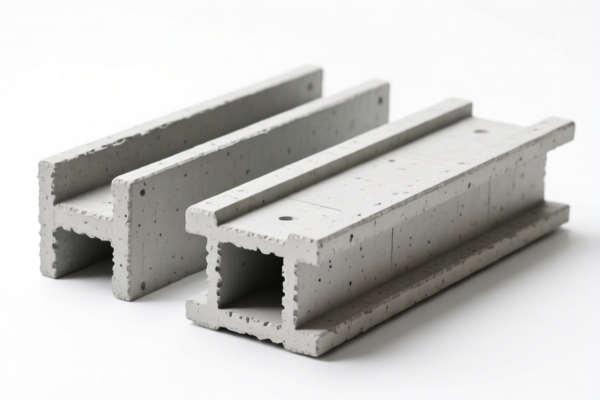
AI Analysis
🧱 Refractory Concrete High Density (Refractory Castable)
🌐 HS Code Reference & Customs Clearance Guide | 2026 Latest Tariff Analysis | Professional Clearance Strategy
📌 I. Product Definition & Classification: What is "High Density Refractory Concrete"?
High-density refractory concrete (often referred to as Refractory Castable or Refractory Concrete) is a specialized inorganic material used in high-temperature industrial applications. Unlike standard structural concrete, it is designed to withstand extreme heat, chemical erosion, and mechanical stress.
Key Characteristics: * Material Basis: Calcium aluminate cement, high-purity alumina, or silicon carbide combined with fine and coarse aggregates. * Form: Typically supplied as a dry mix (powder + aggregates) to be mixed with water on-site, or pre-cast blocks/bricks. * Application: Lining for kilns, furnaces, boilers, incinerators, and blast furnaces.
⚠️ Critical Distinction for Customs:
- Raw/Unfired Shapes (Blocks/Bricks): If the product is in the form of shaped blocks or bricks, even if unfired, it often falls under Chapter 68 (Articles of Stone or Similar) or Chapter 69 (Ceramic Products) depending on density and composition.
- Powder/Mix: If sold as a dry mix for casting, it may fall under Chapter 38 (Miscellaneous Chemical Products) if it has specific refractory properties defined as "preparations for making foundry moulds or cores" or similar.
- Fired Refractory Ceramics: If fired, it strictly falls under Chapter 69 (6902).🔍 Key Classification Point:
- Concrete-based (Unfired/Pre-cast): Usually 6810 or 6902.
- Ceramic-based (Fired): Strictly 6902.
- Chemical Preparations (Dry Mix with specific binding agents): Potentially 3816.
📦 II. HS Code Classification Details (2026 Latest Tariff Authority Comparison)
Based on the provided data, the following HS Codes are relevant for "Refractory Concrete High Density." Each code reflects a different interpretation of the product's state (brick vs. mix) and material basis.
| HS Code | Product Description | Application Scenario | Material/Form Basis |
|---|---|---|---|
6810.11.00.10 |
Concrete/Artificial Stone Building Blocks/Bricks | High-density refractory blocks made from concrete/artificial stone, used in construction or industrial lining. | ✅ Concrete/Artificial Stone; Shaped as Blocks/Bricks |
6902.90.10.10 |
Other Refractory Ceramic Building Products | Inferred as refractory building products based on shape and use. Likely unfired or semi-fired refractory ceramics. | ✅ Refractory Ceramic; Based on Shape & Use |
6810.11.00.70 |
Concrete Building Units (Other) | Concrete-based architectural or industrial units, classified under "Other" in the brick/block category. | ✅ Concrete; Building Units Category |
3816.00.10.00 |
Preparations for Making Refractory Products | Dry chemical mixtures or binders used to create refractory structures. Fits the definition of "concrete-like" refractory preparations. | ✅ Concrete-like Material; Refractory Purpose |
3816.00.20.50 |
Refractory Preparations (Specific) | Chemical preparations with refractory characteristics matching concrete-like materials. | ✅ Refractory Nature + Concrete Material |
6902.90.50.10 |
Other Ceramic Refractory Articles | Ceramic refractory articles where the material is inorganic and the use is consistent with refractory attributes. | ✅ Inorganic Material; Refractory Attribute |
🔍 Key Reminder:
-6810vs.6902: The distinction often lies in whether the product is considered "stone/concrete" (68) or "ceramic" (69). High-density refractory concrete often straddles this line.
-3816: Used for chemical preparations (mixes) that are not yet in a solid block form but have specific refractory properties.
- Customs Authorities may interpret "High Density" differently. If it's a pre-cast block, 6810 or 6902 is more likely than 3816.
💰 III. 2026 Latest Tariff Rate Breakdown (Including Additional Taxes, Policy Surcharges)
✅ Applicable Country: United States (US)
✅ Origin: China (CN)
✅ Effective Date: From November 10, 2025 (including subsequent imports)
🎯 1. 6810.11.00.10 & 6810.11.00.70 —— Concrete Building Blocks/Bricks
| Item | Content |
|---|---|
| Base Tariff Rate | 3.2% (ad valorem) |
| USITC Additional Tax | +25.0% (Under Section 301) |
| Section 122 Tax | +10.0% (US IEEPA surcharge on Chinese goods) |
| Total Tax Rate | 38.2% |
| Tax Calculation | CIF Value × 38.2% |
| De Minimis Exemption | ❌ Not Eligible (deny_de_minimis) |
| Legal Basis Path | USITC:6810.11.00.10 → FOOTNOTE:301 → IEEPA:10% |
📌 Explanation:
- Base 3.2%: Standard MFN (Most Favored Nation) rate for concrete articles.
- 25% Section 301: Standard USITC surcharge on many Chinese manufactured goods.
- 10% Section 122/IEEPA: Additional surcharge specifically targeting Chinese imports.
- Total 38.2%: A significant cost factor. Must be factored into landed cost calculations.
🎯 2. 6902.90.10.10 & 6902.90.50.10 —— Ceramic Refractory Products
| Item | Content |
|---|---|
| Base Tariff Rate | 0.0% |
| USITC Additional Tax | +25.0% |
| Section 122 Tax | +10.0% |
| Total Tax Rate | 35.0% |
| Tax Calculation | CIF Value × 35.0% |
| De Minimis Exemption | ❌ Not Eligible |
| Legal Basis Path | USITC:6902.90.10.10 → FOOTNOTE:301 → IEEPA:10% |
📌 Note:
- Base 0%: Ceramic products often have lower base tariffs.
- Surcharge Impact: The 25% + 10% surcharges raise the total to 35%, which is 3.2% cheaper than the concrete classification (6810).
- Classification Strategy: If the product can be legally classified as "Ceramic" (6902) rather than "Concrete" (6810), it saves 3.2% on the CIF value.
🎯 3. 3816.00.10.00 & 3816.00.20.50 —— Refractory Chemical Preparations
| Item | Content |
|---|---|
| Base Tariff Rate | 0.0% or 3.0% (varies by specific sub-code) |
| USITC Additional Tax | +25.0% |
| Section 122 Tax | +10.0% |
| Total Tax Rate | 35.0% or 38.0% |
| Tax Calculation | CIF Value × 35.0% or 38.0% |
| De Minimis Exemption | ❌ Not Eligible |
| Legal Basis Path | USITC:3816.00.10.00 → FOOTNOTE:301 → IEEPA:10% |
📌 Note:
-3816.00.10.00: Base 0% → Total 35.0%.
-3816.00.20.50: Base 3.0% → Total 38.0%.
- Strategy: If your product is a dry mix (not pre-cast),3816.00.10.00offers the lowest total tax rate (35.0%). However, customs may challenge this if the mix is simply "cement + aggregate" without specific chemical refractory additives defined as a "preparation."
🛠️ IV. Customs Clearance Practical Advice (Real-World Pitfall Guide)
✅ 1. Document Checklist (Mandatory)
| Document | Required | Description |
|---|---|---|
| ✅ Product Specification Sheet | ✔️ | Must detail: Density (kg/m³), Alumina content (%), Compressive Strength, Usage Temperature. |
| ✅ Material Safety Data Sheet (MSDS) | ✔️ | To confirm chemical composition and classify as non-hazardous. |
| ✅ Product Photos | ✔️ | Clear images of the product form (Blocks, Bricks, or Bags of Mix). |
| ✅ Invoice & Packing List | ✔️ | Must clearly state: "Refractory Concrete," "High Density," "Castable," or "Bricks." |
| ✅ Certificate of Origin (CO) | ✔️ | Proof of Chinese origin to apply correct surcharges. |
| ✅ Third-Party Test Report | ✔️ | Lab report confirming refractory properties (e.g., Pyrometric Cone Equivalent). |
✅ 2. Declaration Tips (Key Mnemonic)
🔥 "Form Dictates Code, Density Affects Base, Mix vs. Block is the Key!"
| Scenario | Correct HS Code | Incorrect Declaration | Consequence |
|---|---|---|---|
| Pre-cast Blocks/Bricks | 6810.11.00.10 or 6902.90.10.10 |
Declare as "Chemical Mix" | ❌ Customs rejects; reclassify to 38.2% or 35%. |
| Dry Mix (Powder + Aggregate) | 3816.00.10.00 |
Declare as "Concrete Block" | ❌ Customs rejects; may apply 38.2% or deny entry. |
| High-Density Ceramic Brick | 6902.90.10.10 |
Declare as "Concrete" (6810) |
⚠️ Misses 3.2% savings (35% vs 38.2%). |
| Generic "Refractory Material" | Ambiguous | Vague description | 🚫 High risk of audit, delays, and penalties. |
✅ 3. Special Case Handling
| Scenario | Handling Advice |
|---|---|
| Mixed Shipment (Blocks + Mix) | Declare separately. Do not combine. Different HS Codes, different tax rates. |
| Custom-Bound Refractory | Provide engineering drawings showing the product is shaped specifically for a furnace. Supports 6902 or 6810 classification. |
| "High Density" Claim | Provide test reports showing density > 2.0 g/cm³ (or specific threshold). This supports "Refractory" classification over standard concrete. |
| Fired vs. Unfired | If fired, must be 6902. If unfired, can be 6810 or 3816. Misclassification leads to major penalties. |
🌍 V. Global Market Customs Comparison (2026 Latest)
| Country/Region | Recommended HS Code | Tariff (China Origin) | Certification Requirements | Notes |
|---|---|---|---|---|
| 🇺🇸 USA | 6810.11.00.10 or 6902.90.10.10 |
38.2% or 35.0% | N/A | High surcharges (301 + IEEPA) |
| 🇨🇳 China | 6810.11.00 or 6902.90.10 |
0% - 5% | CCC (if applicable) | Low base tariffs |
| 🇪🇺 EU | 6810.19 or 6902.90 |
0% - 6.5% | REACH + CE | No Section 301 equivalent |
| 🇮🇳 India | 6810.91 or 6902.10 |
7.5% - 15% | BIS Certification | Varies by density |
📌 Conclusion:
- USA is the highest-cost market due to叠加 tariffs (301 + IEEPA).
- Classification Strategy is Critical: Choosing6902(35%) over6810(38.2%) saves 3.2%. Choosing3816(35%) over6810(38.2%) also saves 3.2%.
- European markets are significantly cheaper, with no punitive surcharges.
📌 VI. Common Errors & Pitfalls (Lessons Learned)
❌ Error 1: Declaring "Refractory Concrete" as "Building Materials" (6810.99)
👉 Consequence: Incorrect tax rate; potential audit for misclassification.
❌ Error 2: Claiming "De Minimis" for high-density blocks
👉 Consequence: Denied. Refractory products from China are explicitly excluded from de minimis exemptions under Section 301/IEEPA.
❌ Error 3: Ignoring the "Fired" vs. "Unfired" distinction
👉 Consequence: Customs may reclassify unfired blocks as ceramics (6902) or vice versa, leading to duty discrepancies and delays.
❌ Error 4: Vague Description ("Concrete Mix")
👉 Consequence: CBP may assign a higher default duty rate or require additional documentation, causing delays.
✅ Correct Approach:
"High-Density Refractory Castable, Unfired, Alumina-Based, 2.8 g/cm³ Density, for Industrial Furnace Lining"
🎯 VII. Conclusion: Precision Classification, Cost Optimization
🎯 Remember the Mnemonic:
🔹 "Blocks vs. Mix, Code Differs; 38.2% vs. 35%, Savings Matter!"
🔹 "Surcharges are Fixed, Classification is Key, Don't Pay 38% if 35% is Legal!"
📌 Pro Tip:
If your product is a dry mix with specific chemical binders, argue for 3816.00.10.00 (35%). If it is a pre-cast block, argue for 6902.90.10.10 (35%) if it meets ceramic criteria, or 6810.11.00.10 (38.2%) if it is strictly concrete-based.
Action Plan:
1. Obtain Test Reports confirming density and chemical composition.
2. Consult Customs Broker to decide between 6810, 6902, or 3816.
3. Apply for Advance Ruling if the product is new to the US market.
📣 Immediate Action:
📞 Contact a licensed customs broker + Provide product specs + Verify HS Code classification
🚀 Avoid 38.2% if 35% is eligible. Optimize your landed cost!
✨ Professional Clearance Starts with Accurate Classification!
💼 Every 3.2% Savings Counts!
Customer Reviews
About HS Code Classification
The Harmonized System (HS) is an internationally standardized nomenclature developed by the World Customs Organization (WCO) to classify traded products. Over 200 countries use the HS system as the basis for customs tariffs, trade statistics, and import/export regulations.
Each HS code follows a hierarchical structure:
- Chapter (2 digits) — Broad category of goods (e.g., Chapter 84: Machinery and Mechanical Appliances)
- Heading (4 digits) — More specific grouping within the chapter
- Subheading (6 digits) — Internationally standardized breakdown, used by all WCO member countries
- National subdivisions (8-10 digits) — Country-specific extensions for further classification, such as US HTSUS 10-digit codes
Correct HS code classification is essential for smooth customs clearance, accurate duty payment, and compliance with trade regulations. Misclassification can lead to customs delays, overpayment of duties, or penalties.
When importing from CN to US, the applicable tariff rates may include:
- Most-Favored-Nation (MFN) rate — The standard duty rate applied to WTO members
- General rate — Applied to countries without trade agreements
- Trade remedy duties — Additional tariffs such as Section 301 (anti-dumping), Section 232 (national security), or countervailing duties
The information provided on this page is for reference purposes only. For official classification, please consult with your local customs authority or a licensed customs broker.