Refractory Material Binder Mixture
CN → US| HS Code | Tariff Rate | Origin | Destination | Doc |
|---|---|---|---|---|
| 3824500050 | 35.0% | CN | US | Official Doc |
| 3824992100 | 35.0% | CN | US | Official Doc |
| 381590 | 0.0% | CN | US | Official Doc |
| 381400 | 0.0% | CN | US | Official Doc |
Product Images
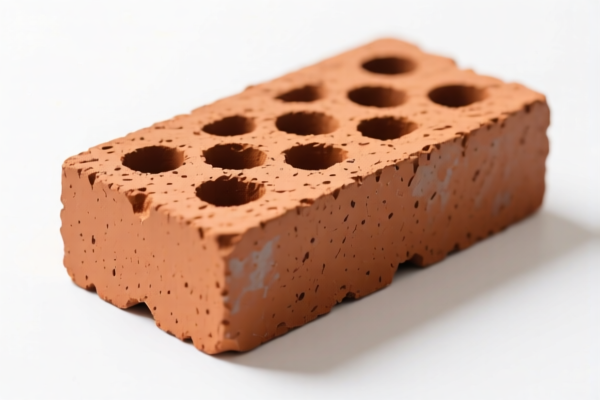
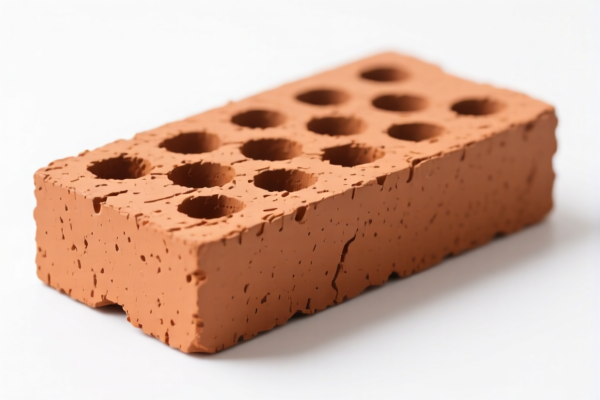
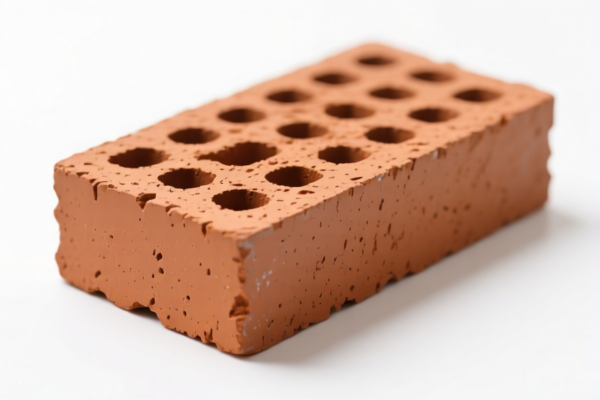
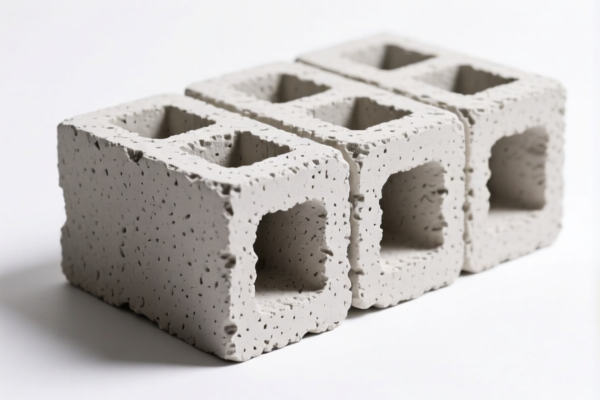
AI Analysis
🧪 Refractory Material Binder Mixture
🌐 HS Code Classification & Customs Clearance Guide | 2026 Tax Tariff Analysis | Professional Logistics Strategy
📌 One, Product Definition & Classification: What Exactly Is This "Binder"?"
A Refractory Material Binder Mixture is a critical chemical component used in high-temperature industrial applications. Its primary function is to bind refractory aggregates (such as bricks, mortars, or concrete) together, ensuring structural integrity under extreme heat.
In international trade, these products are categorized based on their chemical composition, specific application (e.g., foundry molds vs. general refractory use), and presence of aromatic substances. Misclassification here can lead to significant tariff discrepancies, especially given the complex trade policies between China and the US/EU.
⚠️ Key Distinction Point:
- If the binder is specifically for foundry molds or cores → Look at Chapter 38.24.
- If it is a general chemical mixture not elsewhere specified → Look at Chapter 38.15 or 38.14.
- If it contains coal tar derivatives (>5% by weight) → Specific subheadings apply under 38.24.99.
📦 Two. HS Code Classification Details (2026 Authorized Tariff Reference)
| HS Code | Product Description | Application Scenario | Key Classification Criteria |
|---|---|---|---|
3815.90 |
Other chemical products not elsewhere specified; mixtures for use as binders in refractory materials | General refractory applications where no specific heading covers it | ❌ Not specifically covered under another heading; intended for refractory use |
3814.00 |
Mixtures and preparations for use as binders or adhesives | Industrial binders for high-temperature environments | ✅ Formulated specifically for binding in refractory/high-temp contexts |
3824.50.00.50 |
Prepared binders for foundry molds or cores; Other: Nonrefractory mortars and concretes | Foundry mold binding (non-refractory context) | ✅ Specifically for foundry molds/cores; explicitly non-refractory mortars/concretes |
3824.99.21.00 |
Mixtures containing ≥5% aromatic/modified aromatic substances; consisting wholly of naturally occurring coal tar substances | Binders with specific coal tar origins | ✅ Contains ≥5% aromatic substances from natural coal tar sources |
🔍 Critical Note:
-3815.90vs3814.00:3814.00is for "binders/adhesives" generally.3815.90is for "other chemical products" including refractory binders if not specifically covered elsewhere. Use3815.90if the product is a specialized chemical mixture for refractories that doesn't fit standard adhesive definitions.
-3824.50: Only applies if the binder is for foundry molds AND the resulting mortar/concrete is non-refractory. If it's for refractory bricks, do NOT use this code.
-3824.99.21: Only applies if the product is derived from coal tar and contains ≥5% aromatic substances.
💰 Three. 2026 Latest Tariff Rate Breakdown (Including Additional Duties)
✅ Applicable Country: United States (US)
✅ Origin: China (CN)
✅ Effective Date: Based on current USITC data (as per provided data)
🎯 1. 3815.90 —— Other Chemical Products (Refractory Binders)
| Item | Content |
|---|---|
| Base Tariff | Failed to retrieve tax information |
| Additional Duties | Failed to retrieve tax information |
| Total Tax Rate | Error |
| Explanation | ❗ Data Missing: The provided dataset indicates a failure to retrieve tax information for this HS Code. Action Required: Consult official USITC database or customs broker for real-time rates. Likely subject to standard MFN rates + potential Section 301 tariffs depending on specific chemical nature. |
📌 Caution:
- Do not assume 0% tax.
- Many chemical products from China are subject to Section 301 tariffs (25%). Verify with a licensed customs broker.
🎯 2. 3814.00 —— Mixtures for Use as Binders or Adhesives
| Item | Content |
|---|---|
| Base Tariff | Failed to retrieve tax information |
| Additional Duties | Failed to retrieve tax information |
| Total Tax Rate | Error |
| Explanation | ❗ Data Missing: Similar to above, tax data is unavailable in the provided source. |
📌 Caution:
- This category often captures industrial adhesives. If classified here, it may face different tariff treatment than3815.90.
- Recommendation: Provide detailed Material Safety Data Sheets (MSDS) to customs to prove classification.
🎯 3. 3824.50.00.50 —— Prepared Binders for Foundry Molds (Non-Refractory)
| Item | Content |
|---|---|
| Base Tariff | 0.0% |
| Additional Tariff | 25.0% |
| Total Tax Rate | 25.0% |
| Tax Calculation | CIF Value × 25% |
| De Minimis Exemption | ❌ Not Applicable (High-value industrial chemical) |
| Legal Basis | USITC Footnotes for Chapter 38; Section 301 Tariff List |
📌 Explanation:
- Base Rate 0%: Standard MFN rate for some chemical preparations.
- Additional 25%: Likely due to Section 301 tariffs on Chinese-origin chemical products.
- Total 25%: This is a significant cost factor. Ensure the product is not misclassified as refractory (which might have different rates).
🎯 4. 3824.99.21.00 —— Coal Tar-Based Mixtures (≥5% Aromatic)
| Item | Content |
|---|---|
| Base Tariff | 0.0% |
| Additional Tariff | 0.0% |
| Total Tax Rate | 0.0% |
| Tax Calculation | CIF Value × 0% |
| De Minimis Exemption | ❌ Not Applicable (Industrial chemical) |
| Legal Basis | Specific USITC subheading for coal tar derivatives |
📌 Explanation:
- 0% Total Rate: This is a highly favorable classification!
- Condition: Must be wholly composed of substances naturally found in coal tar (from coal tar or other sources).
- Warning: If the product contains synthetic aromatic substances or less than 5% natural coal tar derivatives, this classification is incorrect and risks penalties.
🛠️ Four. Customs Clearance Practical Advice (Real-World Pitfall Guide)
✅ 1. Required Documentation Checklist (All Mandatory)
| Document | Mandatory? | Explanation |
|---|---|---|
| ✅ Material Safety Data Sheet (MSDS) | ✔️ | Critical: Proves chemical composition, especially for 3824.99.21.00 (coal tar content). |
| ✅ Certificate of Origin (CO) | ✔️ | Required for proving Chinese origin and assessing potential Section 301 tariffs. |
| ✅ Commercial Invoice | ✔️ | Must clearly state: "Refractory Binder Mixture" or "Foundry Binder," not just "Chemical." |
| ✅ Packing List | ✔️ | Detail net/gross weight, number of packages. |
| ✅ Product Specification Sheet | ✔️ | Include % of aromatic substances, source of tar, intended use (refractory vs. non-refractory). |
| ✅ Labeling | ✔️ | Must match invoice description. Avoid vague terms like "Glue." |
✅ 2. Classification Strategy (Key Mnemonic)
🔥 "Coal Tar Zero, Foundry 25, General Error, Refractory Check!"
| Scenario | Correct HS Code | Risk |
|---|---|---|
| Product is coal tar-based (≥5% natural aromatic) | 3824.99.21.00 |
✅ Lowest Tax (0%) – Ensure documentation proves natural coal tar origin. |
| Product is for foundry molds (non-refractory) | 3824.50.00.50 |
⚠️ 25% Tax – Confirm it is not for refractory bricks. |
| Product is for refractory materials (general) | 3815.90 or 3814.00 |
❗ Tax Unknown – High risk of misclassification. Must consult expert. |
| Product is misdeclared as "glue" | 3506.91.00 |
❌ Penalty Risk – Different legal framework, potential fraud allegations. |
✅ 3. Special Cases Handling
| Situation | Recommendation |
|---|---|
| OEM Custom Binder | Provide client formula or MSDS to prove composition. |
| Mixed Chemicals | If >5% aromatic substances are synthetic, DO NOT use 3824.99.21.00. Use 3824.99.80 or other general chemical codes. |
| Foundry vs. Refractory | Crucial Distinction: Foundry binders are for molds (often non-refractory). Refractory binders are for bricks/kilns. Misclassification leads to incorrect tax rates. |
| Coal Tar Provenance | For 3824.99.21.00, provide lab tests showing natural coal tar derivatives. Synthetic aromatics do not qualify for 0% rate. |
🌍 Five. Global Market Comparison (2026 Latest)
| Country/Region | Recommended HS Code | Tariff (China Origin) | Certification Requirements | Notes |
|---|---|---|---|---|
| 🇺🇸 USA | 3824.99.21.00 (if coal tar) |
0% (if compliant) | TSCA Compliance (EPA) | 0% is best. Avoid 3815/3814 without expert review due to data gaps. |
| 🇺🇸 USA | 3824.50.00.50 (foundry) |
25% | TSCA Compliance | Higher cost. Only use for non-refractory foundry binders. |
| 🇨🇳 China | 3815.90 / 3824.50 |
Varies (0-10%) | CNCA Certification | Exporting to China? Check local chemical registration. |
| 🇪🇺 EU | 3824.99 / 3814 |
0-6.5% | REACH Registration | REACH is mandatory. High compliance cost. |
| 🇯🇵 Japan | 3824.99 |
0-6% | JIS Standards | Specific chemical import permits may apply. |
📌 Conclusion:
- USA offers the best tariff (0%) for coal tar-based binders (3824.99.21.00).
- Foundry binders face a 25% tariff.
- General refractory binders have unclear tax data in the source – high risk.
📌 Six. Common Errors & Pitfalls (Lessons Learned)
❌ Error 1: Misclassifying refractory binders as foundry binders (3824.50.00.50)
👉 Consequence: 25% tariff + potential penalty if customs determines it's for refractory use.
✅ Fix: Clearly state "For Refractory Bricks" or "For Kiln Lining" on invoice.
❌ Error 2: Claiming 0% tariff for 3824.99.21.00 without proof of natural coal tar
👉 Consequence: Customs will reclassify, assess back taxes, and impose fines.
✅ Fix: Provide lab analysis confirming natural coal tar derivatives ≥5%.
❌ Error 3: Using vague terms like "Chemical Mixture" on Invoice
👉 Consequence: Customs delays, requests for additional info, potential detention.
✅ Fix: Use precise descriptions: "Refractory Binder Mixture, Coal Tar-Based, Model XYZ."
🎯 Seven. Conclusion: Precision in Classification Saves Money!
🎯 Remember the Key Rules:
🔹 "Coal Tar Natural = 0% Tax" (if ≥5% aromatic)
🔹 "Foundry Non-Refractory = 25% Tax"
🔹 "General Refractory = Check Expertly (Data Unclear)"
🔹 "Misclassification = Fines + Delays"
📌 Pro Tip:
If your binder is coal tar-based, insist on lab testing to prove natural origin. This single document can save 25% in tariffs.
For general refractory binders, pre-classification ruling with US Customs is highly recommended due to data uncertainty.
📣 Immediate Action:
📞 Contact a Licensed Customs Broker
📄 Provide MSDS & Composition Details
🚀 Avoid Tax Surprises – Get It Right from the Start!
✨ Professional Clearance, Start with Accurate Classification!
💼 Every Percentage Point Matters in Global Trade!
Customer Reviews
About HS Code Classification
The Harmonized System (HS) is an internationally standardized nomenclature developed by the World Customs Organization (WCO) to classify traded products. Over 200 countries use the HS system as the basis for customs tariffs, trade statistics, and import/export regulations.
Each HS code follows a hierarchical structure:
- Chapter (2 digits) — Broad category of goods (e.g., Chapter 84: Machinery and Mechanical Appliances)
- Heading (4 digits) — More specific grouping within the chapter
- Subheading (6 digits) — Internationally standardized breakdown, used by all WCO member countries
- National subdivisions (8-10 digits) — Country-specific extensions for further classification, such as US HTSUS 10-digit codes
Correct HS code classification is essential for smooth customs clearance, accurate duty payment, and compliance with trade regulations. Misclassification can lead to customs delays, overpayment of duties, or penalties.
When importing from CN to US, the applicable tariff rates may include:
- Most-Favored-Nation (MFN) rate — The standard duty rate applied to WTO members
- General rate — Applied to countries without trade agreements
- Trade remedy duties — Additional tariffs such as Section 301 (anti-dumping), Section 232 (national security), or countervailing duties
The information provided on this page is for reference purposes only. For official classification, please consult with your local customs authority or a licensed customs broker.