Refractory Mortar (High Magnesium)
CN → US| HS Code | Tariff Rate | Origin | Destination | Doc |
|---|---|---|---|---|
| 3824999397 | 40.0% | CN | US | Official Doc |
| 3824500050 | 35.0% | CN | US | Official Doc |
| 6815994110 | 35.0% | CN | US | Official Doc |
| 6815910011 | 35.0% | CN | US | Official Doc |
| 3816002010 | 38.0% | CN | US | Official Doc |
Product Images
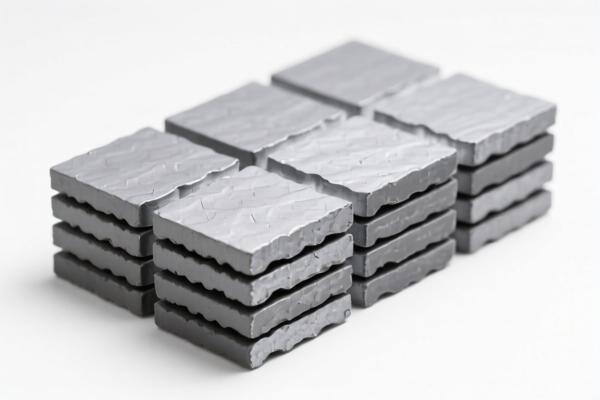
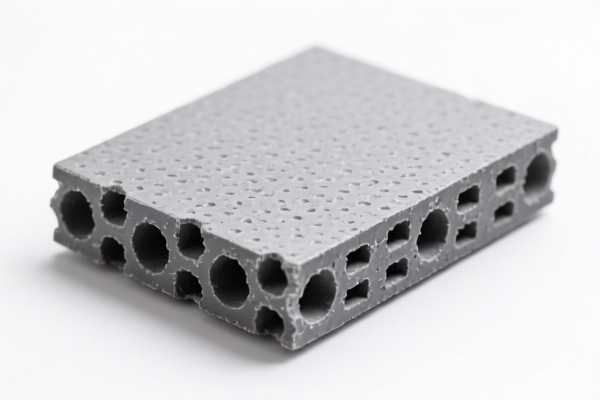
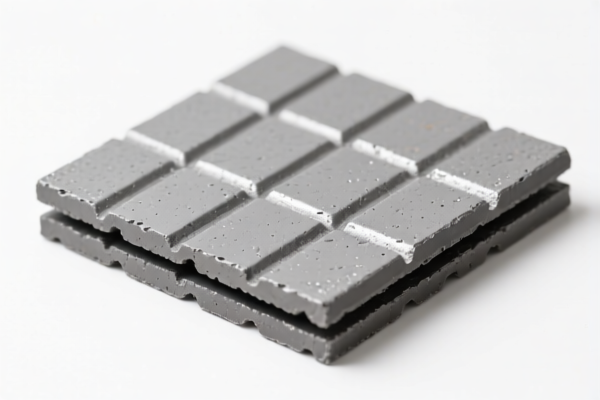
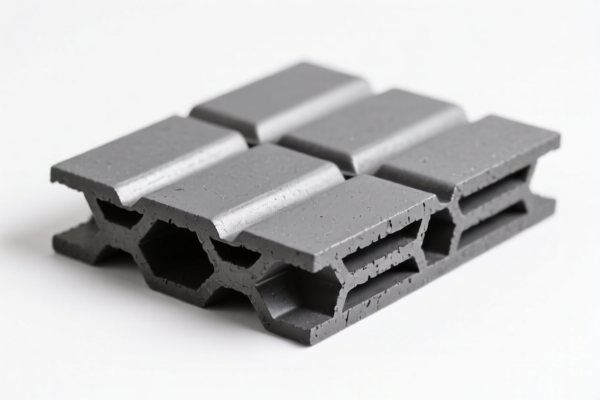
AI Analysis
🧱 High Magnesium Refractory Mortar (耐火砂浆)
🌐 HS Code Reference & Customs Clearance Guide | 2026 Latest Tariff Analysis | Professional Clearance Strategy
📌 I. Product Definition & Classification: What Exactly is "Refractory Mortar"?
Refractory Mortar (specifically High Magnesium/MgO based) is a specialized industrial chemical mixture used for laying and jointing refractory bricks in high-temperature environments (e.g., furnaces, kilns, boilers). It is not just simple construction cement; it is a chemical preparation designed to withstand extreme heat.
In international trade, it falls into two main conceptual buckets depending on its exact composition and binding nature: 1. Chemical Preparations (Chapter 38): If viewed as a specialized industrial chemical binder/adhesive. 2. Mineral Products (Chapter 68): If viewed as an inorganic, mineral-based construction material (similar to concrete or stone products).
⚠️ Key Distinction Point:
- If the product is defined primarily by its chemical binding properties (adhesive/pre-mixed binder) → Chapter 38.
- If the product is defined by its mineral/inorganic physical form (like stone/concrete) → Chapter 68.
📦 II. HS Code Classification Details (2026 Latest Tariff Authority Comparison)
Based on the product "Refractory Mortar (High Magnesium)," here are the five most relevant HS Codes and the logic for each:
| HS Code | Product Description | Logic & Match Basis | Total Tax Rate |
|---|---|---|---|
3824.99.93.97 |
Chemical Products & Preparations (Other) | Chemical Nature: "Mortar" here is classified as a chemical mixture/preparation. It matches the "Chemical Products & Preparations" scope. Use: Industrial chemical for brick jointing. No material conflict. | 40.0% |
3824.50.00.50 |
Cements, Mortars, etc. (Chemical Industry) | Industrial Chemical: Although it is mortar, it is treated as a chemical industry product (pre-adhesive nature). Fits "Other" category under chemical products. Inferred as reasonable due to industrial chemical properties. | 35.0% |
6815.99.41.10 |
Articles of Stone or Other Mineral Substances | Mineral Characteristic: "High Magnesium" implies MgO content. It is an inorganic/mineral substance. The "refractory" nature aligns with chemical characteristics of MgO/Carbon. Fits "binding mineral product" attribute. | 35.0% |
6815.91.00.11 |
Articles of Stone or Other Mineral Substances | Mineral Material: Refractory mortar is a mineral-based product. It fits the characteristic of products chemically bound by mineral components. No material conflict. | 35.0% |
3816.00.20.10 |
Refractory Cements, Concretes, etc. | Specific Match: The name "Refractory Mortar" perfectly matches the classification description "Refractory... Mortar." It is categorized under clay/clay-like products (refractory). Most precise descriptive match. | 38.0% |
🔍 Key Insight:
- Chapter 38 (3816/3824) views it as a Chemical/Industrial Product.
- Chapter 68 (6815) views it as a Mineral/Construction Product.
-3816.00.20.10is often the most accurate descriptive fit for "Refractory Mortar," but3824or6815are common alternatives depending on customs officer interpretation of "chemical vs. mineral."
💰 III. 2026 Latest Tariff Rate Breakdown (Including Surcharges & Policy Add-ons)
✅ Applicable Country: United States (US)
✅ Origin: China (CN)
✅ Effective Time: Post-November 10, 2025 (Includes subsequent imports)
🎯 1. 3824.99.93.97 — Chemical Products & Preparations
| Item | Content |
|---|---|
| Base Tariff | 5.0% (Ad Valorem) |
| USITC Surcharge (Section 301) | +25.0% |
| IEEPA Surcharge (122 Clause) | +10.0% |
| Total Tax Rate | 40.0% |
| Calculation | CIF Value × 40% |
| De Minimis Exemption? | ❌ No (deny_de_minimis) |
| Legal Basis Path | IEEPA:9903.01.25 → USITC:3824.99.93.97 → FOOTNOTE:301 |
📌 Explanation:
- The 25% is the standard Section 301 tariff for most Chinese goods.
- The 10% is the specific IEEPA (122 Clause) surcharge for Chinese origin.
- Total 40% is significant. This classification treats the mortar as a general chemical mix.
🎯 2. 3824.50.00.50 — Chemical Industry Mortars
| Item | Content |
|---|---|
| Base Tariff | 0.0% |
| USITC Surcharge (Section 301) | +25.0% |
| IEEPA Surcharge (122 Clause) | +10.0% |
| Total Tax Rate | 35.0% |
| Calculation | CIF Value × 35% |
| De Minimis Exemption? | ❌ No (deny_de_minimis) |
| Legal Basis Path | IEEPA:9903.01.24 → USITC:3824.50.00.50 → FOOTNOTE:301 |
📌 Note:
- Lower base rate (0%) makes this slightly cheaper than3824.99.93.97, but still high total.
- Relies on the argument that it is a "chemical industry product" (pre-adhesive).
🎯 3. 6815.99.41.10 & 6815.91.00.11 — Mineral/Stone Articles
| Item | Content |
|---|---|
| Base Tariff | 0.0% |
| USITC Surcharge (Section 301) | +25.0% |
| IEEPA Surcharge (122 Clause) | +10.0% |
| Total Tax Rate | 35.0% |
| Calculation | CIF Value × 35% |
| De Minimis Exemption? | ❌ No (deny_de_minimis) |
| Legal Basis Path | IEEPA:9903.01.24 → USITC:6815... → FOOTNOTE:301 |
📌 Note:
- These codes treat the mortar as a mineral product (like stone/concrete).
- The 0% base rate is attractive, but the 35% total remains high due to surcharges.
- Justification: High Magnesium (MgO) is a mineral; the product is a "binding mineral product."
🎯 4. 3816.00.20.10 — Refractory Cements/Mortars (Most Descriptive)
| Item | Content |
|---|---|
| Base Tariff | 3.0% |
| USITC Surcharge (Section 301) | +25.0% |
| IEEPA Surcharge (122 Clause) | +10.0% |
| Total Tax Rate | 38.0% |
| Calculation | CIF Value × 38% |
| De Minimis Exemption? | ❌ No (deny_de_minimis) |
| Legal Basis Path | IEEPA:9903.01.25 → USITC:3816.00.20.10 → FOOTNOTE:301 |
📌 Critical Insight:
- This code is textually the most accurate ("Refractory Mortar" matches the description perfectly).
- However, the base rate is 3%, leading to a 38% total.
- It is more expensive than3824.50.00.50(35%) and6815(35%) due to the higher base rate.
- Risk: If customs insists on the "Chemical" definition, they might push for3824(40%) or accept3816(38%). If they see it as "Mineral," they may accept6815(35%).
🛠️ IV. Customs Clearance Practical Advice (Pitfall Avoidance Guide)
✅ 1. Documentation Checklist (Non-Negotiable)
| Document | Required | Explanation |
|---|---|---|
| ✅ Technical Data Sheet | ✔️ | Must specify: MgO content %, binding agent type, curing temperature, compressive strength. |
| ✅ Material Safety Data Sheet (MSDS) | ✔️ | Crucial for chemical classification (Chapter 38) vs. mineral (Chapter 68). |
| ✅ Product Photos | ✔️ | Show packaging, label ("Refractory Mortar"), and brick-jointing application. |
| ✅ Commercial Invoice | ✔️ | Description must be precise: "High Magnesium Refractory Mortar for Industrial Furnace Lining." Avoid generic "Cement." |
| ✅ Origin Certificate | ✔️ | Mandatory for US origin determination to apply surcharges. |
✅ 2. Classification Strategy (Key Mantra)
🔥 "Describe Function, Specify MgO, Choose Chapter Wisely!"
| Scenario | Recommended HS Code | Why? |
|---|---|---|
| Best Value (Lowest Total Tax) | 3824.50.00.50 or 6815.99.41.10 |
35% Total. If you can argue it's a "Chemical Industry Product" (3824) or "Mineral Product" (6815), you save 2-5% vs. others. |
| Most Accurate Description | 3816.00.20.10 |
38% Total. Best for legal defensibility if the product is explicitly a "Refractory Mortar." |
| Generic Chemical Mix | 3824.99.93.97 |
40% Total. Riskiest and most expensive. Only use if no other classification fits. |
⚠️ Warning:
- Do NOT misclassify as "Construction Cement" (e.g.,2523.23.00.00) unless it is ordinary Portland cement. Refractory mortars have different chemical properties and are subject to different tariffs.
- De Minimis (Section 321): ❌ NOT APPLICABLE. All these HS codes are subject to deny_de_minimis. You must file a formal customs entry and pay taxes. Do not use courier services for B2B bulk shipments.
✅ 3. Special Handling Tips
| Situation | Recommendation |
|---|---|
| High MgO Content (>70%) | Emphasize "Mineral Product" (6815) to potentially align with lower base rates, but beware of 35% total. |
| Pre-mixed with Chemical Binders | Lean towards 3824 (Chemical Preparation). Provide MSDS to prove chemical nature. |
| Customs Audit Risk | If customs questions 3816 vs 6815, provide a Pre-Ruling (ISD) from CBP. This is highly recommended for high-value shipments. |
| Packaging | Ensure packaging is clearly labeled "Industrial Chemical/Refractory Material." Avoid terms like "Home Improvement Cement." |
🌍 V. Global Market Comparison (2026 Latest)
| Country/Region | Recommended HS Code | Total Tariff (China Origin) | Certification Required | Notes |
|---|---|---|---|---|
| 🇺🇸 USA | 3816.00.20.10 / 6815.91.00.11 |
35% - 38% | None (General) | High surcharges (301 + 122 Clause). |
| 🇨🇳 China | 3824.99.93.97 |
Low | CCC (if applicable) | Import duties may be lower, but VAT applies. |
| 🇪🇺 EU | 3824.99 / 6815.91 |
Variable (0-4%) | REACH Registration | No Section 301 equivalent. REACH compliance is key. |
| 🇲🇽 Mexico | 3824.99 / 6815.91 |
Low/Zero (USMCA) | None | If originating in US/Canada, zero tariff under USMCA. |
📌 Conclusion:
- USA is the most expensive market due to叠加 (stacked) surcharges (301 + IEEPA).
- EU and Mexico are significantly more cost-effective for this product.
- For US imports, cost optimization is critical. Consider supply chain diversification (e.g., Mexico) if volume is high.
📌 VI. Common Mistakes & Pitfalls (Blood & Tears Lessons)
❌ Mistake 1: Declaring as "General Cement" (2523)
👉 Consequence: Customs rejects because "Refractory" has special chemical/mineral definitions. Delay + Audit.
❌ Mistake 2: Ignoring the 122 Clause (IEEPA 10%)
👉 Consequence: Underpayment of duties. You thought it was 25%, but it’s actually 30%+ base. Financial Penalty!
❌ Mistake 3: Using De Minimis (Under $800) for Bulk Shipments
👉 Consequence: DENIED. Refractory mortars are explicitly excluded from de minimis. Goods will be held or returned.
❌ Mistake 4: Vague Description "Building Material"
👉 Consequence: Customs assigns a generic, high-rate HS Code. Audit Risk!
✅ Correct Practice:
"High Magnesium Refractory Mortar, MgO >70%, Chemical Binding Agent, for Industrial Furnace Joints, Industrial Use Only."
🎯 VII. Conclusion: Precise Classification Saves Thousands!
🎯 Remember the Mantra:
🔹 "Refractory Mortar is NOT General Cement."
🔹 "35% is the Best Case, 40% is the Risk."
🔹 "De Minimis is DEAD for this product."
🔹 "Provide MSDS + Technical Sheet to Prove Classification."
📌 Pro Tip:
If you are importing large volumes into the US, request an Advance Ruling (CBP ISD) for HS Code 3816.00.20.10 or 6815.91.00.11. This locks in your classification and prevents future audits.
📣 Action Item:
📞 Contact Your Customs Broker: Provide MSDS and Technical Data Sheet.
🚀 Verify Total Landed Cost: Include 35-40% tariff in your pricing model.
📦 Ship Smart: Ensure commercial invoice clearly states "Refractory Mortar" and HS Code.
✨ Professional Clearance, Start with Precise Classification!
💼 Every Percent Saved is Profit Protected!
Customer Reviews
About HS Code Classification
The Harmonized System (HS) is an internationally standardized nomenclature developed by the World Customs Organization (WCO) to classify traded products. Over 200 countries use the HS system as the basis for customs tariffs, trade statistics, and import/export regulations.
Each HS code follows a hierarchical structure:
- Chapter (2 digits) — Broad category of goods (e.g., Chapter 84: Machinery and Mechanical Appliances)
- Heading (4 digits) — More specific grouping within the chapter
- Subheading (6 digits) — Internationally standardized breakdown, used by all WCO member countries
- National subdivisions (8-10 digits) — Country-specific extensions for further classification, such as US HTSUS 10-digit codes
Correct HS code classification is essential for smooth customs clearance, accurate duty payment, and compliance with trade regulations. Misclassification can lead to customs delays, overpayment of duties, or penalties.
When importing from CN to US, the applicable tariff rates may include:
- Most-Favored-Nation (MFN) rate — The standard duty rate applied to WTO members
- General rate — Applied to countries without trade agreements
- Trade remedy duties — Additional tariffs such as Section 301 (anti-dumping), Section 232 (national security), or countervailing duties
The information provided on this page is for reference purposes only. For official classification, please consult with your local customs authority or a licensed customs broker.