Refractory Mortar Fiber Reinforced
CN → US| HS Code | Tariff Rate | Origin | Destination | Doc |
|---|---|---|---|---|
| 6815994110 | 35.0% | CN | US | Official Doc |
| 6815910011 | 35.0% | CN | US | Official Doc |
Product Images
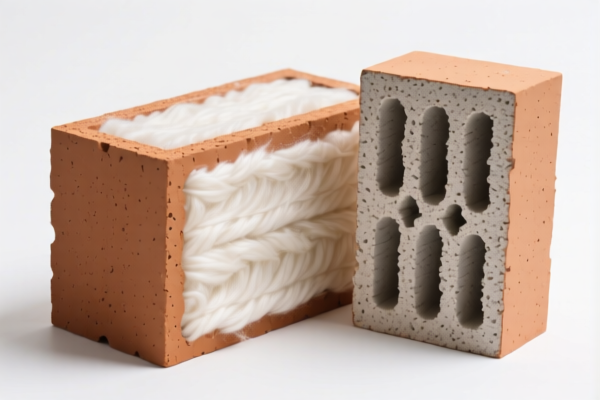

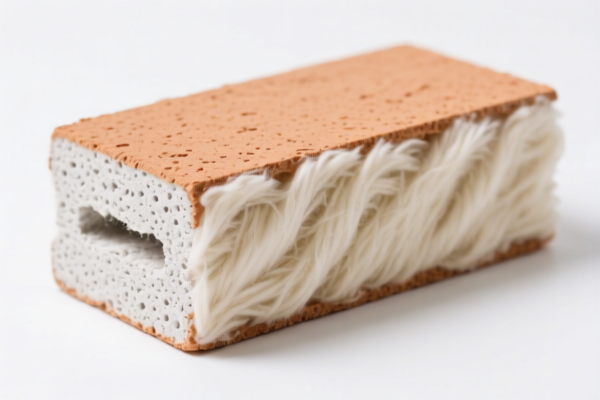
AI Analysis
🧱 Refractory Mortar Fiber Reinforced (Refractory Castables/Bricks)
🌐 HS Code Reference & Customs Clearance Guide | 2026 Latest Tariff Analysis | Professional Clearance Strategy
📌 I. Product Definition & Classification: What Exactly is "Refractory Mortar"?
Refractory mortar, particularly when fiber-reinforced, falls under the broader category of "Articles of stone or other mineral substances". In the context of international trade, these materials are used for high-temperature industrial applications (e.g., furnaces, kilns, boilers). They are not "cements" in the general construction sense (Chapter 38 or 25) but are chemically bonded mineral articles.
Key Characteristics for Classification: 1. Base Material: Contain high percentages of Magnesia (MgO) (typically >70% by weight). 2. Binding Agent: Chemically bonded by resin or pitch (not hydraulic cement). 3. Reinforcement: Contains carbon fibers or similar mineral fibers to prevent cracking under thermal stress. 4. Form: Can be loose mortar, pre-formed bricks, or custom cast shapes.
⚠️ Critical Distinction Point:
- If the product contains >70% MgO (as MgO) and is bonded by resin/pitch → It falls under HS 6815 (Articles of Stone/Mineral Substances).
- If it contains hydraulic cement or lower MgO content → It may fall under different headings (e.g., 3816 or 2523), but fiber-reinforced refractory mortars with high MgO/resin bond are strictly 6815.
📦 II. HS Code Classification Details (2026 Latest Tariff Authority Comparison)
Based on your input, the product matches two specific HS Codes under Chapter 68. Both carry the same tax rate, but the descriptions differ slightly in specificity.
| HS Code | Product Description | Applicable Scenario | Key Composition |
|---|---|---|---|
6815.99.41.10 |
Other articles: Containing by weight more than 70% magnesia (as MgO), with carbon content <30%, chemically bonded by resin or pitch. | General high-MgO refractory mortar, castables, or shapes bonded with organic binders. | MgO >70%, C <30%, Resin/Pitch Bond |
6815.91.00.11 |
Other articles: Specifically mentions magnesite, magnesia (periclase), dolomite, or chromite. Same MgO/C/Binder specs as above. | Highly specific申报 for magnesite-based refractories. Often used for magnesite bricks or mortars. | Magnesite/Dolomite base, MgO >70%, C <30%, Resin/Pitch Bond |
🔍 Key Reminder:
- Both codes describe the exact same physical product regarding tax rates.
-6815.99.41.10is a "catch-all" for other mineral articles meeting the MgO/resin criteria.
-6815.91.00.11explicitly names magnesite/dolomite, which may be preferred if the raw material is specifically magnesite.
- Do not classify under Chapter 38 (Chemical Products) or Chapter 25 (Salt/Stone) — these are finished articles, not raw materials.
💰 III. 2026 Latest Tariff Rate Breakdown (Including Surcharges)
✅ Applicable Country: United States (US)
✅ Origin: China (CN)
✅ Effective Date: 2025–2026 (Current 301 Tariffs)
🎯 1. HS Code 6815.99.41.10 — Refractory Mortar, Fiber-Reinforced, High-MgO
| Item | Content |
|---|---|
| Base Tariff | 0.0% (Ad Valorem) |
| Section 301 Surcharge | +25.0% |
| Total Tax Rate | 25.0% |
| Tax Calculation | CIF Value × 25% |
| De Minimis Exemption | ❌ NOT Applicable (High value items, not eligible for $800 exemption) |
| Legal Basis Path | USITC:6815.99.41.10 → FTS:Section301 → Footnote 9903.88.01 |
📌 Explanation:
- Base Rate 0%: Standard MFN rate for many mineral articles is low/zero.
- 301 Tariff 25%: This product is subject to the Section 301 tariff list (List 4A), as refractory materials from China are explicitly listed.
- Total 25%: This is the final landed cost multiplier for customs duties (excluding VAT/GST if applicable in destination, but US has no federal VAT).
🎯 2. HS Code 6815.91.00.11 — Magnesite/Dolomite Based Refractory
| Item | Content |
|---|---|
| Base Tariff | 0.0% |
| Section 301 Surcharge | +25.0% |
| Total Tax Rate | 25.0% |
| Tax Calculation | CIF Value × 25% |
| De Minimis Exemption | ❌ NOT Applicable |
| Legal Basis Path | USITC:6815.91.00.11 → FTS:Section301 |
📌 Note:
- Identical tax treatment to6815.99.41.10.
- Choose6815.91.00.11if your Bill of Materials explicitly states Magnesite or Dolomite as the primary raw material.
- Choose6815.99.41.10for generic high-MgO refractory mortars where the exact mineral name is less critical.
🛠️ IV. Customs Clearance Practical Advice (Real-World Pitfall Avoidance)
✅ 1. Required Documentation Checklist
| Document | Mandatory? | Purpose |
|---|---|---|
| ✅ Product Spec Sheet | ✔️ | Must clearly state: MgO >70%, Carbon <30%, Bonding Agent: Resin/Pitch, Fiber Reinforcement Type. |
| ✅ Chemical Composition Report | ✔️ | Lab report proving MgO and Carbon percentages. Crucial for HS Code validation. |
| ✅ Material Safety Data Sheet (MSDS) | ✔️ | To confirm no hazardous chemicals beyond standard industrial use. |
| ✅ Commercial Invoice | ✔️ | Must describe as "Refractory Mortar, Fiber-Reinforced, High-Magnesia, Resin-Bonded". Avoid vague terms like "building material." |
| ✅ Packing List | ✔️ | Detail weight/volume. Ensure no wooden pallets without ISPM 15 marking. |
| ✅ Origin Certificate | ✔️ | To prove origin from China (triggers 301 tariff). |
📌 Pro Tip:
If your product is not fiber-reinforced or does not contain resin/pitch, the HS Code may change entirely. Ensure your binding agent is explicitly stated as resin or pitch, not cement.
✅ 2. Declaration Best Practices (Key Phrases)
🔥 Golden Rule:
"Be Specific: MgO%, Carbon%, Binder Type, Fiber Type."
| Scenario | Correct Declaration | Incorrect Declaration |
|---|---|---|
| High-MgO Refractory Mortar | "Refractory Mortar, >70% MgO, <30% C, Resin-Bonded, Carbon Fiber Reinforced, HS 6815.99.41.10" | "Building Cement" or "Construction Adhesive" |
| Magnesite-Based Brick | "Magnesite Refractory Brick, Resin-Bonded, HS 6815.91.00.11" | "Ceramic Brick" or "Fire Clay Brick" |
| Generic Mineral Powder | "Mineral Powder for Industrial Use" | "Refractory Material" (Too vague) |
✅ 3. Special Cases & Risks
| Situation | Handling Advice |
|---|---|
| Mixed Binders | If bonded with both cement and resin, the product may be classified as cement-based (Chapter 25/38), which has different tariffs. Must disclose exact % of binder. |
| Fiber Type | If fibers are carbon fibers, ensure they meet the <30% carbon content rule for HS 6815. If >30% carbon, it may fall under Chapter 6815.99.41.90 (other), which may have different tariffs. |
| Origin Fraud | Do not misdeclare origin as Vietnam or Malaysia to avoid 301 tariffs. US CBP actively audits refractory materials for transshipment. Penalty: Up to 3x value + criminal charges. |
| Pre-shipment Inspection | Consider SGS/BV inspection to verify MgO content before shipment. Discrepancies in MgO% can lead to HS Code reclassification and back taxes. |
🌍 V. Global Market Comparison (2026 Latest)
| Country/Region | Recommended HS Code | Tariff (China Origin) | Key Requirements |
|---|---|---|---|
| 🇺🇸 USA | 6815.99.41.10 / 6815.91.00.11 |
25% (Section 301) | Detailed chemical spec sheet required. |
| 🇨🇳 China | 6815.99.41.10 |
0% (Export) | N/A (Export from China) |
| 🇪🇺 EU | 6815.99.90 (General) |
6.5% (Standard) | REACH compliance for resins/pitch. |
| 🇯🇵 Japan | 6815.99.900 |
6.0% | JIS standards may apply for industrial use. |
| 🇮🇳 India | 6815.99.90 |
7.5% | BIS certification for refractories. |
📌 Conclusion:
- USA is the most expensive market due to Section 301 tariffs (25%).
- EU/Asia have moderate tariffs but strict chemical compliance (REACH, etc.).
- No duty-free treatment for Chinese refractory mortars in major markets.
📌 VI. Common Mistakes & Pitfall Avoidance (Lessons Learned)
❌ Mistake 1: Declaring as "Cement" or "Concrete"
👉 Consequence: HS Code 3816 or 2523 → May have lower tariffs but incorrect classification → Penalties + Retrospective Taxes.
❌ Mistake 2: Ignoring Carbon Content
👉 Consequence: If carbon content is >30%, the HS Code changes to 6815.99.41.90 (Other) → Different tariff → Customs Hold.
❌ Mistake 3: Omitting Fiber Type
👉 Consequence: Without fiber data, CBP may classify as non-reinforced → Wrong HS Code → Audit Risk.
✅ Correct Approach:
"Refractory Mortar, 75% MgO, 10% Carbon, Pitch-Bonded, Carbon Fiber Reinforced, for Industrial Furnace Lining, HS 6815.99.41.10"
🎯 VII. Conclusion: Precision in Classification Saves Money!
🎯 Remember the Mantra:
🔹 "MgO >70%, C <30%, Resin Bond → HS 6815"
🔹 "25% US Tariff is Non-Negotiable for Chinese Origin"
🔹 "Document Everything: MgO%, Binder, Fiber"
📌 Pro Tip:
- Pre-Arrival Ruling: Submit a Binding Ruling Request to US CBP if unsure about MgO/C thresholds.
- Supplier Communication: Ensure your Chinese supplier provides accurate chemical specs on the COA (Certificate of Analysis).
- Cost Planning: Factor 25% tariff into your Landed Cost Calculation.
📣 Immediate Action:
📞 Engage a Licensed Customs Broker
📄 Prepare Chemical Spec Sheet + MSDS
🚀 Ensure Accurate HS Code Declaration to Avoid Delays
✨ Professional Clearance, Start with Accurate Classification!
💼 Every Percent of Tariff Counts in Refractory Trade!
Customer Reviews
About HS Code Classification
The Harmonized System (HS) is an internationally standardized nomenclature developed by the World Customs Organization (WCO) to classify traded products. Over 200 countries use the HS system as the basis for customs tariffs, trade statistics, and import/export regulations.
Each HS code follows a hierarchical structure:
- Chapter (2 digits) — Broad category of goods (e.g., Chapter 84: Machinery and Mechanical Appliances)
- Heading (4 digits) — More specific grouping within the chapter
- Subheading (6 digits) — Internationally standardized breakdown, used by all WCO member countries
- National subdivisions (8-10 digits) — Country-specific extensions for further classification, such as US HTSUS 10-digit codes
Correct HS code classification is essential for smooth customs clearance, accurate duty payment, and compliance with trade regulations. Misclassification can lead to customs delays, overpayment of duties, or penalties.
When importing from CN to US, the applicable tariff rates may include:
- Most-Favored-Nation (MFN) rate — The standard duty rate applied to WTO members
- General rate — Applied to countries without trade agreements
- Trade remedy duties — Additional tariffs such as Section 301 (anti-dumping), Section 232 (national security), or countervailing duties
The information provided on this page is for reference purposes only. For official classification, please consult with your local customs authority or a licensed customs broker.