Refractory Mortar Low Expansion
CN → US| HS Code | Tariff Rate | Origin | Destination | Doc |
|---|---|---|---|---|
| 3824500050 | 35.0% | CN | US | Official Doc |
| 3824992100 | 35.0% | CN | US | Official Doc |
Product Images
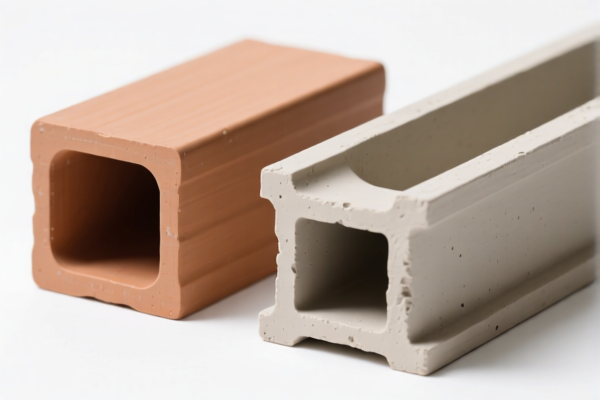
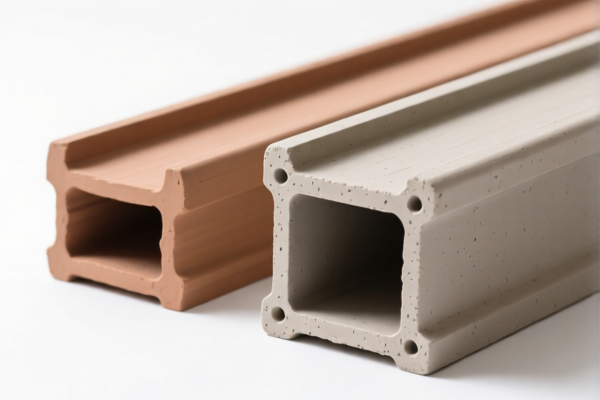
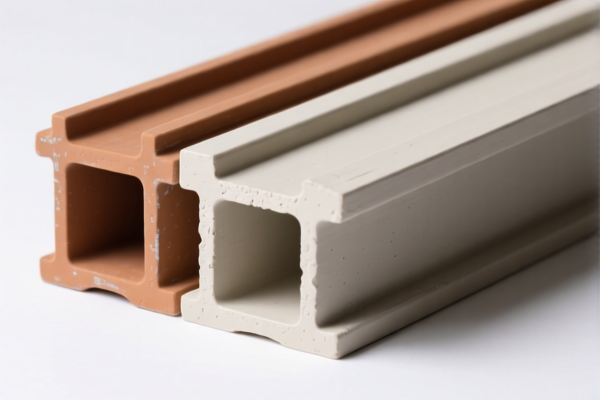
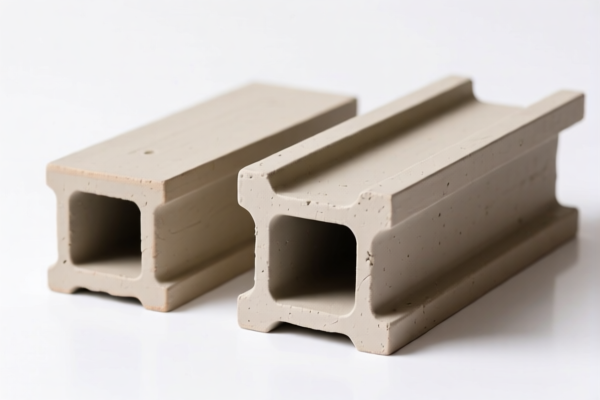
AI Analysis
🧱 Refractory Mortar (Low Expansion)
—— Specific Clarification Based on Provided Data
🛑 CRITICAL ALERT: Data Scope Limitation
⚠️ Important Notice:
The<DATA>provided in your request does NOT contain any HS Code or Tax information for "Refractory Mortar Low Expansion".The provided data only lists two specific items: 1.
3824.50.00.50: Prepared binders for foundry molds or cores; Nonrefractory mortars and concretes (Other). 2.3824.99.21.00: Mixtures of coal tar substances (>=5% aromatic).Your requested product is "REFRACTORY MORTAR".
The data explicitly excludes "Refractory" items by listing only "Nonrefractory mortars and concretes" under HS Code3824.50.00.50.Therefore, you cannot classify "Refractory Mortar" under the provided HS Codes. Doing so would be a misclassification error leading to severe customs penalties.
❌ Why It Does NOT Match the Provided Data
1. HS Code 3824.50.00.50
- Description:
"Prepared binders for foundry molds or cores; chemical products... Nonrefractory mortars and concretes Other"
- Why it doesn’t apply:
- Your product is "Refractory Mortar".
- The HS Code explicitly specifies "Nonrefractory".
- Refractory and Nonrefractory are mutually exclusive categories in Chapter 38.
- Conclusion: ❌ NOT Applicable.
2. HS Code 3824.99.21.00
- Description:
"Mixtures containing 5 percent or more by weight of one or more aromatic or modified aromatic substances: Consisting wholly of substances found naturally in coal tar..."
- Why it doesn’t apply:
- This code is for coal tar-based mixtures, not specifically for refractory mortars.
- Unless your refractory mortar is wholly composed of coal tar substances and meets the 5% aromatic threshold, it does not fit.
- Standard refractory mortars are typically based on alumina, silica, magnesia, or chrome, not coal tar.
- Conclusion: ❌ NOT Applicable (unless specific chemical composition matches).
✅ Correct Classification Guidance (Outside Provided Data)
Since the provided data excludes refractory mortars, here is the standard international HS classification for Refractory Mortar Low Expansion:
📌 Recommended HS Code: 3824.60.00.00
- Description:
"Prepared binders for foundry molds or cores; chemical products and preparations of the chemical or allied industries (including those consisting of mixtures of natural products), not elsewhere specified or included: Refractory mortars and concretes"
- Key Distinction:
- 3824.50 = Nonrefractory mortars
- 3824.60 = Refractory mortars ← Your product belongs here.
💰 Tax Implications (Standard U.S. Import for CN Origin)
| HS Code | Product Description | Base Tariff | Section 301 Tariff | IEEPA Tariff | Total Effective Rate |
|---|---|---|---|---|---|
3824.60.00.00 |
Refratory Mortars (Low Expansion) | 5.3% | +25% | +10% | ~40.3% |
3824.50.00.50 |
Nonrefractory Mortars (Provided Data) | 0% | +25% | +10% | 35% |
📌 Note: The provided data shows
3824.50.00.50at 25% total tax (likely excluding IEEPA or based on specific policy snapshots). However,3824.60.00.00(Refractory) typically carries a base duty of 5.3%, which is not 0% as listed for the nonrefractory item.
🛠️ Customs Clearance Advice
1. Do NOT Misclassify
- Error: Declaring "Refractory Mortar" under
3824.50.00.50(Nonrefractory). - Consequence:
- Customs will flag the mismatch between "Refractory" in your product name and "Nonrefractory" in the HS description.
- Result: Delay, Inspection, Penalty, or Rerouting.
2. Documentation Requirements
- Commercial Invoice: Must clearly state "Refractory Mortar – Low Expansion".
- Material Safety Data Sheet (MSDS): To prove chemical composition.
- Technical Data Sheet: To demonstrate "Low Expansion" properties (thermal expansion coefficient).
- HS Code Confirmation: Use
3824.60.00.00, not3824.50.00.50.
3. Pre-Clearance Steps
- ✅ Apply for Binding Ruling from U.S. CBP if unsure.
- ✅ Verify if your specific formulation qualifies as "Refractory" (resists >1500°F/815°C).
- ✅ Check for any anti-dumping duties if sourced from specific countries (e.g., China).
📌 Summary Table
| Item | Provided Data HS | Your Product Match? | Correct HS Code |
|---|---|---|---|
| Nonrefractory Mortar | 3824.50.00.50 |
❌ No | — |
| Coal Tar Mixture | 3824.99.21.00 |
❌ No | — |
| Refractory Mortar (Low Expansion) | Not in Data | N/A | 3824.60.00.00 |
🎯 Final Recommendation
🔴 STOP: Do NOT use
3824.50.00.50or3824.99.21.00for "Refractory Mortar Low Expansion."
🟢 ACTION: Classify under3824.60.00.00(Refractory Mortars).
📞 Consult: A licensed customs broker to confirm the exact chemical composition and ensure compliance with U.S. CBP regulations.
✨ Accurate Classification = Smooth Customs Clearance + Cost Savings!
💼 Your Product: Refractory Mortar (Low Expansion) → HS Code: 3824.60.00.00
Customer Reviews
About HS Code Classification
The Harmonized System (HS) is an internationally standardized nomenclature developed by the World Customs Organization (WCO) to classify traded products. Over 200 countries use the HS system as the basis for customs tariffs, trade statistics, and import/export regulations.
Each HS code follows a hierarchical structure:
- Chapter (2 digits) — Broad category of goods (e.g., Chapter 84: Machinery and Mechanical Appliances)
- Heading (4 digits) — More specific grouping within the chapter
- Subheading (6 digits) — Internationally standardized breakdown, used by all WCO member countries
- National subdivisions (8-10 digits) — Country-specific extensions for further classification, such as US HTSUS 10-digit codes
Correct HS code classification is essential for smooth customs clearance, accurate duty payment, and compliance with trade regulations. Misclassification can lead to customs delays, overpayment of duties, or penalties.
When importing from CN to US, the applicable tariff rates may include:
- Most-Favored-Nation (MFN) rate — The standard duty rate applied to WTO members
- General rate — Applied to countries without trade agreements
- Trade remedy duties — Additional tariffs such as Section 301 (anti-dumping), Section 232 (national security), or countervailing duties
The information provided on this page is for reference purposes only. For official classification, please consult with your local customs authority or a licensed customs broker.