Refractory Mortar for Furnaces
CN → US| HS Code | Tariff Rate | Origin | Destination | Doc |
|---|---|---|---|---|
| 3816002010 | 38.0% | CN | US | Official Doc |
| 3816002050 | 38.0% | CN | US | Official Doc |
Product Images
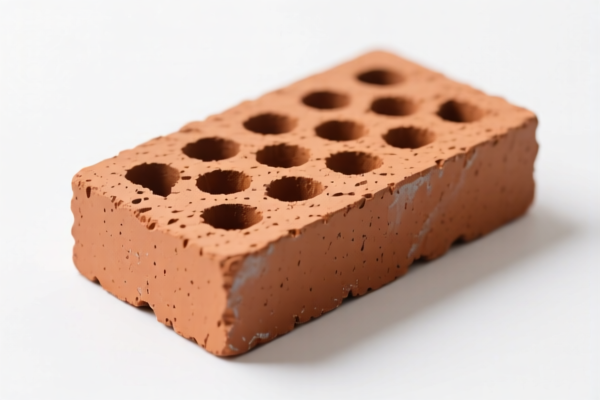
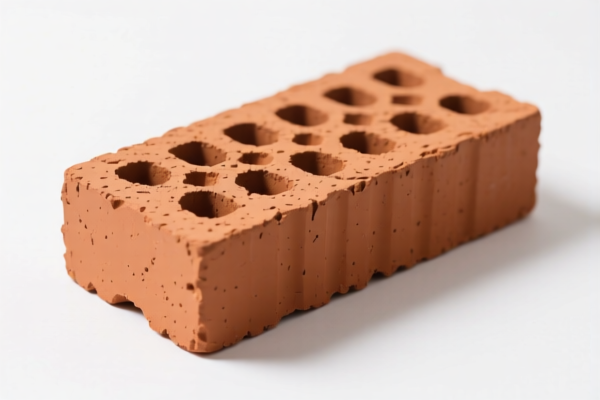
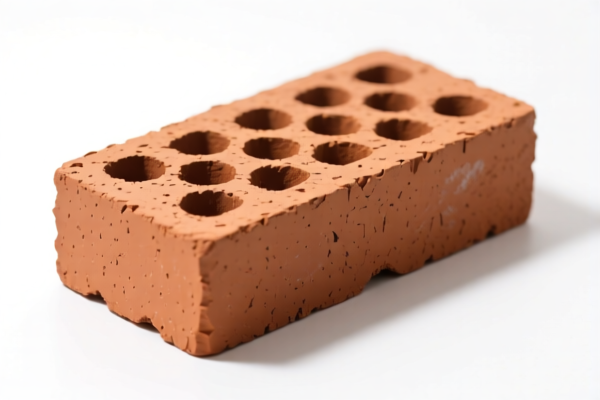
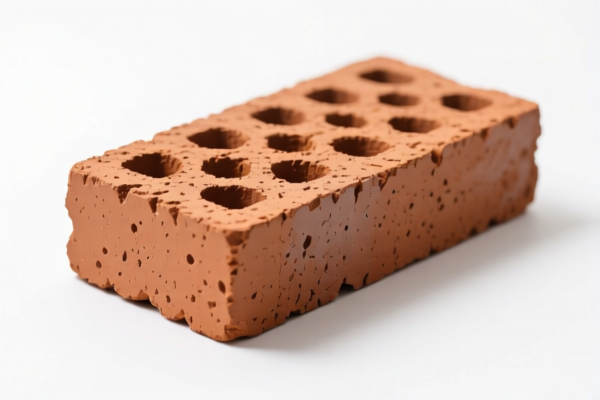
AI Analysis
🔥 Refractory Mortar for Furnaces (High-Temperature Industrial Solutions)
🌐 HS Code Reference & Customs Clearance Guide | 2026 Latest Tariff Analysis | Professional Clearance Strategy
📌 I. Product Definition & Classification: What Exactly is "Refractory Mortar"?
Refractory mortar, often referred to in industrial contexts as "refractory cement" or "ramming mix," is a specialized construction material designed to withstand extreme heat, chemical erosion, and mechanical stress in industrial furnaces, kilns, and incinerators.
In international trade, these products are strictly categorized under Chapter 38, specifically heading 3816. The critical distinction lies in the raw materials used:
- Refractory Products (Heading 3816): Compositions based on calcined graphite, synthetic graphite, or natural graphite with or without other binders, as well as refractory cements, mortars, concretes, and similar compositions (including dolomite ramming mix). These are classified as chemical products/preparations.
- Non-Refractory Clay Products (Heading 3801): Natural graphites and natural graphite preparations. If the mortar is primarily based on standard clays not meeting the specific refractory chemical definitions of 3816, it might fall elsewhere, but the prompt explicitly excludes "products of heading 3801."
⚠️ Key Distinction Point:
- If the product is a refractory cement, mortar, or concrete (including dolomite ramming mix) and is not a product of heading 3801 (which covers specific natural graphite/clay preparations), it falls under 3816.00.20.
- The sub-classification (20.10vs20.50) depends on the specific chemical composition or "Other" status within the 3816.20 subheading.
📦 II. HS Code Classification Details (2026 Latest Tariff Authority Comparison)
Based on the provided data, the product is classified under two specific subheadings within 3816.00.20. Both share the same tax rate but may differ in specific commodity descriptions or minor regulatory nuances.
| HS Code | Product Description | Applicable Scenario | Tax Rate |
|---|---|---|---|
3816.00.20.10 |
Refractory cements, mortars, concretes and similar compositions, including dolomite ramming mix, other than products of heading 3801: Other Clay | Refractory mortars based on specific clay formulations or generic refractory cements not listed as "Other Other" | 28.0% |
3816.00.20.50 |
Refractory cements, mortars, concretes and similar compositions, including dolomite ramming mix, other than products of heading 3801: Other Other | Refractory mortars/concretes that do not fit the "Other Clay" description, often generic or mixed refractory binders | 28.0% |
🔍 Important Note:
- Both codes carry an identical total tax rate of 28.0%.
- The distinction between.10(Other Clay) and.50(Other Other) is subtle and often depends on the specific chemical binder or aggregate used. If the mortar is primarily clay-based,.10is likely. If it is a general refractory mix not specified as clay,.50applies.
- Do not confuse with Heading 3801: Products of heading 3801 (natural graphite preparations) are excluded from this 28% rate structure under this specific data set.
💰 III. 2026 Latest Tariff Rate Details (Detailed Breakdown)
✅ Applicable Country: United States (US)
✅ Origin: China (CN) (Implied by the 25% additional tariff, which is characteristic of US-China trade tariffs)
✅ Effective Date: Current (2026 Tariff Schedule)
🎯 1. General Tariff Structure for HS Code 3816.00.20.xx
| Item | Content |
|---|---|
| Base Tariff Rate | 3.0% (Standard MFN Rate for Heading 3816) |
| Additional Tariff (Section 301) | +25.0% (Retaliatory/Trump-Biden Era Tariffs on Chinese Goods) |
| Total Effective Tax Rate | 28.0% |
| Tax Calculation Basis | CIF Value (Cost, Insurance, and Freight) × 28% |
| De Minimis Exemption | ❌ Not Applicable (Section 321 de minimis does not apply to goods subject to Section 301 tariffs) |
| Legal Authority Path | HTSUS 3816.00.20 → USITC Footnotes → Section 301 List 4A/4C |
📌 Explanation:
- Base Rate (3.0%): This is the standard Most Favored Nation (MFN) duty for refractory cements and mortors under HTSUS 3816.
- Additional Tariff (25.0%): This is a punitive tariff imposed on Chinese-origin goods under Section 301 of the Trade Act of 1974. It applies to a wide range of industrial chemicals and refractory materials.
- Total (28.0%): This is a high tariff burden. Importers must factor this significantly into their landed cost calculations.
🛠️ IV. Customs Clearance Practical Advice (Real-World Pitfall Guide)
✅ 1. Documentation Checklist (Mandatory)
| Document | Required? | Description |
|---|---|---|
| ✅ Product Specification Sheet | ✔️ | Must detail chemical composition (e.g., alumina content, clay type, binder type) to justify HS Code selection (.10 vs .50). |
| ✅ Statement of Origin | ✔️ | Certificate of Origin is crucial for determining eligibility for any future exemptions or for verifying the 25% tariff applicability. |
| ✅ Commercial Invoice | ✔️ | Must clearly state "Refractory Mortar/Cement for Furnaces" and HS Code. Avoid vague terms like "Construction Material." |
| ✅ Safety Data Sheet (SDS) | ✔️ | Required for chemical imports to ensure compliance with OSHA and EPA regulations. |
| ✅ Bill of Lading/Air Waybill | ✔️ | Standard shipping document. |
✅ 2. Declaration Tips (Key Mantra)
🔥 "Specify Composition, Avoid Vague Names, Pay the 28% Truth!"
| Scenario | Correct Declaration | Incorrect Practice |
|---|---|---|
| Standard Refractory Mortar | 3816.00.20.10 or .50 + "Refractory Cement, 25kg bag" |
Misdeclaring as "Concrete" (2601) → Risk of audit & penalty |
| Dolomite Ramming Mix | Explicitly mention "Dolomite Ramming Mix" in description | Calling it "Soil" or "Sand" → Major misclassification |
| Clay-Based vs. Other | Provide chemical analysis to distinguish .10 (Clay) from .50 (Other) |
Guessing the code → Potential underpayment if .50 should be .10 or vice versa (though rates are same, accuracy is key for compliance) |
✅ 3. Special Situation Handling
| Situation | Handling Advice |
|---|---|
| Mixed Shipments | If the shipment contains both refractory mortars (3816) and other goods, declare separately. Do not group under the highest tax code. |
| Private Label/OEM | Ensure the supplier provides the exact chemical formulation if the composition is unique. The "Other Other" (.50) category is a catch-all; specific data may be needed for audit defense. |
| Tariff Engineering | If the product contains significant components that might fall under different headings, consult a trade specialist. However, for "mortars/concretes," the composite nature usually keeps it in 3816. |
🌍 V. Global Market Comparison (2026 Latest)
| Country/Region | Recommended HS Code | Base Tariff | Additional Tariff (if CN Origin) | Total Rate | Remarks |
|---|---|---|---|---|---|
| 🇺🇸 United States | 3816.00.20.10/.50 |
3.0% | +25.0% | 28.0% | High barrier due to Section 301 |
| 🇨🇳 China | 3816.00.20 | 0-5%* | N/A | ~0-5% | Low import duty for domestic use |
| 🇪🇺 European Union | 3816.00.20 | 0-2.7% | N/A | ~0-2.7% | No retaliatory tariffs on refractories |
| 🇮🇳 India | 3816.00.20 | 7.5-10% | N/A | ~7.5-10% | Moderate duty, IGST applies |
📌 Conclusion:
- The US market is the most expensive due to the 25% additional tariff.
- EU and other markets offer significantly lower entry costs.
- For US imports, consider supply chain diversification if feasible, or ensure accurate valuation to avoid duty inflation.
📌 VI. Common Errors & Pitfall Guide (Lessons Learned)
❌ Error 1: Misclassifying Refractory Mortar as "Construction Concrete" (2601)
👉 Consequence: Incorrect HS Code, potential duty evasion, and penalties + interest. Refractory mortars are chemically distinct from ordinary Portland cement concrete.
❌ Error 2: Ignoring the "Other than Heading 3801" Clause
👉 Consequence: If the product is actually a natural graphite preparation (Heading 3801), the tariff structure and regulatory requirements differ. Misclassification leads to customs audits.
❌ Error 3: Assuming De Minimis Exemption Applies
👉 Consequence: For small shipments (under $800), the 25% tariff still applies to Section 301 goods. Assuming it's tax-free is a major financial risk.
✅ Correct Action:
"Refractory Cement, Alumina-Based, for Industrial Furnace Lining, HS 3816.00.20.10, Origin: China, CIF Value: $10,000"
🎯 VII. Conclusion: Professional Classification for Cost Efficiency
🎯 Remember the Mantra:
🔹 "Refractory Mortar is 3816, Not 2601!"
🔹 "28% Total Tax, Pay it or Plan It!"
🔹 "Clay or Other? Specify to Stay Compliant!"
📌 Pro Tip:
If your refractory mortar contains significant amounts of graphite (over 10-15% by weight), verify if it might fall under Heading 3801 (Natural Graphite Preparations). While the data provided excludes Heading 3801, in real-world scenarios, high-graphite refractories might have different tariff implications. Always consult a licensed customs broker for pre-classification rulings if the graphite content is high.
📣 Immediate Action:
📞 Contact your customs broker with the SDS (Safety Data Sheet) and product specification.
🚀 Prepare for the 28% landed cost in your pricing model to maintain profitability.
✨ Precise Classification, Predictable Costs!
💼 In the refractory industry, clarity is your best fireproof shield!
Customer Reviews
About HS Code Classification
The Harmonized System (HS) is an internationally standardized nomenclature developed by the World Customs Organization (WCO) to classify traded products. Over 200 countries use the HS system as the basis for customs tariffs, trade statistics, and import/export regulations.
Each HS code follows a hierarchical structure:
- Chapter (2 digits) — Broad category of goods (e.g., Chapter 84: Machinery and Mechanical Appliances)
- Heading (4 digits) — More specific grouping within the chapter
- Subheading (6 digits) — Internationally standardized breakdown, used by all WCO member countries
- National subdivisions (8-10 digits) — Country-specific extensions for further classification, such as US HTSUS 10-digit codes
Correct HS code classification is essential for smooth customs clearance, accurate duty payment, and compliance with trade regulations. Misclassification can lead to customs delays, overpayment of duties, or penalties.
When importing from CN to US, the applicable tariff rates may include:
- Most-Favored-Nation (MFN) rate — The standard duty rate applied to WTO members
- General rate — Applied to countries without trade agreements
- Trade remedy duties — Additional tariffs such as Section 301 (anti-dumping), Section 232 (national security), or countervailing duties
The information provided on this page is for reference purposes only. For official classification, please consult with your local customs authority or a licensed customs broker.