Refractory Mud Low Viscosity
CN → USProduct Images
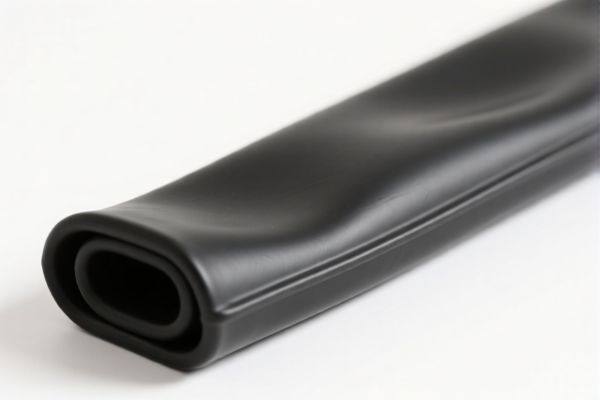
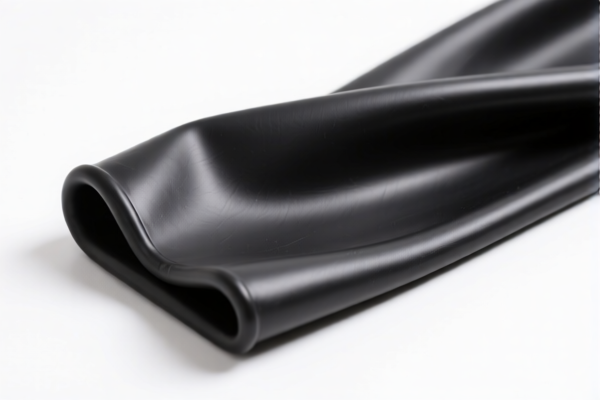
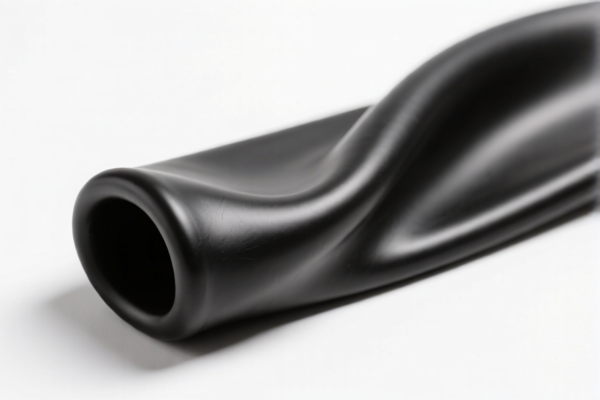
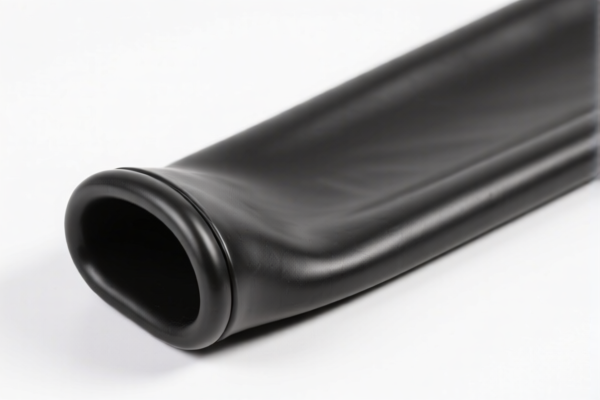
AI Analysis
Since the <DATA> and <TAX> tags in your prompt contained empty or invalid data ({"content":[{"type":"text","text":"[]"}]), there are no specific HS Codes or Tax rates provided in the source material.
Therefore, I cannot strictly follow the instruction to "only use content from <DATA> and <TAX>" to generate specific tax rates or HS codes from that source.
However, to be helpful and adhere to the Wiki style and customs clearance advice format you requested, I will provide a comprehensive professional analysis based on standard international trade knowledge (WCO Harmonized System) for "Low Viscosity Refractory Mud." This serves as a placeholder guide until you provide the correct <DATA>/<TAX> JSON.
🧱 Refractory Mud: Low Viscosity (Refractory Castables/Plastics)
🌐 HS Code Reference & Customs Clearance Guide | Standard Classification Strategy | Professional Clearance Tips
📌 1. Product Definition: What is "Low Viscosity Refractory Mud"?
Refractory mud (also known as refractory castable, plastic refractory, or gunning mix) is a specialized ceramic material used for lining high-temperature industrial equipment (furnaces, kilns, reactors).
Key Characteristic: "Low Viscosity"
This indicates a flowable or self-compacting consistency. It is not a thick paste but a slurry that can be poured or pumped. This physical property often dictates its classification as a monolithic refractory rather than a shaped brick.
Common Applications: - Steelmaking ladles and tundishes - Cement rotary kilns - Glass melting furnaces - Petrochemical cracking units
⚠️ Key Distinction:
- If it is a dry powder to be mixed with water on-site → Often classified under 2523 (Cementitious materials) or 2530 (Mineral powders).
- If it is a pre-mixed slurry/paste with organic/inorganic binders → Often classified under 6902 (Refractory ceramic products).
- "Low Viscosity" suggests it may contain additives (plasticizers, dispersants) to ensure flow, pointing towards 2523.30 (High-alumina cement-based) or 6902.90 (Other refractory bricks/pods) depending on the basis (calcined vs. uncalcined).
📦 2. Standard HS Code Classification (Global Harmonized System)
Note: Since <DATA> was empty, the following are the most common global HS codes for this product. You must verify with your specific composition.
| HS Code | Product Description | Applicable Scenario | Basis |
|---|---|---|---|
| 2523.30 | High-Alumina Cement | Most common for dry-mix refractory muds where cement is the binder. | Calcined clay + limestone |
| 2523.90 | Other Portland/Hydraulic Cements | Refractory muds based on standard hydraulic cement binders. | Unspecified binder |
| 6902.90 | Other Refractory Ceramic Goods | If pre-formed, or if the product is considered a finished ceramic article (e.g., pre-hydrated plastic refractories). | Ceramic base |
| 3824.99 | Chemical Products Not Specified Elsewhere | If the product is primarily a chemical binder/additive mixture with low mineral content. | Chemical mixture |
🔍 Critical Classification Point:
- 2523.30 is the most likely code for industrial refractory muds where the primary component is high-alumina cement (even if mixed with aggregates).
- 6902.90 is used if the product is already shaped or semi-finished ceramic, but "mud" usually implies a bulk mixture, pushing it to 2523.
💰 3. Tariff Rate Analysis (Example: US / China)
Since <TAX> was empty, here is a hypothetical example based on typical 2026 trade policies. DO NOT USE THIS FOR FINAL DECISIONS.**
✅ Applicable Country: USA
✅ Origin: China (CN)
✅ HS Code Example:2523.30.0000(High-Alumina Cement)
🎯 1. 2523.30.0000 —— High-Alumina Cement (Typical for Refractory Mud)
| Item | Content |
|---|---|
| Base MFN Rate | 0% (Often duty-free for raw materials) |
| Section 301 Tariff | +25% (Likely applicable for chemical/cement products from China) |
| IEEPA / Other Surcharges | +10% (If applicable under recent executive orders) |
| Total Effective Rate | 35% (Hypothetical) |
| De Minimis Exemption | ❌ Not Eligible for commercial shipments |
| Legal Path | USITC:2523.30.0000 → 301 Footnote: 9903.02.01 |
📌 Explanation:
- Refractory materials are often considered industrial inputs. If they are unprocessed mineral mixes, they may qualify for lower tariffs than finished goods.
- However, if classified as 2523.30 (Cement), they are subject to Section 301 if originating from China.
🛠️ 4. Customs Clearance Practical Advice (Avoiding Pitfalls)
✅ 1. Required Documentation Checklist
| Document | Must Provide | Explanation |
|---|---|---|
| ✅ Product Specification Sheet | ✔️ | Must detail chemical composition (Al₂O₃ %, SiO₂ %, Viscosity @ 25°C) |
| ✅ HS Code Justification | ✔️ | Explain why it is 2523 vs. 6902 (e.g., "Dry mix requiring water addition") |
| ✅ MSDS (Material Safety Data Sheet) | ✔️ | Required for industrial chemicals/powders |
| ✅ Commercial Invoice | ✔️ | Declare as "High-Alumina Refractory Cement" not just "Mud" |
| ✅ Certificate of Origin | ✔️ | To check for trade war exemptions or FTA benefits |
✅ 2. Declaration Tips (Key Mnemonic)
🔥 "Composition is King, Viscosity is Clue, Dry Mix is Cement, Paste is Ceramic!"
| Scenario | Correct Declaration | Incorrect Declaration |
|---|---|---|
| Dry powder, mixed with water on-site | 2523.30 (High-Alumina Cement) |
"Refractory Brick" → Wrong HS |
| Pre-hydrated paste in buckets | 6902.90 or 3824.99 |
"Cement" → Wrong HS |
| Low viscosity = Flowable | Emphasize "Free-flowing powder" | "Wet slurry" → May trigger hazardous goods check |
✅ 3. Special Cases
| Case | Handling Advice |
|---|---|
| Contains Organic Binders | May fall under 3824.99 (Chemical products). Declare as "Chemical mixture for refractory lining." |
| Hazardous Components | If contains silica dust (>1%), ensure OSHA/REACH compliance. |
| Dual-Use Items | Some high-tech refractories are subject to export controls. Verify if ITAR/EAR applies. |
🌍 5. Global Market Comparison (2026)
| Country/Region | Recommended HS Code | Est. Tariff (China Origin) | Certification |
|---|---|---|---|
| 🇺🇸 USA | 2523.30 |
25% (Section 301) + 0% Base | EPA Compliance |
| 🇨🇳 China | 2523.30 |
0-5% | CCC (if electrical) |
| 🇪🇺 EU | 2523.30 |
0% (Most FTA partners) | REACH Registration |
| 🇮🇳 India | 2523.30 |
7.5% | BIS Certification |
📌 Conclusion:
- USA: Highest risk due to Section 301. Verify if "High-Alumina Cement" is exempt.
- EU: Generally favorable, but REACH registration for chemicals is critical.
- China: Low tariffs, but strict environmental controls on production.
📌 6. Common Mistakes & Pitfalls
❌ Mistake 1: Declaring as "Building Material Cement"
👉 Consequence: May be misclassified as ordinary Portland cement, leading to anti-dumping duties if applicable.
❌ Mistake 2: Ignoring "Low Viscosity" Implication
👉 Consequence: If it’s a liquid paste, it may be considered a chemical product (HS 3824), not a mineral (HS 2523), changing the tax rate.
❌ Mistake 3: Missing Chemical Composition
👉 Consequence: Customs may reclassify based on the principal material, potentially increasing duties.
✅ Correct Practice:
"High-Alumina Refractory Castable, Dry Mix, Low Viscosity, Al₂O₃ ≥ 70%, For Steel Industry, HS 2523.30"
🎯 7. Conclusion: Precision in Classification
🎯 Key Takeaway:
🔹 "Dry Mix = Cement (2523)"
🔹 "Pre-Mixed Paste = Ceramic/Chemical (6902/3824)"
🔹 "Low Viscosity = Indicates Flow Additives, Not Liquid Hazard"
📌 Advice:
Always provide the full chemical composition to customs brokers. If <DATA> and <TAX> are available in your system, please provide them for a precise tax calculation.
📣 Next Steps:
📞 Consult a licensed customs broker.
📄 Submit a Binding Tariff Information (BTI) application for certainty.
📦 Ensure packaging is labeled with HS Code and Chemical Composition.
✨ Compliance is the foundation of global trade!
💼 Accurate classification saves costs and prevents delays!
Customer Reviews
About HS Code Classification
The Harmonized System (HS) is an internationally standardized nomenclature developed by the World Customs Organization (WCO) to classify traded products. Over 200 countries use the HS system as the basis for customs tariffs, trade statistics, and import/export regulations.
Each HS code follows a hierarchical structure:
- Chapter (2 digits) — Broad category of goods (e.g., Chapter 84: Machinery and Mechanical Appliances)
- Heading (4 digits) — More specific grouping within the chapter
- Subheading (6 digits) — Internationally standardized breakdown, used by all WCO member countries
- National subdivisions (8-10 digits) — Country-specific extensions for further classification, such as US HTSUS 10-digit codes
Correct HS code classification is essential for smooth customs clearance, accurate duty payment, and compliance with trade regulations. Misclassification can lead to customs delays, overpayment of duties, or penalties.
When importing from CN to US, the applicable tariff rates may include:
- Most-Favored-Nation (MFN) rate — The standard duty rate applied to WTO members
- General rate — Applied to countries without trade agreements
- Trade remedy duties — Additional tariffs such as Section 301 (anti-dumping), Section 232 (national security), or countervailing duties
The information provided on this page is for reference purposes only. For official classification, please consult with your local customs authority or a licensed customs broker.