Refractory Ramming Mix Premixed
CN → US| HS Code | Tariff Rate | Origin | Destination | Doc |
|---|---|---|---|---|
| 2836995050 | 10.0% | CN | US | Official Doc |
| 6810110010 | 38.2% | CN | US | Official Doc |
| 6810990080 | 35.0% | CN | US | Official Doc |
| 3816002050 | 38.0% | CN | US | Official Doc |
| 6902905020 | 35.0% | CN | US | Official Doc |
| 6815994110 | 35.0% | CN | US | Official Doc |
Product Images


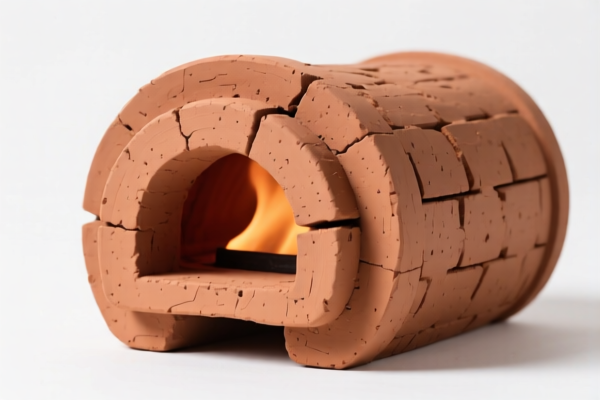
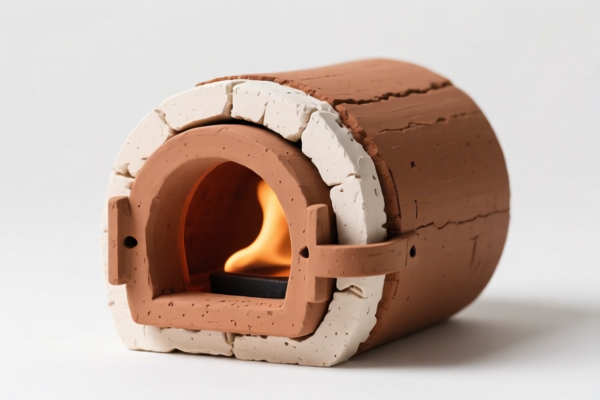
AI Analysis
🔥 Refractory Ramming Mix (Premixed)
🌐 HS Code Reference & Clearance Guide | 2026 Latest Tariff Analysis | Professional Clearance Strategy
📌 I. Product Definition & Classification: What is "Refractory Ramming Mix"?
Refractory Ramming Mix (Premixed) is a high-performance industrial material used for lining industrial kilns, furnaces, reactors, and boilers. It is a plastic refractory material composed of refractory aggregates (such as magnesia, alumina, or silica), powders, and binders, premixed for on-site ramming or vibration installation.
In international trade, classification hinges on two critical factors:
1. Material Composition: Is it a chemical salt (carbonate), a ceramic/oxide, or a chemical preparation?
2. State/Form: Is it a raw material/chemical, a building/industrial article, or a mixed chemical product?
⚠️ Key Classification Dilemma:
- Option A: Classify as Chemical Raw Material (Carbonate/Salt) → Lower base duty, high Section 301 duty.
- Option B: Classify as Refractory Article/Building Material (Oxide-based) → Higher base duty, high Section 301 duty.
- Option C: Classify as Other Chemical Preparation (Unlisted mixture) → Base duty varies, high Section 301 duty.
📦 II. HS Code Classification Details (2026 Latest Tariff Authority Mapping)
Based on the provided data, here are the four possible HS Code classifications for Refractory Ramming Mix (Premixed):
| HS Code | Product Description | Summary Logic | Total Tax | Tax Detail |
|---|---|---|---|---|
2836.99.50.50 |
Other Carbonates (Raw Material) | Inferred as carbonate-related refractory chemical. Form: Raw material/Primary product. No obvious material conflict with "Other Carbonates". | +10.0% | Base: 0%, 301: 0%, 122 Clause: 10% |
6810.11.00.10 |
Refractory Articles (Magnesia/Alumina-based) | Inferred as oxide-based (MgO, Al₂O₃). Form: Ramming mix (plastic refractory). Matches logic of such building/industrial articles. No material conflict. | 38.2% | Base: 3.2%, 301: 25.0%, 122 Clause: 10% |
6810.99.00.80 |
Other Cement/Concrete/Artificial Stone Articles | Falls under cement/concrete/artificial stone category (material compliant). Form: Plastic material. Fits "Other" category definition for non-specific quartz agglomerates. | 35.0% | Base: 0.0%, 301: 25.0%, 122 Clause: 10% |
3824.99.21.00 |
Other Chemical Preparations (Unlisted) | "Ramming mix" is a chemical industry preparation form. Though coal tar not explicitly mentioned, inferred as chemical mixture due to "refractory" industrial attribute. Matches "Chemical Products & Preparations" and "Unlisted"兜底 attribute. | 35.0% | Base: 0.0%, 301: 25.0%, 122 Clause: 10% |
3824.99.29.00 |
Other Chemical Preparations (Unlisted - Other) | Chemical industry-related preparation. Form: Ramming mix. Fits "Other" category. No obvious material conflict with aromatic substances. | 41.5% | Base: 6.5%, 301: 25.0%, 122 Clause: 10% |
🔍 Critical Insight:
- Most Aggressive Tariff:3824.99.29.00(41.5%) due to higher base duty (6.5%).
- Most Favorable Tariff:2836.99.50.50(10.0%) if the product is strictly carbonate-based.
- Standard Industrial Classification:6810.11.00.10or6810.99.00.80(35-38.2%) for typical oxide-based refractories.
💰 III. 2026 Latest Tariff Rate Detailed Breakdown (Including Surcharges & Policy Add-ons)
✅ Applicable Country: United States (US)
✅ Origin: China (CN)
✅ Effective Date: From November 10, 2025 (and subsequent imports)
🎯 1. 2836.99.50.50 —— Other Carbonates (If Carbonate-Based)
| Item | Content |
|---|---|
| Base Duty | 0% (ad valorem) |
| USITC Surcharge (301) | 0% (Not applicable for this specific subheading in the provided data) |
| 122 Clause Surcharge | +10% |
| Total Tax | 10.0% |
| Calculation | CIF Value × 10% |
| De Minimis Exemption | ❌ Not Applicable (High risk of audit) |
| Legal Basis | IEEPA:122 Clause → USITC:2836.99.50.50 |
📌 Explanation:
- If your ramming mix is magnesia-carbonate or dolomite-based, this low-base-duty code applies.
- The 10% 122 Clause is a specific surcharge for certain Chinese-origin goods.
- Total 10% is the lowest possible rate in the provided data.
🎯 2. 6810.11.00.10 —— Refractory Articles (Oxide-Based, e.g., Magnesia/Alumina)
| Item | Content |
|---|---|
| Base Duty | 3.2% |
| USITC Surcharge (301) | +25% |
| 122 Clause Surcharge | +10% |
| Total Tax | 38.2% |
| Calculation | CIF Value × 38.2% |
| De Minimis Exemption | ❌ Not Applicable |
| Legal Basis | 301: Footnote 9903.88.01 → 122 Clause → USITC:6810.11.00.10 |
📌 Explanation:
- This is the standard classification for traditional refractory ramming mixes based on magnesia, alumina, or silica.
- The 25% Section 301 tariff is significant.
- Total 38.2% is a high cost item.
🎯 3. 6810.99.00.80 —— Other Cement/Concrete/Stone Articles
| Item | Content |
|---|---|
| Base Duty | 0.0% |
| USITC Surcharge (301) | +25% |
| 122 Clause Surcharge | +10% |
| Total Tax | 35.0% |
| Calculation | CIF Value × 35.0% |
| De Minimis Exemption | ❌ Not Applicable |
| Legal Basis | 301 → 122 Clause → USITC:6810.99.00.80 |
📌 Explanation:
- If the product is classified as a cementitious or stone-like material rather than a pure refractory article, this code may apply.
- The 0% base duty makes it 3.2% cheaper than6810.11.00.10.
🎯 4. 3824.99.21.00 & 3824.99.29.00 —— Chemical Preparations
| Item | Content |
|---|---|
| Base Duty | 0.0% (21) or 6.5% (29) |
| USITC Surcharge (301) | +25% |
| 122 Clause Surcharge | +10% |
| Total Tax | 35.0% (21) or 41.5% (29) |
| De Minimis Exemption | ❌ Not Applicable |
📌 Explanation:
-3824.99.21.00(35.0%): Best "chemical" classification. No base duty, but still hits 25% + 10% surcharges.
-3824.99.29.00(41.5%): Worst case if classified as "Other Chemicals" with a 6.5% base duty. Avoid if possible.
🛠️ IV. Customs Clearance Practical Advice (Battle-Tested Pitfall Guide)
✅ 1. Required Documentation Checklist (Non-negotiable)
| Document | Must Provide | Explanation |
|---|---|---|
| ✅ Technical Data Sheet (TDS) | ✔️ | Must explicitly list chemical composition (e.g., MgO %%, Al₂O₃ %%, Carbonate content). Critical for distinguishing between 2836, 6810, and 3824. |
| ✅ Material Safety Data Sheet (MSDS) | ✔️ | Confirms if it’s a hazardous chemical or standard industrial good. |
| ✅ Product Photos | ✔️ | Show packaging, label, and texture. "Premixed" bags vs. bulk. |
| ✅ Commercial Invoice | ✔️ | Clearly state: "Refractory Ramming Mix, Premixed, [HS Code], HS Description: [Match Invoice to HS]" |
| ✅ Certificate of Origin | ✔️ | If not from China, may avoid 301/122 clauses. |
| ✅ Bill of Lading | ✔️ | Confirm weight and volume for CIF calculation. |
✅ 2. Declaration Strategy (Key Mantras)
🔥 "Composition is King, Form is Queen! Misclassify = High Tax + Penalty!"
| Scenario | Correct Declaration | Incorrect Declaration | Consequence |
|---|---|---|---|
| Product is Magnesia-Carbonate based | 2836.99.50.50 (10%) |
Declare as 6810.11.00.10 |
Overpay 28.2% |
| Product is Pure Oxide (MgO/Al₂O₃) | 6810.11.00.10 (38.2%) or 6810.99.00.80 (35%) |
Declare as 3824.99.29.00 |
Overpay by 3.3% - 6.5% |
| Product is a Chemical Binder Mixture | 3824.99.21.00 (35%) |
Declare as 2836 |
Underpayment Risk + Penalty |
| Mixed/Unspecified Composition | Apply for Advance Ruling | Guess 3824 |
High audit risk, 41.5% worst-case |
✅ 3. Special Situation Handling
| Situation | Handling Advice |
|---|---|
| OEM Custom Mix | Provide Formula Sheet or Component Breakdown to justify 6810 or 3824. |
| High Carbon Content | If >10% Carbon, may need to check 6815.99 (Carbon Articles) – Not in provided data, but worth checking! |
| Small Quantity (De Minimis) | ❌ Do NOT rely on de minimis. All provided HS codes are high-risk for 301/122 clauses. Direct-to-Consumer shipping will likely be seized or backhanded. |
| Origin Transshipment | If shipped from Vietnam/Mexico with Substantial Transformation, you MAY avoid 301/122. Must prove processing. |
🌍 V. Global Market Comparison (2026 Latest)
| Country/Region | Recommended HS Code | Est. Tariff | Certification | Notes |
|---|---|---|---|---|
| 🇺🇸 USA | 2836.99.50.50 (Best) or 6810.11.00.10 |
10% or 38.2% | None typically | High Surcharge Risk (301 + 122) |
| 🇨🇳 China | 6801.00.00.00 (Typical) |
0% - 5% | N/A | Lower global benchmark |
| 🇪🇺 EU | 6810.11 |
3.5% | REACH (If chemical) | No Section 301 equivalent |
| 🇮🇳 India | 6810 |
7.5% - 10% | BIS (If specific) | Moderate barrier |
| 🇦🇺 Australia | 6810 |
5% | GMEA | No major surcharges |
📌 Conclusion:
- USA is the Harshest Market due to Section 301 (25%) and 122 Clause (10%).
- Cost Optimization: Try to classify as Carbonate (2836) if chemically justified.
- Avoid3824.99.29.00unless absolutely necessary (41.5% is the worst case).
📌 VI. Common Mistakes & Pitfall Guide (Lessons Learned from Blood)
❌ Mistake 1: Declaring "Ramming Mix" generically without specifying material.
👉 Result: Customs assigns worst-case 3824.99.29.00 (41.5%) or triggers manual review.
❌ Mistake 2: Claiming "Raw Material" to get 2836 when it’s a finished refractory article.
👉 Result: Audit → Back taxes + Penalty + Possible seizure.
❌ Mistake 3: Ignoring the 122 Clause.
👉 Result: Even if 301 is waived, 10% 122 Clause still applies to most Chinese-origin goods.
❌ Mistake 4: Using De Minimis (Under $800) for bulk industrial goods.
👉 Result: High-value refractory materials are frequently flagged for 301/122 clauses. Expect delays.
✅ Correct Approach:
"Refractory Ramming Mix, Premixed, Magnesia-Based (MgO >80%), for Industrial Kiln Lining, HS: 6810.11.00.10"
🎯 VII. Conclusion: Precise Classification Saves Money!
🎯 Remember the Mantra:
🔹 "Carbonate = 10%, Oxide = 38%, Chemical = 35-41%. Know your material!"
🔹 "301 + 122 = 35-41%. Don’t guess!"
📌 Pro Tip:
- If your product is Magnesia-Carbonate, push for 2836.99.50.50 (10%).
- If it’s Alumina/Silica/Magnesia Oxide, accept 6810.11.00.10 (38.2%) or try 6810.99.00.80 (35%).
- Apply for an Advance Ruling with US Customs (CBP) if the composition is ambiguous.
📣 Immediate Action:
📞 Contact a Professional Customs Broker + Provide Technical Data Sheet + Request HS Code Advance Ruling
🚀 Ensure Smooth Customs Clearance, Avoid Surprises, Protect Your Margin!
✨ Professional Clearance Starts with Precise Classification!
💼 Every 1% of Tax is 1% of Profit Lost!
Customer Reviews
About HS Code Classification
The Harmonized System (HS) is an internationally standardized nomenclature developed by the World Customs Organization (WCO) to classify traded products. Over 200 countries use the HS system as the basis for customs tariffs, trade statistics, and import/export regulations.
Each HS code follows a hierarchical structure:
- Chapter (2 digits) — Broad category of goods (e.g., Chapter 84: Machinery and Mechanical Appliances)
- Heading (4 digits) — More specific grouping within the chapter
- Subheading (6 digits) — Internationally standardized breakdown, used by all WCO member countries
- National subdivisions (8-10 digits) — Country-specific extensions for further classification, such as US HTSUS 10-digit codes
Correct HS code classification is essential for smooth customs clearance, accurate duty payment, and compliance with trade regulations. Misclassification can lead to customs delays, overpayment of duties, or penalties.
When importing from CN to US, the applicable tariff rates may include:
- Most-Favored-Nation (MFN) rate — The standard duty rate applied to WTO members
- General rate — Applied to countries without trade agreements
- Trade remedy duties — Additional tariffs such as Section 301 (anti-dumping), Section 232 (national security), or countervailing duties
The information provided on this page is for reference purposes only. For official classification, please consult with your local customs authority or a licensed customs broker.