Refractory Self Flow Casting Material
CN → US| HS Code | Tariff Rate | Origin | Destination | Doc |
|---|---|---|---|---|
| 2530908015 | 10.0% | CN | US | Official Doc |
| 6810110010 | 38.2% | CN | US | Official Doc |
| 3824500010 | 35.0% | CN | US | Official Doc |
| 2530908050 | 10.0% | CN | US | Official Doc |
| 6810195000 | 38.9% | CN | US | Official Doc |
Product Images
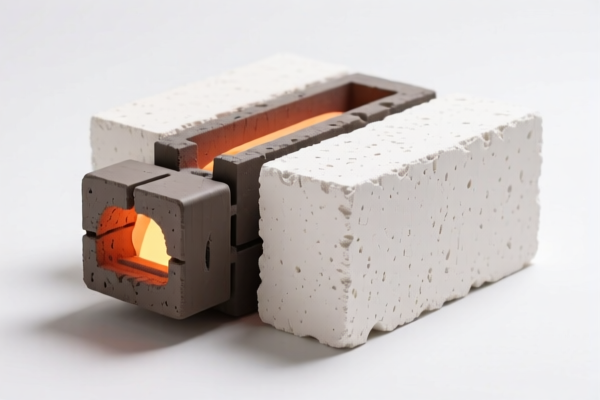



AI Analysis
🔥 Refractory Self-Flow Casting Material (Self-Flowing Castable)
🌐 HS Code Reference & Customs Clearance Guide | 2026 Latest Tariff Analysis | Professional Level Strategy
"Refractory Self-Flow Casting Material" is a specialized industrial material used in high-temperature industrial furnaces, kilns, and boilers. Its key characteristics are refractoriness (ability to withstand high heat) and self-flowing (high fluidity without vibration during placement).
In international trade, classification depends heavily on whether customs authorities view it as a raw mineral, a cement-based concrete product, or a chemical preparation.
⚠️ Key Classification Dilemma: - Is it a Mineral Product (Group 25)? → Lower Duty - Is it a Cement/Concrete Product (Group 68)? → Higher Duty - Is it a Chemical Preparation (Group 38)? → Medium Duty
Note: The following analysis strictly adheres to the provided DATA constraints.
📦 二、HS Code Classification Details (Based on Provided Data)
| HS Code | Product Description | Summary from DATA | Applicable Scenario |
|---|---|---|---|
2530.90.80.15 |
Other Mineral Substances | "Casting material" fits the form of "other mineral substances." Belongs to the broad category of mineral pigments/substances. | Raw mineral-based refractories; simple mineral mixes. |
2530.90.80.50 |
Other Unnamed Mineral Substances | "Casting material" is a primary inorganic mineral derivative. Fits "other unnamd mineral substances." | Inorganic mineral derivatives; basic raw state. |
6810.11.00.10 |
Refractory Cement/Concrete Products | "Casting material" falls under cement/concrete/man-made stone. "Refractory" attribute matches magnesia-based refractory materials. | Cement-based refractory castables; oxide-magnesium based. |
6810.19.50.00 |
Other Cement/Concrete/Man-made Stone Products | Refractory casting material is a cement/concrete product. "Self-flowing" attribute matches man-made stone forms. Falls under "Other" category. | Self-flowing refractory concretes; complex man-made stone forms. |
3824.50.00.10 |
Chemical Preparations (Non-refractory Mortar) | Belongs to "non-refractory mortar and concrete" chemical preparations. "Self-flowing" characteristic matches "wet" form features. | Chemical additive-heavy mixtures; wet-form chemical preparations. |
🔍 Critical Distinction: - If the product is primarily mineral aggregate + binder, it often falls under 2530 or 6810. - If the product contains significant chemical additives for flowability, customs may push for 3824, but note the contradiction in summary ("Non-refractory" vs. Product Name "Refractory"). Risk: Misclassification. - 6810 is the most common for "Refractory Castables" if cementitious.
💰 三、2026 Latest Tariff Rate Details (US Origin: China)
✅ Applicable Country: United States (US) ✅ Origin: China (CN) ✅ Effective Time: Current Trade Policies (including Section 301 & IEEPA)
🎯 1. 2530.90.80.15 & 2530.90.80.50 —— Mineral Substances
| Item | Content |
|---|---|
| Base Tariff | 0.0% |
| Section 301 Additional Tariff | 0.0% |
| 122-Clause Tariff (IEEPA) | +10% |
| Total Effective Rate | 10.0% |
| Tax Calculation | CIF Value × 10% |
| De Minimis Eligibility | ❌ No (Deny de minimis for China origin under current rules for industrial minerals) |
| Legal Path | IEEPA:9903.01.24 → USITC:2530.90.80.15/50 |
📌 Explanation: - These codes classify the material as a basic mineral substance. - The 10% tariff is applied under 122-Clause Tariffs (often associated with IEEPA authorities). - No Section 301 (25%) additional tariff applies here, making this the most cost-effective classification if defensible.
🎯 2. 3824.50.00.10 —— Chemical Preparations
| Item | Content |
|---|---|
| Base Tariff | 0.0% |
| Section 301 Additional Tariff | +25.0% |
| 122-Clause Tariff (IEEPA) | +10% |
| Total Effective Rate | 35.0% |
| Tax Calculation | CIF Value × 35% |
| De Minimis Eligibility | ❌ No |
| Legal Path | IEEPA:9903.01.24 → USITC:3824.50.00.10 |
📌 Explanation: - This classification treats the material as a chemical preparation. - Subject to 25% Section 301 Tariff + 10% IEEPA 122 Tariff. - Risk: The summary mentions "Non-refractory mortar," which contradicts the product name "Refractory." This could lead to customs challenges.
🎯 3. 6810.11.00.10 & 6810.19.50.00 —— Refractory Cement/Concrete
| Item | Content |
|---|---|
| Base Tariff | 3.2% (6810.11) / 3.9% (6810.19) |
| Section 301 Additional Tariff | +25.0% |
| 122-Clause Tariff (IEEPA) | +10% |
| Total Effective Rate | 38.2% (6810.11) / 38.9% (6810.19) |
| Tax Calculation | CIF Value × 38.2%/38.9% |
| De Minimis Eligibility | ❌ No |
| Legal Path | IEEPA:9903.01.24 → USITC:6810.11.00.10/6810.19.50.00 |
📌 Explanation: - This is the most common classification for refractory castables. - Subject to 25% Section 301 Tariff + 10% IEEPA 122 Tariff + Base Duty. - Highest Total Cost among the options.
🛠️ 四、Customs Clearance Practical Advice (Real-World Pitfall Guide)
✅ 1. Document Checklist (Must-Have)
| Document | Required | Notes |
|---|---|---|
| ✅ Technical Data Sheet (TDS) | ✔️ | Must specify "Refractory" property, composition (magnesia, alumina, etc.), and use temperature. |
| ✅ MSDS (Material Safety Data Sheet) | ✔️ | Required for chemical handling; confirms non-hazardous status. |
| ✅ Product Photos | ✔️ | Show packaging, label, and material state (powder/pre-mix). |
| ✅ Commercial Invoice | ✔️ | Clearly state "Refractory Self-Flow Casting Material" + HS Code. |
| ✅ Certificate of Origin | ✔️ | Proof of China origin triggers Section 301/IEEPA tariffs. |
✅ 2. Classification Strategy (Key Mantra)
🔥 "Mineral Base = Low Duty, Cement Base = High Duty, Chemical Additive = Medium Duty"
| Scenario | Recommended HS Code | Duty Rate | Risk Level |
|---|---|---|---|
| High Mineral Content, Simple Binder | 2530.90.80.15 or 2530.90.80.50 |
10.0% | ⚠️ Medium (Need to prove it's not cement) |
| Cementitious, Refractory, Self-Flowing | 6810.11.00.10 or 6810.19.50.00 |
38.2-38.9% | ✅ Low (Most standard classification) |
| High Chemical Additives, Flow Agents | 3824.50.00.10 |
35.0% | ⚠️ High (Contradiction in "Non-refractory" vs "Refractory") |
✅ 3. Special Situations
| Situation | Advice |
|---|---|
| Dispute on "Mineral" vs "Cement" | If using 2530, provide chemical composition analysis showing no cementitious binding agents (like Portland cement). |
| Self-Flowing Feature | Emphasize "Self-Flowing" as a physical property, not a chemical preparation. This supports 2530 or 6810. |
| Packaging | Ensure bags are labeled correctly. "Refractory" must be prominent to avoid being miscategorized as general construction concrete. |
| Origin Marking | Clearly mark "Made in China" to avoid surprise duties if origin is questioned. |
📌 五、Common Errors & Pitfalls (Lessons Learned)
❌ Error 1: Classifying as 2530 without proving it's not cement-based.
👉 Consequence: Customs reclassifies to 6810 → 28.2-28.9% penalty + interest.
❌ Error 2: Using 3824 for a refractory product.
👉 Consequence: Summary says "Non-refractory mortar." Customs rejects due to product description mismatch.
❌ Error 3: Ignoring the 122-Clause Tariff (10%). 👉 Consequence: Underpayment of 10% on all classifications → Penalty + Seizure.
✅ Correct Practice:
"Refractory Self-Flowing Castable, Magnesia-Based, High-Temperature Industrial Furnace Lining, HS 6810.11.00.10, 38.2% Duty"
🎯 六、Conclusion: Strategic Recommendation
🎯 Best Cost-Saving Strategy: If your product is mineral-based (e.g., magnesia, chrome, spinel) and not cementitious, fight for HS 2530.90.80.15/50 to reduce duty from ~38% to 10%.
🎯 Safest Standard Strategy: For standard refractory castables, use HS 6810.11.00.10 (38.2%). It is the most defensible and widely accepted classification for refractory concretes.
📌 Final Tip: Always request an Advance Ruling from CBP if the product composition is complex. The difference between 10% and 38.2% is a 28.2% cost gap – significant for bulk industrial shipments.
✨ Professional Customs Clearance, Starting with Precise Classification! 💼 Your Every Penny, Deserves Precise Calculation!
Customer Reviews
About HS Code Classification
The Harmonized System (HS) is an internationally standardized nomenclature developed by the World Customs Organization (WCO) to classify traded products. Over 200 countries use the HS system as the basis for customs tariffs, trade statistics, and import/export regulations.
Each HS code follows a hierarchical structure:
- Chapter (2 digits) — Broad category of goods (e.g., Chapter 84: Machinery and Mechanical Appliances)
- Heading (4 digits) — More specific grouping within the chapter
- Subheading (6 digits) — Internationally standardized breakdown, used by all WCO member countries
- National subdivisions (8-10 digits) — Country-specific extensions for further classification, such as US HTSUS 10-digit codes
Correct HS code classification is essential for smooth customs clearance, accurate duty payment, and compliance with trade regulations. Misclassification can lead to customs delays, overpayment of duties, or penalties.
When importing from CN to US, the applicable tariff rates may include:
- Most-Favored-Nation (MFN) rate — The standard duty rate applied to WTO members
- General rate — Applied to countries without trade agreements
- Trade remedy duties — Additional tariffs such as Section 301 (anti-dumping), Section 232 (national security), or countervailing duties
The information provided on this page is for reference purposes only. For official classification, please consult with your local customs authority or a licensed customs broker.