Refrigerant Mixture (for Recovery)
CN → US| HS Code | Tariff Rate | Origin | Destination | Doc |
|---|---|---|---|---|
| 2903490000 | 13.7% | CN | US | Official Doc |
| 3827690000 | 38.7% | CN | US | Official Doc |
| 3824995500 | 38.7% | CN | US | Official Doc |
| 3827390000 | 38.7% | CN | US | Official Doc |
Product Images
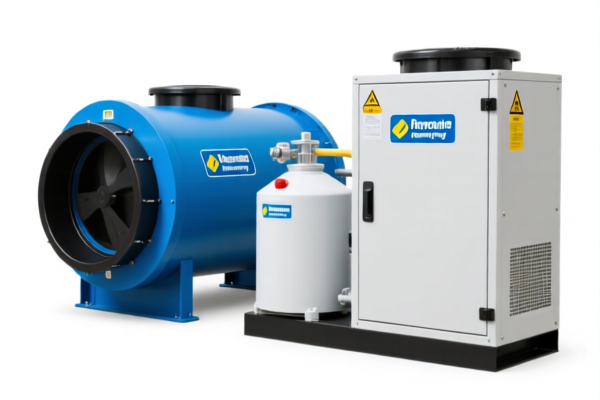
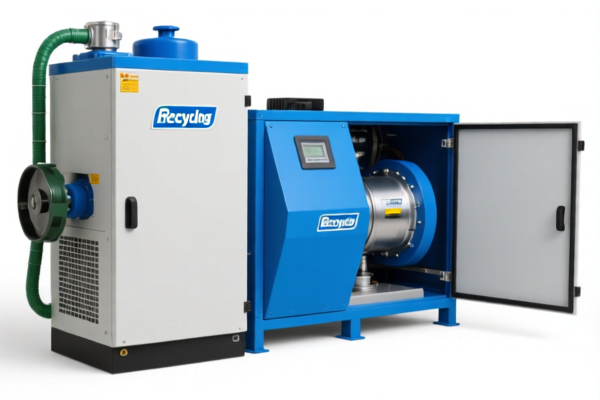
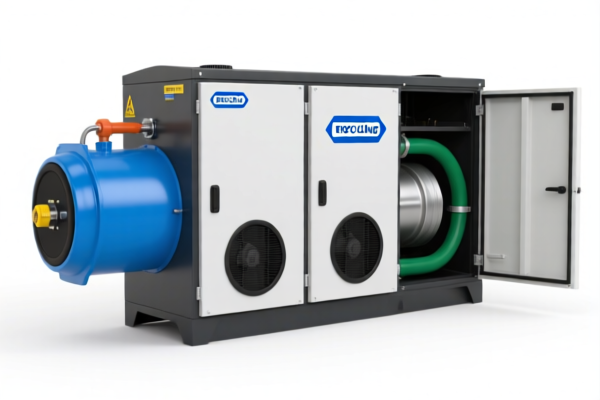
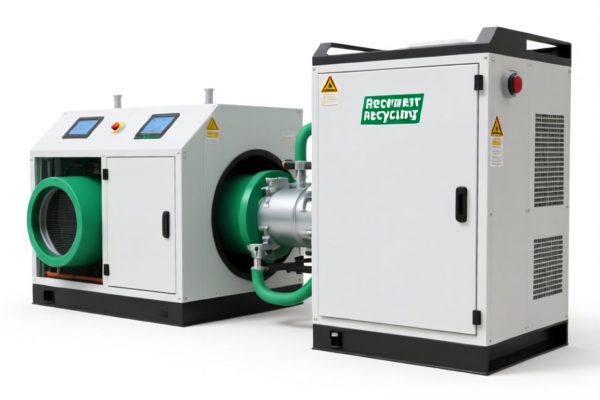
AI Analysis
❄️ Refrigerant Mixture (for Recovery)
🌐 HS Code Reference & Customs Clearance Guide | 2026 Latest Tariff Analysis | Professional Clearance Strategy
📌 I. Product Definition and Classification: Do You Really Understand "Refrigerant Mixture"?
Refrigerant mixtures, specifically those designated "for Recovery", are complex chemical blends used in cooling systems. In international trade, their classification is not straightforward because it depends heavily on their chemical composition (halogenated vs. non-halogenated derivatives) and specific chemical family (HCFCs, HFCs, etc.).
The term "for Recovery" implies the substance is either recycled, reclaimed, or intended for the recovery process from existing systems, but customs classification is based on the chemical nature of the substance itself, not its end-use status, unless specific exemptions apply.
⚠️ Key Distinction Point:
- If the mixture is a derivative of halogenated hydrocarbons (Halogens present) but does not fit specific sub-categories for pure HCFCs/HFCs → Chapter 29.
- If the mixture contains specific halogenated derivatives of methane, ethane, or propane (HFCs) → Chapter 38 (3827).
- If it is a general halogenated hydrocarbon mixture without specific chemical identity → Chapter 38 (3824).
- If it is specifically a mixture of Chlorofluorocarbons (HCFCs) or Hydrochlorofluorocarbons → Chapter 38 (3827).
📦 II. HS Code Classification Details (2026 Latest Tariff Authoritative Comparison)
Based on the provided data, the "Refrigerant Mixture (for Recovery)" is classified into four potential HS Codes depending on its precise chemical makeup. The tax rates vary significantly due to US trade policies (Section 301 and IEEPA).
| HS Code | Product Description | Application Scenario | Chemical Characteristic |
|---|---|---|---|
2903.49.00.00 |
Other halogenated derivatives of hydrocarbons (Mixed refrigerants) | General halogenated refrigerant blends not fitting specific HFC/HCFC lists | ✅ Halogenated Hydrocarbon Derivative |
3827.69.00.00 |
Other Hydrofluorocarbons (HFCs) and their mixtures | Contains halogenated derivatives of methane, ethane, or propane (HFCs) | ✅ HFC Derivative |
3824.99.55.00 |
Other chemical products and preparations (Falling under general residue/mixture) | General halogenated hydrocarbon mixtures, "catch-all" category | ✅ Halogenated Hydrocarbon Mixture |
3827.39.00.00 |
Other mixtures containing fluorinated or chlorofluorinated hydrocarbons | Mixtures containing HCFCs (Hydrochlorofluorocarbons) and related derivatives | ✅ HCFC/Chlorofluorocarbon Mixture |
🔍 Important Reminder:
-2903.49.00.00has the lowest tax burden among these options because it is often classified under a different legal path (potentially fewer Section 301 penalties depending on specific ruling, though the data shows 13.7%).
-3827.69.00.00,3824.99.55.00, and3827.39.00.00all carry a higher tax burden (38.7%) due to the combination of base tariffs, Section 301 additional tariffs (25%), and IEEPA tariffs (10%).
- "For Recovery" does not automatically reduce the tariff. The chemical identity dictates the HS code.
💰 III. 2026 Latest Tariff Rate Details (Including Additional Taxes and Policy Surcharges)
✅ Applicable Country: United States (US)
✅ Country of Origin: China (CN)
✅ Effective Date: 2025/2026 (Current Trade Policies)
🎯 1. 2903.49.00.00 —— Halogenated Derivatives of Hydrocarbons (General Mix)
| Item | Content |
|---|---|
| Base Tariff | 3.7% |
| Section 301 Additional Tariff | 0.0% |
| IEEPA Tariff (122 Clause) | 10.0% |
| Total Tax Rate | 13.7% |
| Tax Calculation | CIF Value × 13.7% |
| De Minimis Eligibility | ❌ No (Commercial shipment) |
| Legal Basis Path | HTS:2903.49.00.00 → IEEPA:122 |
📌 Explanation:
- This classification yields the lowest total tax rate (13.7%).
- It avoids the heavy 25% Section 301 tariff, likely due to its specific chemical definition as a "halogenated derivative" rather than a "mixture of HFCs/HCFCs" which are heavily targeted.
- Critical: Ensure the chemical composition strictly fits "halogenated derivative" and not a broad "HFC mixture" to qualify for this lower rate.
🎯 2. 3827.69.00.00 —— Other Hydrofluorocarbons (HFCs)
| Item | Content |
|---|---|
| Base Tariff | 3.7% |
| Section 301 Additional Tariff | 25.0% |
| IEEPA Tariff (122 Clause) | 10.0% |
| Total Tax Rate | 38.7% |
| Tax Calculation | CIF Value × 38.7% |
| De Minimis Eligibility | ❌ No |
| Legal Basis Path | IEEPA:9903.01.24 → USITC:3827.69.00.00 → FOOTNOTE:9903.88.01 |
📌 Explanation:
- Applies if the mixture contains halogenated derivatives of methane, ethane, or propane (i.e., HFCs).
- Subject to full Section 301 penalties (25%) plus IEEPA (10%).
🎯 3. 3824.99.55.00 —— Other Chemical Mixtures (Halogenated Hydrocarbons)
| Item | Content |
|---|---|
| Base Tariff | 3.7% |
| Section 301 Additional Tariff | 25.0% |
| IEEPA Tariff (122 Clause) | 10.0% |
| Total Tax Rate | 38.7% |
| Tax Calculation | CIF Value × 38.7% |
| De Minimis Eligibility | ❌ No |
| Legal Basis Path | IEEPA:9903.01.24 → USITC:3824.99.55.00 → FOOTNOTE:9903.88.01 |
📌 Explanation:
- This is a "catch-all" category for halogenated hydrocarbon mixtures that don't fit specific HFC/HCFC headings.
- Despite being a "miscellaneous" code, it is not exempt from Section 301 tariffs because it falls under the broader chemical trade restrictions.
🎯 4. 3827.39.00.00 —— Other HCFC Mixtures
| Item | Content |
|---|---|
| Base Tariff | 3.7% |
| Section 301 Additional Tariff | 25.0% |
| IEEPA Tariff (122 Clause) | 10.0% |
| Total Tax Rate | 38.7% |
| Tax Calculation | CIF Value × 38.7% |
| De Minimis Eligibility | ❌ No |
| Legal Basis Path | IEEPA:9903.01.24 → USITC:3827.39.00.00 → FOOTNOTE:9903.88.01 |
📌 Explanation:
- Applies to mixtures containing Hydrochlorofluorocarbons (HCFCs) or related derivatives.
- HCFCs are environmentally restricted (Montreal Protocol), and imports from China face maximum additional tariffs.
🛠️ IV. Customs Clearance Practical Advice (Real-World Pitfall Avoidance Guide)
✅ 1. Required Documentation Checklist (No Exceptions)
| Document | Must Provide | Explanation |
|---|---|---|
| ✅ Technical Data Sheet (TDS) | ✔️ | Crucial. Must list exact chemical components (e.g., R-404A, R-410A) and percentages. |
| ✅ MSDS (Safety Data Sheet) | ✔️ | Must align with TDS. Highlight hazardous properties and flammability. |
| ✅ Product Photographs | ✔️ | Show labels, cylinders, and safety warnings. |
| ✅ Commercial Invoice | ✔️ | Clearly state "Refrigerant Mixture" and HS Code. Do not just write "Gas". |
| ✅ Certificate of Origin (CO) | ✔️ | Essential for determining origin-based tariffs (China vs. Non-China). |
| ✅ Packing List | ✔️ | Detail weight, volume, and packaging type (cylinders vs. drums). |
| ✅ EPA SNIA Form | ✔️ | If required, provide documentation that the refrigerant is EPA-approved or intended for recovery/recycling compliance. |
✅ 2. Declaration Tips (Key Mnemonic)
🔥 “Chemistry is King, Section 301 is Pain, Specify the Mix, Avoid the Rain!”
| Scenario | Correct Declaration | Wrong Approach |
|---|---|---|
| HFC-based Mixture (e.g., R-410A) | 3827.69.00.00 |
Declare as 2903.49 → Penalty for Misclassification |
| HCFC-based Mixture (e.g., R-409A) | 3827.39.00.00 |
Declare as 3824 → Audit Risk |
| Unknown/Complex Halogenated Mix | 2903.49.00.00 (if defensible) |
Declare as 3827 → Pay 38.7% instead of 13.7% |
| Recovery vs. New Gas | No Distinction in HS Code | Claiming "Recovery" for lower tax → Smuggling Risk |
📌 Note: "For Recovery" does not change the HS code. Customs looks at the chemical content. If you are importing reclaimed refrigerant, it is still a chemical mixture and subject to the same tariffs as new refrigerant unless specific bonded warehouse facilities are used.
✅ 3. Special Situation Handling
| Situation | Handling Advice |
|---|---|
| High Purity Chemicals | If the mixture is a pure chemical compound (not a blend), it may fall under Chapter 29 directly. Provide molecular formula. |
| EPA Regulations | Refrigerants are heavily regulated by the EPA (Environmental Protection Agency). Ensure SNAP (Significant New Alternatives Policy) compliance. Non-compliant refrigerants will be seized. |
| Hazmat Shipping | Most refrigerants are compressed gases or hazardous materials. Ensure IMDG/IATA compliance for air/sea freight. |
| Origin Diversification | If possible, source refrigerant from Vietnam, India, or Mexico to avoid China-origin tariffs. |
🌍 V. Global Market Comparison (2026 Latest)
| Country/Region | Recommended HS Code | Tariff (CN Origin) | Certification Requirements | Notes |
|---|---|---|---|---|
| 🇺🇸 USA | 2903.49.00.00 (Best Case) |
13.7% (vs 38.7% for 3827) | EPA SNIA, IEEPA Compliance | Highest Risk. Section 301 heavily impacts 3827. |
| 🇨🇳 China | 2903.49.00.00 / 3827.xx |
5-10% | CCC (if applicable) | No Section 301. Lower trade barriers. |
| 🇪🇺 EU | 2903.49.00.00 / 3827.xx |
0-6.5% | REACH, F-Gas Regulation | F-Gas Regulation strictly controls HFC/HCFC imports and usage quotas. |
| 🇦🇺 Australia | 2903.49.00.00 |
5% | ACS (Australian Certification Scheme) | Strict safety standards for compressed gases. |
| 🇯🇵 Japan | 2903.49.00.00 |
0-3% | JIS Standards | Low tariffs, high regulatory compliance for environmental safety. |
📌 Conclusion:
- USA is the most costly market due to Section 301 and IEEPA tariffs on chemical mixtures (especially under Chapter 38).
- Strategic Opportunity: If the chemical structure allows, classify under2903.49.00.00to save 25% in tariffs.
- EPA Compliance is non-negotiable for any refrigerant import into the US.
📌 VI. Common Mistakes & Pitfall Guide (Lessons from Blood and Tears)
❌ Mistake 1: Declaring "Refrigerant Gas" without chemical specifics
👉 Consequence: Customs issues a Request for Information (RFI) or Hold. Delay of 2-4 weeks.
❌ Mistake 2: Using 3827 codes when 2903 is applicable
👉 Consequence: Paying 38.7% instead of 13.7%. Overpayment of ~25% on CIF value.
❌ Mistake 3: Ignoring EPA F-Gas Rules
👉 Consequence: Seizure and Destruction of goods. Fines up to $37,530 per violation (per day).
❌ Mistake 4: Assuming "Recovery" means Duty-Free
👉 Consequence: Customs treats it as a standard chemical import. No duty exemption for recovered refrigerant unless in a bonded facility.
✅ Correct Practice:
"R-404A Refrigerant Mixture, 80% C404A/HFC Blend, Halogenated Derivative, For Industrial Cooling, Non-Flammable, Compressed Gas, EPA Compliant"
🎯 VII. Conclusion: Professional Declaration, Save Costs, Ensure Compliance
🎯 Remember the Mnemonic:
🔹 "Chemistry Dictates Code, 2903 Saves You Money, 3827 Hurts the Bottom Line, EPA Keeps You Safe!"
🔹 "HS Code Determines Fate, Tariff Differs by 25 Points, Declaration Matters for Profits!"
📌 Pro Tip:
If your refrigerant mixture originates from Vietnam, India, or Mexico, you may avoid IEEPA and Section 301 tariffs, reducing the rate to base rate only (~3.7%).
Recommendation: Apply for a Binding Ruling (Advance Ruling) from US Customs (CBP) to confirm the correct HS code (2903.49.00.00 vs 3827.xxxx) before shipment. This provides legal certainty.
📣 Immediate Action:
📞 Contact a Certified Customs Broker + Provide TDS/MSDS + Apply for CBP Advance Ruling
🚀 Let your refrigerant clear smoothly, legally, and profitably!
✨ Professional Clearance Starts with Precise Classification!
💼 Every Penny in Tariff is Worth Calculating!
Customer Reviews
About HS Code Classification
The Harmonized System (HS) is an internationally standardized nomenclature developed by the World Customs Organization (WCO) to classify traded products. Over 200 countries use the HS system as the basis for customs tariffs, trade statistics, and import/export regulations.
Each HS code follows a hierarchical structure:
- Chapter (2 digits) — Broad category of goods (e.g., Chapter 84: Machinery and Mechanical Appliances)
- Heading (4 digits) — More specific grouping within the chapter
- Subheading (6 digits) — Internationally standardized breakdown, used by all WCO member countries
- National subdivisions (8-10 digits) — Country-specific extensions for further classification, such as US HTSUS 10-digit codes
Correct HS code classification is essential for smooth customs clearance, accurate duty payment, and compliance with trade regulations. Misclassification can lead to customs delays, overpayment of duties, or penalties.
When importing from CN to US, the applicable tariff rates may include:
- Most-Favored-Nation (MFN) rate — The standard duty rate applied to WTO members
- General rate — Applied to countries without trade agreements
- Trade remedy duties — Additional tariffs such as Section 301 (anti-dumping), Section 232 (national security), or countervailing duties
The information provided on this page is for reference purposes only. For official classification, please consult with your local customs authority or a licensed customs broker.