Refrigeration Film
CN → US| HS Code | Tariff Rate | Origin | Destination | Doc |
|---|---|---|---|---|
| 3920620050 | 39.2% | CN | US | Official Doc |
| 3920992000 | 39.2% | CN | US | Official Doc |
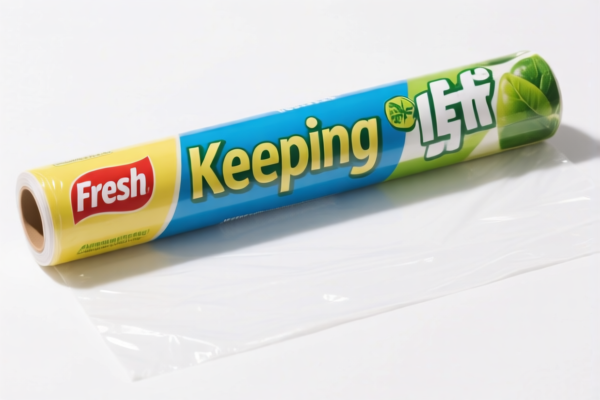
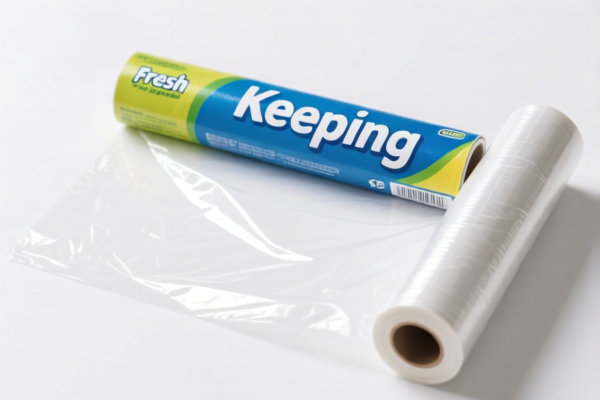
Product Images


AI Analysis
❄️ Refrigeration Film (Polycarbonates/Alkyd/Polyesters/PET & Other Plastics)
🌐 HS Code Reference & Customs Clearance Guide | 2026 Latest Tariff Analysis | Professional Clearance Strategy
📌 I. Product Definition & Classification: What Exactly is "Refrigeration Film"?
Refrigeration film is a specialized plastic packaging material designed for cold chain logistics, food preservation, and refrigerated storage. It requires high tensile strength, low-temperature flexibility, and often moisture/odor barrier properties. In international trade, the classification depends heavily on the material composition and whether it is metallized (coated with a thin layer of metal, usually aluminum, for barrier properties).
Based on the provided <DATA>, this product falls into two distinct HS Code categories based on the plastic type:
- Polyester-based (PET) Films: Specifically Metallized PET film. This is the most common type for high-barrier food packaging.
- Other Plastic Films: Non-cellular, non-reinforced films made from plastics other than polycarbonates, alkyd resins, polyallyl esters, or polyesters (e.g., PE, PP, PVC, though the data specifies "Other plastics" generally).
⚠️ Key Distinction Point:
- If the film is Metallized Polyethylene Terephthalate (PET) → It belongs to 3920.62.00.50.
- If the film is made of Other Plastics (non-PET) and is flexible (strip, sheet, film) → It belongs to 3920.99.20.00.
📦 II. HS Code Classification Details (2026 Latest Tariff Authority Comparison)
| HS Code | Product Description | Application Scenario | Material Type | Tax Rate (Total) |
|---|---|---|---|---|
3920.62.00.50 |
Other plates, sheets, film, foil, strip of plastics... Of polycarbonates, alkyd resins, polyallyl esters or other polyesters: Of poly(ethylene terephthalate) Metallized PET film: Other | High-barrier food packaging, frozen food bags, vacuum bags | Polyester (PET), Metallized | 29.2% |
3920.99.20.00 |
Other plates, sheets, film, foil and strip, of plastics, noncellular and not reinforced... Of other plastics: Film, strip and sheets... Other | General cold storage liners, stretch wrap, non-barrier plastic sheets | Other Plastics (Non-PET) | 0.0% |
🔍 Critical Reminder:
- Metallized PET is taxed significantly higher (29.2%) compared to other plastic films (0.0%).
- Do not misclassify Metallized PET as "Other Plastics" to avoid 0% tax; Customs will verify the material composition (often via lab testing) and penalize misdeclaration.
- "Other" in HS Code3920.62.00.50refers to Metallized PET films that are not specifically listed under other sub-headings (e.g., self-adhesive or specific industrial uses).
💰 III. 2026 Latest Tariff Rate Details (Including Surtaxes & Policy Add-ons)
✅ Applicable Country: United States (US)
✅ Origin: China (CN) (Note: Tax details provided in imply US-China trade context due to the specific "Add-on Tariff" structure common in US-China trade disputes)
✅ Effective Time: Current as of 2026 Data Provided
🎯 1. 3920.62.00.50 —— Metallized PET Film (Polyester-based)
| Item | Content |
|---|---|
| Base Tariff | 4.2% (Ad valorem) |
| Add-on Tariff (Section 301) | +25.0% |
| Total Tariff | 29.2% |
| Tax Calculation | CIF Value × 29.2% |
| De Minimis Exemption | ❌ Not Eligible (High duty rate usually excludes de minimis benefits for commercial shipments) |
| Legal Basis Path | HTSUS: 3920.62.00.50 → USITC Footnotes (Section 301) → China Origin Surtax |
📌 Explanation:
- The 29.2% total duty is a combination of the standard US Most Favored Nation (MFN) rate (4.2%) and the additional Section 301 tariffs imposed on Chinese goods.
- Metallized PET is considered a higher-value, processed plastic film, attracting the full surtax.
- This is a high-cost item for importers; margin compression is likely unless priced accordingly.
🎯 2. 3920.99.20.00 —— Other Plastic Films (Non-PET)
| Item | Content |
|---|---|
| Base Tariff | 0.0% |
| Add-on Tariff | 0.0% |
| Total Tariff | 0.0% |
| Tax Calculation | CIF Value × 0% = $0 |
| De Minimis Exemption | ✅ Eligible (if under $800 per shipment, though commercial imports should always declare) |
| Legal Basis Path | HTSUS: 3920.99.20.00 |
📌 Note:
- 0% duty makes this a highly competitive product for US importers.
- Ensure the product is strictly non-PET (e.g., Polyethylene, Polypropylene) to qualify. If it contains any Polyester layer, it may be reclassified.
🛠️ IV. Customs Clearance Practical Advice (Pitfall Avoidance Guide)
✅ 1. Documentation Checklist (Non-Negotiable)
| Document | Required | Description |
|---|---|---|
| ✅ Product Specification Sheet | ✔️ | Must clearly state: Material Composition (e.g., "100% PET", "PP", "PE"), Thickness, Metallized? (Yes/No), Thickness in microns. |
| ✅ Material Safety Data Sheet (MSDS) | ✔️ | Especially if used for food contact, though often less critical for film than for liquids/powders. |
| ✅ Commercial Invoice | ✔️ | Must explicitly state: "Plastic Film for Refrigeration", "Material: PET" or "Material: Other Plastic", "Metallized: Yes/No". |
| ✅ Bill of Lading (B/L) | ✔️ | Clear description of goods. Avoid vague terms like "Packaging Materials". |
| ✅ Packaging List | ✔️ | Weight and dimensions. |
| ✅ Certificate of Origin | ✔️ | To prove origin (China) for surtax calculation. |
✅ 2. Declaration Tips (Key Mnemonic)
🔥 "Material Dictates Code, Metallization Matters, PET Pays 29, Other Pays 0!"
| Scenario | Correct Declaration | Incorrect Practice |
|---|---|---|
| Metallized PET Film | HS 3920.62.00.50Desc: "Metallized PET Film" |
HS 3920.99.20.00 → High Risk of Audit & Back Tax + Penalty |
| Non-Metallized PET Film | HS 3920.62.00.50 (Check if specific sub-category applies) |
HS 3920.99.20.00 → Misclassification |
| PP/PE Cold Storage Wrap | HS 3920.99.20.00Desc: "Polypropylene Film for Refrigeration" |
N/A |
| Composite Film (e.g., PET/PE Laminated) | Complex! May fall under 3920.62 if PET is essential character |
Simple 3920.99 → Risk of Rejection |
✅ 3. Special Circumstances Handling
| Situation | Handling Advice |
|---|---|
| Laminated Films | If the film is a laminate (e.g., PET layer + PE layer), Customs may use the Essential Character rule. If PET is the outer/barrier layer, it may still fall under 3920.62. Consult a broker. |
| Food Contact | While HS Code doesn't change, ensure you have FDA compliance documents ready. Customs may request proof of food-safe materials. |
| Origin Marking | Each piece or inner package must be marked "Made in China" to avoid secondary penalties. |
| Valuation | Ensure transaction value includes all costs (freight, insurance) to correctly calculate the 29.2% or 0%. |
🌍 V. Global Main Market Customs Comparison (2026 Latest)
| Country/Region | Recommended HS Code | Tariff Rate (China Origin) | Certification Requirements | Notes |
|---|---|---|---|---|
| 🇺🇸 USA | 3920.62.00.50 (PET) |
29.2% | FDA (if food contact) | High tariff on PET. |
| 🇺🇸 USA | 3920.99.20.00 (Other) |
0.0% | FDA (if food contact) | Competitive advantage for non-PET. |
| 🇨🇳 China | 3920.62 / 3920.99 | ~5-10% | N/A | Export from US to China? (Reverse flow) |
| 🇪🇺 EU | 3920.62 / 3920.99 | 0-6.5% | REACH, RoHS | PET films often have lower EU tariffs. |
| 🇯🇵 Japan | 3920.62 / 3920.99 | 0-6% | PSE (if electrical) | Generally low tariffs. |
📌 Conclusion:
- USA is the most expensive market for Metallized PET films due to the 29.2% total duty.
- Non-PET films (Other Plastics) enjoy 0% duty in the US, making them strategically preferred if functionality allows.
- EU and Asia are more cost-effective for PET films, but supply chains are often US-centric.
📌 VI. Common Mistakes & Pitfall Guide (Lessons Learned)
❌ Mistake 1: Declaring "Metallized PET" as "Plastic Film" without specifying material.
👉 Consequence: Customs may assign 3920.99.20.00 (0%) but later audit and demand 29.2% back taxes + interest + penalties.
❌ Mistake 2: Ignoring the "Metallized" aspect.
👉 Consequence: Even non-metallized PET falls under 3920.62.00.50 in many interpretations if not specifically exempted. The 29.2% often applies to the entire polyester category in this HS sub-heading for US imports from China.
❌ Mistake 3: Using vague descriptions like "Cellophane" or "Wrap".
👉 Consequence: Delays in clearance, requests for additional documentation, and potential reclassification to higher-duty codes.
❌ Mistake 4: Not distinguishing between "Reinforced" and "Non-Reinforced".
👉 Consequence: If the film contains mesh or fabric reinforcement, it may fall under 3921 (Reinforced) instead of 3920, changing the tax rate. Ensure the product is non-reinforced.
✅ Correct Practice:
"Metallized Polyethylene Terephthalate (PET) Film, Non-celled, Non-reinforced, for Food Packaging, Made in China, Thickness 50 microns."
🎯 VII. Conclusion: Precision Declaration, Cost Optimization!
🎯 Remember the Mnemonic:
🔹 "PET Metallized? Pay 29.2%. Other Plastic? Pay 0%!
Don't Guess, Specify Material, Or Pay the Penalty!"
🔹 "HS Code is King, Tax Rate is Queen, Misclassification is the Enemy!"
📌 Pro Tip:
If your product is Laminated PET/PE, consult a customs broker to determine if the "Essential Character" rule favors PET (higher tax) or PE (lower tax). In some cases, proper classification of the laminate base layer might allow for a lower duty rate, but this is complex and risky.
📞 Immediate Action:
📞 Contact a Licensed Customs Broker + Provide Material Test Report + Apply for Binding Ruling (if value is high)
🚀 Ensure Smooth Customs Clearance, Minimize Duties, and Maximize Profit!
✨ Professional Clearance Starts with Accurate Classification!
💼 Every Cent of Tax Saved is a Cent of Profit Gained!
Customer Reviews
About HS Code Classification
The Harmonized System (HS) is an internationally standardized nomenclature developed by the World Customs Organization (WCO) to classify traded products. Over 200 countries use the HS system as the basis for customs tariffs, trade statistics, and import/export regulations.
Each HS code follows a hierarchical structure:
- Chapter (2 digits) — Broad category of goods (e.g., Chapter 84: Machinery and Mechanical Appliances)
- Heading (4 digits) — More specific grouping within the chapter
- Subheading (6 digits) — Internationally standardized breakdown, used by all WCO member countries
- National subdivisions (8-10 digits) — Country-specific extensions for further classification, such as US HTSUS 10-digit codes
Correct HS code classification is essential for smooth customs clearance, accurate duty payment, and compliance with trade regulations. Misclassification can lead to customs delays, overpayment of duties, or penalties.
When importing from CN to US, the applicable tariff rates may include:
- Most-Favored-Nation (MFN) rate — The standard duty rate applied to WTO members
- General rate — Applied to countries without trade agreements
- Trade remedy duties — Additional tariffs such as Section 301 (anti-dumping), Section 232 (national security), or countervailing duties
The information provided on this page is for reference purposes only. For official classification, please consult with your local customs authority or a licensed customs broker.