Refrigerator
CN → US| HS Code | Tariff Rate | Origin | Destination | Doc |
|---|---|---|---|---|
| 8418100085 | 35.0% | CN | US | Official Doc |
| 8418210010 | 35.0% | CN | US | Official Doc |
| 8418100010 | 35.0% | CN | US | Official Doc |
Product Images
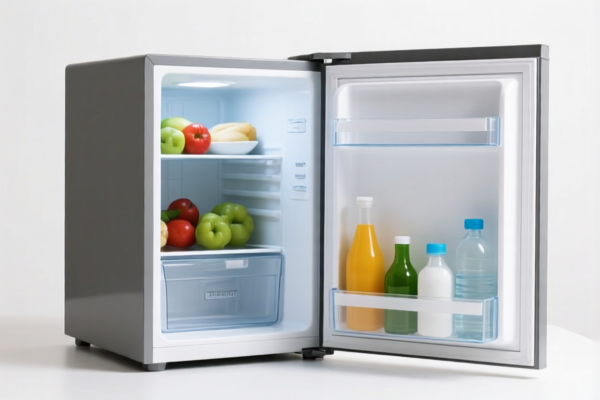
AI Analysis
🧊 Refrigerators (Electric Domestic Refrigerators)
🌐 HS Code Reference & Customs Clearance Guide | 2026 Latest Tariff Analysis | Professional Strategy 📌 One: Product Definition & Classification: Do You Really Understand "Refrigerators"?
Refrigerators are the backbone of food preservation and cold chain logistics. In international trade, they are broadly categorized by capacity, application, and structure:
- Household Refrigerators (Freezers): Designed for domestic use, typically categorized by volume (under/over 184L) and cooling method (compressor vs. absorption).
- Combination Fridges (Multi-Compartment): Units integrating separate refrigeration and freezing compartments within a single chassis.
- Commercial/Industrial: (Note: The data provided focuses on domestic/home-use equivalents).
⚠️ Key Classification Distinctions: * Capacity Matters: Units under 184 Liters are often classified specifically as "Small Refrigerators" (
8418.21.00.10), while others fall under broader categories. * Structure Matters: "Combination" units (freezer + fridge in one box) require specific sub-codes (8418.10.00.85) compared to standard models. * Function: Must be strictly for refrigeration/freezing without conflicting materials (e.g., no integrated cooking elements).
📦 Two: HS Code Classification Details (2026 Latest Tariff Authority)
Based on the provided data, here is the authoritative breakdown for Electric Refrigerators:
| HS Code | Product Description | Application / Scope | Tax Rate (Total) |
|---|---|---|---|
8418.10.00.10 |
Small Refrigerator (Domestic) | Fits definition of "Freezer/Fridge", domestic cooling equipment. | 35.0% |
8418.10.00.85 |
Combined Refrigerator | Combination Type (Fridge+Freezer), "Catch-all" category for general refrigerators. | 35.0% |
8418.21.00.10 |
Small Refrigerator (Under 184L) | Capacity < 184L, Small household appliance. | 35.0% |
8418.10.00.85 |
Standard Refrigerator (Combo) | Fits "Refrigerator" function, Combination or Compressor type. | 35.0% |
8418.10.00.85 |
General Electric Refrigerator | Fits function, Combination or Compressor type, generic catch-all. | 35.0% |
🔍 Critical Insight: * Regardless of the specific sub-code (
10or85), all listed refrigerator classifications carry a Total Tax of 35.0% due to current trade measures. * The distinction between8418.21.00.10(Small) and8418.10.00.85(General/Combo) lies primarily in volume (<184L) and structural configuration, but the tariff impact is identical.
💰 Three: 2026 Tariff Rate Breakdown (Including Add-ons & Policy Fees)
✅ Applicable Market: United States (US)
✅ Origin: China (CN)
✅ Effective Date: Current Trade Measures (Section 301 & 122)
🎯 1. Universal Refrigerator Tariff Structure
| Item | Content |
|---|---|
| Base Duty Rate | 0.0% (Most likely MFN duty for this category) |
| "Section 301" / Add-on Duty | +25.0% (Retaliatory/Section 301 tariff) |
| "Section 122" / Specific Tariff | +10.0% (Specific 122 Clause tariff) |
| Total Effective Tax Rate | 35.0% |
| Calculation Basis | CIF Value (Cost, Insurance, Freight) × 35% |
| De Minimis Exemption | ❌ Not Applicable (High value items like refrigerators do not qualify for low-value de minimis relief in this context) |
| Legal Path | Section 301 (25%) + 122 Clause (10%) = 35% |
📌 Explanation of the 35% Burden: 1. Base Duty (0%): The standard Most-Favored-Nation (MFN) tariff for electric refrigerators is often low or zero. 2. Add-on Tariff (25%): This is the primary "Section 301" tariff applied to Chinese goods to counter unfair trade practices. 3. 122 Clause (10%): A specific supplementary tariff (often related to Section 321 or specific legislative clauses) applied to this category. 4. Result: Even if the base duty is zero, the 35% surcharge makes importing refrigerators highly cost-sensitive.
🛠️ Four: Customs Clearance Practical Advice (Actionable Pitfall Avoidance)
✅ 1. Documentation Checklist (Non-Negotiable)
| Document | Required? | Critical Details for Customs |
|---|---|---|
| Product Spec Sheet | ✅ | Must explicitly state Capacity (Liters) and Type (Combination vs. Standalone). |
| Technical Diagram | ✅ | Must show Compressor or Cooling System to prove it is an "Electric Refrigerator" (HS 8418), not a "Cooler" (HS 7326 or similar). |
| Photos (Labeled) | ✅ | Must show the Nameplate with voltage, capacity, and model number. |
| Commercial Invoice | ✅ | Must clearly state "Electric Refrigerator" and the exact HS Code used. |
| Packing List | ✅ | Separate declaration of the unit vs. accessories (shelves, trays). |
✅ 2. Classification Strategy (The "35% Trap")
🔥 Golden Rule: "Capacity Defines the Code, Tax Rate Defines the Cost."
| Scenario | Correct Classification | Incorrect Classification (Risk) |
|---|---|---|
| Fridge < 184 Liters | 8418.21.00.10 |
8418.10.00.85 (May delay clearance, though tax is same) |
| Fridge+Freezer Combo | 8418.10.00.85 |
8418.21.00.10 (If >184L, this is wrong) |
| Large Fridge > 184L | 8418.10.00.85 (or similar) |
Any code implying <184L |
- Warning: Misdeclaring a 200L fridge as "Small" (
8418.21.00.10) will lead to Customs Penalties and Audit Triggers, even if the tax rate (35%) remains the same. Accuracy is key for compliance.
✅ 3. Special Handling Tips
- Voltage & Plug: Ensure the spec sheet mentions voltage conversion or compatibility (110V/220V) to prevent rejection by safety standards agencies (UL/ETL).
- "Combo" Definition: If the unit has a separate freezer door and fridge door, it must be declared as a Combination type (
8418.10.00.85), not a single-purpose fridge. - Material Check: Ensure the description does not imply "Portable" or "Absorption" cooling (which might fall under different codes) unless intended. The data provided assumes Compressor/Electric types.
🌍 Five: Global Market Comparison (2026 Context)
| Region | Recommended HS Code | Effective Duty | Key Requirement |
|---|---|---|---|
| 🇺🇸 USA | 8418.10.00.85 / 8418.21.00.10 |
35.0% | Strict: Section 301 (25%) + 122 Clause (10%) |
| 🇨🇳 China | 8418.10.00.10 |
~15-20% | CCC Certification |
| 🇪🇺 EU | 8418.10 |
~6-10% | ErP / Energy Label |
| 🇨🇦 Canada | 8418.10 |
~0-5% | Energy Star |
📌 Conclusion: The USA is the most challenging market for Chinese refrigerators due to the combined 35% tariff. * Strategy: If exporting to the US, factor in this 35% cost immediately. * Alternative: Consider sourcing or assembling in non-target countries (e.g., Vietnam, Mexico) to avoid the 25% Section 301 + 10% 122 Clause, if feasible.
📌 Six: Common Mistakes & Pitfalls (Lessons Learned)
❌ Mistake 1: Classifying a 200L Fridge as "Small" (8418.21.00.10).
👉 Consequence: Customs audit, fines, and potential seizure.
❌ Mistake 2: Ignoring the "122 Clause". 👉 Consequence: Calculating duty as only 25% instead of 35%. You will be short by 10% of the CIF value!
❌ Mistake 3: Declaring "Combination" units as single-purpose. 👉 Consequence: While tax is the same, incorrect description leads to delayed clearance while customs verifies the "Combination" status.
✅ Best Practice:
"Electric Refrigerator, Combination Type (Fridge/Freezer), 190L Capacity, Compressor Cooling, 120V, Model XYZ, Made in China."
🎯 Seven: Conclusion: Precision Pays!
🎯 Remember:
🔹 "Capacity First, Then Structure." (Under 184L? Use
...21.10. Otherwise? Use...10.85.). 🔹 "35% is the Floor." (Base 0% + 25% + 10% = 35%). 🔹 "Don't Guess the Clause." Always apply the 122 Clause 10% on top of the Section 301.
📌 Pro Tip:
If you are importing refrigerators for commercial use (e.g., hotel mini-bars) vs. household use, ensure your invoice reflects the intended use, as it impacts the "domestic" definition in some interpretations (though 8418.10 usually covers both).
🚀 Action Plan: 1. Verify Capacity (Is it <184L? Yes/No). 2. Verify Structure (Is it a Combo? Yes/No). 3. Apply the 35% Cost to your margin immediately. 4. File with Precise Descriptions to avoid delays.
✨ Professional Customs Clearance Starts with the Right Code! 💼 Your Margin is Safe When Your Declaration is Accurate!
Customer Reviews
About HS Code Classification
The Harmonized System (HS) is an internationally standardized nomenclature developed by the World Customs Organization (WCO) to classify traded products. Over 200 countries use the HS system as the basis for customs tariffs, trade statistics, and import/export regulations.
Each HS code follows a hierarchical structure:
- Chapter (2 digits) — Broad category of goods (e.g., Chapter 84: Machinery and Mechanical Appliances)
- Heading (4 digits) — More specific grouping within the chapter
- Subheading (6 digits) — Internationally standardized breakdown, used by all WCO member countries
- National subdivisions (8-10 digits) — Country-specific extensions for further classification, such as US HTSUS 10-digit codes
Correct HS code classification is essential for smooth customs clearance, accurate duty payment, and compliance with trade regulations. Misclassification can lead to customs delays, overpayment of duties, or penalties.
When importing from CN to US, the applicable tariff rates may include:
- Most-Favored-Nation (MFN) rate — The standard duty rate applied to WTO members
- General rate — Applied to countries without trade agreements
- Trade remedy duties — Additional tariffs such as Section 301 (anti-dumping), Section 232 (national security), or countervailing duties
The information provided on this page is for reference purposes only. For official classification, please consult with your local customs authority or a licensed customs broker.