Refrigerator Mat
CN → US| HS Code | Tariff Rate | Origin | Destination | Doc |
|---|---|---|---|---|
| 6307909891 | 24.5% | CN | US | Official Doc |
| 6307908940 | 17.0% | CN | US | Official Doc |
| 3926901000 | 20.9% | CN | US | Official Doc |
| 3926909989 | 22.8% | CN | US | Official Doc |
| 4016100000 | 35.0% | CN | US | Official Doc |
Product Images
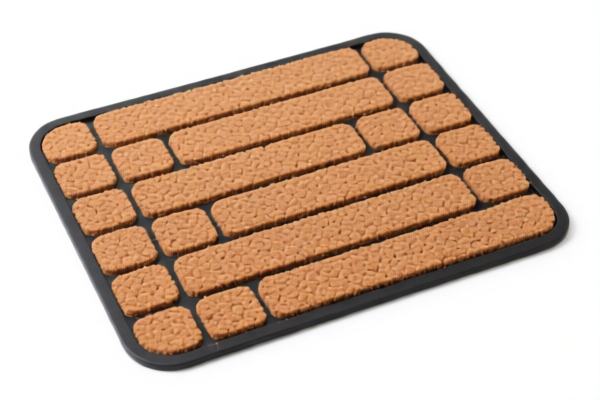
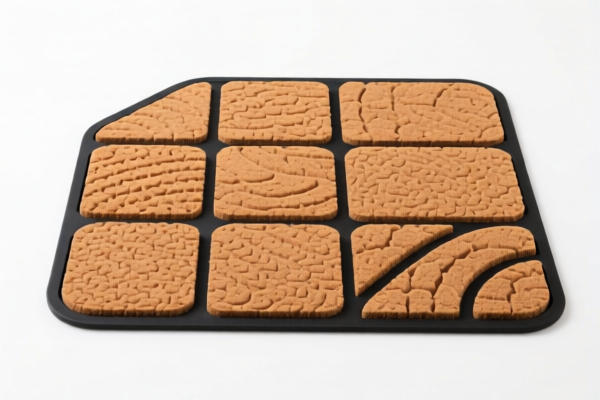
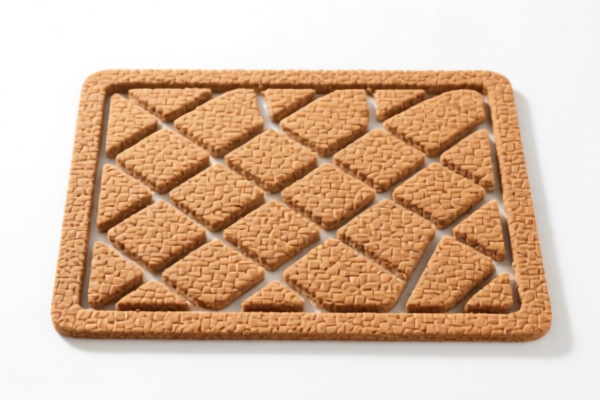
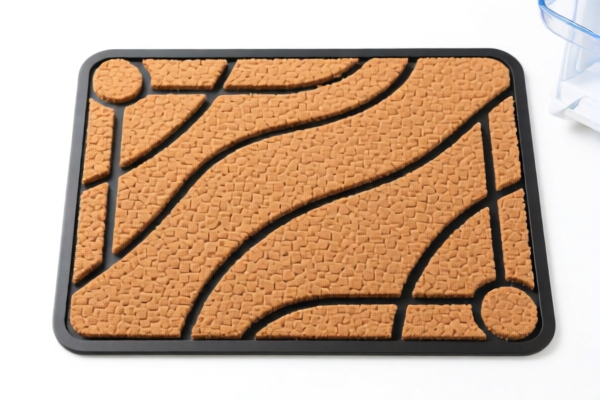
AI Analysis
🧊 Refrigerator Mats (Anti-Stain Fridge Liners)
🌐 HS Code Reference & Customs Clearance Guide | 2026 Latest Tariff Analysis | Professional-Level通关 Strategy
📌 I. Product Definition & Classification: Do You Really Understand "Refrigerator Mats"?
Refrigerator mats, often referred to as "anti-stain fridge liners," are essential household accessories designed to protect refrigerator shelves from spills, stains, and odors. In international trade, their classification varies significantly based on material composition and product form. They generally fall into two main categories:
1. Plastic/PVC/PE Mats: These are made from rigid or semi-rigid plastics, often featuring textured surfaces for grip. They are classified under Chapter 39 (Plastics).
2. Rubber/Silicone Mats: Made from natural rubber, synthetic rubber, or silicone, these are flexible and heat-resistant. They are classified under Chapter 40 (Rubber).
3. Textile/Composite Mats: Less common for "anti-stain" purposes, but if made primarily of fabric with a plastic backing, they might fall under Chapter 63 (Other Made-Up Textile Articles).
⚠️ Key Classification Point:
- If the mat is made of Plastic (PVC/PE) → Look at Chapter 39 (e.g., 3926.90.10.00, 3926.90.99.89).
- If the mat is made of Rubber/Silicone → Look at Chapter 40 (e.g., 4016.10.00.00).
- If the mat is considered a General Household Article (material ambiguous or textile-based) → Look at Chapter 63 (e.g., 6307.90.98.91, 6307.90.89.40).
📦 II. HS Code Classification Details (2026 Latest Tariff Authority Comparison)
Based on the provided data, here are the five possible HS Codes for "Refrigerator Mats," ranging from low to high tax burdens:
| HS Code | Product Description | Material | Application | Total Tax Rate (China Origin) |
|---|---|---|---|---|
6307.90.89.40 |
Other made-up articles, for household use | PVC or Silicone | Home accessories | 17.0% |
3926.90.10.00 |
Other plastic articles, anti-stain mats | Plastic (PVC/PE) | General plastic goods | 20.9% |
3926.90.99.89 |
Other plastic articles, finished mats | Plastic / PVC | Finished plastic products | 22.8% |
6307.90.98.91 |
Other made-up articles, specific anti-stain category | Plastic or Silicone | General household goods | 24.5% |
4016.10.00.00 |
Rubber mats, cold-resilient | Rubber or Synthetic | Cold storage/rubber goods | 35.0% |
🔍 Critical Insight:
- Lowest Tax (17.0%):6307.90.89.40is often used for PVC/Silicone household mats that are not strictly defined as "plastic articles" in Chapter 39.
- Highest Tax (35.0%):4016.10.00.00applies to rubber mats, which incur a significant 25% Section 301 tariff + 10% IEEPA tariff, making it the most expensive option.
- Plastic Variety: The two plastic codes (3926...) differ slightly in base tariffs (3.4% vs. 5.3%), leading to total rates of 20.9% and 22.8%.
💰 III. Detailed 2026 Tariff Breakdown (Including Surtaxes & Policy Add-ons)
✅ Applicable Country: United States (US)
✅ Origin: China (CN)
✅ Effective Time: Post-2025 (Including current import periods)
🎯 1. 6307.90.89.40 —— Household Anti-Stain Mats (PVC/Silicone)
(Recommended for Cost Efficiency)
| Item | Details |
|---|---|
| Base Tariff | 7.0% |
| Section 301 Surtax (421 List) | 0.0% |
| IEEPA Surtax (China) | 10.0% |
| Total Tariff Rate | 17.0% |
| Calculation | CIF Value × 17.0% |
| De Minimis Eligibility | ❌ No (Subject to full duties) |
| Legal Basis | IEEPA:9903.01.24 → USITC:6307.90.89.40 |
📌 Explanation:
- This code benefits from 0% Section 301 surtax (assuming it's not listed under the 25% bucket).
- Only the 10% IEEPA tariff applies.
- Total cost is significantly lower than rubber or certain plastic codes.
🎯 2. 3926.90.10.00 —— Plastic Anti-Stain Mats (PVC/PE)
| Item | Details |
|---|---|
| Base Tariff | 3.4% |
| Section 301 Surtax (421 List) | 7.5% |
| IEEPA Surtax (China) | 10.0% |
| Total Tariff Rate | 20.9% |
| Calculation | CIF Value × 20.9% |
| De Minimis Eligibility | ❌ No |
| Legal Basis | IEEPA:9903.01.24 → USITC:3926.90.10.00 |
📌 Explanation:
- Lower base tariff (3.4%) compared to other plastic codes.
- Adds 7.5% Section 301 + 10% IEEPA.
- Total: 20.9%.
🎯 3. 3926.90.99.89 —— Other Plastic Mats (PVC)
| Item | Details |
|---|---|
| Base Tariff | 5.3% |
| Section 301 Surtax (421 List) | 7.5% |
| IEEPA Surtax (China) | 10.0% |
| Total Tariff Rate | 22.8% |
| Calculation | CIF Value × 22.8% |
| De Minimis Eligibility | ❌ No |
| Legal Basis | IEEPA:9903.01.24 → USITC:3926.90.99.89 |
📌 Explanation:
- Higher base tariff (5.3%) than3926.90.10.00.
- Same surtaxes (7.5% + 10%).
- Total: 22.8%.
🎯 4. 6307.90.98.91 —— Other Made-Up Anti-Stain Articles
| Item | Details |
|---|---|
| Base Tariff | 7.0% |
| Section 301 Surtax (421 List) | 7.5% |
| IEEPA Surtax (China) | 10.0% |
| Total Tariff Rate | 24.5% |
| Calculation | CIF Value × 24.5% |
| De Minimis Eligibility | ❌ No |
| Legal Basis | IEEPA:9903.01.24 → USITC:6307.90.98.91 |
📌 Explanation:
- Higher Section 301 surtax (7.5%) compared to6307.90.89.40.
- Total: 24.5%.
🎯 5. 4016.10.00.00 —— Rubber Mats for Cold Storage
| Item | Details |
|---|---|
| Base Tariff | 0.0% |
| Section 301 Surtax (421 List) | 25.0% |
| IEEPA Surtax (China) | 10.0% |
| Total Tariff Rate | 35.0% |
| Calculation | CIF Value × 35.0% |
| De Minimis Eligibility | ❌ No |
| Legal Basis | IEEPA:9903.01.24 → USITC:4016.10.00.00 |
📌 Explanation:
- Highest burden: 25% Section 301 surtax + 10% IEEPA.
- Even with 0% base tariff, the total hits 35.0%.
- Avoid this code unless the product is strictly rubber and cannot be classified otherwise.
🛠️ IV. Customs Clearance Practical Advice (Battle-Tested Pitfall Guide)
✅ 1. Documentation Checklist (Non-Negotiable)
| Document | Required? | Notes |
|---|---|---|
| ✅ Product Specifications | ✔️ | Must state material (e.g., "100% PVC," "Silicone," "PE"). |
| ✅ Material Composition Report | ✔️ | Lab test results proving material type. Critical for Chapter 39 vs. 40 vs. 63. |
| ✅ Product Photos (Lifestyle + Detail) | ✔️ | Show texture, thickness, and packaging. |
| ✅ Commercial Invoice | ✔️ | Describe as "Anti-Stain Refrigerator Shelf Liner, PVC Material." |
| ✅ Packing List | ✔️ | Weight, dimensions, and unit count. |
| ✅ Certificate of Origin (CO) | ✔️ | If eligible for exemptions (rare for China origin). |
✅ 2. Declaration Strategy (Key Mnemonics)
🔥 "Material Defines Code, 301 Defines Cost, Precision Saves Cash!"
| Scenario | Correct Declaration | Wrong Practice | Consequence |
|---|---|---|---|
| PVC/Silicone Mat | 6307.90.89.40 (17%) |
Misclassify as Rubber (4016) |
+18% extra tax |
| Plastic (PE/PVC) Mat | 3926.90.10.00 (20.9%) |
Misclassify as Textile (6307.90.98.91) |
+3.6% extra tax |
| Rubber Mat | 4016.10.00.00 (35%) |
Try to declare as Plastic | Customs audit + penalty |
| Mixed Material | Provide Lab Test | Guessing the code | Delay + Possible Rejection |
📌 Tip:
- If the mat is flexible, smooth, and plastic-like, try to classify under6307.90.89.40(17%) or3926.90.10.00(20.9%).
- Avoid4016.10.00.00(35%) unless it is clearly rubber.
✅ 3. Special Cases
| Case | Handling Advice |
|---|---|
| Silicone Mats | Often classified under 6307.90.89.40 (17%) if not strictly rubber. Provide silicone-specific test reports. |
| Textile-Backed Mats | If the backing is fabric, may qualify for 6307.90.98.91 (24.5%) or 6307.90.89.40 (17%) depending on primary character. |
| Custom Sizes/Shapes | Does not change HS Code. Describe as "Custom-cut Anti-Stain Liner." |
🌍 V. Global Market Comparison (2026 Latest)
| Country/Region | Recommended HS Code | Tariff Rate (China Origin) | Notes |
|---|---|---|---|
| 🇺🇸 USA | 6307.90.89.40 |
17.0% | Best rate for PVC/Silicone. Avoid Rubber (35%). |
| 🇨🇳 China | 6307.90.89.40 |
Low/Zero | Import duties may be lower, check current CBRC rates. |
| 🇪🇺 EU | 3926.90.99 |
Varies | No Section 301 equivalent, but check anti-dumping. |
| 🇬🇧 UK | 6307.90.90 |
Varies | Post-Brexit rules apply. |
| 🇨🇦 Canada | 6307.90.90 |
Low | Generally lower tariffs for household plastics. |
📌 Conclusion:
- USA is the most critical market due to Section 301 and IEEPA tariffs.
- Optimize for6307.90.89.40(17%) or3926.90.10.00(20.9%).
- Avoid4016.10.00.00(35%) unless absolutely necessary.
📌 VI. Common Mistakes & Pitfalls (Lessons Learned)
❌ Mistake 1: Declaring a PVC mat as Rubber
👉 Consequence: Tax jumps from 17% to 35% → Lose 18% profit margin!
❌ Mistake 2: Using vague terms like "Fridge Accessory" without material specification
👉 Consequence: Customs may assign the highest possible rate or demand additional documentation.
❌ Mistake 3: Not providing Material Test Reports for Silicone vs. Rubber
👉 Consequence: Customs may classify as Rubber (4016) by default → 35% Tax.
✅ Best Practice:
"Anti-Stain Refrigerator Shelf Liner, 12x12 inch, 100% PVC Material, Food Grade, Non-Slip Surface, Model XYZ"
🎯 VII. Conclusion: Professional Classification, Maximize Profit!
🎯 Remember the Rule:
🔹 "Material Matters: PVC/Silicone = 17-21%, Rubber = 35%."
🔹 "Choose6307.90.89.40for PVC/Silicone to save 18% vs. Rubber!"
📌 Pro Tip:
If your refrigerator mats are shipped from Vietnam, Thailand, or Malaysia, you may be eligible for IEEPA exemptions or lower Section 301 rates.
Recommendation: Apply for an Advance Ruling before shipping to lock in the correct HS Code and tax rate.
📣 Take Action Now:
📞 Consult a licensed customs broker + Provide material specs + Request HS Code Pre-ruling
🚀 Ensure smooth clearance, minimize costs, and maximize your profit margin!
✨ Professional Customs Clearance Starts with Precise Classification!
💼 Every cent of tax saved is pure profit!
Customer Reviews
About HS Code Classification
The Harmonized System (HS) is an internationally standardized nomenclature developed by the World Customs Organization (WCO) to classify traded products. Over 200 countries use the HS system as the basis for customs tariffs, trade statistics, and import/export regulations.
Each HS code follows a hierarchical structure:
- Chapter (2 digits) — Broad category of goods (e.g., Chapter 84: Machinery and Mechanical Appliances)
- Heading (4 digits) — More specific grouping within the chapter
- Subheading (6 digits) — Internationally standardized breakdown, used by all WCO member countries
- National subdivisions (8-10 digits) — Country-specific extensions for further classification, such as US HTSUS 10-digit codes
Correct HS code classification is essential for smooth customs clearance, accurate duty payment, and compliance with trade regulations. Misclassification can lead to customs delays, overpayment of duties, or penalties.
When importing from CN to US, the applicable tariff rates may include:
- Most-Favored-Nation (MFN) rate — The standard duty rate applied to WTO members
- General rate — Applied to countries without trade agreements
- Trade remedy duties — Additional tariffs such as Section 301 (anti-dumping), Section 232 (national security), or countervailing duties
The information provided on this page is for reference purposes only. For official classification, please consult with your local customs authority or a licensed customs broker.