Refrigerator Storage Box
CN → US| HS Code | Tariff Rate | Origin | Destination | Doc |
|---|---|---|---|---|
| 4202999000 | 55.0% | CN | US | Official Doc |
| 3923102000 | 35.0% | CN | US | Official Doc |
| 3923109000 | 38.0% | CN | US | Official Doc |
| 3926901000 | 20.9% | CN | US | Official Doc |
| 4202929315 | 52.6% | CN | US | Official Doc |
| 3926909989 | 22.8% | CN | US | Official Doc |
Product Images
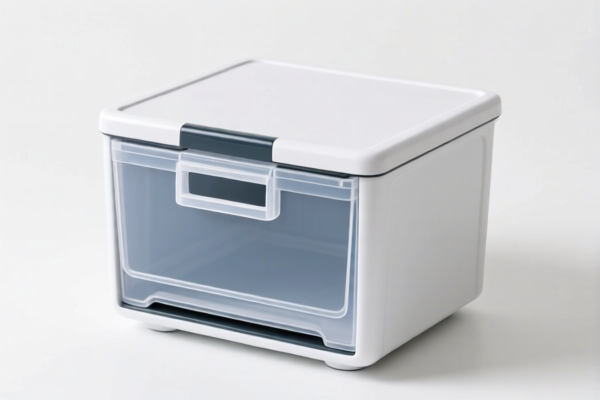
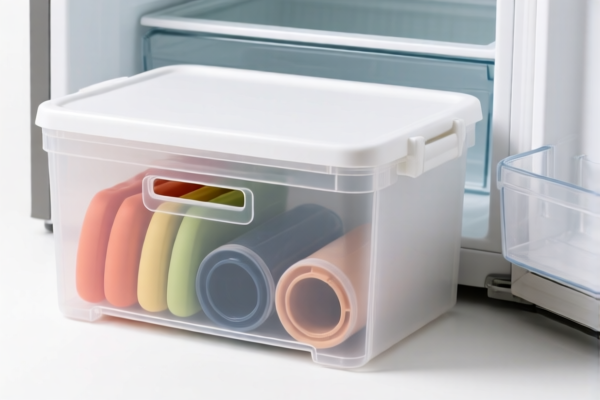
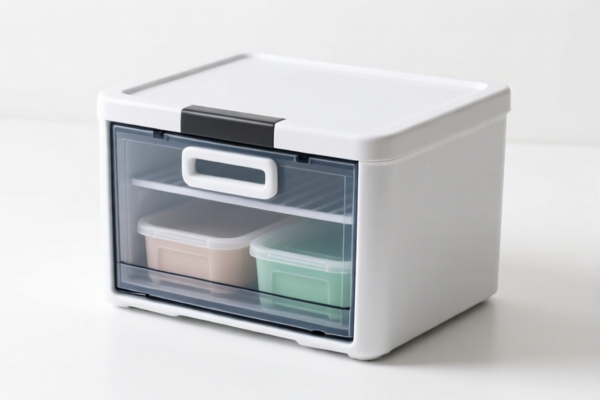
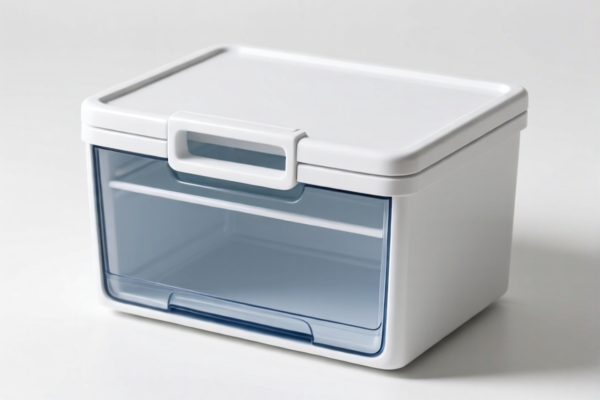
AI Analysis
🧊 Refrigerator Storage Box (Freezer Organizer Bins)
🌐 HS Code Reference & Customs Clearance Guide | 2026 Latest Tariff Analysis | Professional Strategy for US Imports
📌 Part I: Product Definition & Classification: Do You Really Know What a "Storage Box" Is?
Refrigerator storage boxes are essential organizational tools in modern kitchens, used to categorize and preserve food items. In international trade, the classification depends heavily on the material composition and specific design purpose. They generally fall into two main categories:
1. Plastic Packaging/Container Boxes (e.g., Hard Plastic Bins)
Used for bulk storage, often featuring handles or stackable designs. These are classified based on the plastic type and whether they are considered "packaging" or "general plastic articles."
2. General Containers/Bags (e.g., Fabric, Paper, or Mixed Material)
If the box is made of textile (fabric-lined) or paperboard, or if it lacks the rigid structure of typical plastic packaging, it may fall under Chapter 42 (Articles of Apparel, Clothing Accessories, etc.) or other miscellaneous categories.
⚠️ Key Distinction Point:
- If the item is rigid plastic, used for containment and stacking → Usually Chapter 39 (Plastics).
- If the item is soft/fabric, paper-based, or miscellaneous articles not specifically defined as packaging → Usually Chapter 42 or 39.96.
- Critical Warning: Many importers mistakenly classify all storage boxes under one HS Code. However, the material dictates the tariff rate, which can vary from 0% to 55%.
📦 Part II: HS Code Classification Details (2026 Latest Tariff Authority Cross-Reference)
| HS Code | Product Description | Material/Type | Tax Rate Summary |
|---|---|---|---|
4202.99.90.00 |
Containers for carrying food or drink, other than those of heading 4202 or 4203 | Mixed/Textile/General (e.g., fabric-lined, paperboard, or unspecified material) | 55.0% |
3923.10.20.00 |
Boxes, cases, crates, and similar articles, of plastics (Specific subcategory) | Plastic (Strict plastic packaging definition) | 35.0% |
3923.10.90.00 |
Boxes, cases, crates, and similar articles, of plastics (General plastic packaging) | Plastic (Standard rigid plastic boxes) | 38.0% |
3926.90.10.00 |
Other articles of plastics (Household containers not as packaging) | Plastic (Non-packaging household use) | 20.9% |
4202.92.93.15 |
Articles of apparel, clothing accessories, or other articles of textiles (with plastic coating/surface) | Textile-based (Outer surface involves textiles, possibly with plastic liner) | 52.6% |
3926.90.99.89 |
Other plastic articles (General miscellaneous plastic items) | Plastic (General plastic household articles, no specific packaging feature) | 22.8% |
🔍 Key Insight:
- Plastic vs. Non-Plastic: The biggest differentiator is material. If it’s plastic, it stays in Chapter 39. If it’s fabric/paper, it jumps to Chapter 42.
- Packaging vs. Household: Even if plastic, is it "packaging" (3923) or a "general article" (3926)? This affects the base rate (0% vs. 5.3%).
💰 Part III: 2026 Latest Tariff Rate Breakdown (Including Additional Duties & Policy Surcharges)
✅ Applicable Country: United States (US)
✅ Country of Origin: China (CN)
✅ Effective Date: November 10, 2025 (and subsequent imports)
🎯 1. 4202.99.90.00 —— Miscellaneous Containers (Textile/Paper/Mixed Material)
| Item | Details |
|---|---|
| Base Tariff | 20.0% (ad valorem) |
| Section 301 Additional Tariff | +25.0% |
| IEEPA Additional Tariff | +10.0% (Targeting China/HK products) |
| Total Effective Rate | 55.0% |
| Calculation Basis | CIF Value × 55% |
| De Minimis Exemption | ❌ Not Eligible (deny_de_minimis) |
| Legal Path | IEEPA:9903.01.25 → USITC:4202.99.90.00 |
📌 Explanation:
- This is the highest tariff category. It applies if the storage box is made of fabric, paper, or mixed materials not covered under specific plastic packaging codes.
- Warning: If you import fabric-lined organizer bins, do NOT misclassify them as plastic to save tax. Customs will check materials and impose heavy penalties.
🎯 2. 3923.10.20.00 —— Plastic Boxes, Cases (Specific Plastic Packaging)
| Item | Details |
|---|---|
| Base Tariff | 0.0% |
| Section 301 Additional Tariff | +25.0% |
| IEEPA Additional Tariff | +10.0% |
| Total Effective Rate | 35.0% |
| Calculation Basis | CIF Value × 35% |
| De Minimis Exemption | ❌ Not Eligible |
| Legal Path | IEEPA:9903.01.25 → USITC:3923.10.20.00 |
📌 Explanation:
- This code is for rigid plastic boxes explicitly defined as packaging.
- Although the base rate is 0%, the additional tariffs push the total to 35%. This is cheaper than the textile category but still significant.
🎯 3. 3923.10.90.00 —— General Plastic Packaging Boxes
| Item | Details |
|---|---|
| Base Tariff | 3.0% |
| Section 301 Additional Tariff | +25.0% |
| IEEPA Additional Tariff | +10.0% |
| Total Effective Rate | 38.0% |
| Calculation Basis | CIF Value × 38% |
| De Minimis Exemption | ❌ Not Eligible |
| Legal Path | IEEPA:9903.01.25 → USITC:3923.10.90.00 |
📌 Explanation:
- This is a "catch-all" for plastic packaging boxes not in the more specific3923.10.20.
- 38% Total is higher than the 35% option due to the 3% base rate. Ensure your product description matches the specific code for 0% base rate if applicable.
🎯 4. 3926.90.10.00 —— Other Plastic Articles (Household Use)
| Item | Details |
|---|---|
| Base Tariff | 3.4% |
| Section 301 Additional Tariff | +7.5% |
| IEEPA Additional Tariff | +10.0% |
| Total Effective Rate | 20.9% |
| Calculation Basis | CIF Value × 20.9% |
| De Minimis Exemption | ❌ Not Eligible |
| Legal Path | IEEPA:9903.01.25 → USITC:3926.90.10.00 |
📌 Explanation:
- Crucial Distinction: If the storage box is not considered "packaging" (e.g., it’s a permanent household fixture, not a disposable or transport container), it may fall under 3926.
- Benefit: The Section 301 tariff is only +7.5% (not 25%) for some specific plastic articles under this heading.
- Strategy: If your product is a rigid, durable plastic bin for home organization, argue for "Household Article" rather than "Packaging" to reduce the 301 tariff from 25% to 7.5%.
🎯 5. 4202.92.93.15 —— Textile-Based Storage Containers
| Item | Details |
|---|---|
| Base Tariff | 17.6% |
| Section 301 Additional Tariff | +25.0% |
| IEEPA Additional Tariff | +10.0% |
| Total Effective Rate | 52.6% |
| Calculation Basis | CIF Value × 52.6% |
| De Minimis Exemption | ❌ Not Eligible |
| Legal Path | IEEPA:9903.01.25 → USITC:4202.92.93.15 |
📌 Explanation:
- Applies to storage boxes with an outer surface of textiles (e.g., fabric-covered bins, collapsible fabric organizers).
- High base tariff (17.6%) makes this category expensive. Avoid this classification if a plastic alternative is feasible.
🎯 6. 3926.90.99.89 —— General Miscellaneous Plastic Articles
| Item | Details |
|---|---|
| Base Tariff | 5.3% |
| Section 301 Additional Tariff | +7.5% |
| IEEPA Additional Tariff | +10.0% |
| Total Effective Rate | 22.8% |
| Calculation Basis | CIF Value × 22.8% |
| De Minimis Exemption | ❌ Not Eligible |
| Legal Path | IEEPA:9903.01.25 → USITC:3926.90.99.89 |
📌 Explanation:
- This is another "Household Plastic Article" code.
- Lowest Cost Plastic Option: At 22.8%, this is the cheapest option for plastic storage boxes, provided they do not fit the "Packaging" definition (3923).
- Strategy: If the box is a permanent household item (not for shipping/packaging), use this code to save ~15% compared to packaging codes.
🛠️ Part IV: Customs Clearance Practical Advice (Avoid Pitfalls)
✅ 1. Required Documentation Checklist
| Document | Mandatory? | Notes |
|---|---|---|
| ✅ Product Specification Sheet | ✔️ | Must detail material (e.g., "PP Plastic," "Polyester Fabric"), dimensions, and capacity. |
| ✅ Material Breakdown | ✔️ | Critical for distinguishing between 3923 (Packaging) and 3926 (Household). |
| ✅ Product Photos | ✔️ | Show the entire unit, including handles/lids, to prove it is a "container." |
| ✅ Commercial Invoice | ✔️ | Description must match HS Code reasoning (e.g., "Plastic Household Storage Bin" vs. "Plastic Packaging Box"). |
| ✅ Packing List | ✔️ | Ensure no mixed materials (e.g., plastic box with fabric lid) are misdeclared. |
✅ 2. Declaration Strategy (Key Mantra)
🔥 “Material First, Function Second; Packaging vs. Household is the Key!”
| Scenario | Correct Classification | Why? |
|---|---|---|
| Rigid Plastic Box, used for home organization | 3926.90.10.00 (20.9%) or 3926.90.99.89 (22.8%) |
Not "packaging" for transport; it’s a household article. Lower 301 tariff. |
| Plastic Box, intended for shipping/packaging | 3923.10.20.00 (35.0%) or 3923.10.90.00 (38.0%) |
Defined as packaging. Higher base or 301 tariffs apply. |
| Fabric/Collapsible Organizer Bin | 4202.99.90.00 (55.0%) |
Textile-based. Highest tariff. Avoid if possible. |
| Plastic Box with Fabric Insert | 4202.92.93.15 (52.6%) |
Outer surface involves textiles. High tariff. |
✅ 3. Special Considerations
| Situation | Handling Advice |
|---|---|
| Mixed Material Boxes | If a box has a plastic body and a fabric lid, Customs may classify it based on the primary material or the outer surface. If the outer surface is fabric, expect 52.6-55%. |
| "Packaging" Argument | Do NOT claim a reusable kitchen bin is "packaging" unless it is intended for transport. Misclassification can lead to audits. |
| De Minimis (Section 321) | ❌ NOT ELIGIBLE. All these HS Codes are subject to additional tariffs and do not qualify for the $800 de minimis exemption for small shipments. |
| Pre-Ruling | ✅ Strongly Recommended. File an Advance Ruling (Ruling Letter) with CBP to confirm if your specific design qualifies as "Household Article" (3926) rather than "Packaging" (3923). |
🌍 Part V: Global Market Comparison (2026)
| Country/Region | Recommended HS Code | Tariff Rate (China Origin) | Notes |
|---|---|---|---|
| 🇺🇸 USA | 3926.90.99.89 |
22.8% | Lowest cost for plastic household bins. |
| 🇺🇸 USA | 3923.10.20.00 |
35.0% | For plastic packaging boxes. |
| 🇺🇸 USA | 4202.99.90.00 |
55.0% | For textile/paper bins. |
| 🇪🇺 EU | 3923.21.00 |
0% + 6.5% VAT | Lower tariffs than US, no Section 301. |
| 🇨🇳 China | 3926.90.99.89 |
6.5% + 13% VAT | Domestic import tariff is low. |
📌 Conclusion:
- USA is the most expensive market due to Section 301 and IEEPA tariffs.
- Strategy: For US imports, maximize the use of3926codes (Household Articles) for plastic boxes to save ~15% in tariffs compared to3923(Packaging).
- Avoid Textiles: If possible, design storage boxes in plastic to avoid the 55% textile tariff.
📌 Part VI: Common Mistakes & Pitfalls (Blood Lessons)
❌ Mistake 1: Calling a plastic kitchen bin "Plastic Packaging" to avoid higher taxes.
👉 Consequence: Customs may reclassify it as Household (3926) with lower 301, OR if you over-declare value, face penalties. Actually, 3926 is cheaper (22.8%) than Packaging (35-38%). So, declaring it correctly as Household is better.
Correction: Always declare as "Household Storage Container" if it’s for home use, not transport packaging.
❌ Mistake 2: Classifying fabric organizers as "Plastic" because they have plastic frames.
👉 Consequence: If the outer surface is textile, it’s 52.6-55%. Misdeclaration leads to seizure + fines.
Correction: Be honest about material composition. Use 4202 codes.
❌ Mistake 3: Assuming De Minimis ($800 exemption) applies.
👉 Consequence: All these codes are excluded from de minimis. You must file formal entry and pay full duties.
Correction: Budget for 20-55% duty in your pricing model.
🎯 Part VII: Conclusion: Smart Classification, Maximize Profit!
🎯 Remember the Mantra:
🔹 "Plastic Household = 22.8%; Plastic Packaging = 35%; Textile = 55%!"
🔹 "Don't Call a Kitchen Bin 'Packaging' if it Stays in the Fridge!"
📌 Pro Tip:
If your storage boxes are made of Plastic, apply for an Advance Ruling to confirm they qualify as "Other Plastic Articles" (3926) rather than "Packaging" (3923). This simple argument can save you ~12-15% in total duties.
📣 Immediate Action:
📞 Consult a licensed customs broker.
📄 Provide detailed material specs (e.g., "100% PP Plastic, Stackable Design").
🚀 Optimize your HS Code strategy today to boost your margin!
✨ Professional Clearance Starts with Accurate Classification!
💼 Every Percentage Point Saved is Pure Profit!
Customer Reviews
About HS Code Classification
The Harmonized System (HS) is an internationally standardized nomenclature developed by the World Customs Organization (WCO) to classify traded products. Over 200 countries use the HS system as the basis for customs tariffs, trade statistics, and import/export regulations.
Each HS code follows a hierarchical structure:
- Chapter (2 digits) — Broad category of goods (e.g., Chapter 84: Machinery and Mechanical Appliances)
- Heading (4 digits) — More specific grouping within the chapter
- Subheading (6 digits) — Internationally standardized breakdown, used by all WCO member countries
- National subdivisions (8-10 digits) — Country-specific extensions for further classification, such as US HTSUS 10-digit codes
Correct HS code classification is essential for smooth customs clearance, accurate duty payment, and compliance with trade regulations. Misclassification can lead to customs delays, overpayment of duties, or penalties.
When importing from CN to US, the applicable tariff rates may include:
- Most-Favored-Nation (MFN) rate — The standard duty rate applied to WTO members
- General rate — Applied to countries without trade agreements
- Trade remedy duties — Additional tariffs such as Section 301 (anti-dumping), Section 232 (national security), or countervailing duties
The information provided on this page is for reference purposes only. For official classification, please consult with your local customs authority or a licensed customs broker.