Refrigerator Water Filter
CN → US| HS Code | Tariff Rate | Origin | Destination | Doc |
|---|---|---|---|---|
| 8421990140 | 35.0% | CN | US | Official Doc |
| 8509904500 | 39.2% | CN | US | Official Doc |
| 8509905500 | 39.2% | CN | US | Official Doc |
| 8421210000 | 35.0% | CN | US | Official Doc |
| 3926904590 | 13.5% | CN | US | Official Doc |
Product Images
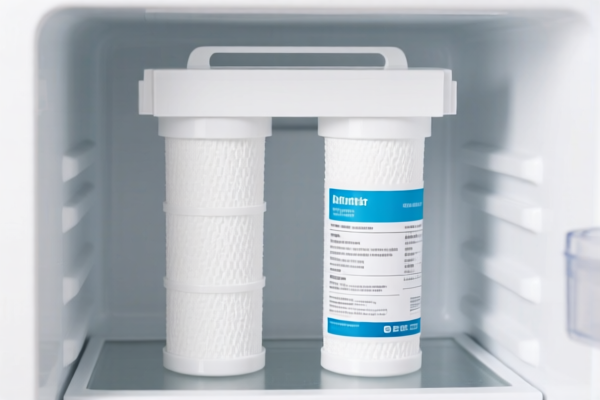
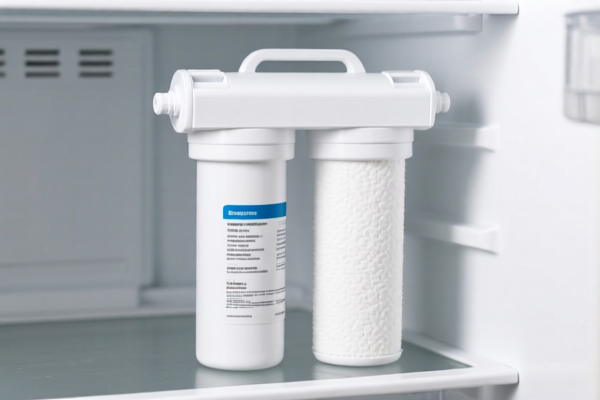
AI Analysis
💧 Refrigerator Water Filter (Fridge Filter)
🌐 HS Code Reference & Customs Clearance Guide | 2026 Latest Tariff Analysis | Professional-Level Clearance Strategy
📌 Part 1: Product Definition and Classification: Do You Really Understand "Refrigerator Water Filter"?
A Refrigerator Water Filter is a critical component for residential refrigerators, designed to remove impurities, sediments, chlorine, and heavy metals from drinking water. In international trade, its classification is contentious because it straddles two major categories: Water Treatment Machinery and Household Appliance Parts. The correct classification depends on whether customs views it as a "standalone filtration device" or merely a "replaceable spare part" of the refrigerator.
⚠️ Key Distinction:
- If classified under Chapter 84 (Machinery): It is viewed as a "water filtering machine part" or the filter itself as a small filtration unit.
- If classified under Chapter 85 (Electrical Machinery): It is viewed strictly as a "part/accessory" of the refrigerator (an electrical household appliance).
- If classified under Chapter 39 (Plastics): It is viewed primarily by its material composition (plastic housing) rather than function.
📦 Part 2: HS Code Classification Details (2026 Latest Tariff Authority Comparison)
| HS Code | Product Description | Application Scenario | Classification Logic |
|---|---|---|---|
8421.99.01.40 |
Parts of water filtering or purifying machinery | Filter treated as a component of a larger filtration system | ✅ Function First: Belongs to Ch 84 (Machinery for filtering/purifying water) |
8509.90.45.00 |
Parts of electromechanical domestic appliances | Filter treated as a spare part for the refrigerator (Ch 85) | ✅ Appliance Part: Belongs to Ch 85 (Parts of domestic electric appliances) |
8509.90.55.00 |
Parts of electromechanical domestic appliances | Alternative code for parts of domestic electric appliances | ✅ Appliance Part: Same logic as above, alternative subheading |
8421.21.00.00 |
Water filtering or purifying machines | Filter treated as a standalone small filtering device | ✅ Machine Category: Fits "machines for filtering or purifying water" directly |
3926.90.45.90 |
Other articles of plastic | Filter treated primarily as a plastic molded product | ✅ Material Based: Classified by raw material (plastic) rather than function |
🔍 Key Reminder:
- The choice of HS Code significantly impacts the total tax rate.
- Classifying as a Machinery Part (8421) or Machine (8421) incurs a higher base tax but no additional tariff on the base rate, leading to a 35.0% total effective rate.
- Classifying as an Appliance Part (8509) incurs a 4.2% base tax, but the same additional tariffs apply, leading to a 39.2% total effective rate.
- Classifying by Material (3926) offers the lowest tax burden but carries a higher risk of customs reclassification if function is emphasized.
💰 Part 3: 2026 Latest Tariff Rate Breakdown (Including Surtaxes & Policy Add-ons)
✅ Applicable Country: United States (US)
✅ Origin: China (CN)
✅ Effective Time: From November 10, 2025 (including subsequent imports)
🎯 1. 8421.99.01.40 & 8421.21.00.00 —— Water Filtering Machinery / Parts
| Item | Content |
|---|---|
| Base Tariff | 0.0% (ad valorem) |
| USITC Surcharge (Section 301) | +25.0% |
| IEEPA Surcharge (Section 122/China) | +10.0% |
| Total Effective Rate | 35.0% |
| Tax Calculation | CIF Value × 35.0% |
| De Minimis Eligibility | ❌ Not Eligible (deny_de_minimis) |
| Legal Basis Path | USITC:8421.99.01.40 / 8421.21.00.00 → FOOTNOTE:301 → IEEPA:China |
📌 Explanation:
- Base Rate 0%: Machinery for filtering water often enjoys a low base duty under the Harmonized Tariff Schedule.
- 25% + 10% Surtaxes: Regardless of the 0% base, all Chinese-origin goods in these categories are subject to Section 301 tariffs (25%) and the additional 10% IEEPA tariff.
- Total 35%: This is the "Machinery Route." It avoids the 4.2% base tariff but hits the same surcharge wall.
🎯 2. 8509.90.45.00 & 8509.90.55.00 —— Parts of Electromechanical Domestic Appliances
| Item | Content |
|---|---|
| Base Tariff | 4.2% (ad valorem) |
| USITC Surcharge (Section 301) | +25.0% |
| IEEPA Surcharge (Section 122/China) | +10.0% |
| Total Effective Rate | 39.2% |
| Tax Calculation | CIF Value × 39.2% |
| De Minimis Eligibility | ❌ Not Eligible (deny_de_minimis) |
| Legal Basis Path | USITC:8509.90.45.00 / 8509.90.55.00 → FOOTNOTE:301 → IEEPA:China |
📌 Explanation:
- Base Rate 4.2%: As a "part of an electrical appliance," the base duty is higher than the machinery classification.
- 25% + 10% Surtaxes: The same punitive tariffs apply.
- Total 39.2%: This is the "Appliance Part Route." It is 4.2% more expensive than the Machinery Route.
- Risk: Customs may reclassify to this if they deem the filter inseparable from the fridge's electrical system.
🎯 3. 3926.90.45.90 —— Other Plastic Articles
| Item | Content |
|---|---|
| Base Tariff | 3.5% (ad valorem) |
| USITC Surcharge (Section 301) | 0.0% |
| IEEPA Surcharge (Section 122/China) | +10.0% |
| Total Effective Rate | 13.5% |
| Tax Calculation | CIF Value × 13.5% |
| De Minimis Eligibility | ❌ Not Eligible (deny_de_minimis) |
| Legal Basis Path | USITC:3926.90.45.90 → IEEPA:China |
📌 Explanation:
- Base Rate 3.5%: Lower base than appliance parts.
- 0% USITC (301) Surcharge: Crucial Difference! If classified correctly as plastic articles, it may escape the 25% Section 301 tariff.
- 10% IEEPA Surcharge: The 10% China-specific tariff still applies.
- Total 13.5%: This is the Lowest Tax Option.
- ⚠️ High Risk: This classification is aggressive. If customs determines the primary function is filtration (not just being a plastic object), they will reclassify to Ch 84 or Ch 85, leading to back taxes and penalties.
🛠️ Part 4: Customs Clearance Practical Advice (Battle-Tested Pitfall Avoidance)
✅ 1. Required Documentation Checklist (Non-Negotiable)
| Document | Must Provide | Description |
|---|---|---|
| ✅ Product Specification Sheet | ✔️ | Must detail filtration capacity, flow rate, filter media type (e.g., activated carbon), and material composition. |
| ✅ Structural Diagram | ✔️ | Show internal components to argue for "plastic article" or "filtering unit" vs. "simple spare part." |
| ✅ Product Photos (Clear Labels) | ✔️ | Must show model numbers, brand, and any "Made in China" marks. |
| ✅ Commercial Invoice | ✔️ | Description should be precise. E.g., "Water Filter Cartridge for Refrigerator, Model XYZ." Avoid vague terms like "Plastic Part." |
| ✅ Packing List | ✔️ | Clearly separate filters from refrigerators. Do not ship as a "kit" if you want to avoid appliance classification. |
| ✅ Material Composition Statement | ✔️ | Explicitly state the percentage of plastic, carbon, and other materials to support 3926 classification if attempted. |
✅ 2. Declaration Strategy (Key Mnemonic)
🔥 "Function Dictates Class, Material Lowers Cost, Separation Saves Money!"
| Scenario | Recommended Declaration | Wrong Approach | Consequence |
|---|---|---|---|
| Shipping filters alone | 8421.99.01.40 (Safe) or 3926.90.45.90 (Aggressive) |
8509.90.45.00 |
Missing out on 0% base tax |
| Shipping with Fridge | Declare as Accessory/Part of 8504 (Fridge) |
Separate declaration for filter | Risk of splitting goods incorrectly |
| Claiming Plastic Class | Emphasize "Plastic Housing, Replaceable" | Emphasize "Water Purification Technology" | Customs may reject 3926 for misdeclaration |
| OEM Custom Filters | Provide Customer PO + Tech Specs | Generic "Water Filter" | Risk of generic classification |
✅ 3. Special Handling for Specific Situations
| Situation | Handling Advice |
|---|---|
| High-End Smart Filters | If the filter has electronic chips/sensors, it must be classified under Ch 85 (8509). Do not try 3926 or 8421. |
| Bulk Industrial Filters | If used in commercial settings (not just home fridges), argue for 8421.21.00.00 as standalone machines. |
| Plastic Housing Only | If the core filter element is removed and only plastic parts are shipped, 3926 is viable. |
| Kit Sales (Fridge + Filter) | Declare the fridge under 8418.69.00.00 (Refrigerators). The filter can be listed as a "free gift" or minimal value part on the invoice to minimize duty impact, but ensure the fridge's HS code is correct. |
🌍 Part 5: Global Market Clearance Comparison (2026 Latest)
| Country/Region | Recommended HS Code | Total Tariff Rate | Certification Requirements | Notes |
|---|---|---|---|---|
| 🇺🇸 USA | 8421.99.01.40 |
35.0% (Safe) | NSF/ANSI 42/53 (Optional but recommended for market access) | 3926 is risky; 8509 is expensive. |
| 🇨🇳 China | 8421.99.01.40 |
5.0% - 8.0% | None | Low base tariff. |
| 🇪🇺 EU | 8421.21.00.00 |
0% - 2.5% | CE, ROHS, WEEE | No Section 301/IEEPA surcharges. |
| 🇬🇧 UK | 8421.21.00.00 |
0% - 2.5% | UKCA, ROHS | Post-Brexit alignment with EU standards. |
| 🇦🇺 Australia | 8421.21.00.00 |
5.0% | RCM | No high surcharges. |
📌 Conclusion:
- USA is the most difficult market due to Section 301 (25%) and IEEPA (10%) tariffs.
- Total Tax Difference: Between3926(13.5%) and8509(39.2%), the saving is 25.7%. However,3926carries significant legal risk.
- Strategy: For the US market,8421.99.01.40is the safest balance of cost (35%) and compliance. Avoid8509unless the filter is deeply integrated with the fridge's electronics.
📌 Part 6: Common Errors & Pitfall Guide (Lessons Learned)
❌ Error 1: Classifying a filter with electronic sensors as 3926 (Plastic).
👉 Consequence: Customs will reclassify to 8509 or 8538, resulting in back taxes + 25% surcharge + penalties.
❌ Error 2: Declaring "Refrigerator Part" when shipped separately.
👉 Consequence: Customs may view it as a standalone "Filtering Machine," shifting you to 8421. While the rate difference is small (35% vs 39.2%), the description inconsistency can cause hold-ups.
❌ Error 3: Ignoring the IEEPA 10% tariff.
👉 Consequence: Many importers calculate only the 25% Section 301 tariff. The additional 10% is mandatory for Chinese origin goods since Nov 2025. Failing to pay leads to customs holds.
❌ Error 4: Using vague descriptions like "Fridge Accessory."
👉 Consequence: Customs has discretion. A vague description invites the highest possible tariff classification or a detailed inspection.
✅ Correct Declaration Example:
"Water Filter Cartridge for Household Refrigerator, Model RF-2026, Contains Activated Carbon and Resin, Plastic Housing, Made in China."
🎯 Part 7: Conclusion: Precise Classification, Cost Efficiency!
🎯 Remember the Mnemonic:
🔹 "Filter Alone = 8421 (35%), Appliance Part = 8509 (39.2%), Plastic Risk = 3926 (13.5%)"
🔹 "Surcharge is King: 25% + 10% applies to almost all China-origin goods in these chapters."
📌 Pro Tip:
If you are importing large volumes, consider Advance Ruling (Pre-classification) from US Customs and Border Protection (CBP). This locks in your HS Code classification and protects you from future disputes.
📣 Immediate Action:
📞 Contact your Customs Broker with the technical datasheet.
📄 Prepare the Invoice with the exact phrase "Water Filtering Cartridge."
🚀 Optimize your supply chain by ensuring the HS Code is agreed upon before shipment to avoid 13.5% to 39.2% discrepancies!
✨ Professional Clearance Starts with Accurate Classification!
💼 Every percentage point of tariff is a point of profit!
Customer Reviews
About HS Code Classification
The Harmonized System (HS) is an internationally standardized nomenclature developed by the World Customs Organization (WCO) to classify traded products. Over 200 countries use the HS system as the basis for customs tariffs, trade statistics, and import/export regulations.
Each HS code follows a hierarchical structure:
- Chapter (2 digits) — Broad category of goods (e.g., Chapter 84: Machinery and Mechanical Appliances)
- Heading (4 digits) — More specific grouping within the chapter
- Subheading (6 digits) — Internationally standardized breakdown, used by all WCO member countries
- National subdivisions (8-10 digits) — Country-specific extensions for further classification, such as US HTSUS 10-digit codes
Correct HS code classification is essential for smooth customs clearance, accurate duty payment, and compliance with trade regulations. Misclassification can lead to customs delays, overpayment of duties, or penalties.
When importing from CN to US, the applicable tariff rates may include:
- Most-Favored-Nation (MFN) rate — The standard duty rate applied to WTO members
- General rate — Applied to countries without trade agreements
- Trade remedy duties — Additional tariffs such as Section 301 (anti-dumping), Section 232 (national security), or countervailing duties
The information provided on this page is for reference purposes only. For official classification, please consult with your local customs authority or a licensed customs broker.