Refrigerator Water Purifier
CN → US| HS Code | Tariff Rate | Origin | Destination | Doc |
|---|---|---|---|---|
| 8421990140 | 35.0% | CN | US | Official Doc |
| 8509904500 | 39.2% | CN | US | Official Doc |
| 8509905500 | 39.2% | CN | US | Official Doc |
| 8421210000 | 35.0% | CN | US | Official Doc |
| 3926904590 | 38.5% | CN | US | Official Doc |
Product Images
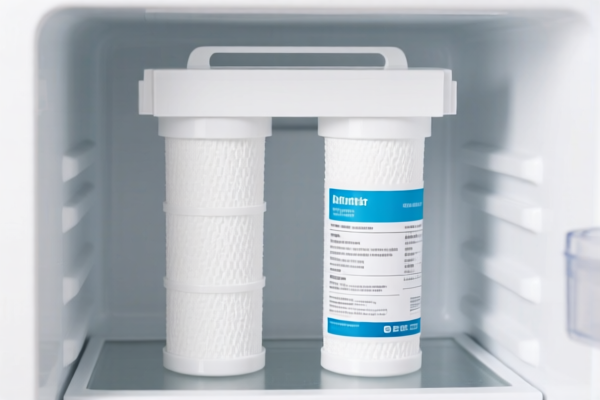
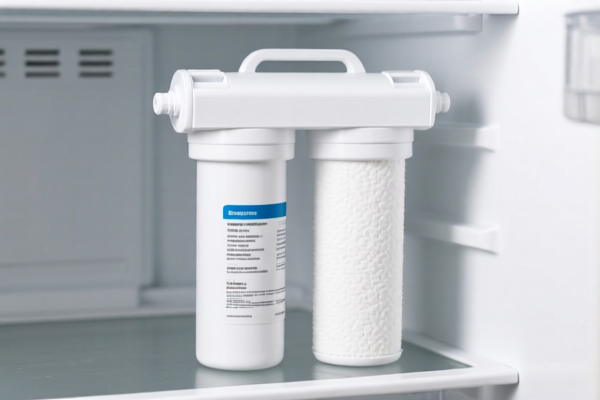
AI Analysis
💧 Refrigerator Water Purifier (Refrigerator Filter)
🌐 HS Code Reference & Customs Clearance Guide | 2026 Latest Tariff Analysis | Professional Strategy for US Imports
📌 I. Product Definition & Classification: What is a "Refrigerator Water Purifier"?
A Refrigerator Water Purifier (often called a Refrigerator Water Filter) is a device installed in refrigerators to filter drinking water. Its primary function is water filtration or purification.
In international trade classification (HS Code), the key distinction lies in its function vs. its physical form: 1. Functional Classification: If the item is viewed as a machine/apparatus for water filtration, it falls under Chapter 84. 2. Component Classification: If viewed merely as a part/accessory for a home appliance (refrigerator), it falls under Chapter 85. 3. Material Classification: If viewed primarily as a plastic manufactured good (less common for functional filters), it falls under Chapter 39.
⚠️ Critical Distinction:
- Functional vs. Structural: Customs often prioritizes the principal purpose. Since the device's main purpose is filtering, not just supporting the fridge, Chapter 84 is often the strongest argument for lower base duties (0% vs 4.2% or 3.5%).
- Complete Unit vs. Part: If the filter comes with the refrigerator, it is a part of the fridge. If imported separately as a replacement, it is a standalone filtration device.
📦 II. HS Code Classification Details (2026 Latest Tariff Data)
The provided data lists 5 potential HS Codes. Here is the detailed breakdown of why each applies and the corresponding tax implications.
| HS Code | Summary Description | Why it Applies (Logic) | Total Tax Rate |
|---|---|---|---|
| 8421.99.01.40 | Parts of water filtering machines | Viewed as a component specifically designed for water filtration/purification machinery. Fits the function of "water filtering apparatus." | 35.0% |
| 8509.90.45.00 | Parts of electro-mechanical domestic appliances | Viewed as a spare part/accessory for a home appliance (refrigerator). The filter is physically attached to or used by the fridge. | 39.2% |
| 8509.90.55.00 | Parts of electro-mechanical domestic appliances | Similar to above; another sub-category for parts of home appliances. | 39.2% |
| 8421.21.00.00 | Filtration or purification apparatus for liquids | Viewed as the complete apparatus for filtering water, not just a "part." This is often the most accurate functional classification for standalone filters. | 35.0% |
| 3926.90.45.90 | Other plastic articles | Viewed based on material composition (plastic housing/cartridge). This is the weakest classification unless the device has no active filtration function recognized by customs. | 38.5% |
🔍 Key Observation:
- The lowest total tax rate is 35.0% (Codes8421.99.01.40and8421.21.00.00).
- The highest total tax rate is 39.2% (Codes8509.90.45.00and8509.90.55.00).
- All rates include additional tariffs (Section 301 and IEEPA), making the choice of HS Code critical for cost optimization.
💰 III. 2026 Latest Tariff Rate Breakdown (Detailed Tax Clauses)
✅ Applicable Country: United States (US)
✅ Country of Origin: China (CN)
✅ Effective Date: Includes subsequent imports subject to current trade policies.
The total tax rate is composed of three layers: Base Duty, Section 301 Duty, and IEEPA Duty.
🎯 1. Classification A: Water Filtration Function (Codes 8421.99.01.40 & 8421.21.00.00)
Best for Cost Efficiency
| Tax Component | Rate | Legal Basis / Explanation |
|---|---|---|
| Base Duty | 0.0% | Chapter 84 typically has 0% base duty for water filtration machinery. |
| Section 301 Duty | 25.0% | Additional tariff imposed on Chinese goods under Trade Act of 1974, Section 301. |
| IEEPA Duty | 10.0% | Additional tariff under International Emergency Economic Powers Act (122 Clauses). |
| TOTAL TAX | 35.0% | 0% + 25% + 10% = 35% |
📌 Why this is preferred:
- By arguing the product is a "filtration apparatus" or "part of filtration machinery," you avoid the higher base duty of home appliance parts.
- Calculation: CIF Value × 35%.
- De Minimis: ❌ Not Eligible. Goods from China are denied de minimis exemption for these HS codes under current enforcement.
🎯 2. Classification B: Home Appliance Parts (Codes 8509.90.45.00 & 8509.90.55.00)
Higher Cost Alternative
| Tax Component | Rate | Legal Basis / Explanation |
|---|---|---|
| Base Duty | 4.2% | Chapter 85 parts for home appliances carry a higher base rate. |
| Section 301 Duty | 25.0% | Same Section 301 tariff as above. |
| IEEPA Duty | 10.0% | Same IEEPA tariff as above. |
| TOTAL TAX | 39.2% | 4.2% + 25% + 10% = 39.2% |
📌 Why this happens:
- Customs may classify the filter as a "part of a refrigerator" if the documentation lacks clarity on its standalone filtration capability.
- Cost Impact: You pay an additional 4.2% on the CIF value compared to Classification A.
- De Minimis: ❌ Not Eligible.
🎯 3. Classification C: Plastic Article (Code 3926.90.45.90)
Least Recommended
| Tax Component | Rate | Legal Basis / Explanation |
|---|---|---|
| Base Duty | 3.5% | Base duty for other plastic articles. |
| Section 301 Duty | 25.0% | Section 301 applies. |
| IEEPA Duty | 10.0% | IEEPA applies. |
| TOTAL TAX | 38.5% | 3.5% + 25% + 10% = 38.5% |
📌 Warning:
- This classification is risky. It ignores the functional aspect of water purification. Customs may reject this if they determine the primary value is in the filtration technology, not the plastic casing.
- Cost Impact: Slightly better than appliance parts, but still higher than filtration machinery.
🛠️ IV. Customs Clearance Practical Advice (Avoiding Pitfalls)
✅ 1. Documentation Checklist (Must-Haves)
| Document | Requirement | Purpose |
|---|---|---|
| Product Specification Sheet | ✔️ Detailed | Must clearly state "Water Filtration Function," filter type (e.g., Carbon Block), and flow rate. |
| Commercial Invoice | ✔️ Specific | Describe as "Water Filter for Refrigerator" or "Replacement Water Purifier", NOT just "Part for Fridge." |
| Structure Diagram | ✔️ Recommended | Shows the internal filtration elements (carbon, membrane) to prove it is a filtration device, not just a plastic holder. |
| Origin Certificate | ✔️ Critical | Must clearly state China (CN) to verify applicability of Section 301 and IEEPA. |
| FCC/UL Certificates | Optional but helpful | Proves safety and regulatory compliance, speeding up inspection. |
✅ 2. Strategic Classification Advice
🔥 "Function over Form: Claim Filtration, Not just Plastic or Appliance Parts!"
| Scenario | Recommended HS Code | Reason |
|---|---|---|
| Standalone Replacement Filter | 8421.21.00.00 | It is a standalone unit performing a specific function (filtration). Best tax rate (35%). |
| Filter Imported as "Part" | 8421.99.01.40 | Still benefits from 0% base duty as a part of filtration machinery. |
| Filter with Fridge (Bundled) | 8421.21.00.00 | Even when bundled, the principal function of the filter unit is filtration. Try to classify the whole unit under the filter's function if possible, or split the invoice. |
| Pure Plastic Housing (No Filter Media) | 3926.90.45.90 | Only if the product is literally an empty plastic sleeve. |
✅ 3. Critical Clearance Tips
- Avoid "Part of Refrigerator" Language: Do not describe the product as "Refri Part" or "Fridge Accessory" in the invoice. Use "Water Filter Cartridge" or "Water Purification Device."
- Highlight the "Filtration Mechanism": In your product description, explicitly mention "Carbon Filtration," "Sediment Removal," or "Microfiltration." This supports the Chapter 84 classification.
- Pre-Ruling Request: For large shipments, consider applying for an Advance Ruling from US Customs and Border Protection (CBP) to lock in the 35% rate.
- Section 301 Exemptions: Check if the specific HS code has any current exclusions. As of 2026, most Chinese consumer electronics and parts remain subject to 301 duties, but verification is key.
🌍 V. Global Market Comparison (2026)
| Market | Recommended HS Code | Estimated Total Duty | Notes |
|---|---|---|---|
| 🇺🇸 USA | 8421.21.00.00 |
35.0% | Includes 25% (301) + 10% (IEEPA). No de minimis for China. |
| 🇨🇳 China | 8421.21.00.00 |
Varies | Check latest Chinese tariff. Usually lower base duty, no 301/IEEPA. |
| 🇪🇺 EU | 8421.21.00.00 |
~4.5% | Standard EU duty for water filters. No punitive tariffs. |
| 🇨🇦 Canada | 8421.21.00.00 |
~5-7% | General Rate. CUSMA may apply if from Mexico/US. |
📌 Conclusion for US Market:
The 35% total duty is significant. Importers must calculate this into their landed cost. Misclassification as a "plastic part" (38.5%) or "appliance part" (39.2%) results in overpayment.
📌 VI. Common Mistakes & Pitfalls (Blood & Tears Lessons)
❌ Mistake 1: Describing the product as "Refrigerator Part" on the Invoice.
👉 Result: Customs may assign 8509.90.45.00 (39.2%) instead of 8421.21.00.00 (35%).
👉 Loss: 4.2% extra tax on CIF value.
❌ Mistake 2: Ignoring the IEEPA 10% Tariff.
👉 Result: Unexpected audit or balance payment request upon arrival.
👉 Loss: Cash flow disruption + potential penalties.
❌ Mistake 3: Claiming De Minimis ($800 exemption).
👉 Result: Rejected. Goods from China under these HS codes are explicitly excluded from de minimis relief.
👉 Loss: Full duty and taxes assessed; shipment held at border.
❌ Mistake 4: Providing no technical specs.
👉 Result: Customs inspects manually, delays clearance by 7-14 days.
👉 Loss: Demurrage charges at port.
✅ Correct Strategy:
"Import as Water Filtration Device. Invoice Description: Replacement Water Filter for Refrigerator, Carbon Block Type. HS Code: 8421.21.00.00. Origin: China. Duty: 35%."
🎯 VII. Conclusion: Smart Classification Saves Money
🎯 Key Takeaway:
🔹 Always classify Refrigerator Water Filters under Chapter 84 (8421.21.00.00 or 8421.99.01.40) for the lowest 35% duty.
🔹 Avoid Chapter 85 (Appliance Parts) and Chapter 39 (Plastics) due to higher base duties.
🔹 Remember: 25% (301) + 10% (IEEPA) = 35% Total for China-origin goods.
📌 Pro Tip:
If you are importing directly from China, factor in the 35% duty in your pricing model.
Consider sourcing from Vietnam, Thailand, or Mexico (if rules of origin allow) to potentially avoid the 25% + 10% penalties, reducing total duty to near 0-5%.
📣 Immediate Action Item:
📞 Contact your customs broker with the exact technical specifications of your water filter.
📄 Request an Advance Ruling from CBP if shipment volume is high.
🚀 Optimize your supply chain to minimize the impact of high tariffs.
✨ Professional Clearance Starts with Precise Classification!
💼 Your profit margin depends on these 4.2% differences!
Customer Reviews
About HS Code Classification
The Harmonized System (HS) is an internationally standardized nomenclature developed by the World Customs Organization (WCO) to classify traded products. Over 200 countries use the HS system as the basis for customs tariffs, trade statistics, and import/export regulations.
Each HS code follows a hierarchical structure:
- Chapter (2 digits) — Broad category of goods (e.g., Chapter 84: Machinery and Mechanical Appliances)
- Heading (4 digits) — More specific grouping within the chapter
- Subheading (6 digits) — Internationally standardized breakdown, used by all WCO member countries
- National subdivisions (8-10 digits) — Country-specific extensions for further classification, such as US HTSUS 10-digit codes
Correct HS code classification is essential for smooth customs clearance, accurate duty payment, and compliance with trade regulations. Misclassification can lead to customs delays, overpayment of duties, or penalties.
When importing from CN to US, the applicable tariff rates may include:
- Most-Favored-Nation (MFN) rate — The standard duty rate applied to WTO members
- General rate — Applied to countries without trade agreements
- Trade remedy duties — Additional tariffs such as Section 301 (anti-dumping), Section 232 (national security), or countervailing duties
The information provided on this page is for reference purposes only. For official classification, please consult with your local customs authority or a licensed customs broker.