Refurbished Agricultural Tires
CN → US| HS Code | Tariff Rate | Origin | Destination | Doc |
|---|---|---|---|---|
| 4012204500 | 35.0% | CN | US | Official Doc |
| 4012201500 | 35.0% | CN | US | Official Doc |
| 4012901000 | 35.0% | CN | US | Official Doc |
| 4011808020 | 38.4% | CN | US | Official Doc |
| 4016996010 | 37.5% | CN | US | Official Doc |
Product Images
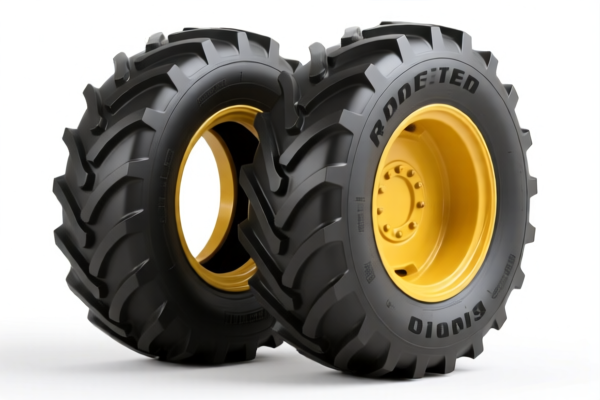
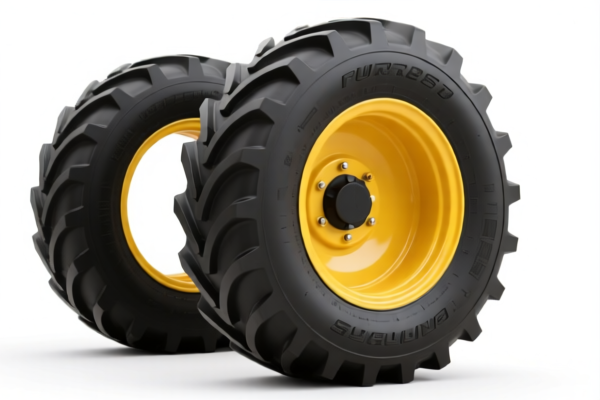
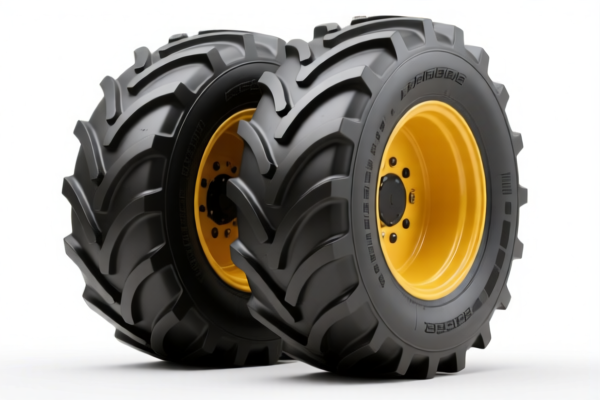

AI Analysis
🚜 Refurbished Agricultural Tires: HS Code Classification & Clearance Strategy (2026 Edition)
🌐 HS Code Reference & Customs Clearance Guide | 2026 Latest Tariff Analysis | Professional-Level Entry Strategy
📌 I. Product Definition: What Exactly Are "Refurbished Agricultural Tires"?
Refurbished agricultural tires (often referred to as retreaded or recapped tires) are pneumatic rubber tires that have undergone a manufacturing process where the original tread is replaced or renewed. In international trade, they are strictly categorized not by their "newness," but by their state (Used/Refurbished) and specific application (Agricultural/Garden Machinery vs. Industrial/Industrial Handling).
Key Distinctions: * Agricultural Use: Designed for tractors, harvesters, and lawn/garden machinery. Usually classified under heading 4012.20. * Industrial/Industrial Handling (e.g., Forklifts): Designed for factory logistics, pallet jacks, and forklifts. Usually classified under heading 4012.90 or 4011.80.
⚠️ Critical Classification Point:
- If the tire is explicitly for Agricultural or Garden Machinery → Look at 4012.20.xxxx.
- If the tire is for Forklifts/Industrial Vehicles → Look at 4012.90 (Pneumatic, Other) or 4011.80 (Other Pneumatic).
- Material: All these are inferred as Vulcanized Rubber.
📦 II. HS Code Classification Matrix (2026 Latest Tariff Alignment)
Based on the specific product descriptions provided in the data, here is the authoritative breakdown for "Refurbished Agricultural Tires" and similar industrial rubber products.
| HS Code | Product Description | Application / Match Logic | Status |
|---|---|---|---|
4012.20.45.00 |
Used Pneumatic Rubber Tires, Agricultural/Garden | Matches "Old" (Used) + "Tire" + "Agricultural Use". Specific sub-category for agricultural/garden machinery tires. | ✅ Matched |
4012.20.15.00 |
Used Pneumatic Rubber Tires, Agricultural | High-confidence match. "Refurbished/Old" aligns with "Used Pneumatic Tires." "Agricultural" fits the use case. | ✅ Matched |
4012.90.10.00 |
Other Used/Pneumatic Rubber Tires (e.g., Forklift) | Matches "Refurbished" + "Rubber." Often used for non-agricultural pneumatic tires like forklifts. | ✅ Matched |
4011.80.80.20 |
Other Pneumatic Rubber Tires (Industrial/Forklift) | Matches "Refurbished Tire" shape/material. Classified under "Other" pneumatic tires for industrial handling vehicles. | ✅ Matched |
4016.99.60.10 |
Other Articles of Vulcanized Rubber (Parts) | Alternative classification for "Refurbished Forklift Tire" if viewed as a rubber part/assembly rather than a standalone tire. | ✅ Matched |
🔍 Important Note:
- Heading 4012.20 is the primary destination for used pneumatic tires for agricultural/garden use.
- Heading 4012.90 and 4011.80 are common for refurbished tires intended for industrial machinery (like forklifts), even if loosely termed "agricultural" in casual speech, as forklifts are often used on farms.
- Material Inference: All classifications assume Vulcanized Rubber (standard for tires).
💰 III. 2026 Tariff Rate Breakdown (Including Surtaxes & Policy Add-ons)
✅ Applicable Country: USA (US)
✅ Country of Origin: China (CN)
✅ Effective Date: Post-November 2025 (Includes Section 301 & IEEPA Add-ons)
🎯 1. 4012.20.45.00 & 4012.20.15.00 — Used Pneumatic Tires (Agricultural)
| Item | Detail |
|---|---|
| Base Tariff | 0.0% (Ad valorem) |
| Section 301 Surtax | +25.0% |
| IEEPA Section 122 Surtax | +10.0% |
| Total Effective Rate | 35.0% |
| Calculation Basis | CIF Value × 35% |
| De Minimis Exemption? | ❌ No (deny_de_minimis) |
| Legal Pathway | USITC:4012.20.15.00 → FOOTNOTE:301 (25%) + IEEPA:9903 (10%) |
📌 Explanation:
- These "used" agricultural tires benefit from a 0% base tariff, but face heavy Section 301 (25%) and IEEPA (10%) surcharges.
- Total Cost Impact: 35% of the CIF value.
- Risk: High scrutiny on "Used" vs. "New" declarations. Misclassification as "New" could lead to penalties, but the tax burden is similar.
🎯 2. 4012.90.10.00 — Other Used Pneumatic Tires (e.g., Forklift)
| Item | Detail |
|---|---|
| Base Tariff | 0.0% |
| Section 301 Surtax | +25.0% |
| IEEPA Section 122 Surtax | +10.0% |
| Total Effective Rate | 35.0% |
| Calculation Basis | CIF Value × 35% |
| De Minimis Exemption? | ❌ No |
| Legal Pathway | USITC:4012.90.10.00 → FOOTNOTE:301 (25%) + IEEPA:9903 (10%) |
📌 Note:
- Same tax structure as agricultural used tires due to the "Used/Refurbished" rubber goods classification.
🎯 3. 4011.80.80.20 — Other Pneumatic Tires (Industrial/Forklift)
| Item | Detail |
|---|---|
| Base Tariff | 3.4% |
| Section 301 Surtax | +25.0% |
| IEEPA Section 122 Surtax | +10.0% |
| Total Effective Rate | 38.4% |
| Calculation Basis | CIF Value × 38.4% |
| De Minimis Exemption? | ❌ No |
| Legal Pathway | USITC:4011.80.80.20 → FOOTNOTE:301 (25%) + IEEPA:9903 (10%) |
📌 Warning:
- If classified as a "New" or general "Other" pneumatic tire (rather than "Used"), the base rate jumps to 3.4%, increasing total liability to 38.4%.
- Ensure documentation clearly states "Refurbished" or "Used" to justify4012(0% base) over4011(3.4% base).
🎯 4. 4016.99.60.10 — Other Rubber Articles (Parts)
| Item | Detail |
|---|---|
| Base Tariff | 2.5% |
| Section 301 Surtax | +25.0% |
| IEEPA Section 122 Surtax | +10.0% |
| Total Effective Rate | 37.5% |
| Calculation Basis | CIF Value × 37.5% |
| De Minimis Exemption? | ❌ No |
| Legal Pathway | USITC:4016.99.60.10 → FOOTNOTE:301 (25%) + IEEPA:9903 (10%) |
📌 Strategy:
- This classification is less common for full tires but may apply if the item is considered a "part" of a vehicle rather than a standalone tire.
- Total rate (37.5%) is slightly lower than4011.80but higher than4012.20.
🛠️ IV. Customs Clearance Practical Advice (Pitfall Avoidance Guide)
✅ 1. Documentation Checklist (Non-Negotiable)
| Document | Required? | Description |
|---|---|---|
| ✅ Commercial Invoice | ✔️ | Must explicitly state "REFURBISHED" or "USED" tires. Do not just say "Tires." |
| ✅ Product Photos | ✔️ | Show tread depth, labeling, and any "Retreaded" markings. |
| ✅ Specification Sheet | ✔️ | Confirm rubber compound and intended machinery (Agri vs. Industrial). |
| ✅ Certificate of Origin | ✔️ | Critical for proving Chinese origin to apply correct 301/IEEPA rates. |
| ✅ Packing List | ✔️ | Detail quantity, weight, and dimensions per unit. |
📌 Tip:
- Avoid Ambiguity: Never use the generic term "Tires" without a qualifier like "Refurbished," "Used," or "Retreaded."
- HS Code Precision: Use4012.20for Agri,4012.90for Industrial/Other Used.
✅ 2. Declaration Strategy (Key Mantras)
🔥 “State ‘Refurbished’, Declare ‘Used’, Choose ‘4012’ Base, Avoid ‘4011’ Penalty!”
| Scenario | Correct Declaration | Wrong Declaration | Consequence |
|---|---|---|---|
| Agri Tires | 4012.20.15.00 (Used Agri Tire) |
4011.80... (New Tire) |
+3.4% Base Tax (Total 38.4%) |
| Forklift Tires | 4012.90.10.00 (Used Other) |
4011.80.80.20 (Other Pneumatic) |
+3.4% Base Tax (Total 38.4%) |
| Rubber Parts | 4016.99.60.10 |
4012... |
Risk of reclassification + delay |
| Generic "Tires" | ❌ Forbidden | "Agricultural Tires" | Customs may classify as New → Higher Tax |
✅ 3. Special Cases & Mitigation
| Situation | Handling Advice |
|---|---|
| OEM Refurbished Tires | Provide OEM authorization or contract to prove legitimacy of refurbishment. |
| Mixed Shipments (Agri + Industrial) | Separate line items in invoice. Do not lump together. Agri (4012.20) and Industrial (4012.90) have different sub-categories. |
| High Value Shipments | Consider Advance Ruling (Pre-Classification) to lock in HS Code and avoid post-entry audits. |
| De Minimis (Section 321) | ❌ NOT APPLICABLE. Refurbished rubber goods from China are denied de minimis exemption. Full duty applies. |
🌍 V. Global Market Comparison (2026 Update)
| Market | Recommended HS Code | Base Rate (China) | Surtaxes | Total Est. Rate | Notes |
|---|---|---|---|---|---|
| 🇺🇸 USA | 4012.20.15.00 |
0.0% | 35% (25%+10%) | 35.0% | Strict "Used" declaration required. |
| 🇺🇸 USA | 4011.80.80.20 |
3.4% | 35% (25%+10%) | 38.4% | Higher base if not classified as "Used". |
| 🇪🇺 EU | 4012.20.00.00 |
Varies | VAT + Duties | ~5-10% | No Section 301/IEEPA. Lower barrier. |
| 🇨🇳 China | 4012.20.00.00 |
Varies | VAT | ~13% | Import duties vary, but no punitive US taxes. |
📌 Conclusion:
- USA is the most challenging market due to Section 301 (25%) and IEEPA (10%) surcharges.
- Classification as "Used" (4012) is crucial to avoid the higher base rate of "New" (4011).
- No De Minimis means even small shipments incur full duty costs.
📌 VI. Common Errors & Pitfalls (Lessons Learned)
❌ Error 1: Declaring "Refurbished Tires" as "New Tires"
👉 Consequence: Misdeclaration. While tax might be similar (if "New" also has 301), it risks fraud allegations and cargo detention.
❌ Error 2: Using "Agricultural Tires" without specifying "Used/Refurbished"
👉 Consequence: Customs may default to 4011.80 (New) → +3.4% Base Tax → Total 38.4%. Save 3.4% by being precise.
❌ Error 3: Ignoring IEEPA Section 122 (10%)
👉 Consequence: Underpaying duties. The 10% IEEPA surcharge is mandatory for many rubber goods from China. Total is 35%, not 25%.
❌ Error 4: Splitting Forklift Tires from Agricultural Tires in one line item
👉 Consequence: Ambiguity leads to random inspection and delay. Separate them clearly.
✅ Best Practice:
"Refurbished Pneumatic Rubber Tire, for Tractor Use, HS 4012.20.15.00, Origin: China"
🎯 VII. Conclusion: Precision Saves Money!
🎯 Remember the Mantra:
🔹 "Used = 4012, Base 0%."
🔹 "New = 4011, Base 3.4%."
🔹 "China Origin = +35% Total Tax (25% 301 + 10% IEEPA)."
🔹 "No De Minimis. Pay Up."
📌 Pro Tip:
If your shipment value is high, file for an Advance Ruling with US Customs (CBP). This legally binds the HS Code to your product, preventing post-entry audits and surprise bills.
📣 Immediate Action:
📞 Consult a licensed customs broker.
📄 Ensure your invoice says "REFURBISHED" in bold.
🚀 Get your tires cleared, taxed correctly, and on the road!
✨ Professional Clearance Starts with Accurate Classification!
💼 Every percentage point counts in the rubber trade!
Customer Reviews
About HS Code Classification
The Harmonized System (HS) is an internationally standardized nomenclature developed by the World Customs Organization (WCO) to classify traded products. Over 200 countries use the HS system as the basis for customs tariffs, trade statistics, and import/export regulations.
Each HS code follows a hierarchical structure:
- Chapter (2 digits) — Broad category of goods (e.g., Chapter 84: Machinery and Mechanical Appliances)
- Heading (4 digits) — More specific grouping within the chapter
- Subheading (6 digits) — Internationally standardized breakdown, used by all WCO member countries
- National subdivisions (8-10 digits) — Country-specific extensions for further classification, such as US HTSUS 10-digit codes
Correct HS code classification is essential for smooth customs clearance, accurate duty payment, and compliance with trade regulations. Misclassification can lead to customs delays, overpayment of duties, or penalties.
When importing from CN to US, the applicable tariff rates may include:
- Most-Favored-Nation (MFN) rate — The standard duty rate applied to WTO members
- General rate — Applied to countries without trade agreements
- Trade remedy duties — Additional tariffs such as Section 301 (anti-dumping), Section 232 (national security), or countervailing duties
The information provided on this page is for reference purposes only. For official classification, please consult with your local customs authority or a licensed customs broker.