Refurbished Agricultural Tractor Tires
CN → US| HS Code | Tariff Rate | Origin | Destination | Doc |
|---|---|---|---|---|
| 4011700050 | 35.0% | CN | US | Official Doc |
| 4012204500 | 35.0% | CN | US | Official Doc |
| 4012201500 | 35.0% | CN | US | Official Doc |
| 4012901000 | 35.0% | CN | US | Official Doc |
| 4011808020 | 38.4% | CN | US | Official Doc |
Product Images
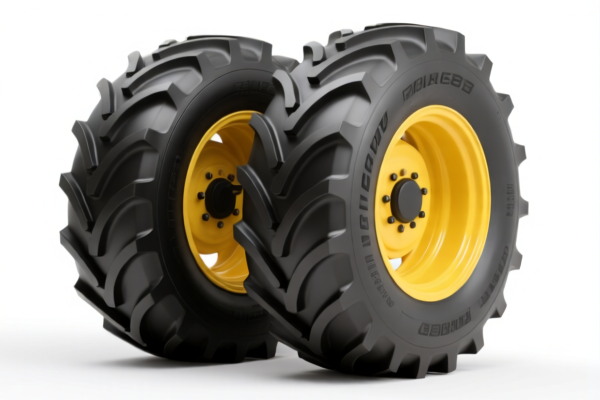
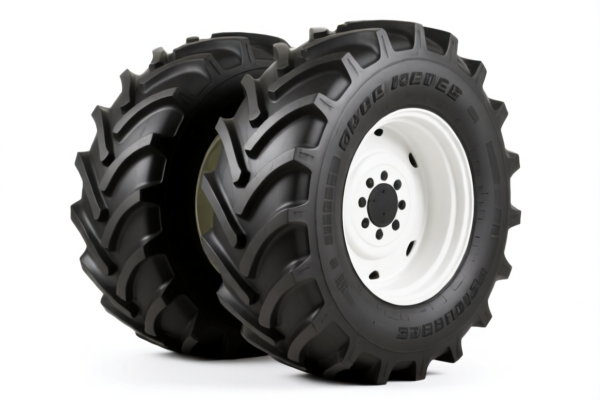
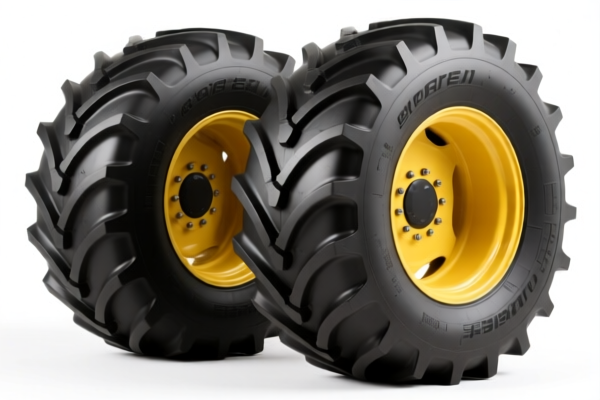

AI Analysis
🚜🚜 Refurbished Agricultural Tractor Tires & Agricultural Used Tires
🌐 HS Code Reference & Customs Clearance Guide | 2026 Latest Tariff Analysis | Professional Entry Strategy
📌 I. Product Definition & Classification: What Are "Refurbished Agricultural Tires"?
Agricultural tractor tires are specialized rubber products designed for heavy-duty farm machinery. In international trade, they are strictly categorized based on their condition (new vs. used/refurbished) and specific application.
1. New Agricultural Tractor Tires
Definition: Brand-new pneumatic tires manufactured specifically for agricultural tractors.
Material: Rubber.
Key Characteristic:* Never previously used; designed for high torque and soil traction.
2. Refurbished/Retreaded Tires
Definition: Tires that have been re-treaded or recapped with new tread material over an existing casing.
Material: Rubber.
Key Characteristic:* The casing is used, but the tread is new. Often used for forklifts or lower-intensity agricultural tasks.
3. Used/Scrap Agricultural Tires
Definition: Old, worn-out pneumatic rubber tires removed from agricultural or garden machinery.
Material: Rubber.
Key Characteristic:* End-of-life condition, potentially subject to stricter environmental or import restrictions depending on the destination.
⚠️ Key Distinction Point:
- If the tire is brand new for a tractor → Classify under 4011.70.00.50.
- If the tire is refurbished/retreaded for forklifts → Classify under 4011.80.80.20.
- If the tire is old/used for agricultural/garden machinery → Classify under 4012.20.15.00 or 4012.20.45.00.
- If the tire is refurbished/used for forklifts (non-pneumatic or specific pneumatic types not covered elsewhere) → Classify under 4012.90.10.00.
📦 II. HS Code Classification Details (2026 Latest Tariff Authority Cross-Reference)
| HS Code | Product Description | Application Scenario | Condition | Material |
|---|---|---|---|---|
4011.70.00.50 |
New Agricultural Tractor Tires | Specifically for agricultural tractors | ✅ New | Rubber |
4012.20.45.00 |
Used Agricultural Tires | Old pneumatic rubber tires for ag/garden machinery | ✅ Used/Old | Rubber |
4012.20.15.00 |
Used Agricultural Tires | Old pneumatic rubber tires for ag/garden machinery | ✅ Used/Old | Rubber |
4012.90.10.00 |
Refurbished Forklift Tires | Rubber retreaded or old pneumatic tires for forklifts | ✅ Refurbished/Old | Rubber |
4011.80.80.20 |
Refurbished Forklift Tires | Industrial handling vehicles | ✅ Refurbished | Rubber |
🔍 Key Reminder:
- "New" vs. "Used/Refurbished" is the critical differentiator. New tires fall under Heading 4011; used/retreaded tires generally fall under Heading 4012.
- Application matters: "Agricultural" (Tractor/Garden) vs. "Industrial" (Forklift). Misclassifying a forklift tire as an agricultural tire can lead to significant duty discrepancies.
- All items in this dataset are subject to high additional tariffs due to their origin (likely China) and trade policies.
💰 III. 2026 Latest Tariff Rate Breakdown (Including Additional Duties & Policy Add-ons)
✅ Applicable Country: USA (US)
✅ Origin: China (CN)
✅ Effective Date: Ongoing (2025-2026 Trade Policy Period)
🎯 1. 4011.70.00.50 — New Agricultural Tractor Tires
| Item | Content |
|---|---|
| Base Rate | 0% (Ad Valorem) |
| USITC Additional Duty | +25% (Section 301) |
| IEEPA Additional Duty | +10% (122 Section: Targeted Chinese Imports) |
| Total Rate | 35.0% |
| Tax Calculation | CIF Value × 35% |
| De Minimis Exemption? | ❌ NO (Denied) |
| Legal Path | Base: 0% + 301: 25% + IEEPA/122: 10% |
📌 Explanation:
- Although the base MFN rate is 0%, the Section 301 tariffs (25%) and Section 122/IEEPA tariffs (10%) apply heavily.
- Total 35% is a standard burden for new rubber agricultural goods from China to the US.
🎯 2. 4012.20.45.00 & 4012.20.15.00 — Used Agricultural Tires
| Item | Content |
|---|---|
| Base Rate | 0% (Ad Valorem) |
| USITC Additional Duty | +25% (Section 301) |
| IEEPA Additional Duty | +10% (122 Section) |
| Total Rate | 35.0% |
| Tax Calculation | CIF Value × 35% |
| De Minimis Exemption? | ❌ NO (Denied) |
| Legal Path | Base: 0% + 301: 25% + IEEPA/122: 10% |
📌 Explanation:
- Used tires are often scrutinized for environmental reasons and fair trade practices.
- Despite being "used," they are still subject to the same 35% total tariff as new tires in this dataset.
- Ensure the description explicitly states "Used" or "Scrap" to avoid being classified as new.
🎯 3. 4012.90.10.00 — Refurbished Forklift Tires (General Rubber)
| Item | Content |
|---|---|
| Base Rate | 0% (Ad Valorem) |
| USITC Additional Duty | +25% (Section 301) |
| IEEPA Additional Duty | +10% (122 Section) |
| Total Rate | 35.0% |
| Tax Calculation | CIF Value × 35% |
| De Minimis Exemption? | ❌ NO (Denied) |
| Legal Path | Base: 0% + 301: 25% + IEEPA/122: 10% |
📌 Explanation:
- This code covers broader "retreaded or used pneumatic tires" not specifically for agriculture or road vehicles.
- Tariff impact is identical to agricultural tires: 35%.
🎯 4. 4011.80.80.20 — Refurbished Forklift Tires (Specific Industrial)
| Item | Content |
|---|---|
| Base Rate | 3.4% |
| USITC Additional Duty | +25% (Section 301) |
| IEEPA Additional Duty | +10% (122 Section) |
| Total Rate | 38.4% |
| Tax Calculation | CIF Value × 38.4% |
| De Minimis Exemption? | ❌ NO (Denied) |
| Legal Path | Base: 3.4% + 301: 25% + IEEPA/122: 10% |
📌 Crucial Difference:
- This is the only code in the list with a non-zero base rate (3.4%).
- Total Rate: 38.4% is higher than the 35% for other rubber tires.
- Why? This code likely refers to a specific sub-category of industrial tires (e.g., solid or specific pneumatic forklift tires) where the base MFN duty is slightly higher.
- Warning: Do not mistakenly use this code for agricultural tires; if misclassified, you may face audits for under-declaring or penalties for incorrect entry.
🛠️ IV. Customs Clearance Practical Advice (Pitfall Avoidance Guide)
✅ 1. Documentation Checklist (Non-negotiable)
| Document | Required? | Notes |
|---|---|---|
| ✅ Commercial Invoice | ✔️ | Must clearly state: "Refurbished," "Used," or "New." Include HS Code. |
| ✅ Packing List | ✔️ | Detail weight, quantity, and tire sizes (e.g., 11.2-24). |
| ✅ Condition Report | ✔️ | For used/refurbished tires: Photos showing tread depth, casing condition. |
| ✅ Proof of Origin | ✔️ | To confirm China origin (triggers 35-38.4% duties). |
| ✅ Fumigation Certificate | ✔️ | Critical for rubber/agricultural goods to prevent pest introduction. |
| ✅ CE/FDA/USDA Docs | ✔️ | If applicable for specific agricultural machinery compliance. |
✅ 2. Declaration Tips (Key Mantras)
🔥 "Condition Matters: New vs. Used! Application Matters: Ag vs. Forklift!"
| Scenario | Correct HS Code | Incorrect Code | Consequence |
|---|---|---|---|
| New Tractor Tire | 4011.70.00.50 |
4012.20.45.00 |
Under-declaration of value/duty; potential penalty. |
| Used Ag Tire | 4012.20.45.00 |
4011.70.00.50 |
Over-declaration (if declared new); or misclassification if declared as new. |
| Forklift Tire | 4011.80.80.20 or 4012.90.10.00 |
4011.70.00.50 |
Wrong duty rate (38.4% vs 35%); audit risk. |
| Mixed Shipment | Separate Lines | Single Line | Customs may reject entire entry; delay in clearance. |
✅ 3. Special Considerations
| Issue | Handling Advice |
|---|---|
| Environmental Restrictions | Some states (e.g., California) restrict import of used tires due to mosquito breeding risks. Check local laws. |
| Fumigation | Rubber tires are prone to soil/pest contamination. Ensure phytosanitary certificates are issued. |
| Valuation | For used tires, use transaction value of the refurbished product, not new tire value. |
| Labeling | Must indicate "Used" or "Refurbished" clearly on packaging and invoice. |
🌍 V. Global Market Comparison (2026 Latest)
| Country/Region | Recommended HS Code | Tariff Rate | Certification | Notes |
|---|---|---|---|---|
| 🇺🇸 USA | 4011.70.00.50 (New Ag) |
35% | USDA, Fumigation | High duty due to 301 + 122. |
| 🇺🇸 USA | 4011.80.80.20 (Forklift) |
38.4% | USDA, Fumigation | Highest base rate. |
| 🇨🇳 China | 4011.70 |
5-10% | CCC | Export duty may apply. |
| 🇪🇺 EU | 4011.70 |
0-10% | ECE-R75 | Used tires often restricted. |
| 🇲🇽 Mexico | 4011.70 |
0-5% | NOM | USMCA benefits if originating. |
📌 Conclusion:
- USA imposes the heaviest burden on rubber tires from China due to Section 301 and Section 122 tariffs.
- Used tires face similar duty rates as new ones in this specific dataset, removing the cost advantage of using second-hand goods.
- Forklift tires have a slightly higher total tariff (38.4%) due to a non-zero base rate.
📌 VI. Common Errors & Pitfalls (Blood-Teaching Lessons)
❌ Error 1: Declaring Used Tires as New Tires to avoid "used" stigma.
👉 Consequence: Customs Audit, confiscation, and fines for fraud. Value may be reassessed at new tire prices.
❌ Error 2: Mixing Agricultural and Forklift tires in one HS Code.
👉 Consequence: Misclassification leads to duty underpayment/overpayment and entry rejection.
❌ Error 3: Ignoring Fumigation Requirements.
👉 Consequence: Goods held at port, destroyed, or returned. Phytosanitary certificate is mandatory.
❌ Error 4: Not specifying "Refurbished" on the invoice.
👉 Consequence: If declared as new, but found used, it’s customs fraud.
✅ Correct Action:
"Refurbished Pneumatic Rubber Tire for Forklift, Size 6.50-10, Condition: Good, Fumigated, Origin: China, HS Code: 4011.80.80.20"
🎯 VII. Conclusion: Professional Declaration, Cost Control, Risk Mitigation!
🎯 Remember Mantras:
🔹 "New is 4011, Used is 4012. Ag is 35%, Forklift is 38.4%.
🔹 "Used tires are not cheaper in duty! 35% is 35%, new or old!"
🔹 "Fumigate or Face Rejection! Labels must say 'Used' or 'Refurbished'!"**
📌 Pro Tip:
- If importing used tires, ensure they meet US EPA and USDA standards.
- For forklift tires, verify if they are pneumatic or solid, as this affects the exact sub-code.
- Consider Advance Rulings if your shipment is large or complex.
📣 Immediate Action:
📞 Consult a licensed customs broker + Provide product photos + Verify fumigation status
🚀 Clear customs smoothly, avoid penalties, and protect your margins!
✨ Professional Customs Clearance Starts with Accurate Classification!
💼 Every dollar of duty saved starts with the right HS Code!
Customer Reviews
About HS Code Classification
The Harmonized System (HS) is an internationally standardized nomenclature developed by the World Customs Organization (WCO) to classify traded products. Over 200 countries use the HS system as the basis for customs tariffs, trade statistics, and import/export regulations.
Each HS code follows a hierarchical structure:
- Chapter (2 digits) — Broad category of goods (e.g., Chapter 84: Machinery and Mechanical Appliances)
- Heading (4 digits) — More specific grouping within the chapter
- Subheading (6 digits) — Internationally standardized breakdown, used by all WCO member countries
- National subdivisions (8-10 digits) — Country-specific extensions for further classification, such as US HTSUS 10-digit codes
Correct HS code classification is essential for smooth customs clearance, accurate duty payment, and compliance with trade regulations. Misclassification can lead to customs delays, overpayment of duties, or penalties.
When importing from CN to US, the applicable tariff rates may include:
- Most-Favored-Nation (MFN) rate — The standard duty rate applied to WTO members
- General rate — Applied to countries without trade agreements
- Trade remedy duties — Additional tariffs such as Section 301 (anti-dumping), Section 232 (national security), or countervailing duties
The information provided on this page is for reference purposes only. For official classification, please consult with your local customs authority or a licensed customs broker.