Refurbished Bus Rubber Tires
CN → US| HS Code | Tariff Rate | Origin | Destination | Doc |
|---|---|---|---|---|
| 4011201015 | 39.0% | CN | US | Official Doc |
| 4011205020 | 38.4% | CN | US | Official Doc |
| 4012124035 | 39.0% | CN | US | Official Doc |
| 4012124025 | 39.0% | CN | US | Official Doc |
| 4012128029 | 38.4% | CN | US | Official Doc |
Product Images
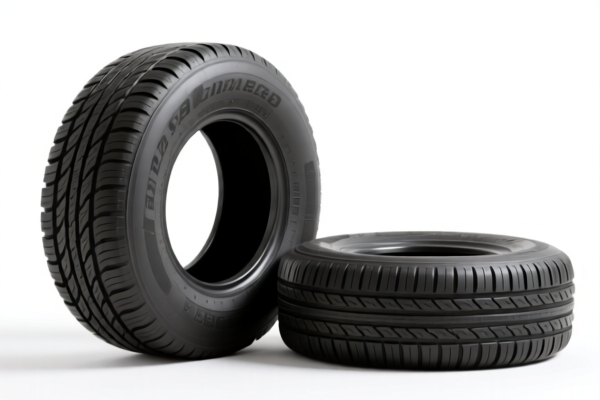
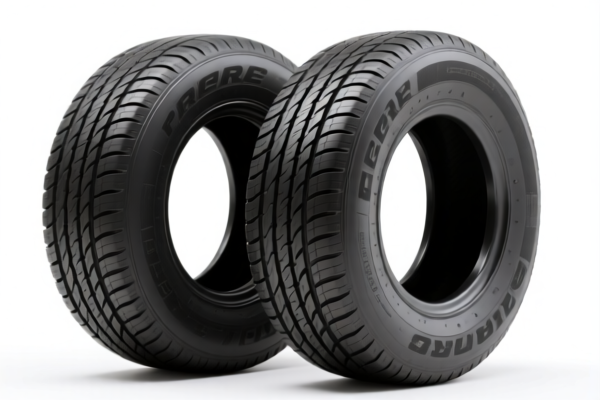
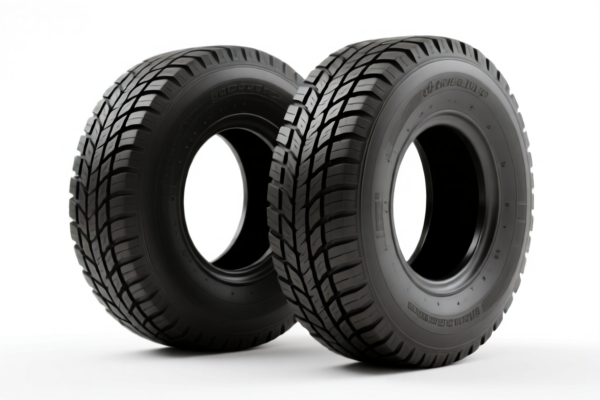
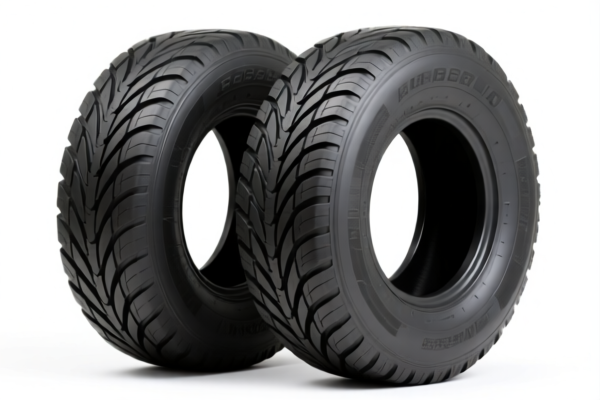
AI Analysis
🚛 Refurbished Bus Rubber Tires (Retreads for Public Transport)
🌐 HS Code Reference & Customs Clearance Guide | 2026 Latest Tariff Analysis | Professional通关 Strategy
📌 1. Product Definition & Classification: What are "Refurbished Bus Tires"?
Refurbished Bus Rubber Tires, commonly known as Retreads or Re-treaded Tires, are not brand-new rubber products. They are used tire casings that have been repaired, re-cased, and retreaded to extend their service life. In international trade, they fall under Chapter 40 (Rubber and Articles Thereof).
Key classification logic depends on the specific HS Code structure: * Chapter 40: Rubber and articles thereof. * Heading 4011: Pneumatic tires, new; pneumatic tires, used; pneumatic tire casings; tire tread rubbers. * Specific Subheadings: Differentiate between tires for passenger vehicles, buses/trucks, and aircraft.
⚠️ Critical Distinction:
- If the product is a used tire being sold as-is for scrap/recycling, it may fall under different subcategories (e.g., 4012.10).
- If the product is retreaded for reuse (i.e., a new tread is bonded to a sound casing), it is classified as a "Retreaded Tire."
- The destination provided highlights public transport (Bus/Truck) applications, directing us to specific subheadings for heavy-duty vehicle tires.
📦 2. HS Code Classification Details (2026 Latest Tariff Authority Alignment)
Based on the provided data, here are the valid HS Codes for Refurbished Bus/Truck Tires and their corresponding tax profiles:
| HS Code | Product Description | Application Scenario | Key Characteristics |
|---|---|---|---|
4011.20.10.15 |
Retreaded Pneumatic Tires for Buses or Trucks | Public transport buses, heavy-duty trucks | Logic: Matches public transport classification; specific subheading for bus/truck retreads. |
4011.20.50.20 |
Retreaded Pneumatic Tires for Buses or Trucks (Residual) | Public transport, other heavy vehicles | Logic: Fallback/Residual category; inferred bus/truck use based on general principles. |
4012.12.40.35 |
Retreaded Pneumatic Tires (Rubber) | Buses, Trucks | Logic: General retreaded tire category; covers bus/truck use. |
4012.12.40.25 |
Retreaded Pneumatic Tires (Rubber) | Buses, Trucks | Logic: Form meets retreading requirements; rubber material; bus/truck use. |
4012.12.80.29 |
Retreaded Pneumatic Tires (Rubber) | Buses, Trucks | Logic: Fallback/residual retread category; rubber material; bus/truck use. |
🔍 Key Insight:
- All listed codes fall under HS 4012 (Pneumatic tires, used; tire casings; tire tread rubbers).
- The specific 8-10 digit codes vary by country’s national tariff schedule (e.g., China’s 10-digit HS system), but the international 6-digit prefix is 4012.12 (Retreaded pneumatic tires).
- All scenarios involve US Import Tariffs (based on the tax details provided).
💰 3. 2026 Latest Tariff Rate Breakdown (Including Surtaxes & Policy Surcharges)
✅ Applicable Country: United States (US)
✅ Country of Origin: China (CN) (Inferred from the tariff structure: Base + Section 301 + 122/IEEPA)
✅ Effective Date: Current (Post-2025 Policy Era)
🎯 1. 4011.20.10.15 & 4012.12.40.35 & 4012.12.40.25
Retreaded Tires (Specific Subheadings)
| Item | Content |
|---|---|
| Base Duty Rate | 4.0% (Standard MFN Rate for Retreaded Tires) |
| Section 301 Surcharge (25%) | +25.0% |
| Section 122/IEEPA Surcharge | +10.0% |
| Total Tax Rate | 39.0% |
| Tax Calculation | CIF Value × 39.0% |
| De Minimis Exemption | ❌ Not Applicable (High value, high risk, specific commodity) |
| Legal Basis Path | USITC:4011.20.10.15 → Section 301:9903.88.01 → IEEPA/Sec 122:9903.01.24 |
📌 Explanation:
- Base Duty (4%): Standard duty for retreaded tires under HTSUS 4012.
- Section 301 (25%): Tariff imposed on goods from China under Trade Act of 1974.
- Section 122 / IEEPA (10%): Additional surcharge under International Emergency Economic Powers Act or related trade orders targeting Chinese imports.
- Total: 39% – This is a significant cost driver.
🎯 2. 4011.20.50.20 & 4012.12.80.29
Retreaded Tires (Residual/Fallback Subheadings)
| Item | Content |
|---|---|
| Base Duty Rate | 3.4% (Slightly lower base rate for residual subheadings) |
| Section 301 Surcharge (25%) | +25.0% |
| Section 122/IEEPA Surcharge | +10.0% |
| Total Tax Rate | 38.4% |
| Tax Calculation | CIF Value × 38.4% |
| De Minimis Exemption | ❌ Not Applicable |
| Legal Basis Path | USITC:4011.20.50.20 → Section 301:9903.88.01 → IEEPA/Sec 122:9903.01.24 |
📌 Note:
- The base duty is 0.6% lower than the specific subheadings (3.4% vs 4.0%).
- However, the surcharges (35%) remain identical.
- Total: 38.4% – Still a high-cost item.
🛠️ 4. Customs Clearance Practical Advice (Avoid Pitfalls)
✅ 1. Documentation Checklist (Non-negotiable)
| Document | Required | Purpose |
|---|---|---|
| ✅ Product Specification Sheet | ✔️ | Must explicitly state "Refurbished" or "Retreaded". Do NOT list as "New Tires." |
| ✅ Casing Provenance | ✔️ | Proof of origin of the used casing (critical for environmental compliance). |
| ✅ Quality Certification | ✔️ | DOT certification (if for US use), SAE standards, or ISO quality marks for retreading. |
| ✅ Commercial Invoice | ✔️ | Clearly describe as "Retreaded Pneumatic Tires for Buses/Trucks." |
| ✅ Packing List | ✔️ | Detailed breakdown of tire size, brand, retread manufacturer. |
| ✅ Certificate of Origin | ✔️ | If claiming non-US origin, to verify Section 301 applicability. |
✅ 2. Declaration Strategy (Key Tips)
🔥 "Declare True, Declare Specific, Avoid New Tire Misclassification!"
| Scenario | Correct Declaration | Incorrect Declaration | Consequence |
|---|---|---|---|
| Refurbished Tire | 4012.12... "Retreaded Tire" |
4011.xx... "New Pneumatic Tire" |
Severe Penalty + Back Duties (New tires have different rates and potential anti-dumping duties) |
| Used Tire for Scrap | 4012.10... "Used Tire (Scrap)" |
4012.12... "Retreaded" |
Misclassification Risk: If sold for reuse, it must be retreaded code. |
| Tire Repair Kits | 4016.93... "Rubber Articles" |
4012... "Tire" |
Low Rate Avoidance: Don't lump accessories with main product. |
✅ 3. Special Cases & Warnings
| Case | Handling Advice |
|---|---|
| Anti-Dumping Duties (AD) | Some Chinese-made tires face AD/CVD (Countervailing Duties). Check if your specific retread process and casing origin trigger AD. |
| DOT Compliance | US DOT requires FMVSS No. 119 compliance for retreaded tires. Non-compliant tires will be seized. |
| Casing Origin | If the casing is from the US but retreaded in China, the origin for tariff purposes is China. |
| Environmental Laws | Importing used tires can trigger EPA regulations. Ensure the product is approved for retreading, not illegal waste. |
🌍 5. Global Market Comparison (2026 Update)
| Country/Region | Recommended HS Code | Tariff (China Origin) | Certification | Notes |
|---|---|---|---|---|
| 🇺🇸 United States | 4012.12.40.xx |
38.4% - 39.0% | DOT, FMVSS 119 | High Surcharges. Strict DOT enforcement. |
| 🇨🇳 China | 4012.12.40.xx |
~10-15% (Import) | CCC (if applicable) | China imports retreaded tires for domestic use. |
| 🇪🇺 European Union | 4012.12 |
~2-4% | E-Mark Certification | No major Section 301/122 equivalents. |
| 🇨🇦 Canada | 4012.12 |
~0-5% | Transport Canada | Lower trade barriers, but strict safety rules. |
| 🇲🇽 Mexico | 4012.12 |
~5% | NOM Certification | Potential benefit under USMCA if retreaded in Mexico. |
📌 Conclusion:
- USA is the most expensive market due to 35% in surcharges (25% Sec 301 + 10% Sec 122/IEEPA).
- Compliance is key: DOT certification is non-negotiable.
- Consider Origin Shifting: Retreading in a country with favorable trade status (e.g., Vietnam, Mexico) may reduce tariff exposure.
📌 6. Common Errors & Pitfalls (Lessons Learned)
❌ Error 1: Declaring "Refurbished Tires" as "New Tires"
👉 Consequence: Violation of customs law, potential fraud charges, and seizure. New tires may also face anti-dumping duties (up to 200%+), making the penalty far worse.
❌ Error 2: Missing DOT Certification
👉 Consequence: US Customs and Border Protection (CBP) will detain the shipment at the port of entry. Returns or destruction are costly.
❌ Error 3: Ignoring Section 122/IEEPA Surcharges
👉 Consequence: Underpaying duties. CBP audits will result in back duties + interest + penalties. The 10% surcharge is often overlooked but mandatory.
❌ Error 4: Incorrect HS Code Selection (Using New Tire Codes)
👉 Consequence: Misclassification. HS 4011 (New) vs. 4012 (Retreaded) have different duty structures and reporting requirements.
✅ Correct Action:
"Retreaded Pneumatic Tires for Bus Use, Rubber, DOT FMVSS 119 Certified, Model XYZ, Retreader: ABC Corp."
🎯 7. Conclusion: Professional Clearance, Save Costs, Ensure Compliance
🎯 Key Takeaways:
🔹 "Retreaded, Not New" – Always declare accurately.
🔹 "DOT is Mandatory" – No DOT mark = No entry.
🔹 "39% Total Duty" – Plan your pricing with 38.4%–39.0% in mind.
🔹 "Origin Matters" – Consider retreading in non-China countries to avoid surcharges.
📌 Pro Tip:
If you are importing large volumes, apply for an Advance Ruling from CBP to confirm the correct HS Code and tariff liability. This provides legal certainty and prevents audits.
📣 Immediate Action:
📞 Engage a licensed customs broker.
📄 Ensure DOT certification is on file.
💰 Budget for 39% total landed cost impact.
✨ Precision in Classification, Profit in Compliance!
💼 Every percentage point saved is pure profit!
Customer Reviews
About HS Code Classification
The Harmonized System (HS) is an internationally standardized nomenclature developed by the World Customs Organization (WCO) to classify traded products. Over 200 countries use the HS system as the basis for customs tariffs, trade statistics, and import/export regulations.
Each HS code follows a hierarchical structure:
- Chapter (2 digits) — Broad category of goods (e.g., Chapter 84: Machinery and Mechanical Appliances)
- Heading (4 digits) — More specific grouping within the chapter
- Subheading (6 digits) — Internationally standardized breakdown, used by all WCO member countries
- National subdivisions (8-10 digits) — Country-specific extensions for further classification, such as US HTSUS 10-digit codes
Correct HS code classification is essential for smooth customs clearance, accurate duty payment, and compliance with trade regulations. Misclassification can lead to customs delays, overpayment of duties, or penalties.
When importing from CN to US, the applicable tariff rates may include:
- Most-Favored-Nation (MFN) rate — The standard duty rate applied to WTO members
- General rate — Applied to countries without trade agreements
- Trade remedy duties — Additional tariffs such as Section 301 (anti-dumping), Section 232 (national security), or countervailing duties
The information provided on this page is for reference purposes only. For official classification, please consult with your local customs authority or a licensed customs broker.