Refurbished Bus Tires
CN → US| HS Code | Tariff Rate | Origin | Destination | Doc |
|---|---|---|---|---|
| 4011201015 | 39.0% | CN | US | Official Doc |
| 4011205020 | 38.4% | CN | US | Official Doc |
| 4012124035 | 39.0% | CN | US | Official Doc |
| 4012124025 | 39.0% | CN | US | Official Doc |
| 4012128029 | 38.4% | CN | US | Official Doc |
Product Images
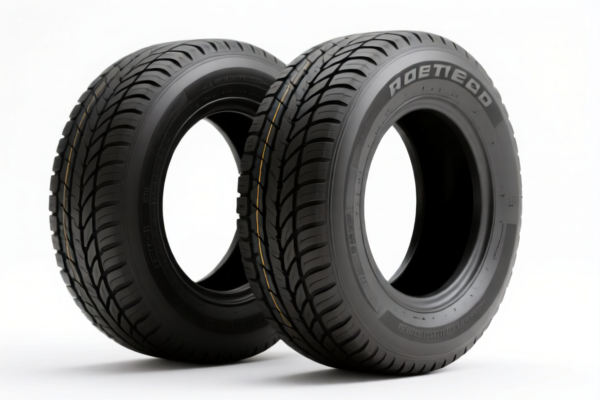
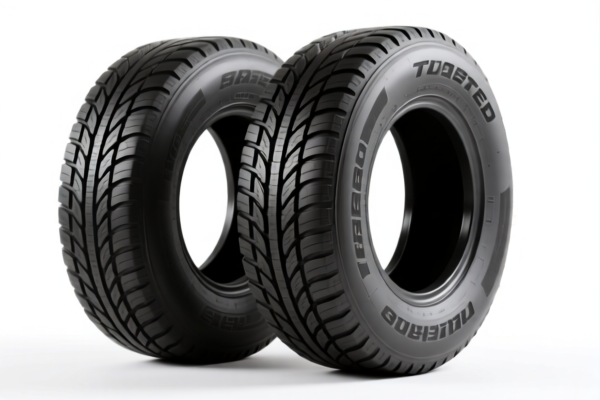
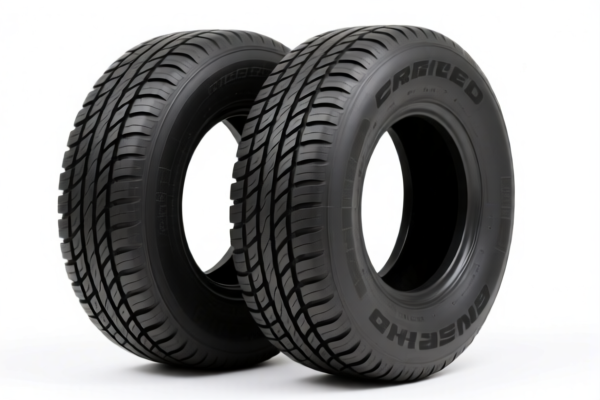
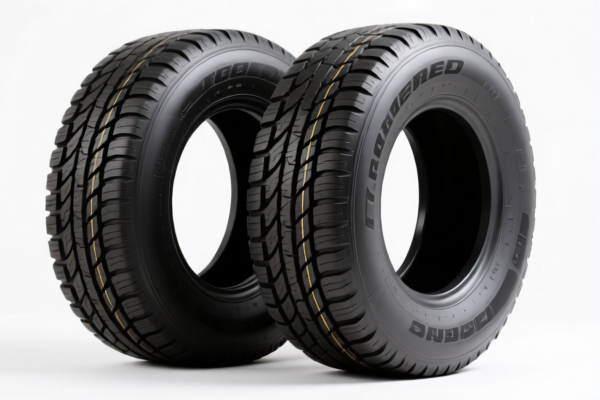
AI Analysis
🚛 Refurbished Bus Tires (Retreaded Tires for Public Transport)
🌐 HS Code Reference & Customs Clearance Guide | 2026 Latest Tariff Analysis | Professional Clearance Strategy
📌 1. Product Definition & Classification: Are You Classifying "Refurbished Bus Tires" Correctly?
Refurbished tires (commonly known as Retreaded Tires) are used tire casings that have been repaired and rebuilt with new tread material to extend their service life. For public transportation vehicles (buses and trucks), these are critical components.
In international trade, the classification depends heavily on: 1. The Type of Vehicle: Specifically, tires for buses or trucks (as opposed to passenger cars). 2. The Condition: Whether they are "new" or "refurbished/retreaded." 3. The Material: Typically rubber.
⚠️ Key Distinction Point:
- Refurbished/Retreaded: Must be declared explicitly as "Refurbished" or "Retreaded." Misdeclaring as "New" can lead to severe penalties.
- Vehicle Type: Tires for buses/trucks generally fall under specific subheadings distinct from passenger car tires.
- Duty Impact: Refurbished tires often attract higher additional tariffs (e.g., Section 301 and Section 122 duties) compared to new tires, making accurate HS Code selection vital for cost control.
📦 2. HS Code Classification Matrix (2026 Latest Tariff Authority Cross-Reference)
Based on the provided data, here are the possible HS Codes for Refurbished Bus Tires, categorized by their specific descriptive nuances.
| HS Code | Product Description | Applicable Scenario | Total Tax Rate |
|---|---|---|---|
| 4011.20.10.15 | Refurbished bus/truck tires, explicitly classified for road use in public transport. | Direct match for "Public Transport Bus/Truck Tires" under road-use classification. | 39.0% |
| 4011.20.50.20 | Refurbished bus/truck tires, inferred as public transport use, fitting the residual/fallback category. | Used when specific sub-headings don't perfectly match, falling under "Other" categories based on residual principles. | 38.4% |
| 4012.12.40.35 | Refurbished tires, classified under rubber retreaded tires category, covering bus/truck use. | General classification for rubber retreaded tires intended for buses or trucks. | 39.0% |
| 4012.12.40.25 | Refurbished tires, shape and use match bus/truck, material is rubber. | Focuses on the material (rubber) and form factor matching bus/truck applications. | 39.0% |
| 4012.12.80.29 | Refurbished tires, characteristics match bus/truck use, material is rubber. | Another variant for rubber retreaded tires, potentially differing in specific sub-sub-classification details. | 38.4% |
🔍 Important Note:
- All listed codes relate to Refurbished/Retreaded Tires for Buses/Trucks.
- The difference between 39.0% and 38.4% is driven by the Base Tariff (4.0% vs. 3.4%), while the additional duties remain consistent.
- 4011 vs. 4012: Both chapters relate to rubber articles. 4011 is typically for new tires, but specific sub-headings may allow for refurbished goods depending on national tariff schedules. 4012 is explicitly for "Used or Retreaded Pneumatic Tires." Please verify the latest national tariff schedule for exact chapter applicability, as 4012 is the standard GHS chapter for retreaded tires.
💰 3. 2026 Latest Tariff Rate Breakdown (Including Additional Duties & Policy Surcharges)
✅ Applicable Country: United States (US)
✅ Origin: China (CN)
✅ Effective Time: Current tariffs apply (including Section 301 and Section 122).
🎯 A. HS Code 4011.20.10.15 & 4012.12.40.35 & 4012.12.40.25 (39.0% Total)
| Item | Detail |
|---|---|
| Base Tariff | 4.0% (Ad Valorem) |
| Section 301 Additional Duty | +25% (USITC Footnote, Trade Act Section 301) |
| Section 122 Duty | +10% (Specific surcharge for certain Chinese goods) |
| Total Tax Rate | 39.0% |
| Tax Calculation | CIF Value × 39.0% |
| De Minimis Exemption | ❌ Not Available (Deny de minimis) |
| Legal Basis Path | Base Tariff: 4011/4012 → USITC: Section 301 (25%) → IEEPA/Section 122 (10%) |
📌 Explanation:
- The 25% duty is the standard Section 301 tariff on many Chinese industrial goods.
- The 10% Section 122 duty is an additional surcharge applied to specific categories, often targeting goods deemed to be of strategic concern or under specific trade remedies.
- Total 39% is a high tariff, significantly impacting profit margins. Must be factored into landed cost calculations.
🎯 B. HS Code 4011.20.50.20 & 4012.12.80.29 (38.4% Total)
| Item | Detail |
|---|---|
| Base Tariff | 3.4% (Ad Valorem) |
| Section 301 Additional Duty | +25% (USITC Footnote, Trade Act Section 301) |
| Section 122 Duty | +10% (Specific surcharge for certain Chinese goods) |
| Total Tax Rate | 38.4% |
| Tax Calculation | CIF Value × 38.4% |
| De Minimis Exemption | ❌ Not Available (Deny de minimis) |
| Legal Basis Path | Base Tariff: 4011/4012 → USITC: Section 301 (25%) → IEEPA/Section 122 (10%) |
📌 Note:
- These codes offer a 0.6% saving compared to the 39.0% bracket due to a lower base tariff (3.4% vs. 4.0%).
- However, the additional duties (25% + 10%) remain the same.
- Choose this code if the product description strictly fits the "residual" or specific "rubber material" definitions that qualify for the 3.4% base rate.
🛠️ 4. Customs Clearance Practical Advice (Real-World Pitfall Avoidance Guide)
✅ 1. Required Documentation Checklist (All are Mandatory)
| Document | Must Provide | Description |
|---|---|---|
| ✅ Commercial Invoice | ✔️ | Must clearly state "Refurbished" or "Retreaded". Do not just write "Tires." |
| ✅ Packing List | ✔️ | Detail the quantity, weight, and dimensions per box/pallet. |
| ✅ Product Specifications | ✔️ | Include tread depth, casing origin, retread process type (pre-cure vs. mold-cure), and applicable vehicle models (Bus/Truck). |
| ✅ Certificate of Origin (CO) | ✔️ | Required for origin verification. If not from China, check for FTZ benefits (though Section 301/122 may still apply depending on rules of origin). |
| ✅ Proof of Refurbishment | ✔️ | Some customs officials may require documentation showing the casing was processed, not newly manufactured, to justify the HS Code. |
| ✅ Import Security Filing (ISF) | ✔️ | Required for ocean freight to the US. File 10 days prior to loading. |
✅ 2. Declaration Best Practices (Key Tips)
🔥 "Declare 'Refurbished' Explicitly, Don't Hide the Origin, Pay the Duties Early!"
| Situation | Correct Declaration | Incorrect Action | Consequence |
|---|---|---|---|
| Refurbished Tires | HS: 4012.12...Name: "Retreaded Bus Tires" |
Declare as "New Tires" | Severe Penalty: Misdeclaration, potential fraud charges, seizure of goods. |
| Bus/Truck Use | Specify "For Buses/Trucks" in description | Vague term: "Auto Parts" | Customs may assign a higher default code or request additional info, causing delays. |
| High Tariff Codes | Pre-calculate landed cost with 39% | Underestimate duty cost | Unexpected cash flow issues at customs release. |
| Origin Marking | Mark "Made in China" on casing/tire sidewall | No marking or false marking | Violation of US origin marking laws; fines per unit. |
✅ 3. Special Cases & Handling
| Situation | Handling Advice |
|---|---|
| Mixed Cargo (New + Refurbished) | Ship separately or declare distinctly on the same invoice. Mixing can trigger audits on the entire shipment. |
| CASING ONLY | If shipping only the retreaded casing without new tread, the HS code may differ. Ensure the description matches the physical state. |
| Used Tire Ban Check | Ensure the product is legally retreaded. Importing "used tires" for disposal is banned in many jurisdictions, including parts of the US. Retreaded tires for reuse are allowed. |
| Section 301 Exemption | Check if the specific HS Code was excluded from Section 301 duties in 2026. (Note: Most tire categories are not excluded). |
🌍 5. Global Market Clearance Comparison (2026 Update)
| Country/Region | Recommended HS Code | Est. Total Duty | Key Certification | Notes |
|---|---|---|---|---|
| 🇺🇸 USA | 4012.12.40.xx |
38.4% - 39.0% | DOT, DOT-TIR | High Section 301 + 122 duties. Strict origin marking. |
| 🇨🇳 China | 4012.12.40.xx |
~5-7% | CCC (if applicable) | Lower base tariff. No Section 301/122. |
| 🇪🇺 EU | 4012.12.40.xx |
4.5% - 6% | E-mark (ECE R108/109) | No US-style surcharges. Focus on ECE standards. |
| 🇬🇧 UK | 4012.12.40.xx |
4.5% | UKCA / ECE | Post-Brexit tariff schedule. Similar to EU base rates. |
| 🇦🇺 Australia | 4012.12.40.xx |
5% | SABS/TGA (if relevant) | Generally low base duty. Check anti-dumping duties. |
📌 Conclusion:
- USA is the most challenging market due to the cumulative 39% tariff burden (Base + 301 + 122).
- EU/UK/Australia are more favorable regarding duty rates, but require strict ECE/UKCA certification for road safety.
- China remains a low-cost manufacturing hub but faces export barriers to the US.
📌 6. Common Errors & Pitfall Guide (Lessons Learned)
❌ Error 1: Declaring "Refurbished Tires" as "New Tires" to avoid Section 301/122.
👉 Consequence: Customs Audit, seizure, fines up to 4x the duty value, and loss of importer security bond.
❌ Error 2: Using generic terms like "Truck Parts" instead of "Refurbished Bus Tires."
👉 Consequence: Customs Valuation Adjustment. Customs may assign a higher HTS code with higher duties or reject the entry.
❌ Error 3: Ignoring Section 122 Duties.
👉 Consequence: Underpayment of duties. Section 122 is additional to Section 301. Many importers forget this 10% surcharge.
❌ Error 4: Failing to mark "Made in China" on the tire sidewall.
👉 Consequence: Import Penalties. US Customs requires permanent marking of origin on the article itself.
✅ Correct Approach:
"Retreaded Pneumatic Tires, for Buses, Rubber, Refurbished, Made in China"
Ensure all documents align with this description. Pre-pay estimated duties. Verify Section 122 applicability for the specific year.
🎯 7. Conclusion: Professional Declaration Saves Money!
🎯 Key Takeaways:
🔹 "Refurbished" must be declared explicitly. Hiding the true condition is fraud.
🔹 Budget for 39% Duty for US imports. Factor this into your pricing strategy.
🔹 Use the 38.4% Code if applicable to save 0.6% on base duty.
🔹 Prepare Documentation Early. ISF, CO, and detailed specs prevent delays.
📌 Pro Tip:
If you are importing into the US, consider Advance Ruling (Ruling Request) from CBP (U.S. Customs and Border Protection) to confirm the exact HS Code and duty liability before shipment. This provides legal certainty and prevents surprise costs.
📣 Immediate Action Required:
📞 Contact a licensed Customs Broker.
📄 Prepare detailed product photos and specs showing the "Refurbished/Retreaded" nature.
💰 Calculate landed cost including 39% duty.
🚀 Ensure smooth clearance and protect your profit margins!
✨ Professional Clearance Starts with Accurate Classification!
💼 Your Bottom Line Depends on These Details!
Customer Reviews
About HS Code Classification
The Harmonized System (HS) is an internationally standardized nomenclature developed by the World Customs Organization (WCO) to classify traded products. Over 200 countries use the HS system as the basis for customs tariffs, trade statistics, and import/export regulations.
Each HS code follows a hierarchical structure:
- Chapter (2 digits) — Broad category of goods (e.g., Chapter 84: Machinery and Mechanical Appliances)
- Heading (4 digits) — More specific grouping within the chapter
- Subheading (6 digits) — Internationally standardized breakdown, used by all WCO member countries
- National subdivisions (8-10 digits) — Country-specific extensions for further classification, such as US HTSUS 10-digit codes
Correct HS code classification is essential for smooth customs clearance, accurate duty payment, and compliance with trade regulations. Misclassification can lead to customs delays, overpayment of duties, or penalties.
When importing from CN to US, the applicable tariff rates may include:
- Most-Favored-Nation (MFN) rate — The standard duty rate applied to WTO members
- General rate — Applied to countries without trade agreements
- Trade remedy duties — Additional tariffs such as Section 301 (anti-dumping), Section 232 (national security), or countervailing duties
The information provided on this page is for reference purposes only. For official classification, please consult with your local customs authority or a licensed customs broker.