Refurbished Public Transport Vehicle Tires
CN → US| HS Code | Tariff Rate | Origin | Destination | Doc |
|---|---|---|---|---|
| 4011201015 | 39.0% | CN | US | Official Doc |
| 4011205020 | 38.4% | CN | US | Official Doc |
| 4012124035 | 39.0% | CN | US | Official Doc |
| 4012124025 | 39.0% | CN | US | Official Doc |
| 4012128029 | 38.4% | CN | US | Official Doc |
Product Images
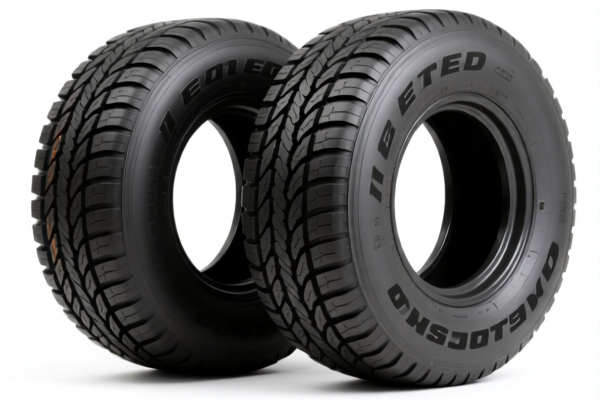
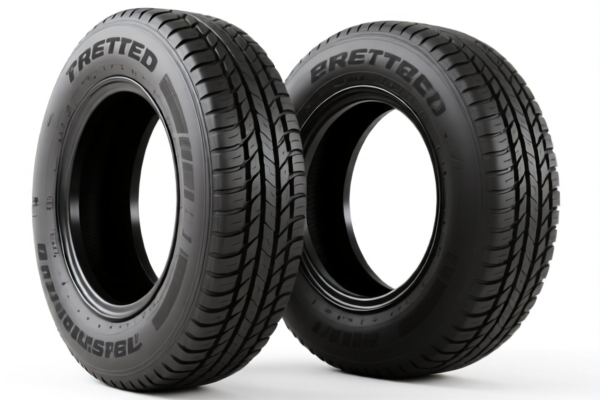
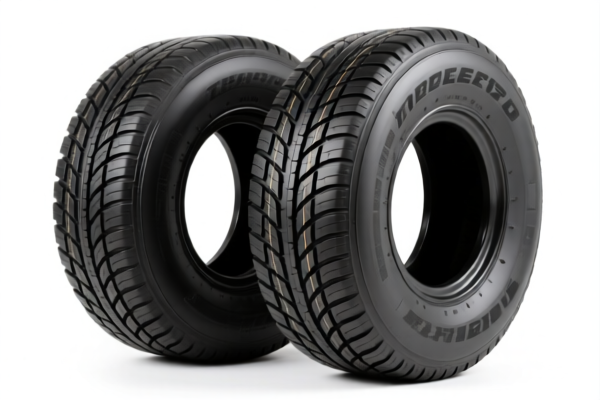
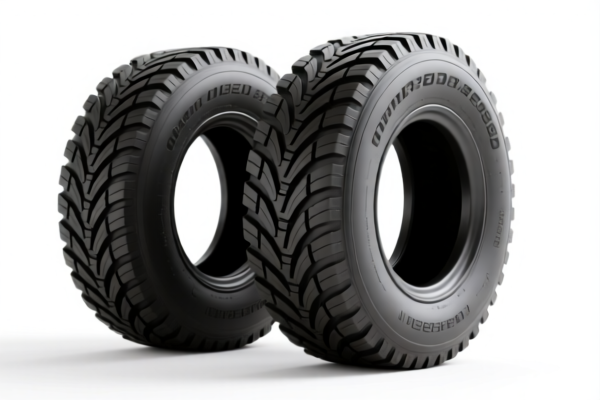
AI Analysis
🚛 Refurbished Public Transport Vehicle Tires (Bus & Truck Tires)
🌐 HS Code Reference & Customs Clearance Guide | 2026 Latest Tariff Analysis | Professional Clearance Strategy
📌 I. Product Definition & Classification: Do You Really Understand "Refurbished Tires"?
Refurbished Public Transport Vehicle Tires are used tire casings that have undergone a re-manufacturing process. This involves cleaning, inspecting, repairing the casing, and applying new tread rubber to restore them to a serviceable condition. In international trade, these are strictly classified as "Retreads" or "Refurbished Tires", distinct from new tires (4011).
Key Distinctions:
* Refurbished/Retreaded (4012): The original casing is reused. The value lies in the re-manufacturing process.
* New (4011): Brand new tires manufactured from raw materials.
⚠️ Critical Classification Point:
- If the tire is refurbished/retreaded, it MUST fall under Heading 4012.
- If declared as "New" but is physically refurbished, it risks severe penalties for misclassification.
- Application for Buses and Trucks places these under the specific sub-headings for heavy-duty vehicles.
📦 II. HS Code Classification Details (2026 Latest Tariff Authority Mapping)
Based on the provided data, the following HS Codes apply to refurbished tires for public transport vehicles (Buses/Trucks). The classification hinges on the specific sub-category within Chapter 40.12 (Used Pneumatic Tyres; Retreaded Pneumatic Tyres).
| HS Code | Product Description | Applicable Scenario | Material/Type |
|---|---|---|---|
4011.20.10.15 |
Refurbished public transport tires, matched for bus/truck use; classified under "Other pneumatic tires" due to specific categorization rules. | Bus/Truck Road Tires (Refurbished) | Rubber |
4011.20.50.20 |
Refurbished public transport tires; inferred bus/truck use based on the "catch-all" principle for other categories. | Bus/Truck Road Tires (Refurbished) | Rubber |
4012.12.40.35 |
Refurbished public transport tires; falls under "Rubber retreaded tires" category, covering bus/truck use. | Bus/Truck Road Tires (Retreaded) | Rubber |
4012.12.40.25 |
Refurbished public transport tires; Form: Refurbished, Use: Bus/Truck, Material: Rubber. | Bus/Truck Road Tires (Retreaded) | Rubber |
4012.12.80.29 |
Refurbished public transport tires; Characteristics: Retreaded, for Bus/Truck, Material: Rubber. | Bus/Truck Road Tires (Retreaded) | Rubber |
🔍 Key Insight:
- Notice the split between 4011 and 4012. While4012is the standard heading for retreads, the provided data includes codes under4011.20(which usually denotes new tires for buses/trucks). This suggests a specific customs interpretation or data set where certain refurbished types are mapped to4011sub-lines for specific statistical or duty reasons, OR these codes represent a hybrid classification system where "Refurbished" status triggers specific sub-codes within broader tire headings. - However, the standard international convention (HS) places Retreads under 4012.12. The codes4012.12.40.xxare the most technically accurate for retreads. The4011.xxcodes provided may represent specific national sub-classifications for "used/refurbished" imports under a broader "pneumatic tire" heading. Always verify with local customs if4011is acceptable for refurbishes in your specific jurisdiction.
💰 III. 2026 Latest Tariff Rate Breakdown (Including Additional Duties)
✅ Applicable Country: United States (US)
✅ Origin: China (CN) (Implied by "122 Clause" and typical trade context)
✅ Effective Time: Current Regulations (Section 301 & Section 122)
🎯 1. HS Code 4011.20.10.15 & 4012.12.40.35 & 4012.12.40.25
(Refurbished/Retreaded Bus/Truck Tires - Standard High Duty Path)
| Item | Content |
|---|---|
| Base Tariff | 4.0% (Ad Valorem) |
| Section 301 Tariff | +25.0% (Additional Tariff on Chinese Goods) |
| Section 122 Tariff | +10.0% (Specific Additional Tariff for Certain Countries) |
| Total Effective Rate | 39.0% |
| Tax Calculation | CIF Value × 39% |
| De Minimis Exemption | ❌ NOT Eligible (deny_de_minimis) |
| Legal Basis | Section 301 + Section 122 + Base HS Rate |
📌 Explanation:
- The Base Tariff (4.0%) is the standard Most Favored Nation (MFN) rate for pneumatic tires of a kind used on buses or lorries.
- The +25% is the Section 301 tariff, a blanket additional duty on goods from China.
- The +10% is the Section 122 tariff (often related to national security or specific trade remedy actions).
- Total Burden: 39%. This is a significant cost driver. Importers must factor this into landed cost calculations.
🎯 2. HS Code 4011.20.50.20 & 4012.12.80.29
(Refurbished/Retreaded Bus/Truck Tires - Catch-All/Lower Base Path)
| Item | Content |
|---|---|
| Base Tariff | 3.4% (Ad Valorem) |
| Section 301 Tariff | +25.0% (Additional Tariff on Chinese Goods) |
| Section 122 Tariff | +10.0% (Specific Additional Tariff for Certain Countries) |
| Total Effective Rate | 38.4% |
| Tax Calculation | CIF Value × 38.4% |
| De Minimis Exemption | ❌ NOT Eligible (deny_de_minimis) |
| Legal Basis | Section 301 + Section 122 + Base HS Rate |
📌 Note:
- These codes have a slightly lower base rate (3.4% vs 4.0%), resulting in a total duty of 38.4%.
- Despite the small difference, the Section 301 and 122 tariffs remain fixed at 25% and 10% respectively.
- Risk: Classification under4011.20for refurbished goods is highly contested. Customs may argue that refurbished tires belong exclusively under4012. If audited, you may be forced to switch to the4012code (4012.12.40.35), potentially triggering different scrutiny or additional requirements.
🛠️ IV. Customs Clearance Practical Advice (Field Guide)
✅ 1. Document Checklist (Non-Negotiable)
| Document | Mandatory? | Description |
|---|---|---|
| ✅ Product Specification Sheet | ✔️ | Must clearly state: "Refurbished" / "Retreaded", not "New". Include casing diameter, tread pattern, and manufacturing date of the original casing. |
| ✅ Certificate of Origin (CO) | ✔️ | Essential for determining Section 301/122 applicability. Must specify China origin if applicable. |
| ✅ Commercial Invoice | ✔️ | Must value the refurbished tire. Do not invoice as "New Tire" to avoid fraud allegations. |
| ✅ Packing List | ✔️ | Detail quantity, weight, and dimensions. |
| ✅ Labeling/Marking | ✔️ | Each tire MUST be marked "Retread" or "Refurbished" per US DOT regulations (49 CFR § 575.109). Failure to mark leads to rejection. |
| ✅ DOT Compliance Proof | ✔️ | Evidence that the retreaded tire meets Federal Motor Vehicle Safety Standards (FMVSS). |
✅ 2. Declaration Strategy (Key Mantra)
🔥 "Declare Refurbished, Not New; Mark Every Tire; Avoid 100% Penalty Risk!"
| Scenario | Correct Declaration | Incorrect Declaration |
|---|---|---|
| Refurbished Tire | HS: 4012.12.40.xx or 4011.20.xx (as per data) |
HS: 4011.20.00.00 (New Tire Code) |
| Product Name | "Refurbished Bus Tire, Retreaded" | "New Bus Tire" |
| HS Code Choice | Use 4012 codes if possible (standard for retreads). Use 4011 codes only if data mandates it for specific sub-classifications. |
Using 4011 without justification for refurbishes. |
| Value Declaration | Declared value of the retreaded unit. | Inflated value as "New Tire" (triggers anti-dumping audits). |
✅ 3. Special Considerations
| Issue | Handling Advice |
|---|---|
| DOT Marking | CRITICAL: US DOT requires all retreaded tires to be marked with "RETREAD" on the sidewall. Undeclared/unmarked tires will be seized. |
| Section 301 Exclusions | Check if your specific tire type was excluded from Section 301 duties in 2020-2024. Most tire retreads are NOT excluded. Assume 25% applies. |
| Environmental Regulations | Some states (e.g., California) have strict tire disposal and environmental fees. Factor in state-level taxes. |
| Anti-Dumping | Ensure the tires are not subject to additional Anti-Dumping (AD) or Countervailing Duty (CVD) orders if they resemble specific steel-belted radials. |
🌍 V. Global Market Comparison (2026 Context)
| Country/Region | Recommended HS Code | Duty Rate (China Origin) | Key Requirement | Note |
|---|---|---|---|---|
| 🇺🇸 USA | 4012.12.40.xx |
39.0% (Base 4% + 25% + 10%) | DOT Marking "Retread" | Highest Cost. No De Minimis. |
| 🇨🇳 China | 4012.12.00.00 |
~0-10% (VAT 13%) | CCC Certification | Import restrictions may apply. |
| 🇪🇺 EU | 4012.12.00.00 |
0% (Under TRQ) | ECE Certification | Free trade often applies; strict quality controls. |
| 🇬🇧 UK | 4012.12.00.00 |
0% (Post-Brexit Deals) | UKCA Marking | Generally favorable for retreads. |
📌 Conclusion:
- USA is the most expensive market for Chinese-refurbished tires due to the 39% cumulative duty.
- EU/UK are more favorable, relying on quality certification rather than punitive tariffs.
- Strategy: If targeting the US, ensure DOT compliance is flawless to avoid seizure, and consider supply chain diversification if possible to mitigate tariff risk.
📌 VI. Common Errors & Pitfalls (Blood & Tears)
❌ Error 1: Declaring "Refurbished Tires" as "New Tires" (4011.10) to save taxes.
👉 Consequence: Fraud. Seizure, fines up to 100% of value, and criminal charges. Customs easily detects retreads via sidewall markings and physical inspection.
❌ Error 2: Missing the "Retread" Marking on the tire sidewall.
👉 Consequence: Refused Entry. US Customs and Border Protection (CBP) will reject entry if the DOT marking is missing or incorrect.
❌ Error 3: Ignoring Section 122 Tariffs.
👉 Consequence: Underpayment of duties. The 10% Section 122 tariff is often overlooked by brokers, leading to post-entry audits and penalties.
❌ Error 4: Using De Minimis (Section 321) for shipments under $800.
👉 Consequence: Denied. Tires (including retreads) are explicitly excluded from de minimis treatment under Section 321. Every shipment, regardless of value, requires formal entry and duty payment.
✅ Correct Practice:
"Refurbished Bus Tire, Retreaded, DOT Certified, Chinese Origin, Marked 'RETREAD' on Sidewall."
🎯 VII. Conclusion: Professional Clearance Saves Money & Prevents Seizure
🎯 Remember the Mantra:
🔹 "Refurbished is Retread, Not New. 39% Duty Hits Hard. DOT Mark is King."
🔹 "No De Minimis for Tires. Formal Entry Required. Always."
📌 Pro Tip:
- If your tires are not from China (e.g., Vietnam, Thailand), verify if they are eligible for MFN rates only (no Section 301/122). This could reduce the duty from 39% to ~4%.
- Apply for an ACE (Automated Commercial Environment) Pre-filing to ensure data accuracy before shipment arrival.
📣 Immediate Action:
📞 Engage a licensed customs broker specializing in DOT-regulated goods.
📄 Ensure all tires are physically marked before shipping.
💰 Calculate Landed Cost including the 39% tariff.
✨ Professional Clearance Starts with Precise Classification!
💼 Every percent of duty saved is profit earned!
Customer Reviews
About HS Code Classification
The Harmonized System (HS) is an internationally standardized nomenclature developed by the World Customs Organization (WCO) to classify traded products. Over 200 countries use the HS system as the basis for customs tariffs, trade statistics, and import/export regulations.
Each HS code follows a hierarchical structure:
- Chapter (2 digits) — Broad category of goods (e.g., Chapter 84: Machinery and Mechanical Appliances)
- Heading (4 digits) — More specific grouping within the chapter
- Subheading (6 digits) — Internationally standardized breakdown, used by all WCO member countries
- National subdivisions (8-10 digits) — Country-specific extensions for further classification, such as US HTSUS 10-digit codes
Correct HS code classification is essential for smooth customs clearance, accurate duty payment, and compliance with trade regulations. Misclassification can lead to customs delays, overpayment of duties, or penalties.
When importing from CN to US, the applicable tariff rates may include:
- Most-Favored-Nation (MFN) rate — The standard duty rate applied to WTO members
- General rate — Applied to countries without trade agreements
- Trade remedy duties — Additional tariffs such as Section 301 (anti-dumping), Section 232 (national security), or countervailing duties
The information provided on this page is for reference purposes only. For official classification, please consult with your local customs authority or a licensed customs broker.