Refurbished Rubber Tires for Garden Vehicles
CN → US| HS Code | Tariff Rate | Origin | Destination | Doc |
|---|---|---|---|---|
| 4005910000 | 35.0% | CN | US | Official Doc |
| 4006901000 | 35.0% | CN | US | Official Doc |
| 4012904500 | 39.2% | CN | US | Official Doc |
| 4012909000 | 37.7% | CN | US | Official Doc |
| 4005200000 | 35.0% | CN | US | Official Doc |
Product Images
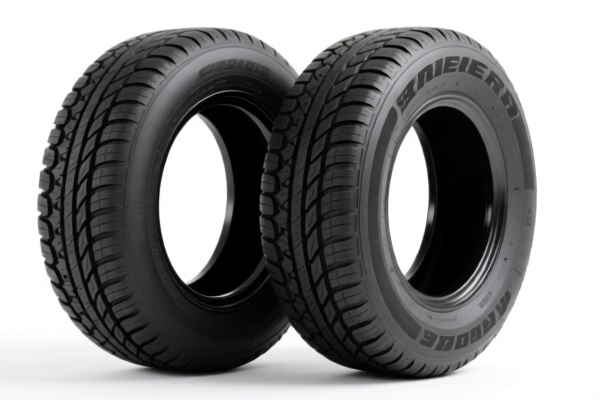
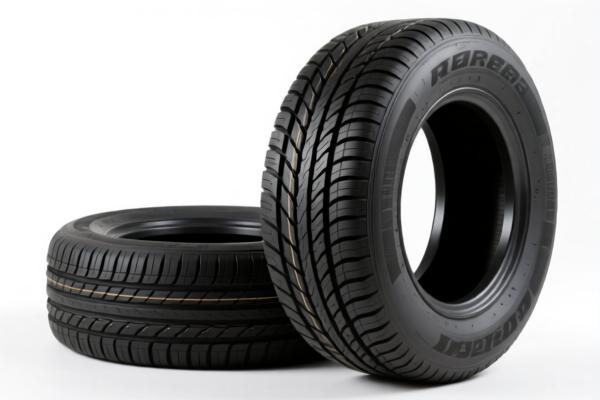
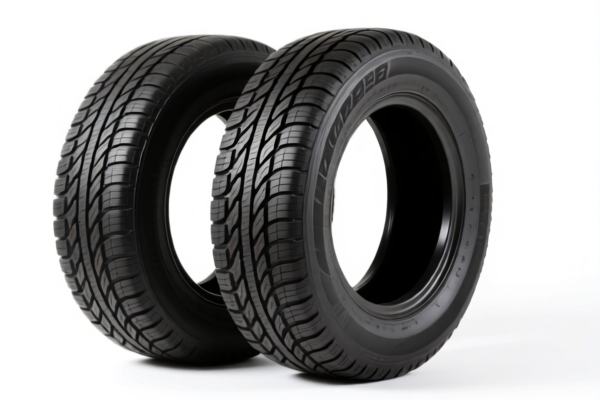
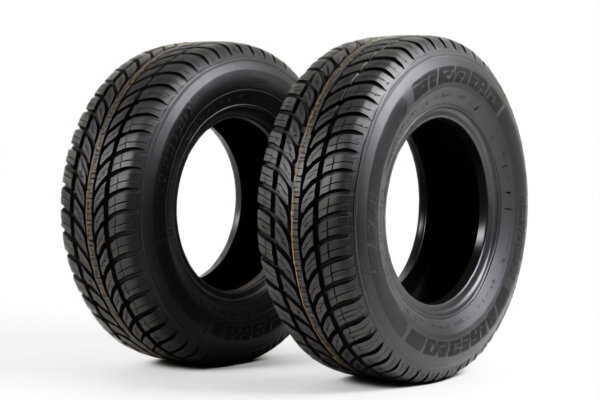
AI Analysis
🚜 Refurbished Rubber Tires for Garden Vehicles (Garden Vehicle Retreads)
🌐 HS Code Reference & Customs Clearance Guide | 2026 Latest Tariff Analysis | Professional Clearance Strategy
📌 I. Product Definition & Classification: Do You Understand "Refurbished Tires"?
Refurbished Rubber Tires for Garden Vehicles, commonly known as retreads, are used tires that have been restored by replacing the worn tread with new rubber. In international trade, they are classified based on their material (rubber), state (refurbished/semi-manufactured), and specific application.
Key Distinction Points: * If Classified as Semi-Finished Rubber: If the item is viewed primarily as a rubber sheet/strip used in the retreading process, it may fall under Chapter 40 (Rubber) headings like 4005 or 4006. * If Classified as Finished/Tire Components: If viewed as a functional part of a tire for refurbishment, it falls under Heading 4012 (Retreaded or used pneumatic tires; rubber tire casings, cord fabric and other parts).
⚠️ Critical Note:
- The term "Garden Vehicles" often triggers scrutiny under specific agricultural or utility vehicle categories, but the HS Code is primarily driven by the "Retread" and "Rubber" attributes.
- High Tariff Alert: Products originating from China face significant additional duties under Section 301 and IEEPA measures.
📦 II. HS Code Classification Details (2026 Latest Tariff Authority Comparison)
Based on the provided data, here are the potential HS Codes and their logic:
| HS Code | Product Description | Matching Logic (Why this code?) | Total Tax Rate (China Origin) |
|---|---|---|---|
4005.91.00.00 |
Other uncured compound rubber, in primary forms or in plates, sheets or strips | Material & Form: The tire tread is rubber in a plate/strip form (primary/semi-finished). Fits "Uncured Compound Rubber". | 35.0% |
4006.90.10.00 |
Other articles of uncured rubber | Intermediate Product: Tread is an intermediate rubber article/semi-finished product. No conflict in material/usage. | 35.0% |
4012.90.45.00 |
Other rubber tires, new or retreaded; rubber tire casings... (Specific Sub-heading for Retreads) | Form & Use: Explicitly matches "Tread" and "Refurbishment/Retreading" use. Material is confirmed as rubber. | 39.2% |
4012.90.90.00 |
Other rubber tires, new or retreaded... (General Sub-heading) | Material & Use: General category for rubber tires/retreads. Fits tread/refurbishment characteristics. | 37.7% |
4005.20.00.00 |
Other uncured compound rubber, in primary forms... (Specific for Semi-Finished) | Form: Refurbished treads are seen as semi-finished/uncured rubber articles. Fits 4005 description for intermediate forms. | 35.0% |
🔍 Key Insight:
-4012.90.45.00and4012.90.90.00are the most specific to "Retreads" but carry the highest base duties (4.2% and 2.7% respectively) due to being classified as "Tires/Tire Parts".
-4005and4006classify the item as Raw/Semi-Finished Rubber, resulting in lower base duties (0%) but still subject to heavy附加 taxes.
💰 III. 2026 Latest Tariff Rate Breakdown (Including Surtaxes & Policy Add-ons)
✅ Applicable Country: United States (US)
✅ Origin: China (CN)
✅ Effective Time: From November 10, 2025 (and subsequent imports)
🎯 1. Classification as Semi-Finished Rubber (4005.91.00.00, 4006.90.10.00, 4005.20.00.00)
| Item | Content |
|---|---|
| Base Duty Rate | 0% (Ad Valorem) Classified as Uncured Rubber/Intermediate |
| USITC Surtax (Section 301) | +25% From USITC Footnote 9903.88.01 (or similar 301 footnote for rubber compounds) |
| IEEPA Surtax | +10% China/China-HK products under IEEPA, effective Nov 10, 2025 |
| Total Tax Rate | 35.0% |
| Tax Calculation | CIF Value × 35% |
| De Minimis Exemption | ❌ Not Applicable (deny_de_minimis) |
| Legal Basis Path | IEEPA:9903.01.25 → IEEPA:9903.01.24 → USITC:4005.91.00.00 → FOOTNOTE:9903.88.01 |
📌 Explanation:
- These codes treat the tread as uncured rubber material, not a finished tire part.
- Base duty is 0%, but the 35% surcharge is substantial.
- Note: If classified under4005.20, the logic is similar: 0% base + 25% + 10% = 35%.
🎯 2. Classification as Retreaded Tire Part (4012.90.45.00)
| Item | Content |
|---|---|
| Base Duty Rate | 4.2% (Ad Valorem) |
| USITC Surtax (Section 301) | +25% |
| IEEPA Surtax | +10% |
| Total Tax Rate | 39.2% |
| Tax Calculation | CIF Value × 39.2% |
| De Minimis Exemption | ❌ Not Applicable |
| Legal Basis Path | IEEPA:9903.01.25 → IEEPA:9903.01.24 → USITC:4012.90.45.00 |
📌 Note:
- Higher base duty (4.2%) because it is explicitly identified as a tire component/retread.
- Total tax is higher than the rubber material classification.
🎯 3. Classification as Other Tire Part (4012.90.90.00)
| Item | Content |
|---|---|
| Base Duty Rate | 2.7% (Ad Valorem) |
| USITC Surtax (Section 301) | +25% |
| IEEPA Surtax | +10% |
| Total Tax Rate | 37.7% |
| Tax Calculation | CIF Value × 37.7% |
| De Minimis Exemption | ❌ Not Applicable |
🛠️ IV. Customs Clearance Practical Advice (Pitfall Avoidance Guide)
✅ 1. Required Documentation Checklist
| Document | Must Provide? | Description |
|---|---|---|
| ✅ Product Specification Sheet | ✔️ | Detail: Material (Uncured Cured Rubber?), State (Tread Strip?), Application (Garden Vehicle Retread). |
| ✅ Product Photos (Clear) | ✔️ | Show the tread profile, labeling (if any), and packaging. |
| ✅ Commercial Invoice | ✔️ | Must accurately state: "Rubber Tread for Refurbishing Garden Vehicle Tires". Avoid vague terms like "Auto Parts". |
| ✅ Packing List | ✔️ | Confirm weight and volume. |
| ✅ Certificate of Origin (CO) | ✔️ | Crucial for determining IEEPA applicability. |
| ✅ Third-Party Test Report | ✔️ | If claiming "Uncured Rubber", provide chemical composition or vulcanization status report. |
✅ 2. Declaration Strategies (Key Mantras)
🔥 "Define State, Specify Use, Declare Material Clearly!"
| Scenario | Correct Declaration | Wrong Practice |
|---|---|---|
| Semi-Finished Tread | 4005.91.00.00 "Uncured Rubber Tread Strip for Retreading" |
Misdeclare as "Finished Tire" → 4012 codes (37.7%-39.2%) |
| Finished Tread (Vulcanized) | 4012.90.45.00 "Retreaded Tire Tread for Garden Vehicles" |
Declare as "Raw Material" → Customs Rejection/Reclassification |
| Vague Description | "Rubber Piece" | ❌ High Risk: Customs may assign highest applicable duty or reject shipment. |
📌 Critical Advice:
- If the tread is uncured (soft, pliable), use 4005/4006 to benefit from 0% base duty.
- If the tread is vulcanized/hard (ready to apply), use 4012. However, note that 4012 has higher base duties.
- Total Cost Comparison:
-4005.91(35%) vs4012.90.45(39.2%).
- Saving: ~4.2% by classifying as uncured rubber/intermediate if technically accurate.
✅ 3. Special Situations
| Situation | Handling Advice |
|---|---|
| OEM for Garden Equipment Brands | Provide brand authorization if applicable, but focus on HS classification. |
| Mix of Tires and Treads | Do NOT mix in one shipment. Separate "Finished Tires" (if any) from "Treads". |
| Origin: Not China | If from Vietnam/Thailand, IEEPA may not apply → Lower Total Tax. Verify CO carefully. |
🌍 V. Global Market Comparison (2026)
| Country/Region | Recommended HS Code | Est. Total Tax (China Origin) | Notes |
|---|---|---|---|
| 🇺🇸 USA | 4005.91.00.00 or 4012.90.45.00 |
35.0% – 39.2% | High tariffs due to Section 301 + IEEPA. |
| 🇨🇳 China | 4012.90.45.00 |
~5-8% (Import Duty) | Lower base duties, no 301/IEEPA. |
| 🇪🇺 EU | 4012.90.45.00 |
~6.5% + VAT | No Section 301 equivalent. |
| 🇦🇺 Australia | 4012.90.45.00 |
~5% | No major retaliatory tariffs. |
📌 Conclusion:
- The USA is the most expensive market for Chinese rubber retreads/treads due to combined tariffs.
- Classifying as "Uncured Rubber" (4005) can save ~4% compared to "Tire Parts" (4012), but must be technically accurate (uncured state).
📌 VI. Common Mistakes & Pitfalls (Lessons Learned)
❌ Mistake 1: Declaring "Retreaded Tires" as "New Tires"
👉 Consequence: Customs may impose penalties for misdeclaration, or apply different duty rates.
❌ Mistake 2: Ignoring IEEPA 10% Surtax
👉 Consequence: Underpaying duties → Back taxes + Interest + Penalties. The 10% is automatic for Chinese rubber products under specific headings.
❌ Mistake 3: Using "General Rubber Part" in Description
👉 Consequence: Customs ambiguity → Audit Delay or forced reclassification to highest duty rate.
✅ Correct Approach:
"Rubber Tread, Uncured, for Refurbishing Garden Vehicle Tires, Model XYZ, Origin: China"
+ Accurate HS Code (4005.91.00.00) + IEEPA Compliance.
🎯 VII. Conclusion: Precision in Classification Saves Cost
🎯 Key Takeaway:
🔹 State Matters: Uncured =
4005(Lower Base Duty). Vulcanized =4012(Higher Base Duty).
🔹 Tariffs are Cumulative: 0% + 25% + 10% = 35%.
🔹 Always Include IEEPA: Don't forget the extra 10% for Chinese origin.🔹 "HS Code determines the base; Surtaxes determine the total. Get both right!"
🔹 "35% vs 39.2%: A 4% difference can impact profitability on large volumes."
📌 Pro Tip:
If your supply chain allows, consider shifting origin to countries not subject to IEEPA (e.g., Southeast Asia) for significant tax savings.
For US imports, pre-ruling with CBP is highly recommended for rubber retreads to avoid clearance delays.
📣 Immediate Action:
📞 Consult with a licensed customs broker.
📄 Ensure your invoice matches the HS Code description exactly.
🚀 Clear Customs Smoothly, Optimize Costs, Maximize Profits!
✨ Professional Clearance Starts with Accurate Classification!
💼 Every Percentage Point Counts in International Trade!
Customer Reviews
About HS Code Classification
The Harmonized System (HS) is an internationally standardized nomenclature developed by the World Customs Organization (WCO) to classify traded products. Over 200 countries use the HS system as the basis for customs tariffs, trade statistics, and import/export regulations.
Each HS code follows a hierarchical structure:
- Chapter (2 digits) — Broad category of goods (e.g., Chapter 84: Machinery and Mechanical Appliances)
- Heading (4 digits) — More specific grouping within the chapter
- Subheading (6 digits) — Internationally standardized breakdown, used by all WCO member countries
- National subdivisions (8-10 digits) — Country-specific extensions for further classification, such as US HTSUS 10-digit codes
Correct HS code classification is essential for smooth customs clearance, accurate duty payment, and compliance with trade regulations. Misclassification can lead to customs delays, overpayment of duties, or penalties.
When importing from CN to US, the applicable tariff rates may include:
- Most-Favored-Nation (MFN) rate — The standard duty rate applied to WTO members
- General rate — Applied to countries without trade agreements
- Trade remedy duties — Additional tariffs such as Section 301 (anti-dumping), Section 232 (national security), or countervailing duties
The information provided on this page is for reference purposes only. For official classification, please consult with your local customs authority or a licensed customs broker.