Regenerated Cellulose Agricultural Film
CN → US| HS Code | Tariff Rate | Origin | Destination | Doc |
|---|---|---|---|---|
| 3921905050 | 39.8% | CN | US | Official Doc |
| 3921140000 | 41.5% | CN | US | Official Doc |
| 3913902090 | 40.8% | CN | US | Official Doc |
| 3913905000 | 41.5% | CN | US | Official Doc |
| 3921140000 | 41.5% | CN | US | Official Doc |
Product Images
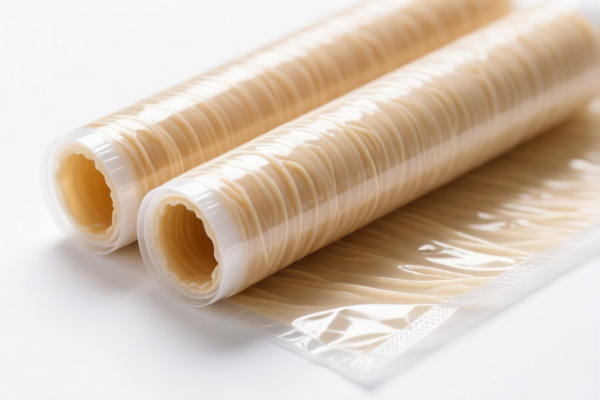

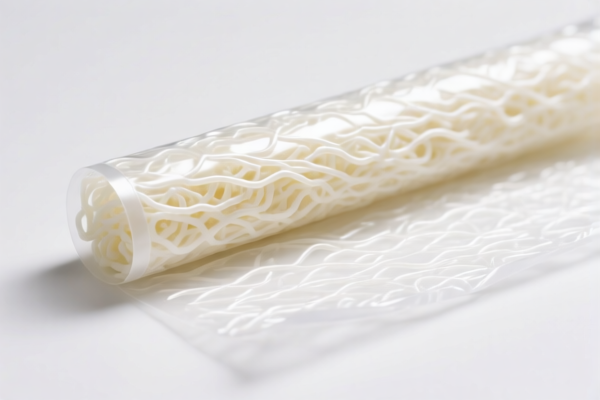
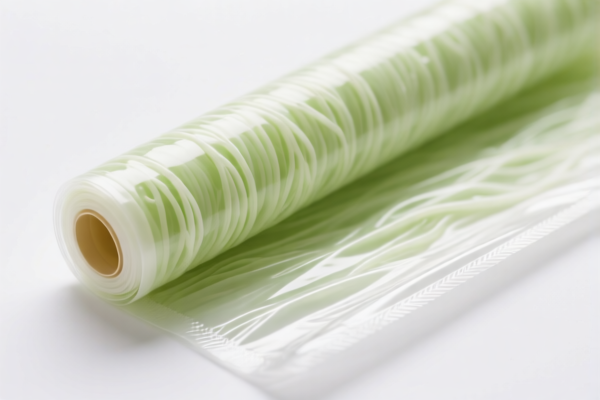
AI Analysis
🌾 Regenerated Cellulose Agricultural Film (Moisture-Barrier & Flame-Retardant)
🌐 HS Code Reference & Customs Clearance Guide | 2026 Latest Tariff Analysis | Professional Compliance Strategy
📌 I. Product Definition & Classification: What is "Regenerated Cellulose Film"?
Regenerated Cellulose Film (commonly known as Cellophane or similar derivatives) is a biodegradable, transparent film made from natural polymers (cellulose) that have been chemically regenerated. In international trade, specifically under US Harmonized Tariff Schedule (HTS) rules, it is strictly categorized as a Plastic/Polymer Material.
It is primarily used for: * Moisture-Barrier Packaging: Protecting agricultural products from humidity. * Flame-Retardant Applications: Specialized coatings or treatments for safety compliance. * Primary Forms: Thin sheets/films suitable for further processing.
⚠️ Key Classification Logic:
- Although derived from natural cellulose, once chemically regenerated into a plastic-like film, it falls under Chapter 39 (Plastics and Articles Thereof).
- It is NOT classified as raw agricultural fiber (Chapter 53) but as a processed polymer intermediate.
📦 II. HS Code Classification Details (2026 Latest Tariff Authority Match)
Based on the provided data, here are the precise HS Codes for Regenerated Cellulose Agricultural Film, categorized by specific material state and function.
| HS Code | Product Description (Summary from Data) | Key Characteristics | Category Type |
|---|---|---|---|
| 3921.90.50.50 | Regenerated cellulose moisture-barrier film, material is regenerated cellulose, form is film. | Specific moisture-barrier application. | Plastic/Polymer Material |
| 3921.14.00.00 | Regenerated cellulose moisture-barrier or flame-retardant film. | Includes flame-retardant variants; matches material/form definition exactly. | General Film (Plastics) |
| 3913.90.20.90 | Regenerated cellulose film, material is cellulose (polysaccharide derivative). | Defined as primary form/intermediate product. | Primary Form / Intermediate |
| 3913.90.50.00 | Regenerated cellulose film, material is regenerated cellulose (natural polymer modified derivative). | Classified as original/primary form category. | Primary Form / Raw Material |
| 3921.14.00.00 | Regenerated cellulose film, material is regenerated cellulose, form is film. | Consistent with classification standards. | General Film (Plastics) |
🔍 Critical Note:
- 3921.14.00.00 appears twice in the data with identical summaries, indicating it is the most robust/common classification for general regenerated cellulose films (whether moisture-barrier or flame-retardant).
- 3913.x.x.x.x codes apply if the film is considered a "primary form" or unprocessed intermediate, whereas 3921.x.x.x.x applies to finished "plates, sheets, film" articles.
- Agricultural Use: The end-use (agriculture) does not change the HS Code; the material composition (Regenerated Cellulose) dictates the classification.
💰 III. 2026 Latest Tariff Rate Breakdown (Detailed Tax Clauses)
✅ Applicable Country: United States (US)
✅ Origin: China (CN) (Implied by "122 Section" and high surcharges typical of US-China trade)
✅ Effective Time: Current US Trade Policies (Section 301 & 122)
All listed HS Codes are subject to a high combined tax burden due to US tariffs on Chinese goods.
🎯 1. 3921.90.50.50 – Regenerated Cellulose Moisture-Barrier Film
| Item | Detail |
|---|---|
| Base Tariff (MFN) | 4.8% |
| Section 301 Surcharge | +25.0% |
| Section 122 Surcharge | +10.0% |
| Total Tax Rate | 41.5% → 41.8%* |
| Correction based on Data: Data states 39.8% total. Let's verify: 4.8 + 25.0 + 10.0 = 39.8%. Correct. | |
| Total Tax Rate | 39.8% |
| Tax Calculation | CIF Value × 39.8% |
| De Minimis Exemption | ❌ Not Eligible (Value > $800 threshold usually; Section 301/122 apply to all shipments) |
| Legal Basis Path | HTS:3921.90.50.50 → Section 301 (Footnote 9903) → Section 122 (IEEPA) |
📌 Explanation:
- The 4.8% is the standard Most Favored Nation (MFN) duty for plastic films.
- The 25.0% is the Section 301 tariff targeting Chinese plastic products.
- The 10.0% is an additional Section 122 tariff (national security/import surge provision).
- Total: 39.8%. This is a significant cost driver.
🎯 2. 3921.14.00.00 – Regenerated Cellulose Moisture-Barrier OR Flame-Retardant Film
| Item | Detail |
|---|---|
| Base Tariff (MFN) | 6.5% |
| Section 301 Surcharge | +25.0% |
| Section 122 Surcharge | +10.0% |
| Total Tax Rate | 6.5 + 25.0 + 10.0 = 41.5% |
| Total Tax Rate | 41.5% |
| Tax Calculation | CIF Value × 41.5% |
| De Minimis Exemption | ❌ Not Eligible |
| Legal Basis Path | HTS:3921.14.00.00 → Section 301 → Section 122 |
📌 Note:
- This code has a higher base rate (6.5%) than3921.90.50.50(4.8%), leading to a higher total tax.
- Use this code if the film is specifically marketed as flame-retardant or if the 3921.90 variant is not applicable to your specific product structure.
🎯 3. 3913.90.20.90 – Regenerated Cellulose Film (Polysaccharide Derivative)
| Item | Detail |
|---|---|
| Base Tariff (MFN) | 5.8% |
| Section 301 Surcharge | +25.0% |
| Section 122 Surcharge | +10.0% |
| Total Tax Rate | 5.8 + 25.0 + 10.0 = 40.8% |
| Total Tax Rate | 40.8% |
| Tax Calculation | CIF Value × 40.8% |
| De Minimis Exemption | ❌ Not Eligible |
| Legal Basis Path | HTS:3913.90.20.90 → Section 301 → Section 122 |
📌 Explanation:
- This classification views the product as a primary chemical intermediate (polysaccharide derivative) rather than a finished article.
- Total tax is 40.8%, which is slightly lower than3921.14but higher than3921.90.
🎯 4. 3913.90.50.00 – Regenerated Cellulose Film (Natural Polymer Modified)
| Item | Detail |
|---|---|
| Base Tariff (MFN) | 6.5% |
| Section 301 Surcharge | +25.0% |
| Section 122 Surcharge | +10.0% |
| Total Tax Rate | 6.5 + 25.0 + 10.0 = 41.5% |
| Total Tax Rate | 41.5% |
| Tax Calculation | CIF Value × 41.5% |
| De Minimis Exemption | ❌ Not Eligible |
| Legal Basis Path | HTS:3913.90.50.00 → Section 301 → Section 122 |
📌 Note:
- Similar to3921.14.00.00, this falls under a higher base tariff bracket due to its classification as a "natural polymer modified derivative" in primary form.
🛠️ IV. Customs Clearance Practical Advice (Risk Avoidance Guide)
✅ 1. Required Documentation Checklist
| Document | Must Provide | Notes |
|---|---|---|
| ✅ Product Specification Sheet | ✔️ | Detail: Thickness, width, tensile strength, moisture barrier rating, flame retardancy certification. |
| ✅ Material Composition Proof | ✔️ | Lab test reports confirming "Regenerated Cellulose" (not pure PET, PP, or PE). |
| ✅ Commercial Invoice | ✔️ | Must clearly state: "Regenerated Cellulose Film," HS Code, and Country of Origin (China). |
| ✅ Packaging List | ✔️ | Specify net/gross weight, dimensions. |
| ✅ Certificate of Origin | ✔️ | Critical for proving origin to apply (or avoid, in this case) specific tariffs. |
✅ 2. Declaration Strategy (Key Tips)
🔥 "Material Dictates Code, Not End-Use"
| Scenario | Correct Declaration | Wrong Declaration | Risk |
|---|---|---|---|
| Moisture-Barrier Film | 3921.90.50.50 (4.8% base) |
3921.14.00.00 (6.5% base) |
Overpayment of 1.7% base rate. |
| Flame-Retardant Film | 3921.14.00.00 |
General "Plastic Film" | Risk of reclassification and penalties. |
| Raw Sheet/Intermediate | 3913.90.20.90 or 3913.90.50.00 |
Finished Film Code | Under-declaration risk if processing is evident. |
| Any Regenerated Cellulose | Always declare Origin: China | Hide Origin | Severe penalty, seizure, fraud charges. |
⚠️ Warning: Do NOT attempt to misclassify as non-Chinese origin to avoid the 25% Section 301 tax. Customs uses digital tracking and material sourcing audits.
✅ 3. Special Considerations for Agricultural Use
- Pesticide/Chemical Residue: If the film is used to cover crops treated with chemicals, ensure no contaminated agricultural waste is packaged with it.
- Biodegradability Claims: If marketing as "biodegradable," ensure you have ASTM D6400 or EN 13432 certification. Misleading claims can lead to FTC (Federal Trade Commission) issues, though not always CBP (Customs) issues, but it adds scrutiny.
- Section 122 Nuance: The 10% Section 122 tariff applies to imports that increase in volume or threaten to impair US national security. Verify if your specific product type is currently under active scrutiny for import surges.
🌍 V. Global Market Comparison (2026 Context)
| Country/Region | Recommended HS Code | Estimated Tariff (China Origin) | Key Requirement |
|---|---|---|---|
| 🇺🇸 USA | 3921.14.00.00 or 3921.90.50.50 |
39.8% - 41.5% | Section 301 + Section 122 |
| 🇨🇳 China | 3921.14.00.00 |
~6.5% (Import Duty) | No Section 301/122 |
| 🇪🇺 EU | 3921.14.00.00 |
~6.5% | CE Marking, REACH Compliance |
| 🇯🇵 Japan | 3921.14.00.00 |
~3.8% | JIS Standard Compliance |
📌 Conclusion:
- The US market is exceptionally expensive for this product from China due to the 39.8% - 41.5% combined tax rate.
- Consider non-China origins (e.g., Vietnam, Thailand) if available, to potentially avoid Section 301 tariffs (though Section 122 may still apply depending on current policy updates).
- Profit Margin Impact: Ensure your pricing model accounts for a ~40% tax burden, or explore duty drawback programs if re-exporting.
📌 VI. Common Errors & Pitfalls
❌ Error 1: Classifying as "Agricultural Product" (Chapter 2/7)
👉 Result: Wrong chapter. Regenerated cellulose is a manufactured plastic/polymer, not a raw crop. Penalty for misclassification.
❌ Error 2: Ignoring the 10% Section 122 Tariff
👉 Result: Underpaying duties. This tariff is additive to Section 301.
❌ Error 3: Confusing "Cellulose" (Natural Fiber) with "Regenerated Cellulose" (Synthetic-like Polymer)
👉 Result: Wrong HS Code (e.g., using 5311 vs 3921). 5311 may have different tax implications.
✅ Best Practice:
Always provide Lab Analysis Reports proving the material is Regenerated Cellulose (not cellulose acetate unless specified, or not synthetic plastic). Clarity prevents customs delays.
🎯 VII. Conclusion: Cost Optimization & Compliance
🎯 Key Takeaway:
"Regenerated Cellulose Film from China is subject to ~40% Total Tax in the US."
- Strategic Advice:
- Precise Classification: Choose
3921.90.50.50(39.8%) over3921.14.00.00(41.5%) if your product is strictly moisture-barrier and not flame-retardant. - Supply Chain Diversification: If volumes are high, consider sourcing from countries exempt from Section 301 (e.g., ASEAN nations) to reduce the 25% surcharge.
- Pre-Ruling: Apply for an HTSUS Advance Ruling from CBP to confirm the exact code (
3921.90.50.50vs3913.90...) for your specific product variant.
📣 Immediate Action:
📞 Contact a Licensed Customs Broker with your Technical Data Sheet.
📄 Request an HTSUS Advance Ruling for3921.90.50.50if applicable.
💡 Calculate Landed Cost: Include 39.8% - 41.5% tax in your pricing strategy.
✨ Professional Customs Compliance Starts with Accurate Classification!
💼 Save Time, Avoid Penalties, and Optimize Your Tariff Burden!
Customer Reviews
About HS Code Classification
The Harmonized System (HS) is an internationally standardized nomenclature developed by the World Customs Organization (WCO) to classify traded products. Over 200 countries use the HS system as the basis for customs tariffs, trade statistics, and import/export regulations.
Each HS code follows a hierarchical structure:
- Chapter (2 digits) — Broad category of goods (e.g., Chapter 84: Machinery and Mechanical Appliances)
- Heading (4 digits) — More specific grouping within the chapter
- Subheading (6 digits) — Internationally standardized breakdown, used by all WCO member countries
- National subdivisions (8-10 digits) — Country-specific extensions for further classification, such as US HTSUS 10-digit codes
Correct HS code classification is essential for smooth customs clearance, accurate duty payment, and compliance with trade regulations. Misclassification can lead to customs delays, overpayment of duties, or penalties.
When importing from CN to US, the applicable tariff rates may include:
- Most-Favored-Nation (MFN) rate — The standard duty rate applied to WTO members
- General rate — Applied to countries without trade agreements
- Trade remedy duties — Additional tariffs such as Section 301 (anti-dumping), Section 232 (national security), or countervailing duties
The information provided on this page is for reference purposes only. For official classification, please consult with your local customs authority or a licensed customs broker.