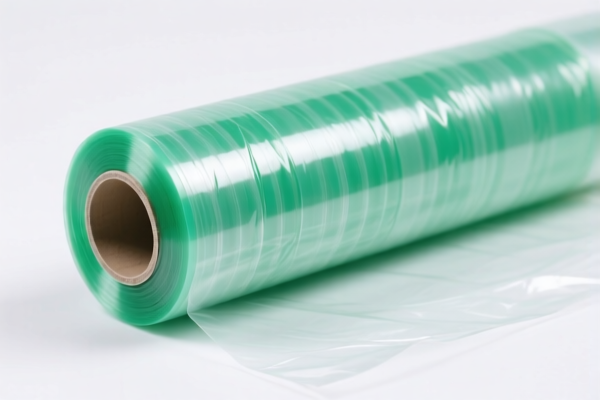
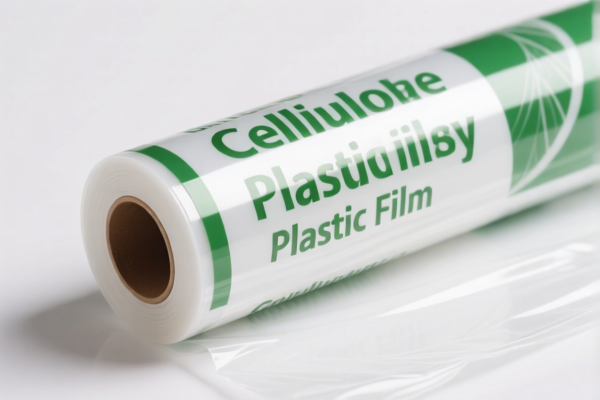
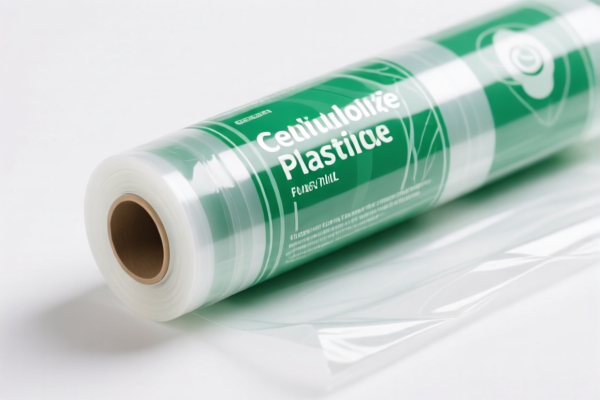
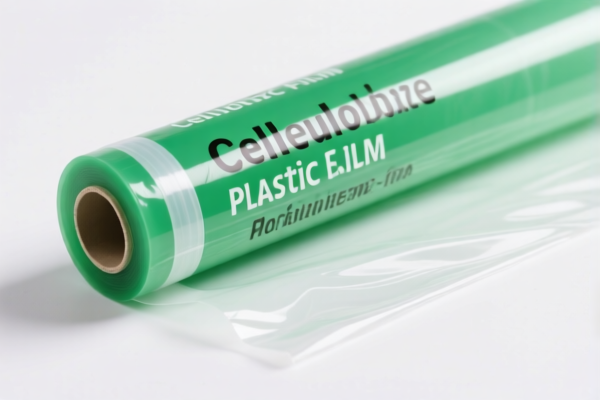
Regenerated Cellulose Cold Seal Film
CN → US| HS Code | Tariff Rate | Origin | Destination | Doc |
|---|---|---|---|---|
| 3921140000 | 41.5% | CN | US | Official Doc |
| 3921905050 | 39.8% | CN | US | Official Doc |
Product Images
AI Analysis
🧊 Regenerated Cellulose Cold Seal Film (Cold Seal Coated Paper/Film)
🌐 HS Code Reference & Customs Clearance Guide | 2026 Latest Tariff Analysis | Professional Compliance Strategy
📌 I. Product Definition & Classification: What Exactly is "Regenerated Cellulose Cold Seal Film"?
Regenerated Cellulose Cold Seal Film is a specialized packaging material used primarily in the food and pharmaceutical industries. It consists of a film made from cellulose (derived from wood pulp or cotton linters) that is coated with a water-soluble adhesive.
- Key Characteristic: It seals by pressure alone (cold seal) when moistened slightly with water, avoiding the heat required for standard plastic films. This preserves the quality of heat-sensitive products (e.g., fresh food, sensitive drugs).
- Material Basis: Despite being a "film" or "sheet," its primary constituent is regenerated cellulose (a type of plastic-like polymer derived from natural fibers), not synthetic petrochemical plastics like PE or PP.
⚠️ Critical Distinction Point:
- If the material is pure regenerated cellulose (transparent, cellulose-based, often used for wrapping cakes, fruits, or pharmaceutical blisters) → It falls under Chapter 39, Heading 3921.
- If it is paper coated with adhesive (even if called "film" in loose trade terms) → It might fall under Chapter 48 (Paper).
- However, the prompt and data specifically point to plastic-like sheets of regenerated cellulose. Therefore, we look at HS Code 3921.14.00.00.
📦 II. HS Code Classification Details (2026 Latest Tariff Authority Comparison)
Based on the provided data, there are two potential HS Codes. The correct one depends strictly on the material composition.
| HS Code | Product Description | Material Basis | Applicable Scenario | Tax Rate (Total) |
|---|---|---|---|---|
3921.14.00.00 |
Other plates, sheets, film, foil and strip, of plastics: Cellular: Of regenerated cellulose | Regenerated Cellulose | Pure cellulose film, cold seal coated cellulose, transparent wrapping for food/pharma | 0.0% |
3921.90.50.50 |
Other plates, sheets, film, foil and strip, of plastics: Other: Other: Other Other | Synthetic Plastics (PE, PP, PET, etc.) | Standard plastic films, laminated plastic sheets, non-cellulose based films | 29.8% |
🔍 Key Insight:
- HS Code3921.14.00.00is the correct classification for Regenerated Cellulose films.
- HS Code3921.90.50.50is for other plastics (like Polyethylene). Using this code for cellulose film is a classification error leading to excessive taxation.
💰 III. 2026 Latest Tariff Rate Details (With Additional Taxes & Policy Surcharges)
✅ Applicable Country: United States (US)
✅ Origin: China (CN)
✅ Effective Date: 2025/2026 Trade Period
🎯 1. 3921.14.00.00 —— Regenerated Cellulose Film (Cold Seal)
| Item | Content |
|---|---|
| Base Tariff | 0.0% (Ad Valorem) |
| Section 301 Additional Tariff | 0.0% |
| IEEPA Surcharge | 0.0% |
| Total Tax Rate | 0.0% |
| Tax Calculation | CIF Value × 0% = $0 |
| De Minimis Eligibility | ✅ Yes (If value ≤ $800) |
| Legal Basis Path | USITC:3921.14.00.00 |
📌 Explanation:
- Regenerated cellulose is often treated more favorably than synthetic plastics in US trade policy.
- No Section 301 tariffs apply to this specific subheading.
- This results in a zero-duty entry for most shipments, making it highly competitive.
🎯 2. 3921.90.50.50 —— Other Plastic Films (Incorrect Classification Risk)
| Item | Content |
|---|---|
| Base Tariff | 4.8% |
| Section 301 Additional Tariff | 25.0% |
| IEEPA Surcharge | Included in the 25% or separate? Data says "Total: 29.8%". Breakdown: Base 4.8% + Add-on 25.0% = 29.8%. |
| Total Tax Rate | 29.8% |
| Tax Calculation | CIF Value × 29.8% |
| De Minimis Eligibility | ❌ No (High tariff items often excluded from de minimis depending on current enforcement) |
| Legal Basis Path | USITC:3921.90.50.50 + Section 301 Footnotes |
📌 Warning:
- If Customs determines your "Regenerated Cellulose Film" is misclassified as "Other Plastic," you will owe 29.8% duty.
- This is a 29.8x cost multiplier compared to the correct code!
🛠️ IV. Customs Clearance Practical Advice (Pitfall Avoidance Guide)
✅ 1. Required Documentation Checklist (Must-Have)
| Document | Mandatory? | Description |
|---|---|---|
| ✅ Material Safety Data Sheet (MSDS) | ✔️ | Prove the material is regenerated cellulose, not synthetic plastic. |
| ✅ Product Specification Sheet | ✔️ | Must state "Cold Seal Coated" and "Cellulose Base." |
| ✅ Ingredient Composition Statement | ✔️ | Explicitly declare: "100% Regenerated Cellulose" or % of coating vs. base. |
| ✅ Commercial Invoice | ✔️ | Use precise description: "Regenerated Cellulose Film for Cold Seal Packaging" |
| ✅ Proof of Origin (CO) | ✔️ | Required to prove Chinese origin for tariff verification. |
✅ 2. Declaration Tips (Key Mantras)
🔥 "Cellulose is not Plastic in HS Code! Don't get fooled by the 'Film' name!"
| Situation | Correct Declaration | Wrong Action |
|---|---|---|
| Regenerated Cellulose Cold Seal Film | 3921.14.00.00 |
Misclassify as 3921.90.50.50 → 29.8% Duty |
| Paper-based Cold Seal Sheet | Chapter 48 (e.g., 4823.90) | Force into Chapter 39 → Rejection/Delay |
| Laminated Plastic Film | 3921.90.50.50 |
Claim "Cellulose" falsely → Fraud Alert |
| Sample Shipments (<$800) | 3921.14.00.00 |
Declare as high-duty item → Unnecessary tax |
✅ 3. Special Cases Handling
| Scenario | Handling Suggestion |
|---|---|
| Cold Seal Coating Contains Synthetic Adhesive | If the base film is regenerated cellulose, 3921.14.00.00 usually still applies. The coating is considered part of the product. Do not split unless the coating is the primary value driver. |
| Blister Packs for Pharma | If rigid, might be 3920.99 or 3921.14. Ensure it’s "flexible film." |
| Export to EU/China | EU may have different duties. For China, check GB standards for food contact. |
🌍 V. Global Market Clearance Comparison (2026 Latest)
| Country/Region | Recommended HS Code | Duty Rate (China Origin) | Certification Required | Notes |
|---|---|---|---|---|
| 🇺🇸 USA | 3921.14.00.00 |
0.0% | FDA (if food contact) | Zero Duty Advantage! |
| 🇪🇺 EU | 3920 99 00 or 3921 14 | ~6.5% | CE, REACH | No 301-style surcharges. |
| 🇨🇳 China | 3921.14.00 | ~6-13% (varies) | GB Standards | Domestic production may be cheaper. |
| 🇯🇵 Japan | 3921.14.00 | ~5-8% | JIS | Low barrier for cellulose. |
📌 Conclusion:
- USA is the most favorable market for Regenerated Cellulose Film due to 0% duty.
- Misclassification is the biggest risk: Calling it "Plastic Film" triggers a 29.8% penalty.
📌 VI. Common Errors & Pitfalls (Lessons Learned)
❌ Error 1: Using "Plastic Film" in the invoice description for Cellulose Product
👉 Consequence: Customs officer may assume synthetic plastic → Classify under 3921.90 → 29.8% Tax.
❌ Error 2: Confusing "Regenerated Cellulose" with "Cellophane" (Old Term)
👉 Consequence: "Cellophane" is still covered under 3921.14 in modern HS codes, but must be declared accurately to avoid confusion with synthetic "Cellophane-like" films.
❌ Error 3: Ignoring the Coating
👉 Consequence: If the adhesive is water-soluble, it confirms "Cold Seal." If it’s heat-activated, it might be different. Clarify in specs.
❌ Error 4: De Minimis Misuse
👉 Consequence: If you ship small samples under 3921.90.50.50 (29.8%), you might pay tax even under $800 if the carrier enforces strict rules. Always use 3921.14 for cellulose.
✅ Correct Declaration Example:
"Regenerated Cellulose Film, Cold Seal Coated, Transparent, for Food Packaging, 12 Microns Thick, Model CS-100"
🎯 VII. Conclusion: Professional Declaration Saves Money!
🎯 Remember the Mantra:
🔹 "Cellulose is Not Plastic! Use 3921.14 for Zero Duty!"
🔹 "Cold Seal Film = Regenerated Cellulose = 0% US Tariff!"
🔹 "Don't Pay 29.8% for a $0 Duty Product!"
📌 Pro Tip:
If your product is 100% Regenerated Cellulose (even with cold seal coating), always declare it under HS Code 3921.14.00.00.
Provide a material certificate from the manufacturer stating "Regenerated Cellulose" to back up the declaration.
📣 Immediate Action:
📞 Consult a customs broker to verify the adhesive composition if unsure.
🚀 Ship Smart, Pay Less, Clear Fast!
✨ Professional Customs Clearance Starts with Accurate Classification!
💼 Your Profit Margin Depends on This 8-Digit Code!
Customer Reviews
About HS Code Classification
The Harmonized System (HS) is an internationally standardized nomenclature developed by the World Customs Organization (WCO) to classify traded products. Over 200 countries use the HS system as the basis for customs tariffs, trade statistics, and import/export regulations.
Each HS code follows a hierarchical structure:
- Chapter (2 digits) — Broad category of goods (e.g., Chapter 84: Machinery and Mechanical Appliances)
- Heading (4 digits) — More specific grouping within the chapter
- Subheading (6 digits) — Internationally standardized breakdown, used by all WCO member countries
- National subdivisions (8-10 digits) — Country-specific extensions for further classification, such as US HTSUS 10-digit codes
Correct HS code classification is essential for smooth customs clearance, accurate duty payment, and compliance with trade regulations. Misclassification can lead to customs delays, overpayment of duties, or penalties.
When importing from CN to US, the applicable tariff rates may include:
- Most-Favored-Nation (MFN) rate — The standard duty rate applied to WTO members
- General rate — Applied to countries without trade agreements
- Trade remedy duties — Additional tariffs such as Section 301 (anti-dumping), Section 232 (national security), or countervailing duties
The information provided on this page is for reference purposes only. For official classification, please consult with your local customs authority or a licensed customs broker.