Regenerated Cellulose Composite Plastic Board
CN → US| HS Code | Tariff Rate | Origin | Destination | Doc |
|---|---|---|---|---|
| 4823908680 | 35.0% | CN | US | Official Doc |
| 3921140000 | 41.5% | CN | US | Official Doc |
| 3921905010 | 39.8% | CN | US | Official Doc |
| 4823902000 | 35.0% | CN | US | Official Doc |
| 3920992000 | 39.2% | CN | US | Official Doc |
Product Images
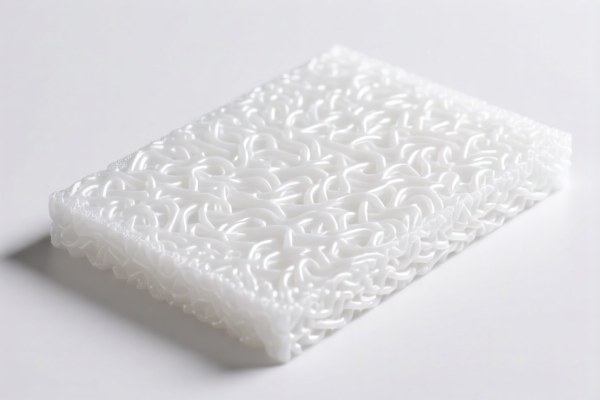
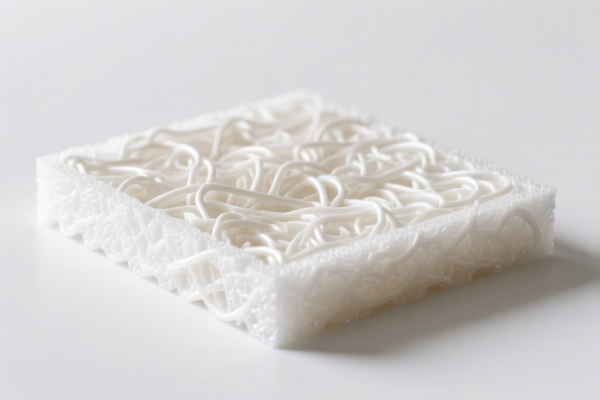
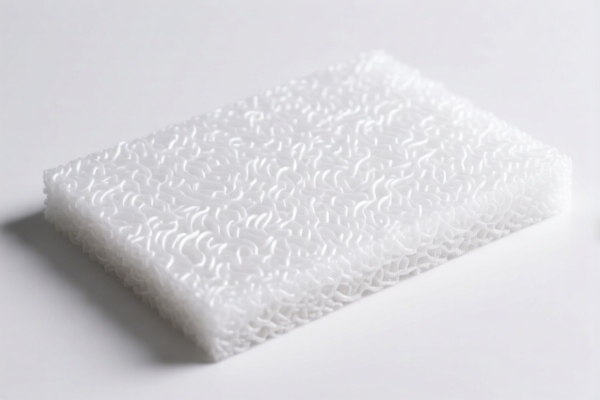
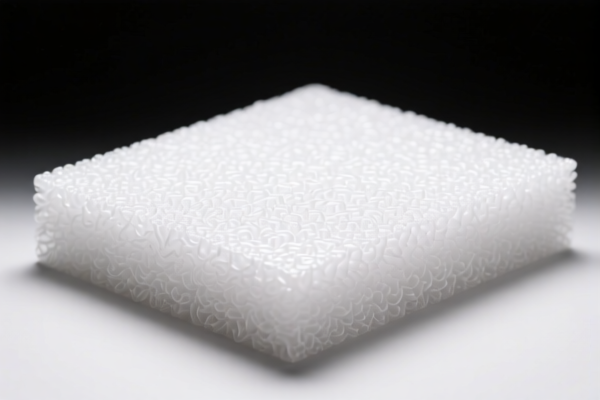
AI Analysis
🪵 Regenerated Cellulose Composite Plastic Board (RCCPB)
🌐 HS Code Reference & Customs Clearance Guide | 2026 Latest Tariff Analysis | Professional Declassification Strategy
📌 I. Product Definition & Classification: What Exactly Is "Regenerated Cellulose Composite Plastic Board"?
Regenerated Cellulose Composite Plastic Board is a versatile industrial material, widely used in furniture surfaces, decorative laminates, and industrial packaging. It is not a single raw material but a composite or layered structure.
In international trade, its classification hinges on two critical factors: 1. Primary Material Composition: Is it dominated by cellulose fiber (paper-like) or plastic/polymer (synthetic)? 2. Structural Form: Is it a board/plate (rigid), a film/sheet (flexible), or a composite laminate?
⚠️ Key Distinction Point:
- If the board is primarily cellulose fiber with plastic coating or lamination, it often falls under Chapter 48 (Paper/Paperboard).
- If the board is primarily plastic with cellulose reinforcement or surface layer, it falls under Chapter 39 (Plastics).
- The physical morphology (board vs. film) and specific manufacturing process (impregnated vs. coated) dictate the exact HS Code.
📦 II. HS Code Classification Details (2026 Latest Tariff Authority Comparison)
| HS Code | Product Description | Application Scenario | Material Dominance |
|---|---|---|---|
4823.90.86.80 |
Other articles of paper, paperboard, cardboard, cellulose wadding or webs of cellulose fibers | Decorative boards made of regenerated cellulose, shaped as cardboard/boards | ✅ Cellulose-Dominant |
3921.14.00.00 |
Plates, sheets, film, foil and strip, of plastics... impregnated, coated, covered or laminated with paper or paperboard... | RCCPB where plastic impregnates cellulose, fully meeting plastic plate requirements | ✅ Plastic-Dominant |
3921.90.50.10 |
Other plates, sheets, film, foil and strip, of plastics... | Decorative laminate panels, classified as plastic sheets with cellulose surface | ✅ Plastic-Dominant |
4823.90.20.00 |
Other plates, sheets, film, foil, flat shapes and similar articles, of cellulose wadding or webs of cellulose fibers | RCCPB specifically identified as cellulose fiber web products in board form | ✅ Cellulose-Dominant |
3920.99.20.00 |
Other plates, sheets, film, foil and strip, of plastics... (Composite) | Plastic composite board, classified as a plastic composite material | ✅ Plastic-Dominant |
🔍 Key Reminder:
- "Regenerated Cellulose" (like Viscose/Rayon core) is chemically processed cellulose, often treated as Paper/Cellulose Web (Ch 48) if the structural integrity comes from the fiber web.
- However, if the board is laminated with plastic as the main protective/decorative layer, customs may lean toward Chapter 39 (Plastics).
- Misclassification Risk: Declaring a cellulose-dominant board as plastic (or vice versa) can lead to significant duty differences and potential penalties.
💰 III. 2026 Latest Tariff Rate Breakdown (Including Surcharges, Policy Add-ons)
✅ Applicable Country: United States (US)
✅ Origin: China (CN)
✅ Effective Date: November 10, 2025 (and subsequent imports)
🎯 1. 4823.90.86.80 & 4823.90.20.00 —— Regenerated Cellulose Boards (Cellulose-Dominant)
| Item | Content |
|---|---|
| Base Tariff | 0.0% (ad valorem) |
| USITC Surcharge (Section 301) | +25.0% |
| IEEPA Surcharge (Section 122/EO) | +10.0% |
| Total Tax Rate | 35.0% |
| Tax Calculation | CIF Value × 35% |
| De Minimis Exemption Available? | ❌ NO (deny_de_minimis) |
| Legal Basis Path | USITC:4823.90.86.80 → USITC:4823.90.20.00 → FOOTNOTE:301 → IEEPA:122 |
📌 Explanation:
- Since the base tariff for these cellulose products is 0%, the total tax burden is entirely driven by the 25% Section 301 surcharge and the 10% IEEPA surcharge.
- Total Cost Impact: 35% of the CIF value.
- This is a medium-high duty rate, but significantly lower than plastic-dominated alternatives in some cases.
🎯 2. 3921.14.00.00 —— Plastic-Impregnated Cellulose Boards (Plastic-Dominant)
| Item | Content |
|---|---|
| Base Tariff | 6.5% (ad valorem) |
| USITC Surcharge (Section 301) | +25.0% |
| IEEPA Surcharge (Section 122/EO) | +10.0% |
| Total Tax Rate | 41.5% |
| Tax Calculation | CIF Value × 41.5% |
| De Minimis Exemption Available? | ❌ NO (deny_de_minimis) |
| Legal Basis Path | USITC:3921.14.00.00 → FOOTNOTE:301 → IEEPA:122 |
📌 Explanation:
- This code carries a higher base tariff (6.5%) compared to cellulose codes.
- Total Cost Impact: 41.5% of the CIF value.
- This is the highest duty rate among the options provided, making it the most expensive classification for US importers.
🎯 3. 3921.90.50.10 —— Decorative Laminates/Plastic Sheets (Plastic-Dominant)
| Item | Content |
|---|---|
| Base Tariff | 4.8% (ad valorem) |
| USITC Surcharge (Section 301) | +25.0% |
| IEEPA Surcharge (Section 122/EO) | +10.0% |
| Total Tax Rate | 39.8% |
| Tax Calculation | CIF Value × 39.8% |
| De Minimis Exemption Available? | ❌ NO (deny_de_minimis) |
| Legal Basis Path | USITC:3921.90.50.10 → FOOTNOTE:301 → IEEPA:122 |
📌 Explanation:
- Often used for decorative layering panels where the plastic film/laminate is the key feature.
- Total Cost Impact: 39.8% of the CIF value.
- Slightly more expensive than cellulose-dominant codes but cheaper than the 6.5% base plastic code.
🎯 4. 3920.99.20.00 —— Plastic Composite Boards (Plastic-Dominant)
| Item | Content |
|---|---|
| Base Tariff | 4.2% (ad valorem) |
| USITC Surcharge (Section 301) | +25.0% |
| IEEPA Surcharge (Section 122/EO) | +10.0% |
| Total Tax Rate | 39.2% |
| Tax Calculation | CIF Value × 39.2% |
| De Minimis Exemption Available? | ❌ NO (deny_de_minimis) |
| Legal Basis Path | USITC:3920.99.20.00 → FOOTNOTE:301 → IEEPA:122 |
📌 Explanation:
- Classified as a general plastic composite.
- Total Cost Impact: 39.2% of the CIF value.
- Useful if the product is a true plastic composite with cellulose filler, but the plastic matrix is dominant.
🛠️ IV. Customs Clearance Practical Advice (Real-World Pitfall Avoidance Guide)
✅ 1. Required Documentation Checklist (Non-Negotiable)
| Document | Mandatory? | Purpose |
|---|---|---|
| ✅ Product Technical Data Sheet (TDS) | ✔️ | Must specify % of cellulose vs. plastic, manufacturing process (impregnated vs. coated), and core material. |
| ✅ Cross-Section Microscopy Report | ✔️ | Crucial! Visual proof of whether the board is a cellulose web with plastic coating (Ch 48) or a plastic sheet with cellulose layer (Ch 39). |
| ✅ Commercial Invoice | ✔️ | Must clearly state "Regenerated Cellulose Board" or "Decorative Lamination Board", avoiding vague terms like "Plastic Board". |
| ✅ Packing List | ✔️ | Ensure weight and dimensions match the invoice. |
| ✅ Certificate of Origin | ✔️ | Required for tariff calculations and potential exemptions. |
| ✅ Import License (if applicable) | ✔️ | Check if specific environmental or plastic restrictions apply. |
✅ 2. Declaration Strategy (Key Mantra)
🔥 "Cellulose Base = Ch 48; Plastic Base = Ch 39. Morphology Matters!"
| Scenario | Correct HS Code | Incorrect Practice | Consequence |
|---|---|---|---|
| Board is primarily cellulose fiber, plastic coated | 4823.90.86.80 or 4823.90.20.00 |
Declaring as 3921.14.00.00 |
Overpaying ~6.5% on base duty |
| Board is primarily plastic, cellulose reinforced | 3921.14.00.00 or 3920.99.20.00 |
Declaring as 4823.90.86.80 |
Under-declaration Risk, penalties |
| Decorative Laminate (Plastic Film + Paper) | 3921.90.50.10 |
Declaring as "Paper" | Customs Rejection, delay |
| Any Regenerated Cellulose Board | Apply Pre-Ruling | Guessing HS Code | High Risk of Audit |
✅ 3. Special Handling for "Regenerated Cellulose"
- Definition Clarification: "Regenerated Cellulose" (e.g., Viscose, Rayon core) is chemically different from "Wood Pulp". However, in HS Nomenclature, it often falls under Chapter 48 if it behaves like paper/board.
- Plastic Interaction: If the product is a laminate (e.g., HPL - High Pressure Laminate), it is often classified under Chapter 39 because the plastic resin (melamine-formaldehyde) binds the cellulose layers.
- Documentation Tip: Always provide a material breakdown (e.g., "80% Regenerated Cellulose, 20% Melamine Resin") to justify the HS Code choice.
🌍 V. Global Market Comparison (2026 Latest)
| Country/Region | Recommended HS Code | Base Tariff | Total US Duty (China Origin) | Notes |
|---|---|---|---|---|
| 🇺🇸 USA | 4823.90.86.80 |
0% | 35.0% | Lowest duty among options |
| 🇺🇸 USA | 3921.14.00.00 |
6.5% | 41.5% | Highest duty, avoid if possible |
| 🇪🇺 EU | 4823.90 |
4.5% | N/A | No Section 301/122 surcharges |
| 🇨🇳 China | 4823.90 |
7.5% | N/A | Import duty for domestic sales |
📌 Conclusion:
- For US Imports,4823.90.86.80or4823.90.20.00are the most cost-effective if the product qualifies as cellulose-dominant.
- Avoid3921.14.00.00unless the product is predominantly plastic, due to the 41.5% total tax burden.
- Pre-Ruling is Highly Recommended: Given the complexity of composite materials, applying for an Advance Ruling from US Customs (CBP) is the safest way to avoid post-import audits.
📌 VI. Common Mistakes & Pitfalls (Lessons Learned)
❌ Mistake 1: Calling it "Plastic Board" when it's 80% cellulose
👉 Result: Customs may reclassify it to Ch 48, but if you paid higher duties upfront, you might not get a refund easily.
👉 Correct: Use precise technical names like "Regenerated Cellulose Decorative Board".
❌ Mistake 2: Ignoring the "Regenerated" aspect
👉 Result: Customs may treat it as generic wood pulp board (different subheading).
👉 Correct: Explicitly state "Regenerated Cellulose" in the description.
❌ Mistake 3: Assuming "Film" and "Board" are interchangeable
👉 Result: 3921.90.50.10 (film/sheet) vs. 4823.90.86.80 (board). Thickness and rigidity matter.
👉 Correct: Provide thickness and rigidity data in specs.
✅ Correct Practice:
"Regenerated Cellulose Decorative Board, Impregnated with Melamine Resin, Rigid Board Form, 1.5mm Thickness, for Furniture Laminating, Model XYZ"
🎯 VII. Conclusion: Precision in Classification, Savings in Duty
🎯 Remember the Mantra:
🔹 "Cellulose Base = 35% Tax; Plastic Base = 39-41% Tax."
🔹 "Document the Material Split; Avoid the 6.5% Base Duty Trap."
📌 Pro Tip:
If your product can be technically classified under 4823.90.86.80 (35% total), STRIVE FOR THIS CODE. It saves 4.2% to 6.5% compared to plastic-dominated codes.
Work with your lab to confirm the cellulose dominance and provide a microscopy report to CBP.
📣 Immediate Action:
📞 Consult a customs broker + Provide TDS + Microscopy Report + Apply for CBP Advance Ruling
🚀 Secure the 35% rate, not the 41.5% rate!
✨ Professional Clearance Starts with Accurate Classification!
💼 Every percentage point of duty saved is profit added!
Customer Reviews
About HS Code Classification
The Harmonized System (HS) is an internationally standardized nomenclature developed by the World Customs Organization (WCO) to classify traded products. Over 200 countries use the HS system as the basis for customs tariffs, trade statistics, and import/export regulations.
Each HS code follows a hierarchical structure:
- Chapter (2 digits) — Broad category of goods (e.g., Chapter 84: Machinery and Mechanical Appliances)
- Heading (4 digits) — More specific grouping within the chapter
- Subheading (6 digits) — Internationally standardized breakdown, used by all WCO member countries
- National subdivisions (8-10 digits) — Country-specific extensions for further classification, such as US HTSUS 10-digit codes
Correct HS code classification is essential for smooth customs clearance, accurate duty payment, and compliance with trade regulations. Misclassification can lead to customs delays, overpayment of duties, or penalties.
When importing from CN to US, the applicable tariff rates may include:
- Most-Favored-Nation (MFN) rate — The standard duty rate applied to WTO members
- General rate — Applied to countries without trade agreements
- Trade remedy duties — Additional tariffs such as Section 301 (anti-dumping), Section 232 (national security), or countervailing duties
The information provided on this page is for reference purposes only. For official classification, please consult with your local customs authority or a licensed customs broker.