Regenerated Cellulose Decorative Panel
CN → US| HS Code | Tariff Rate | Origin | Destination | Doc |
|---|---|---|---|---|
| 4823902000 | 35.0% | CN | US | Official Doc |
| 4823908680 | 35.0% | CN | US | Official Doc |
| 3921140000 | 41.5% | CN | US | Official Doc |
| 3921905010 | 39.8% | CN | US | Official Doc |
Product Images
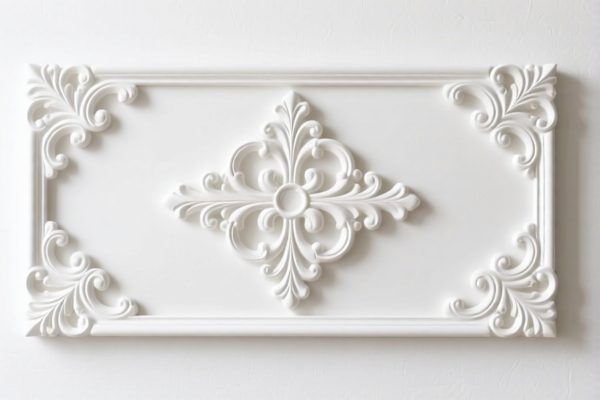
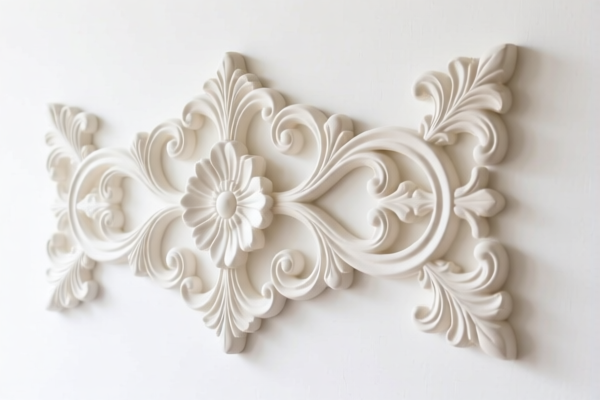
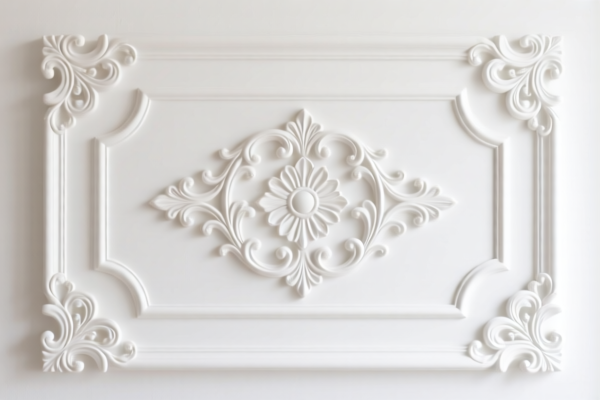
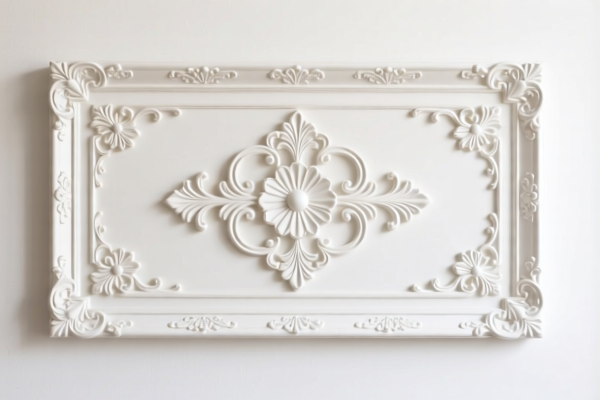
AI Analysis
🖼️ Regenerated Cellulose Decorative Panel (High-Pressure Laminates / HPL)
🌐 HS Code Reference & Clearance Guide | 2026 Latest Tariff Analysis | Professional Customs Strategy
📌 I. Product Definition & Classification: Do You Truly Understand "Regenerated Cellulose"?
Regenerated Cellulose Decorative Panels (often known as High-Pressure Laminates or HPL) are complex composite materials made from cellulose fibers (paper) impregnated with phenolic or melamine resins and cured under high pressure and temperature. In international trade, classification depends heavily on whether the product is viewed primarily as a paper product or a plastic/plastic-like composite.
Key Distinction Points: 1. Paper-Based Classification (Chapter 48): If the panel is considered a processed paper product where the cellulose content dominates the identity, it may fall under Chapter 48. 2. Plastic/Composite Classification (Chapter 39): If the resin content and the plastic-like properties (flexibility, water resistance, decorative finish) are dominant, it is often classified as a flat sheet of plastics or other plastic products.
⚠️ Critical Note for Customs:
- The boundary between4823(Other paper articles) and3921(Plates, sheets, film, etc.) is contentious.
- US Customs and Border Protection (CBP) often looks at the manufacturing process and chemical composition.
- Misclassification can lead to significant duty differences due to the 301 tariffs (Section 301) and Section 232/IEEPA duties.
📦 II. HS Code Classification Details (2026 Latest Tariff Authority)
Based on the provided data, here are the four possible HS Codes for Regenerated Cellulose Decorative Panels, along with their logical justifications and tax implications.
| HS Code | Product Description | Justification for Classification | Total Tax Rate (US/China) |
|---|---|---|---|
4823.90.20.00 |
Other articles of paper pulp, paper, cellulose wadding or papers of cellular surface: Other: Decals. (Note: Summary says "Recycled cellulose decorative board... paper pulp products") |
Classified under Chapter 48 (Paper/Pulp). The logic is that the core material is regenerated cellulose (paper-based), and it falls under "other articles of paper pulp." The summary explicitly states it belongs to the category of "other products of paper pulp." | 35.0% |
4823.90.86.80 |
Other articles of paper pulp, paper, cellulose wadding or papers of cellular surface: Other: Other: Of recycled cellulose. | Also classified under Chapter 48. This code specifically targets recycled cellulose products. It emphasizes the material origin (recycled) rather than the decorative nature. The form is identified as paperboard/sheet. | 35.0% |
3921.14.00.00 |
Other plates, sheets, film, foil and strip, of plastics: Of polymers of ethylene. (Note: Summary says "Material: Regenerated Cellulose... fully meets material and form attributes") |
Classified under Chapter 39 (Plastics). Although made of cellulose, regenerated cellulose (like rayon/viscose base) is often treated similarly to plastics in trade statistics when formed into rigid or semi-rigid decorative sheets. The summary states it "fully meets the material and form attributes" of this code, suggesting a strong argument for plastic-like treatment despite the cellulose origin. | 41.5% |
3921.90.50.10 |
Other plates, sheets, film, foil and strip, of plastics: Other: Other: Of other plastics. | Classified under Chapter 39. This is a catch-all for plastic-like sheets not elsewhere specified. The summary notes it is "in the form of plate, sheet, or film" and matches the characteristics of decorative laminates. This is a common fallback for HPL if not specifically listed under ethylene polymers. | 39.8% |
🔍 Key Insight:
- Codes4823...treat the item as Paper/Pulp.
- Codes3921...treat the item as Plastic/Composite.
- The tax rate varies from 35% to 41.5%, depending on the specific subheading and the customs officer's interpretation of the material's primary characteristic.
💰 III. 2026 Latest Tariff Rate Breakdown (Including Additional Duties & Policy Add-ons)
✅ Applicable Country: United States (US)
✅ Country of Origin: China (CN)
✅ Effective Date: Ongoing (Subject to Section 301 & IEEPA modifications)
🎯 1. Codes 4823.90.20.00 & 4823.90.86.80 —— Regenerated Cellulose Panels (Paper Classification)
| Item | Detail |
|---|---|
| Base Tariff Rate | 0.0% (Most Favored Nation rate for paper articles) |
| Section 301 Additional Duty | +25.0% (List 3/4A items, commonly applied to paper products from China) |
| Section 122 / IEEPA Additional Duty | +10.0% (Specific additional duty for certain Chinese goods) |
| Total Effective Tax Rate | 35.0% |
| Tax Calculation | CIF Value × 35% |
| De Minimis Exemption Eligible? | ❌ No (De minimis applies only to duties < $800, but these items are subject to high combined tariffs and are often excluded from de minimis benefits if deemed high-risk or non-compliant) |
| Legal Basis Path | HTSUS:4823.90 → USITC:301 (25%) → IEEPA:122 (10%) |
📌 Explanation:
- The 0% base duty is offset entirely by the 35% combined additional duties.
- This classification is often favored by importers because the base duty is low, but the total cost is still high due to the add-ons.
- Caution: Ensure the "recycled" claim is documented for4823.90.86.80to avoid misclassification penalties.
🎯 2. Code 3921.14.00.00 —— Regenerated Cellulose Decorative Board (Plastic Classification)
| Item | Detail |
|---|---|
| Base Tariff Rate | 6.5% (Standard MFN rate for polymers of ethylene) |
| Section 301 Additional Duty | +25.0% |
| Section 122 / IEEPA Additional Duty | +10.0% |
| Total Effective Tax Rate | 41.5% |
| Tax Calculation | CIF Value × 41.5% |
| De Minimis Exemption Eligible? | ❌ No |
| Legal Basis Path | HTSUS:3921.14 → USITC:301 (25%) → IEEPA:122 (10%) |
📌 Explanation:
- This classification is the most expensive due to the 6.5% base duty being added to the 35% surcharges.
- Even though the material is cellulose, if CBP classifies it as a plastic-like sheet, the importer pays more.
- This classification assumes the product is "of polymers of ethylene" (as per the code description), which may be a mismatch if the actual product is not ethylene-based, potentially leading to customs audits.
🎯 3. Code 3921.90.50.10 —— Regenerated Cellulose Decorative Board (Other Plastic)
| Item | Detail |
|---|---|
| Base Tariff Rate | 4.8% (Standard MFN rate for other plastic sheets) |
| Section 301 Additional Duty | +25.0% |
| Section 122 / IEEPA Additional Duty | +10.0% |
| Total Effective Tax Rate | 39.8% |
| Tax Calculation | CIF Value × 39.8% |
| De Minimis Exemption Eligible? | ❌ No |
| Legal Basis Path | HTSUS:3921.90 → USITC:301 (25%) → IEEPA:122 (10%) |
📌 Explanation:
- A middle-ground option. Lower base duty than3921.14, but higher than the paper codes.
- Suitable if the product is clearly a decorative laminate but doesn't fit the "ethylene polymer" definition of3921.14.
🛠️ IV. Customs Clearance Practical Advice (Avoiding Pitfalls)
✅ 1. Required Documentation Checklist
| Document | Required | Description |
|---|---|---|
| ✅ Product Specification Sheet | ✔️ | Must detail: Material composition (cellulose %, resin %), manufacturing process, thickness, dimensions. |
| ✅ HS Code Pre-Ruling Request | ✔️ | Highly Recommended. Submit a binding ruling request to CBP to determine if 4823 or 3921 is correct. |
| ✅ Commercial Invoice | ✔️ | Clearly state: "Regenerated Cellulose Decorative Panel (HPL)" and country of origin. |
| ✅ Packing List | ✔️ | Detail weight, dimensions, and number of sheets per pallet. |
| ✅ Certificate of Origin | ✔️ | Essential for verifying Chinese origin and applying (or disputing) 301 duties. |
| ✅ Test Report | ✔️ | Lab report confirming cellulose content and absence of restricted hazardous substances. |
✅ 2. Declaration Strategy (Key Mnemonics)
🔥 “Paper vs. Plastic: Declare Material, Not Just Use!”
| Scenario | Correct Declaration | Incorrect Declaration | Risk |
|---|---|---|---|
| High-Pressure Laminate (HPL) | 4823.90.20.00 or 3921.90.50.10 with detailed specs |
"Decorative Board" | High risk of audit, potential 41.5% if misclassified as plastic ethylene. |
| Recycled Cellulose Paper Board | 4823.90.86.80 |
"Plastic Sheet" | Lower tax (35% vs 39.8%), but requires proof of recycling. |
| Mixed Shipment | Separate invoices for Paper vs. Plastic items | Mixed HS Codes | Complex clearance, high chance of delay. |
📌 Important:
- Do not simply declare "Decorative Panel."
- Provide chemical composition data. If the resin content is high, CBP may lean toward3921. If cellulose is dominant,4823is stronger.
✅ 3. Special Handling Cases
| Case | Recommendation |
|---|---|
| OEM/Custom Colors | Provide sample images and color codes. CBP may classify based on form, not color. |
| Thickness Variations | Thin sheets (<0.5mm) might be considered "film" (3920), while thicker sheets are "plates" (3921). Ensure consistency. |
| Third-Country Transshipment | If transshipped via Vietnam/Malaysia, ensure substantial transformation occurs. Otherwise, US origin rules may still attribute Chinese origin, triggering 301 duties. |
🌍 V. Global Market Comparison (2026 Latest)
| Market | Recommended HS Code | Estimated Total Duty | Certification Requirements | Notes |
|---|---|---|---|---|
| 🇺🇸 USA | 4823.90.20.00 or 3921.90.50.10 |
35.0% - 39.8% | None specific, but must comply with TSCA if formaldehyde release is high. | High duties due to 301 & IEEPA. |
| 🇨🇳 China | 4823.90.20.00 |
~5-8% | CCC (if applicable) | Lower duties. |
| 🇪🇺 EU | 4823.90 or 3921.90 |
~3-6% | CE (if applicable), REACH compliance | Lower duties. No Section 301 equivalent. |
| 🇬🇧 UK | 4823.90 |
~3-6% | UKCA marking | Post-Brexit tariffs similar to EU. |
📌 Conclusion:
- The US market is the most challenging due to the 35%+ combined tariff burden.
- Importers should explore duty drawback programs or FTZ (Foreign Trade Zone) benefits to defer or reduce costs.
- Pre-classification rulings are critical to avoid surprise bills at the port.
📌 VI. Common Errors & Pitfalls (Lessons Learned)
❌ Error 1: Declaring as "Plastic Sheet" without proving ethylene content
👉 Consequence: If CBP audits and finds it's cellulose-based, they may downgrade to 4823 (saving money) OR classify it under a different 3921 code with higher base duty.
Risk: Penalty for misrepresentation.
❌ Error 2: Failing to document "Recycled" content for 4823.90.86.80
👉 Consequence: CBP may reclassify to 4823.90.20.00 (same rate) or question the legality of recycled imports.
Risk: Delay and additional scrutiny.
❌ Error 3: Ignoring Section 122 / IEEPA 10% Duty
👉 Consequence: Underpayment of duties.
Risk: Back taxes + interest + penalties.
✅ Correct Approach:
"Regenerated Cellulose Decorative Panel, HPL, 0.8mm, Phenolic Resin Impregnated, Made in China"
🎯 VII. Conclusion: Professional Classification Saves Money!
🎯 Remember:
🔹 “Cellulose is Paper? Or Plastic? The battle is in the Base Duty!”
🔹 “35% is the floor, 41.5% is the ceiling. Choose wisely.”
🔹 “301 and IEEPA are non-negotiable. Plan your supply chain accordingly.”
📌 Pro Tip:
If your panels are originating in Vietnam, Mexico, or Thailand (with sufficient transformation), you may qualify for exemptions from US 301 tariffs. However, verify this with a customs attorney.
Strongly recommend applying for a Binding Ruling before your first shipment to lock in the HS Code and avoid disputes.
📣 Immediate Action:
📞 Consult a licensed Customs Broker.
📄 Prepare technical data sheets.
🚀 Secure your HS Code Ruling to save up to 6.5% in duties!
✨ Professional Clearance, Starting with Precise Classification!
💼 Every percent saved is profit earned!
Customer Reviews
About HS Code Classification
The Harmonized System (HS) is an internationally standardized nomenclature developed by the World Customs Organization (WCO) to classify traded products. Over 200 countries use the HS system as the basis for customs tariffs, trade statistics, and import/export regulations.
Each HS code follows a hierarchical structure:
- Chapter (2 digits) — Broad category of goods (e.g., Chapter 84: Machinery and Mechanical Appliances)
- Heading (4 digits) — More specific grouping within the chapter
- Subheading (6 digits) — Internationally standardized breakdown, used by all WCO member countries
- National subdivisions (8-10 digits) — Country-specific extensions for further classification, such as US HTSUS 10-digit codes
Correct HS code classification is essential for smooth customs clearance, accurate duty payment, and compliance with trade regulations. Misclassification can lead to customs delays, overpayment of duties, or penalties.
When importing from CN to US, the applicable tariff rates may include:
- Most-Favored-Nation (MFN) rate — The standard duty rate applied to WTO members
- General rate — Applied to countries without trade agreements
- Trade remedy duties — Additional tariffs such as Section 301 (anti-dumping), Section 232 (national security), or countervailing duties
The information provided on this page is for reference purposes only. For official classification, please consult with your local customs authority or a licensed customs broker.