Regenerated Cellulose Fiber Textile
CN → US| HS Code | Tariff Rate | Origin | Destination | Doc |
|---|---|---|---|---|
| 5516110010 | 49.9% | CN | US | Official Doc |
| 5403310040 | 45.0% | CN | US | Official Doc |
| 5403103040 | 45.0% | CN | US | Official Doc |
| 5516120010 | 49.9% | CN | US | Official Doc |
| 5007903090 | 35.8% | CN | US | Official Doc |
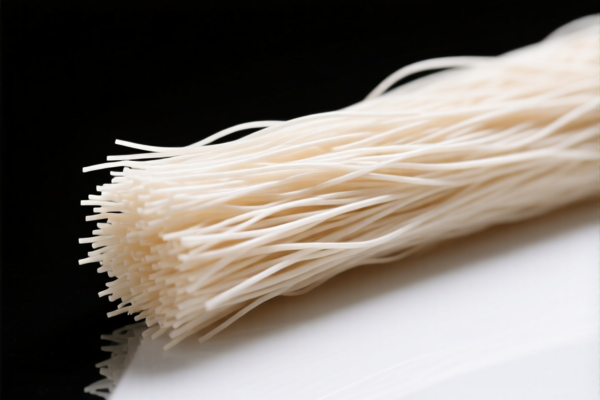
Product Images


AI Analysis
🧵 Regenerated Cellulose Fiber Textiles (Viscose/Rayon & Silk Blends)
🌐 HS Code Reference & Customs Clearance Guide | 2026 Latest Tariff Analysis | Professional Clearance Strategy
📌 I. Product Definition & Classification: What Exactly Are We Importing?
"Regenerated Cellulose Fiber Textiles" are synthetic fabrics derived from natural cellulose (typically wood pulp) through chemical processing. In international trade, they are broadly categorized as Artificial Filaments. The specific HS Code depends heavily on the physical form (filament vs. fabric) and the material composition (pure regenerated vs. silk blends).
⚠️ Key Distinction Point:
- Filaments (Long fibers): Raw strands, yarns, or monofilaments that have not yet been woven or knitted into fabric.
- Fabrics (Woven/Knitted): The final textile material, ready for garment production.
- Blends: Mixtures with natural silk or other fibers, which drastically change the tariff rate.
📦 II. HS Code Classification Details (2026 Latest Tariff Authority Cross-Reference)
Based on the provided data, here are the specific classifications for different forms of regenerated cellulose textiles:
| HS Code | Product Description | Application Scenario | Material/State |
|---|---|---|---|
5516.11.00.10 |
Regenerated fiber silk, material: regenerated fiber, form: Fabric | Woven fabrics made from regenerated long fibers | ✅ Fabric |
5516.12.00.10 |
Regenerated fiber silk, material: regenerated fiber, form: Long fiber fabric | Long-fiber yarn fabrics, artificial filament textile classification | ✅ Fabric |
5403.31.00.40 |
Regenerated fiber silk, material: regenerated fiber (e.g., Viscose/Rayon), form: Filament/Monofilament | Raw yarns, single filaments, artificial filament characteristics | ✅ Filament/Yarn |
5403.10.30.40 |
Regenerated fiber silk, material: regenerated fiber, form: Filament/Multi-filament | Multi-filament yarns, artificial silk filament characteristics | ✅ Filament/Yarn |
5007.90.30.90 |
Regenerated fiber silk, material: Silk or silk waste category, form: Fabric | Blends containing natural silk or waste silk mixed with regenerated fibers | ✅ Blend/Fabric |
🔍 Critical Reminder:
- Pure Regenerated Fibers (like Viscose/Rayon) generally fall under Chapter 54 (if filament) or Chapter 55 (if staple/fabric).
- Silk Blends fall under Chapter 50. If your product contains natural silk fibers, even in small amounts, it may be misclassified if you only declare "regenerated fiber."
- Form Matters: Declaring a woven fabric as a "filament" (or vice versa) is a common customs error that leads to severe penalties or delays.
💰 III. 2026 Latest Tariff Rate Details (Including Additional Taxes & Policy Surcharges)
✅ Applicable Country: United States (US)
✅ Origin: China (CN)
✅ Effective Date: Current rates apply to imports from China.
🎯 1. 5516.11.00.10 & 5516.12.00.10 —— Regenerated Fiber Fabrics (Chapters 55)
These codes apply to woven fabrics made from regenerated artificial filaments (e.g., rayon/viscose).
| Item | Content |
|---|---|
| Base Tariff | 14.9% (Ad Valorem) |
| Section 301 Additional Tariff | +25.0% |
| Section 122 Tariff | +10.0% |
| Total Tariff Rate | 49.9% |
| Tax Calculation | CIF Value × 49.9% |
| De Minimis Exemption | ❌ Not Eligible |
| Legal Basis Path | Base Tariff → Section 301 → Section 122 |
📌 Explanation:
- The 14.9% base tariff reflects the standard duty for artificial filament fabrics.
- The 25% is the standard USITC surcharge on Chinese goods under Section 301.
- The 10% is an additional surcharge under Section 122 (often related to specific trade remedies or national security provisions).
- Total Cost Impact: Nearly 50% of the goods' value is lost to duties. This is extremely high for textiles.
🎯 2. 5403.31.00.40 & 5403.10.30.40 —— Regenerated Filaments/Yarns (Chapters 54)
These codes apply to raw filaments, monofilaments, or multi-filament yarns (e.g., viscose rayon threads) before they are woven into fabric.
| Item | Content |
|---|---|
| Base Tariff | 10.0% (Ad Valorem) |
| Section 301 Additional Tariff | +25.0% |
| Section 122 Tariff | +10.0% |
| Total Tariff Rate | 45.0% |
| Tax Calculation | CIF Value × 45.0% |
| De Minimis Exemption | ❌ Not Eligible |
| Legal Basis Path | Base Tariff → Section 301 → Section 122 |
📌 Note:
- These tariffs are slightly lower than the fabric codes (45% vs 49.9%) because the base duty for filaments (10%) is lower than for finished fabrics (14.9%).
- However, the additional surcharges (35% total) remain the same.
- Even if you import raw yarns, the effective duty is still nearly half the product value.
🎯 3. 5007.90.30.90 —— Silk Blends / Silk Waste Fabric (Chapter 50)
This code applies if the product is classified as "Silk or Silk Waste" because it contains natural silk components mixed with regenerated fibers.
| Item | Content |
|---|---|
| Base Tariff | 0.8% (Ad Valorem) |
| Section 301 Additional Tariff | +25.0% |
| Section 122 Tariff | +10.0% |
| Total Tariff Rate | 35.8% |
| Tax Calculation | CIF Value × 35.8% |
| De Minimis Exemption | ❌ Not Eligible |
| Legal Basis Path | Base Tariff → Section 301 → Section 122 |
📌 Critical Insight:
- The base tariff for silk/silk waste is very low (0.8%), resulting in a total effective rate of 35.8%.
- ⚠️ WARNING: Do NOT misclassify pure regenerated fiber as "silk" to get this lower rate. Customs will inspect the fiber composition. If it is 100% viscose/rayon, declaring it as silk is fraud.
- This rate is only valid if the product genuinely contains natural silk fibers or silk waste.
🛠️ IV. Customs Clearance Practical Advice (Battle-Tested Pitfall Guide)
✅ 1. Documentation Checklist (All Required)
| Document | Required | Notes |
|---|---|---|
| ✅ Product Specification Sheet | ✔️ | Must specify: Fiber content (% Viscose, % Cotton, etc.), Fiber type (Filament vs. Staple), Weave type (if fabric). |
| ✅ Material Safety Data Sheet (MSDS) | ✔️ | Especially for chemical processing residues in regenerated fibers. |
| ✅ Commercial Invoice | ✔️ | Must clearly state: "Regenerated Cellulose Fiber Textile," HS Code, and Country of Origin. |
| ✅ Packing List | ✔️ | Detail the weight and dimensions. Ensure no mix of different HS codes in one shipment without clear separation. |
| ✅ Proof of Origin (COO) | ✔️ | Required for verifying Section 301 applicability. |
| ✅ Fiber Content Test Report | ✔️ | Crucial: Third-party lab report confirming % of Regenerated Cellulose vs. Natural Silk. Prevents misclassification fines. |
✅ 2. Declaration Tips (Key Mnemonics)
🔥 “Fiber Determines Code, Form Determines Tariff, Blend Determines Trap!”
| Scenario | Correct Declaration | Mistake to Avoid |
|---|---|---|
| Pure Viscose Yarn | 5403.31.00.40 or 5403.10.30.40 |
Declaring as "Fabric" → 49.9% tax |
| Pure Viscose Woven Fabric | 5516.11.00.10 or 5516.12.00.10 |
Declaring as "Yarn" → Audit risk |
| Viscose + Silk Blend | 5007.90.30.90 (If Silk is primary) |
Declaring as pure regenerated → Fraud charge |
| Viscose + Cotton Blend | Check Chapter 54/55 rules | Do not assume it’s "Silk" |
📌 Note: If the silk content is low (e.g., <5%), it may still be classified as regenerated fiber unless the silk imparts essential characteristics. Consult a specialist for blends.
✅ 3. Special Situation Handling
| Situation | Handling Advice |
|---|---|
| OEM Custom Fabric | Provide design specs and fiber composition. Ensure the supplier’s declaration matches your lab tests. |
| Mixed Container | Separate shipments by HS Code. Do not mix 5516 (Fabric) and 5403 (Yarn) in one entry without proper justification. |
| "Silk-Like" Polyester/Viscose | Clearly declare as "Artificial Silk" or "Regenerated Cellulose." Do not use the word "Silk" in the product name if it contains no natural silk. |
| Recycled Textiles | If the regenerated fiber is made from recycled clothing, ensure it meets the specific "waste" or "recycled" criteria for potential duty advantages (though 301/122 still apply). |
🌍 V. Global Market Comparison (2026 Latest)
| Country/Region | Recommended HS Code | Tariff (China Origin) | Certifications | Notes |
|---|---|---|---|---|
| 🇺🇸 USA | 5516.11.00.10 (Fabric)5403.31.00.40 (Yarn) |
49.9% (Fabric) 45.0% (Yarn) |
None specific for fiber, but check FTC labeling | Highest duty market. Section 301 & 122 apply heavily. |
| 🇨🇳 China | 5516.11 / 5403.31 |
~5-10% (Import Tariff) | GB Standards | Lower base tariffs, but domestic production is dominant. |
| 🇪🇺 EU | 5516.11 / 5407 |
0-4.5% (General) | REACH, OEKO-TEX | No Section 301/122. Much more favorable for Chinese textiles. |
| 🇬🇧 UK | 5516.11 / 5407 |
0-4.5% | UKCA | Post-Brexit rules align closely with EU. |
| 🇦🇺 Australia | 5516.11 |
5% | ACCC | No major trade wars. |
📌 Conclusion:
- USA is the most challenging market for regenerated cellulose textiles from China due to the 45-50% effective tariff.
- EU/UK/Australia offer significantly lower duties (0-5%) and are preferred for cost-sensitive supply chains.
- If targeting the US, consider transshipment (if legally compliant) or supply chain diversification (e.g., producing in Vietnam or India to avoid China-specific tariffs).
📌 VI. Common Errors & Pitfall Guide (Blood-Tested Lessons)
❌ Error 1: Declaring "Viscose Fabric" as "Silk" to get the 0.8% base rate.
👉 Consequence: Customs lab test reveals 100% viscose. Penalty + Back Duties + Potential Fraud Charges.
❌ Error 2: Mixing "Yarn" and "Fabric" in one HS Code.
👉 Consequence: Customs rejects the entry, demands re-classification, and imposes late fees.
❌ Error 3: Ignoring Section 122 (10% surcharge).
👉 Consequence: Underpayment of duties. Customs will issue a post-assessment notice with interest.
❌ Error 4: Using generic terms like "Textile" or "Fabric" without specifying fiber content.
👉 Consequence: Customs may assign a higher default tariff or hold the shipment for inspection.
✅ Correct Practice:
"Regenerated Cellulose Fiber Woven Fabric, 100% Viscose, Plain Weave, Width 60cm, for Garment Use, HS 5516.11.00.10"
🎯 VII. Conclusion: Professional Declaration Saves Money!
🎯 Remember the Mnemonics:
🔹 "Fabric vs. Yarn: 49.9% vs. 45%, Base Rate Differs."
🔹 "Silk Blend: 35.8%, But Prove It or Pay the Price."
🔹 "Section 301 + 122 = 35% Surcharge on Top of Base."
🔹 "Total US Duty: 45-50%, Make Sure Your Margin Can Absorb It!"
📌 Pro Tip:
If you are importing 100% regenerated cellulose (Viscose/Rayon), do NOT rely on "Silk" classifications. The risk of audit and penalty is too high.
Consider Advance Ruling from US Customs (CBP) if you are unsure about a blend or specific fabric structure.
For large volumes, evaluate non-China origin options to mitigate the Section 301/122 risk.
📣 Immediate Action:
📞 Contact a licensed customs broker + Provide Lab Test Results + Verify HS Code Pre-Ruling
🚀 Let your textile shipment pass smoothly, avoid costly delays, and protect your profit margins!
✨ Professional Clearance Starts with Precise Classification!
💼 Your Every Penny is Worth Being Calculated Precisely!
Customer Reviews
About HS Code Classification
The Harmonized System (HS) is an internationally standardized nomenclature developed by the World Customs Organization (WCO) to classify traded products. Over 200 countries use the HS system as the basis for customs tariffs, trade statistics, and import/export regulations.
Each HS code follows a hierarchical structure:
- Chapter (2 digits) — Broad category of goods (e.g., Chapter 84: Machinery and Mechanical Appliances)
- Heading (4 digits) — More specific grouping within the chapter
- Subheading (6 digits) — Internationally standardized breakdown, used by all WCO member countries
- National subdivisions (8-10 digits) — Country-specific extensions for further classification, such as US HTSUS 10-digit codes
Correct HS code classification is essential for smooth customs clearance, accurate duty payment, and compliance with trade regulations. Misclassification can lead to customs delays, overpayment of duties, or penalties.
When importing from CN to US, the applicable tariff rates may include:
- Most-Favored-Nation (MFN) rate — The standard duty rate applied to WTO members
- General rate — Applied to countries without trade agreements
- Trade remedy duties — Additional tariffs such as Section 301 (anti-dumping), Section 232 (national security), or countervailing duties
The information provided on this page is for reference purposes only. For official classification, please consult with your local customs authority or a licensed customs broker.