Regenerated Cellulose Moisture Barrier Film
CN → US| HS Code | Tariff Rate | Origin | Destination | Doc |
|---|---|---|---|---|
| 3913905000 | 41.5% | CN | US | Official Doc |
| 3913902090 | 40.8% | CN | US | Official Doc |
| 3921905050 | 39.8% | CN | US | Official Doc |
| 3921140000 | 41.5% | CN | US | Official Doc |
Product Images
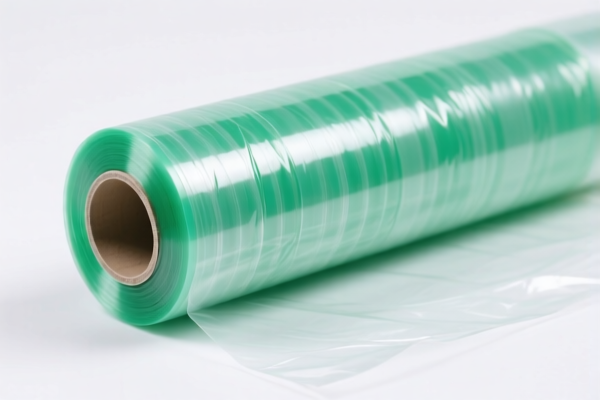
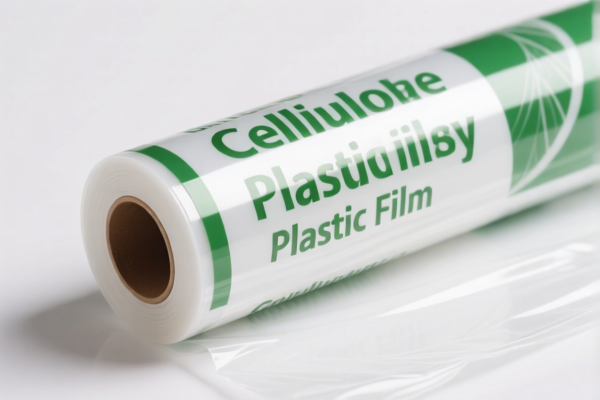
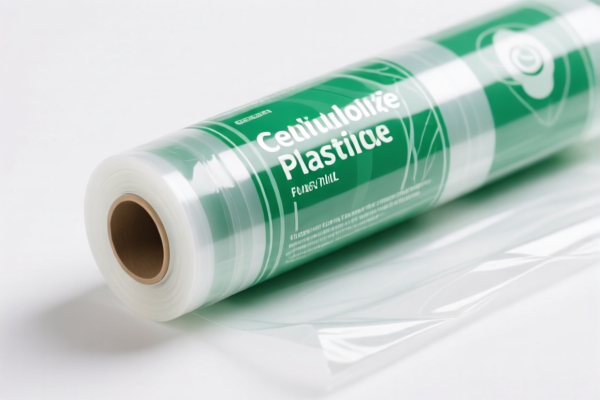
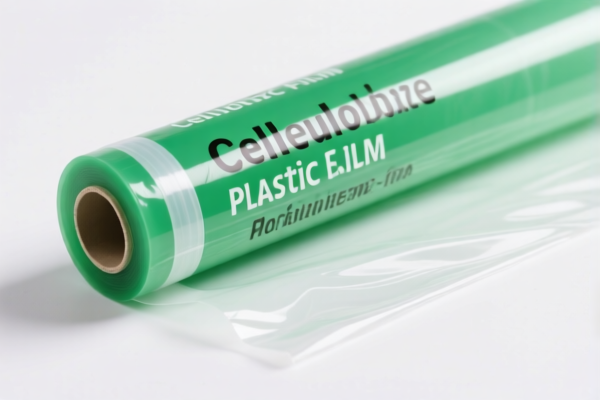
AI Analysis
🎞️ Regenerated Cellulose Moisture Barrier Film
🌐 HS Code Reference & Customs Clearance Guide | 2026 Latest Tariff Analysis | Professional Compliance Strategy
📌 I. Product Definition & Classification: What Exactly is "Regenerated Cellulose Film"?
Regenerated Cellulose Moisture Barrier Film is a high-performance packaging material derived from natural polymers (cellulose). It is widely used in food packaging, pharmaceuticals, and industrial applications due to its excellent moisture resistance, clarity, and biodegradability.
In international trade, it is classified under Chapter 39 (Plastics and Articles Thereof), but specifically categorized based on whether it is viewed as a "modified natural polymer" or a "synthetic plastic sheet/film."
⚠️ Key Distinction Point:
- If viewed as a derivative of natural polymers (cellulose polysaccharides) → 3913.90
- If viewed as a plastic sheet/film (polymer material) → 3921.90 / 3921.14
📦 II. HS Code Classification Details (2026 Latest Tariff Authoritative Comparison)
| HS Code | Product Description | Application Scenario | Classification Logic |
|---|---|---|---|
3913.90.50.00 |
Regenerated cellulose films, material: regenerated cellulose, form: film, belonging to natural polymers and modified natural polymers. | General regenerated cellulose packaging films | ✅ Natural Polymer Derivative |
3913.90.20.90 |
Regenerated cellulose moisture barrier film, material: cellulose (polysaccharide derivative), form: film, belonging to polysaccharides and their derivatives under 3913.90. | Films specifically identified as polysaccharide derivatives | ✅ Polysaccharide Derivative |
3921.90.50.50 |
Regenerated cellulose moisture barrier film, material: regenerated cellulose (plastic/polymer material), form: film, meets sheet/film requirements. | Films classified under plastic sheet/film category | ✅ Plastic/Polymer Material |
3921.14.00.00 |
Regenerated cellulose moisture barrier film, material and shape meet code requirements, specific subdivision under this category. | Specific subdivision for regenerated cellulose sheets/films | ✅ Specific Plastic Subdivision |
🔍 Key Reminder:
- All entries share high additional tariffs due to US-China trade policies. - The choice between 3913 and 3921 depends on the specific chemical definition and customs interpretation of "regenerated cellulose" in your jurisdiction. - Do not assume lower tariffs based on generic "plastic film" classifications; the specific material nature dictates the code.
💰 III. 2026 Latest Tariff Rate Breakdown (Including Surtaxes, Policy Surcharges)
✅ Applicable Country: United States (US)
✅ Origin: China (CN)
✅ Effective Date: 2025 November 10 (and subsequent imports)
🎯 1. 3913.90.50.00 —— Regenerated Cellulose Film (Natural Polymer Derivative)
| Item | Content |
|---|---|
| Base Tariff | 6.5% (ad valorem) |
| USITC Additional Tariff (Section 301) | +25.0% |
| 122 Clause Tariff (IEEPA/Executive Order) | +10.0% |
| Total Tax Rate | 41.5% |
| Tax Calculation | CIF Value × 41.5% |
| De Minimis Eligibility | ❌ Not Eligible |
| Legal Basis Path | USITC:3913.90.50.00 → Section 301: 25% → 122 Clause: 10% |
📌 Explanation:
- The 6.5% base tariff applies to modified natural polymers. - The 25% Section 301 tariff is a major barrier for Chinese-origin plastics and polymers. - The 10% 122 Clause tariff is an additional surcharge targeting specific Chinese materials. - Total 41.5% is a significant cost factor that must be priced into FOB/CIF negotiations.
🎯 2. 3913.90.20.90 —— Regenerated Cellulose Film (Polysaccharide Derivative)
| Item | Content |
|---|---|
| Base Tariff | 5.8% (ad valorem) |
| USITC Additional Tariff (Section 301) | +25.0% |
| 122 Clause Tariff (IEEPA/Executive Order) | +10.0% |
| Total Tax Rate | 40.8% |
| Tax Calculation | CIF Value × 40.8% |
| De Minimis Eligibility | ❌ Not Eligible |
| Legal Basis Path | USITC:3913.90.20.90 → Section 301: 25% → 122 Clause: 10% |
📌 Note:
- This code offers a slightly lower base rate (5.8% vs 6.5%) because it is classified strictly as a polysaccharide derivative. - However, the total rate (40.8%) is still extremely high. - Suitable for films explicitly marketed and chemically defined as cellulose polysaccharide derivatives.
🎯 3. 3921.90.50.50 —— Regenerated Cellulose Film (Plastic/Polymer Material)
| Item | Content |
|---|---|
| Base Tariff | 4.8% (ad valorem) |
| USITC Additional Tariff (Section 301) | +25.0% |
| 122 Clause Tariff (IEEPA/Executive Order) | +10.0% |
| Total Tax Rate | 39.8% |
| Tax Calculation | CIF Value × 39.8% |
| De Minimis Eligibility | ❌ Not Eligible |
| Legal Basis Path | USITC:3921.90.50.50 → Section 301: 25% → 122 Clause: 10% |
📌 Note:
- This is the lowest total tax rate (39.8%) among the options. - Classification as "plastic sheet/film" allows for the lowest base rate (4.8%). - Recommended if the product can be legally and technically described as a polymer film rather than a natural polymer derivative.
🎯 4. 3921.14.00.00 —— Regenerated Cellulose Film (Specific Subdivision)
| Item | Content |
|---|---|
| Base Tariff | 6.5% (ad valorem) |
| USITC Additional Tariff (Section 301) | +25.0% |
| 122 Clause Tariff (IEEPA/Executive Order) | +10.0% |
| Total Tax Rate | 41.5% |
| Tax Calculation | CIF Value × 41.5% |
| De Minimis Eligibility | ❌ Not Eligible |
| Legal Basis Path | USITC:3921.14.00.00 → Section 301: 25% → 122 Clause: 10% |
📌 Note:
- Same total rate as3913.90.50.00. - Use this code only if the product fits the specific "subdivision" description under 3921.14 (e.g., specific thickness or composition requirements not met by other 3921 codes).
🛠️ IV. Customs Clearance Practical Advice (Pitfall Avoidance Guide)
✅ 1. Preparation Checklist (All Required)
| Material | Required | Description |
|---|---|---|
| ✅ Product Spec Sheet | ✔️ | Include material composition (cellulose %), thickness, moisture barrier properties, width, length. |
| ✅ Material Safety Data Sheet (MSDS) | ✔️ | Confirm chemical nature (regenerated cellulose vs. synthetic plastic). |
| ✅ Product Photos | ✔️ | Clear images of film roll, packaging, label, and any certifications. |
| ✅ Commercial Invoice | ✔️ | Clearly state "Regenerated Cellulose Moisture Barrier Film" and correct HS Code. |
| ✅ Packing List | ✔️ | Detail weight, dimensions, and number of rolls. |
| ✅ Origin Certificate | ✔️ | If not Chinese origin, to avoid Section 301 tariffs (not applicable here if CN origin). |
✅ 2. Declaration Tips (Key Mantra)
🔥 "Specify Material, Clarify Form, Avoid Ambiguity!"
| Scenario | Correct Declaration | Wrong Practice |
|---|---|---|
| General Regenerated Cellulose Film | 3921.90.50.50 (Lowest Tax) |
Vague "Plastic Film" → Potential misclassification |
| Polysaccharide-Based Film | 3913.90.20.90 |
Misclassifying as synthetic plastic → Audit risk |
| Specific Subdivision Fit | 3921.14.00.00 |
Using generic code when specific one applies |
| Natural Polymer Derivative | 3913.90.50.00 |
Overlooking natural polymer classification |
✅ 3. Special Case Handling
| Situation | Handling Advice |
|---|---|
| OEM Custom Film | Provide customer order + technical specs to prove specific use and material. |
| Blended Materials | If mixed with synthetic polymers, may shift to different 39xx codes; consult expert. |
| Export to US | High Tariff Warning: Prepare for 39.8%-41.5% total duty. Factor into pricing. |
| Pre-Ruling | Highly Recommended: Apply for an Advance Ruling from US Customs (CBP) to confirm the correct HS Code and avoid post-clearance audits. |
🌍 V. Global Market Clearance Comparison (2026 Latest)
| Country/Region | Recommended HS Code | Tariff (China Origin) | Certification Requirements | Notes |
|---|---|---|---|---|
| 🇺🇸 USA | 3921.90.50.50 |
39.8% - 41.5% | FDA (if food contact), USDA | High tariffs due to Section 301 & 122 Clause |
| 🇨🇳 China | 3921.90.50.50 |
~6.5% - 9% | CCC (if applicable) | Lower tariffs, no US surcharges |
| 🇪🇺 EU | 3920.62.00.00 |
~4.5% - 6% | REACH, Food Contact Compliance | Different classification logic (often 3920) |
| 🇬🇧 UK | 3920.62.00.00 |
~4.5% - 6% | UKCA, Food Contact | Post-Brexit rules may vary |
| 🇦🇺 Australia | 3920.62.00.00 |
~5% | AUSTLIS, Food Standards | No Section 301 equivalent |
📌 Conclusion:
- USA is the most challenging market for this product due to cumulative surcharges. - EU/UK/AU have significantly lower tariffs but require strict food contact and chemical compliance (REACH/FDA) documentation.
📌 VI. Common Mistakes & Pitfall Guide (Lessons Learned)
❌ Mistake 1: Declaring as "General Plastic Film" without specifying "Regenerated Cellulose"
👉 Consequence: Misclassification, potential 25% penalty, customs hold.
❌ Mistake 2: Ignoring the 122 Clause Tariff
👉 Consequence: Unexpected 10% additional duty at border → Profit margin erosion.
❌ Mistake 3: Using "Cellophane" as the primary keyword without technical specs
👉 Consequence: Customs may reject "Cellophane" as a trade name and require proper HS Code classification.
❌ Mistake 4: Not checking for De Minimis Exemption
👉 Consequence: Assuming small shipments are tax-free → All these HS codes are NOT eligible for de minimis for Chinese origin.
✅ Correct Approach:
"Regenerated Cellulose Moisture Barrier Film, Plastic Sheet/Film, 3921.90.50.50, Made in China, FDA Compliant"
🎯 VII. Conclusion: Precision Classification Saves Money!
🎯 Remember the Mantra:
🔹 "Lowest Base Rate =
3921.90.50.50(39.8% Total)"
🔹 "Natural Polymer = Higher Base (41.5% Total)"
🔹 "No De Minimis for CN Origin"
🔹 "Apply for Advance Ruling!"
📌 Pro Tip:
If your product is food-contact grade, ensure you have FDA 21 CFR compliance documentation. While not affecting HS Code, it affects customs release time and market access.
📣 Immediate Action:
📞 Contact a Certified Customs Broker
📄 Provide Product Specs + Origin Proof
🚀 Get an Advance Ruling from CBP
💰 Factor 39.8%-41.5% Tariff into Your Cost Model
✨ Professional Clearance Starts with Precise Classification!
💼 Every Dollar of Tariff Should Be Accounted For!
Customer Reviews
About HS Code Classification
The Harmonized System (HS) is an internationally standardized nomenclature developed by the World Customs Organization (WCO) to classify traded products. Over 200 countries use the HS system as the basis for customs tariffs, trade statistics, and import/export regulations.
Each HS code follows a hierarchical structure:
- Chapter (2 digits) — Broad category of goods (e.g., Chapter 84: Machinery and Mechanical Appliances)
- Heading (4 digits) — More specific grouping within the chapter
- Subheading (6 digits) — Internationally standardized breakdown, used by all WCO member countries
- National subdivisions (8-10 digits) — Country-specific extensions for further classification, such as US HTSUS 10-digit codes
Correct HS code classification is essential for smooth customs clearance, accurate duty payment, and compliance with trade regulations. Misclassification can lead to customs delays, overpayment of duties, or penalties.
When importing from CN to US, the applicable tariff rates may include:
- Most-Favored-Nation (MFN) rate — The standard duty rate applied to WTO members
- General rate — Applied to countries without trade agreements
- Trade remedy duties — Additional tariffs such as Section 301 (anti-dumping), Section 232 (national security), or countervailing duties
The information provided on this page is for reference purposes only. For official classification, please consult with your local customs authority or a licensed customs broker.