Registration Book
CN → US| HS Code | Tariff Rate | Origin | Destination | Doc |
|---|---|---|---|---|
| 4823906700 | 35.0% | CN | US | Official Doc |
| 4810131900 | 10.0% | CN | US | Official Doc |
| 4820104000 | 10.0% | CN | US | Official Doc |
| 4820102060 | 35.0% | CN | US | Official Doc |
| 4823908680 | 35.0% | CN | US | Official Doc |
Product Images
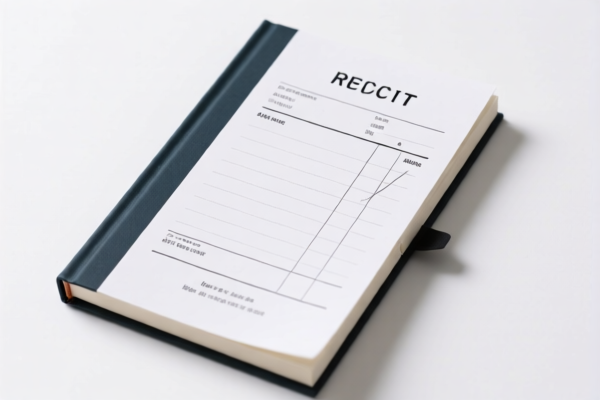
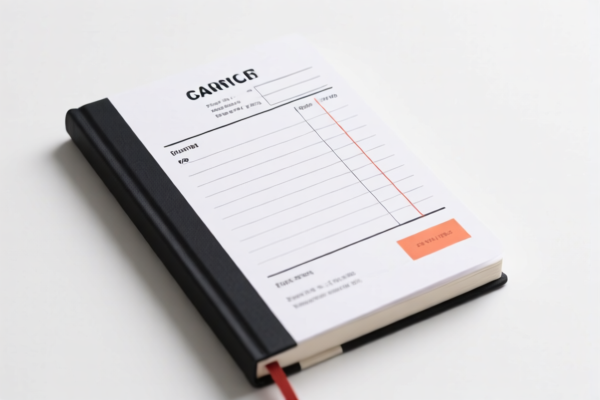
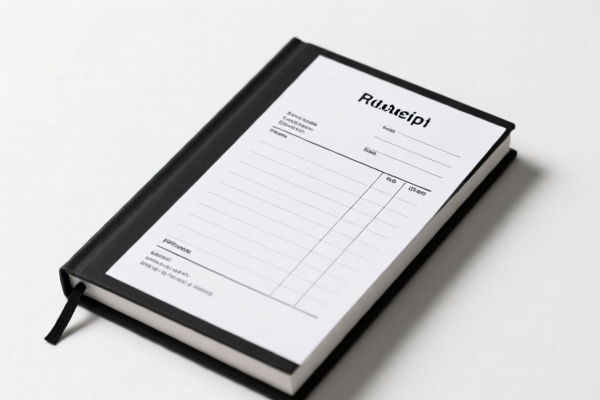
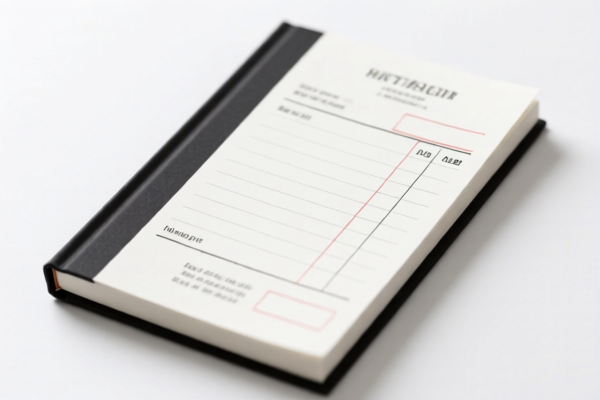
AI Analysis
📓 Registration Books (Paper Register Books)
🌐 HS Code Reference & Customs Clearance Guide | 2026 Latest Tariff Analysis | Professional Entry Strategy
📌 Part 1: Product Definition & Classification: Do You Really Know "Registration Books"?
Registration Books, also known as Register Books, Ledgers, or Logbooks, are paper-based goods used for manual record-keeping, accounting, logging, or administrative registration. In international trade, their classification depends strictly on the paper type, surface treatment, and structural characteristics.
⚠️ Key Distinction Points:
- High-quality Coated/Paperboard: If made from coated paper or specific processed paperboard, it falls under different headings than simple printed paper. - Simple Paper: If made from basic paper used for writing/graphic records, it may attract lower base duties but still faces significant additional tariffs. - 122 Clauses: All items below are subject to specific "Section 122" or related punitive tariff structures depending on the HS code subgroup.
📦 Part 2: HS Code Classification Details (2026 Latest Tariff Authority Comparison)
| HS Code | Product Description | Applicable Scenario | Paper Type/Nature |
|---|---|---|---|
4820.10.40.00 |
Register Books, of paper; for recording, accounting purposes | Standard administrative logs, simple record books | Basic Paper |
4820.10.20.60 |
Register Books, of paper; core use for registration, accounting | Generic registered books, standard ledgers | Standard Paper |
4823.90.86.80 |
Register Books, classified as other paper products; made of paper | General paper-based registers, non-coated | Simple Paper |
4823.90.67.00 |
Register Books, made of paper or paperboard; coated or specially processed | High-quality coated registers, treated paper products | Coated/Special Paper |
4810.13.19.00 |
Register Books, of paper; coated paper for writing/graphic recording | Writing pads, graphic recording ledgers, coated surfaces | Coated Graphic Paper |
🔍 Key Reminder:
- Paper Type is Critical: Whether the paper is "coated," "cardboard," or "basic writing paper" determines whether it falls under Chapter 48 Heading 4810, 4820, or 4823. - Structure: If it is a bound book (registers), Heading 4820 is often the primary candidate. If it is a loose-leaf pad or specific shaped paper product, Heading 4823 may apply. - Tariff Shock: All listed HS Codes face significant Additional Tariffs (25%) and Section 122 Tariffs (10%). There is NO de minimis exemption for these categories from China.
💰 Part 3: 2026 Latest Tariff Rate Details (Including Additional Taxes & Policy Add-ons)
✅ Applicable Country: USA (US)
✅ Origin: China (CN)
✅ Effective Date: Post-November 2025 (Current Enforcement)
🎯 1. 4820.10.40.00 & 4820.10.20.60 —— Register Books (Paper, General/Standard)
These two codes cover most standard registration books. The tax structure is nearly identical.
| Item | Content |
|---|---|
| Base Tariff | 0.0% (Ad Valorem) |
| Section 122 Tariff | +10% (Specific Clause for Paper Products/Registers) |
| Additional Duty (301/USITC) | +25% (Standard punitive duty for Chapter 48 paper goods from China) |
| Total Tariff Rate | 35.0% |
| Tax Calculation | CIF Value × 35% |
| De Minimis Exemption? | ❌ NO (High risk of audit, not eligible for $800 exemption if bundled) |
| Legal Basis Path | HTSUS:4820.10 → Section 122: 10% → USITC Footnote: 25% |
📌 Explanation:
- "Base 0%": The traditional MFN tariff for these books is low or zero. - "Section 122 10%": A specific punitive add-on for certain paper/register imports. - "Additional 25%": The standard Section 301 tariff applied to most Chinese paper products. - Total 35%: This is a high-cost category. Do not underestimate this.
🎯 2. 4823.90.86.80 & 4823.90.67.00 —— Other Paper Products / Coated Register Books
These codes apply to registers made from coated paper, paperboard, or specific processed paper types.
| Item | Content |
|---|---|
| Base Tariff | 0.0% |
| Section 122 Tariff | +10% |
| Additional Duty (301/USITC) | +25% |
| Total Tariff Rate | 35.0% |
| Tax Calculation | CIF Value × 35% |
| De Minimis Exemption? | ❌ NO |
| Legal Basis Path | HTSUS:4823.90 → Section 122: 10% → USITC Footnote: 25% |
📌 Note:
- Even if the paper is "coated" or "specialized," the Additional Tariff remains 25% + Section 122 10%. - Do not confuse "Coated Paper" (4810) with "Coated Registers" (4823). If bound as a book, it often stays in 4820, but if it's a specific shaped paper product, it goes to 4823. Both face the same 35% rate.
🎯 3. 4810.13.19.00 —— Coated Paper for Writing/Graphic Recording
This code applies if the "register" is essentially a sheet of coated paper intended for writing, or a loose pad not bound as a traditional book.
| Item | Content |
|---|---|
| Base Tariff | 0.0% |
| Section 122 Tariff | +10% |
| Additional Duty (301/USITC) | 0.0% (Note: Some coated papers may have lower additional duties depending on specific subheading nuances, but Section 122 still applies) |
| Total Tariff Rate | 10.0% |
| Tax Calculation | CIF Value × 10% |
| De Minimis Exemption? | ❌ NO (Section 122 usually blocks de minimis for paper) |
| Legal Basis Path | HTSUS:4810.13 → Section 122: 10% |
📌 Critical Distinction:
- If the product is bound as a book, it is likely 35%. - If the product is unbound sheets/pads classified as "Coated Paper" (4810), it may be 10%. - Risk: Misdeclaring a bound book as "paper" (4810) to save 25% is a major customs fraud risk. Ensure the physical product matches the HS code description exactly.
🛠️ Part 4: Customs Clearance Practical Advice (Avoid Pitfalls)
✅ 1. Document Checklist (Mandatory)
| Document | Required | Explanation |
|---|---|---|
| ✅ Product Photos | ✔️ | Clear images showing binding, pages, and covers. Prove it's a "Register Book." |
| ✅ Material Specification | ✔️ | Detail the paper type: Is it coated? Cardboard? Basic wood pulp? |
| ✅ Commercial Invoice | ✔️ | Must clearly state "Registration Book" or "Ledger," not just "Paper." |
| ✅ Packing List | ✔️ | Weight and dimensions are critical for valuation. |
| ✅ HS Code Pre-Ruling | ✔️ | Strongly Recommended to confirm if it falls under 4820 (Book) or 4810 (Paper). |
✅ 2. Declaration Tips (Key Mantra)
🔥 "Bound is Book, Loose is Paper. Don't Cheat, Or You'll Suffer."
| Scenario | Correct Declaration | Wrong Practice | Consequence |
|---|---|---|---|
| Bound Register Book | 4820.10.xxxx |
Declare as "Notebook" or "Paper" | 35% Tariff vs Risk of Penalty |
| Coated Paper Pad | 4810.13.19.00 |
Declare as "Bound Book" | 10% Tariff (Saves 25%, but must be truly unbound) |
| Paperboard Register | 4823.90.xxxx |
Ignore coating details | 35% Tariff |
📌 Warning:
- If you declare a bound book as paper (4810) to get the 10% rate, CBP (Customs and Border Protection) will likely inspect the physical product. If they see binding, they will reclassify it, charge the difference (25% more), plus penalties and interest.
✅ 3. Special Handling Cases
| Case | Advice |
|---|---|
| Custom Printed Covers | If the cover is cardboard and pages are paper, it’s still a Register Book (4820/4823). |
| Digital Logbooks? | If the "book" has electronic components, it is NOT paper. It goes to Chapter 85! |
| Gift Sets (Book + Pen) | De minimis ($800) may apply if total value is under $800, but Section 122 may still block it. Check current enforcement. |
🌍 Part 5: Global Market Comparison (2026)
| Country/Region | Recommended HS Code | Base Tariff | Additional Tariffs (China) | Total Effective Rate | Notes |
|---|---|---|---|---|---|
| 🇺🇸 USA | 4820.10.xxxx / 4823.90.xxxx |
0% | 122 (10%) + Sec 301 (25%) | 35% | High cost. Avoid de minimis misuse. |
| 🇺🇸 USA | 4810.13.19.00 |
0% | 122 (10%) + Sec 301 (0%*) | 10% | Only if truly unbound/coated paper. |
| 🇨🇳 China | 4820.10.xxxx |
10-15% | None | ~10-15% | Domestic production is cheaper. |
| 🇪🇺 EU | 4820.10.xxxx |
6.5% | None | 6.5% | No Section 122 equivalent. |
| 🇬🇧 UK | 4820.10.xxxx |
6.5% | None | 6.5% | Post-Brexit rules apply. |
📌 Conclusion:
- USA is the most expensive market for Chinese Paper Registration Books due to the 35% effective rate (for bound books). - Strategy: If volume is high, consider third-country sourcing (e.g., Vietnam, Thailand) to avoid Section 122 and 301 tariffs, provided substantial transformation occurs.
📌 Part 6: Common Errors & Pitfalls (Lessons Learned)
❌ Error 1: Declaring a bound book as "Notebooks" or "Paper" to get 10% tax.
👉 Consequence: CBP inspection reveals binding. Reclassification to 35% + Penalties.
❌ Error 2: Ignoring the Section 122 10% tariff.
👉 Consequence: Underpayment. Back-taxes + Interest.
❌ Error 3: Misidentifying Coated Paper vs Register Book.
👉 Consequence: If it’s a book, it’s 35%. If it’s paper, it’s 10%. Clarify physical structure.
❌ Error 4: Using De Minimis ($800) for large shipments.
👉 Consequence: Section 122 and 301 tariffs often block the de minimis exemption for paper products. Declare properly.
✅ Correct Approach:
"Register Book, Bound, Paper Pages, Cardboard Cover, for Accounting Use" →
4820.10.20.60or4820.10.40.00
Tariff: 35%.
"Coated Paper Sheets, Unbound, for Writing" →4810.13.19.00
Tariff: 10%.
🎯 Part 7: Conclusion: Precision Saves Money!
🎯 Remember the Mantra:
🔹 "Bound = Book = 35% | Unbound Paper = 10% | Don't Cheat = Survive!"
🔹 "Section 122 10% + Sec 301 25% = 35% Pain for Bound Books!"
📌 Pro Tip:
If your Registration Books are bound, accept the 35% tariff. It is the correct classification.
If they are loose coated paper pads, classify as 4810 for 10%.
Always provide clear photos and material specs to your customs broker.
📣 Immediate Action:
📞 Contact your Customs Broker to confirm if your product is "Bound" or "Unbound."
📋 Prepare Material Specs (Coated? Cardboard? Basic Paper?).
🚀 Plan for 35% Cost if Bound, or 10% Cost if Unbound Paper.
✨ Professional Clearance Starts with Accurate Classification!
💼 Your Cost is Calculated in Every Digit of the HS Code!
Customer Reviews
About HS Code Classification
The Harmonized System (HS) is an internationally standardized nomenclature developed by the World Customs Organization (WCO) to classify traded products. Over 200 countries use the HS system as the basis for customs tariffs, trade statistics, and import/export regulations.
Each HS code follows a hierarchical structure:
- Chapter (2 digits) — Broad category of goods (e.g., Chapter 84: Machinery and Mechanical Appliances)
- Heading (4 digits) — More specific grouping within the chapter
- Subheading (6 digits) — Internationally standardized breakdown, used by all WCO member countries
- National subdivisions (8-10 digits) — Country-specific extensions for further classification, such as US HTSUS 10-digit codes
Correct HS code classification is essential for smooth customs clearance, accurate duty payment, and compliance with trade regulations. Misclassification can lead to customs delays, overpayment of duties, or penalties.
When importing from CN to US, the applicable tariff rates may include:
- Most-Favored-Nation (MFN) rate — The standard duty rate applied to WTO members
- General rate — Applied to countries without trade agreements
- Trade remedy duties — Additional tariffs such as Section 301 (anti-dumping), Section 232 (national security), or countervailing duties
The information provided on this page is for reference purposes only. For official classification, please consult with your local customs authority or a licensed customs broker.