Reinforced Conveyor Belt
CN → US| HS Code | Tariff Rate | Origin | Destination | Doc |
|---|---|---|---|---|
| 5910009000 | 37.6% | CN | US | Official Doc |
| 5910001070 | 39.0% | CN | US | Official Doc |
| 8431390010 | 35.0% | CN | US | Official Doc |
| 3926905500 | 40.1% | CN | US | Official Doc |
| 3926905900 | 37.4% | CN | US | Official Doc |
Product Images
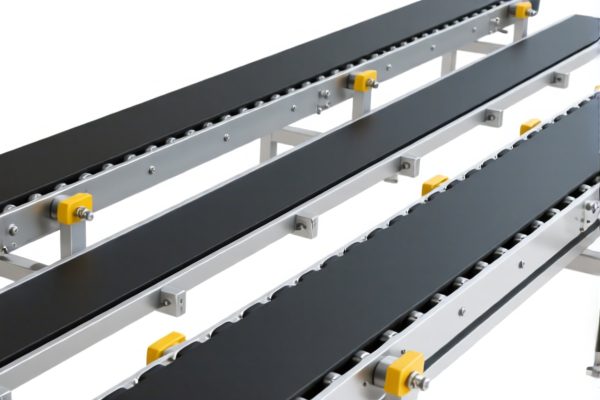

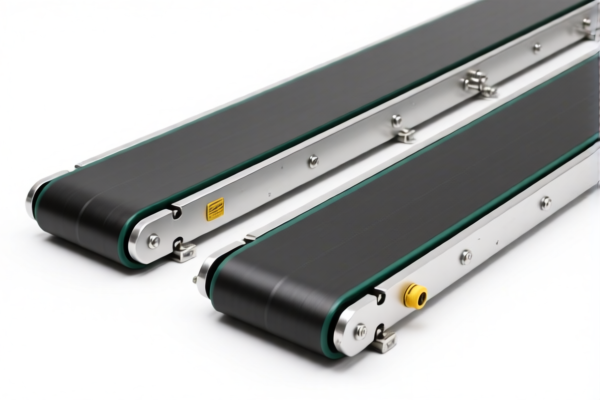
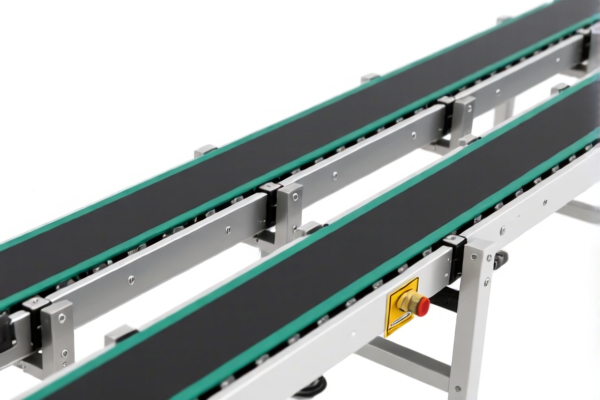
AI Analysis
🛠️ Reinforced Conveyor Belt: HS Code Classification & 2026 Customs Clearance Guide
🌐 HS Code Reference & Customs Guide | 2026 Latest Tariff Analysis | Professional Clearance Strategy
📌 I. Product Definition & Classification: What Exactly is a "Reinforced Conveyor Belt"?
Reinforced conveyor belts are critical components in industrial logistics, manufacturing, and mining. They consist of an elastomeric or polymer cover reinforced with textile, synthetic fiber, or steel cords to withstand tension and wear.
In international trade, the HS Code (Harmonized System) classification depends heavily on: 1. Material Composition: Textile, Artificial Fiber, Plastic, or Composite. 2. Function: Conveying materials vs. Transmitting power. 3. Configuration: Is it a standalone belt or a spare part for machinery?
⚠️ Critical Distinction:
- If the belt is primarily for conveying bulk materials (coal, ore, packages) → It falls under Chapter 59 (Impregnated textiles).
- If the belt is primarily for transmitting power (like a drive belt) → It may fall under Chapter 39 (Plastics).
- If declared as a spare part for a conveyor machine → It falls under Chapter 84 (Machinery parts).
📦 II. HS Code Classification Details (2026 Tariff Schedule)
Based on the provided data, here are the five possible classifications for Reinforced Conveyor Belts. Each has a distinct tax profile.
| HS Code | Product Description | Primary Use | Material |
|---|---|---|---|
5910.00.90.00 |
Textile Reinforced Conveyor Belt | Conveying bulk materials | Textile Material |
5910.00.10.70 |
Textile/Artificial Fiber Belt | Transmission OR Conveying | Artificial Fiber / Textile |
8431.39.00.10 |
Spare Part for Conveyor Machine | Industrial Component | Textile Reinforced |
3926.90.55.00 |
Plastic Conveyor Belt | Mechanical Transmission | Plastic |
3926.90.59.00 |
Plastic/Fiber Composite Belt | Power Transmission | Plastic or Fiber Composite |
🔍 Key Clarification:
- Chapter 59 (5910...): Covers belts impregnated, coated, covered, or laminated with rubber or other plastics, reinforced with textile or other material. This is the standard classification for most industrial conveyor belts.
- Chapter 84 (8431...): Strictly for parts of machinery. Only use this if you are importing replacement belts explicitly marketed as "spare parts" for a specific machine model.
- Chapter 39 (3926...): Applies if the belt is made predominantly of plastic and functions as a transmission belt rather than a heavy-duty bulk conveyor.
💰 III. 2026 Tariff Rate Breakdown (Including Add-ons & Policy Surcharges)
✅ Applicable Country: United States (US)
✅ Country of Origin: China (CN)
✅ Effective Date: 2025/2026 (Current Trade War Context)
🎯 1. 5910.00.90.00 – Textile Reinforced Conveyor Belt (Conveying)
| Item | Details |
|---|---|
| Base Tariff | 2.6% |
| Section 301 Surcharge | +25.0% |
| Section 122 Surcharge | +10.0% |
| Total Tax Rate | 37.6% |
| Calculation Basis | CIF Value × 37.6% |
| De Minimis Exemption | ❌ NOT Eligible |
| Legal Reference | Section 301 (Trade Act) + Section 122 (National Defense/Supply Chain) |
📌 Explanation:
- This is the most common classification for general-purpose textile conveyor belts.
- The 37.6% rate is high due to the combined effect of Section 301 (25%) and Section 122 (10%) tariffs imposed on Chinese goods.
- Section 122 refers to specific provisions often invoked for national security or supply chain resilience, adding an extra 10% on top of the standard 301 tariff.
🎯 2. 5910.00.10.70 – Textile/Artificial Fiber Belt (Transmission/Conveying)
| Item | Details |
|---|---|
| Base Tariff | 4.0% |
| Section 301 Surcharge | +25.0% |
| Section 122 Surcharge | +10.0% |
| Total Tax Rate | 39.0% |
| Calculation Basis | CIF Value × 39.0% |
| De Minimis Exemption | ❌ NOT Eligible |
| Legal Reference | Same as above |
📌 Note:
- Slightly higher base tariff (4.0% vs 2.6%) leads to a total of 39.0%.
- Applies if the belt is made of artificial fibers (e.g., nylon, polyester) and used for both transmission and conveying.
🎯 3. 8431.39.00.10 – Spare Part for Conveyor Machine
| Item | Details |
|---|---|
| Base Tariff | 0.0% |
| Section 301 Surcharge | +25.0% |
| Section 122 Surcharge | +10.0% |
| Total Tax Rate | 35.0% |
| Calculation Basis | CIF Value × 35.0% |
| De Minimis Exemption | ❌ NOT Eligible |
| Legal Reference | Same as above |
📌 Strategy:
- Lowest Total Rate (35.0%)!
- If you can legitimately classify the belt as a spare part (8431.39.00.10) rather than a generic textile product, you save 2.6% in base tariffs.
- Risk: Customs may challenge this if the belt is not uniquely identifiable as a part for a specific machine. It must be packaged and documented as a "Spare Part," not a general commodity.
🎯 4. 3926.90.55.00 – Plastic Conveyor Belt (Transmission)
| Item | Details |
|---|---|
| Base Tariff | 5.1% |
| Section 301 Surcharge | +25.0% |
| Section 122 Surcharge | +10.0% |
| Total Tax Rate | 40.1% |
| Calculation Basis | CIF Value × 40.1% |
| De Minimis Exemption | ❌ NOT Eligible |
| Legal Reference | Same as above |
📌 Note:
- This applies to plastic-based belts used for transmission.
- Highest base tariff (5.1%) leads to the highest total rate (40.1%).
- Avoid this classification if possible due to cost.
🎯 5. 3926.90.59.00 – Plastic/Fiber Composite Belt
| Item | Details |
|---|---|
| Base Tariff | 2.4% |
| Section 301 Surcharge | +25.0% |
| > Section 122 Surcharge | +10.0% |
| Total Tax Rate | 37.4% |
| Calculation Basis | CIF Value × 37.4% |
| De Minimis Exemption | ❌ NOT Eligible |
| Legal Reference | Same as above |
📌 Note:
- For belts made of plastic or composite materials with fiber reinforcement.
- Total rate is 37.4%, slightly lower than5910.00.90.00but higher than the spare part option.
🛠️ IV. Customs Clearance Practical Advice
✅ 1. Documentation Checklist (Non-Negotiable)
| Document | Required? | Notes |
|---|---|---|
| ✅ Product Specification Sheet | ✔️ | Must detail: Material (Textile/Plastic), Reinforcement Type, Width, Length, Application |
| ✅ Commercial Invoice | ✔️ | Must explicitly state: "Reinforced Conveyor Belt, Made in China" |
| ✅ Packing List | ✔️ | Include weight, dimensions, and number of rolls |
| ✅ Proof of Origin | ✔️ | Certificate of Origin (CO) required for Section 301/122 verification |
| ✅ HS Code Justification | ✔️ | Brief memo explaining why the specific HS code was chosen (e.g., "Textile reinforced, used for bulk conveying") |
| ✅ Photos of Product & Labeling | ✔️ | Show material texture, branding, and any technical labels |
✅ 2. Classification Strategy: How to Minimize Tax
| Scenario | Recommended HS Code | Total Tax | Rationale |
|---|---|---|---|
| General Industrial Belt | 5910.00.90.00 |
37.6% | Safest, most common for textile belts |
| Replacement Belt for Specific Machine | 8431.39.00.10 |
35.0% | Best Rate. Requires clear "Spare Part" documentation |
| Artificial Fiber Belt | 5910.00.10.70 |
39.0% | Higher base tariff due to artificial fiber classification |
| Plastic Transmission Belt | 3926.90.55.00 |
40.1% | Avoid if possible; highest base tariff |
| Composite Plastic/Fiber Belt | 3926.90.59.00 |
37.4% | Middle ground for non-textile reinforced belts |
🔥 Pro Tip:
If you are supplying belts to a factory that already owns conveyor machines, try to structure the contract as "Spare Parts Supply" and declare under8431.39.00.10. This saves 2.6% in base tariffs. However, ensure the belt is not sold as a general commodity.
✅ 3. Common Pitfalls & Avoidance
| Mistake | Consequence | Solution |
|---|---|---|
| Misclassifying as "Textile Fabric" | Customs may reclassify to higher duty or demand back taxes | Always specify "Conveyor Belt" and its function |
| Ignoring Section 122 | Unexpected 10% surcharge at customs | Include Section 122 in cost calculations |
| Vague Description | Customs delays for inspection | Use precise language: "Textile-reinforced rubber conveyor belt for bulk material handling" |
| Assuming De Minimis Applies | Shipment held or taxed | Remember: Section 301/122 goods are NOT eligible for de minimis (under $800) |
🌍 V. Global Market Comparison (2026)
| Country | Recommended HS Code | Est. Total Tariff | Notes |
|---|---|---|---|
| 🇺🇸 USA | 8431.39.00.10 |
35.0% | Lowest rate if classified as spare part |
| 🇺🇸 USA | 5910.00.90.00 |
37.6% | Standard rate for textile belts |
| 🇨🇳 China | 5910.00.90.00 |
~5-10% | Import duty low, no Section 301/122 |
| 🇪🇺 EU | 5910.00.90 |
~4-6% | No Section 301/122; standard EU tariff |
| 🇬🇧 UK | 5910.00.90 |
~4-6% | Post-Brexit tariff schedule |
📌 Conclusion:
- The US market is the most expensive for Chinese-made conveyor belts due to Section 301 and 122 tariffs.
- No de minimis exemption means even small shipments are subject to full taxation.
- Cost Optimization: Explore if your supplier can ship via third-party countries (e.g., Vietnam, Mexico) where different rules may apply, but be cautious of Rules of Origin violations.
📌 VI. Final Checklist for Smooth Clearance
- Confirm Material: Is it textile, artificial fiber, or plastic? → Determines Chapter 59 vs. 39.
- Confirm Function: Is it conveying or transmission? → Determines Subheading.
- Confirm Context: Is it a spare part? → If yes, try
8431.39.00.10for 35.0% rate. - Calculate Landed Cost: Include 35.0%–40.1% in your pricing model.
- Prepare Docs: Ensure invoices clearly state "Made in China" and proper HS Code.
🎯 Final Advice:
📞 Contact your customs broker with product photos and technical specs before shipping.
📝 Request a Binding Tariff Information (BTI) or Advance Ruling from US Customs if the shipment value is high.
💡 Remember: In the US, 35.0%–40.1% is the new normal for Chinese conveyor belts. Plan accordingly.
✨ Accurate Classification Saves Money!
💼 Don't Let Hidden Tariffs Eat Your Margins!
Customer Reviews
About HS Code Classification
The Harmonized System (HS) is an internationally standardized nomenclature developed by the World Customs Organization (WCO) to classify traded products. Over 200 countries use the HS system as the basis for customs tariffs, trade statistics, and import/export regulations.
Each HS code follows a hierarchical structure:
- Chapter (2 digits) — Broad category of goods (e.g., Chapter 84: Machinery and Mechanical Appliances)
- Heading (4 digits) — More specific grouping within the chapter
- Subheading (6 digits) — Internationally standardized breakdown, used by all WCO member countries
- National subdivisions (8-10 digits) — Country-specific extensions for further classification, such as US HTSUS 10-digit codes
Correct HS code classification is essential for smooth customs clearance, accurate duty payment, and compliance with trade regulations. Misclassification can lead to customs delays, overpayment of duties, or penalties.
When importing from CN to US, the applicable tariff rates may include:
- Most-Favored-Nation (MFN) rate — The standard duty rate applied to WTO members
- General rate — Applied to countries without trade agreements
- Trade remedy duties — Additional tariffs such as Section 301 (anti-dumping), Section 232 (national security), or countervailing duties
The information provided on this page is for reference purposes only. For official classification, please consult with your local customs authority or a licensed customs broker.