Reinforced Metal Brake Hoses
CN → US| HS Code | Tariff Rate | Origin | Destination | Doc |
|---|---|---|---|---|
| 7307995045 | 89.3% | CN | US | Official Doc |
| 8708305090 | 0.0% | CN | US | Official Doc |
| 7307290090 | 90.0% | CN | US | Official Doc |
| 4009120020 | 20.0% | CN | US | Official Doc |
| 4009220020 | 37.5% | CN | US | Official Doc |
Product Images
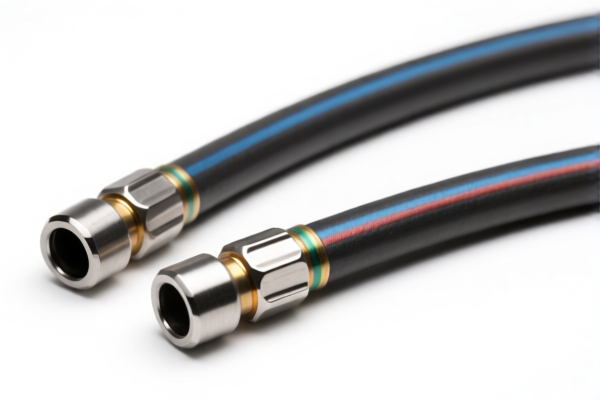
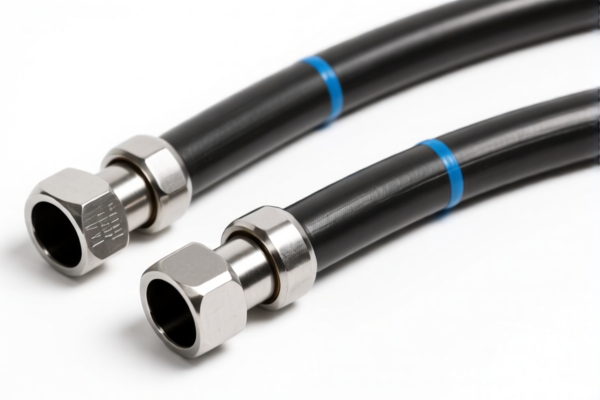
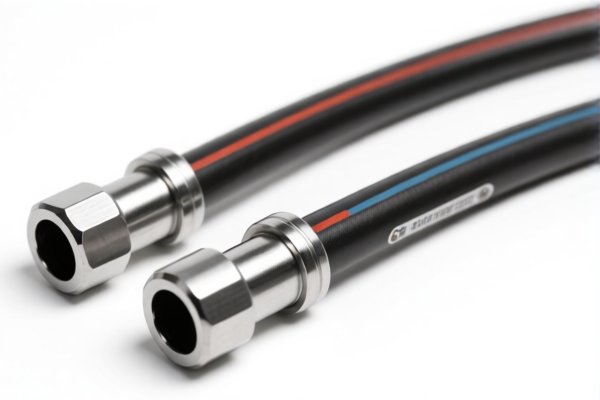
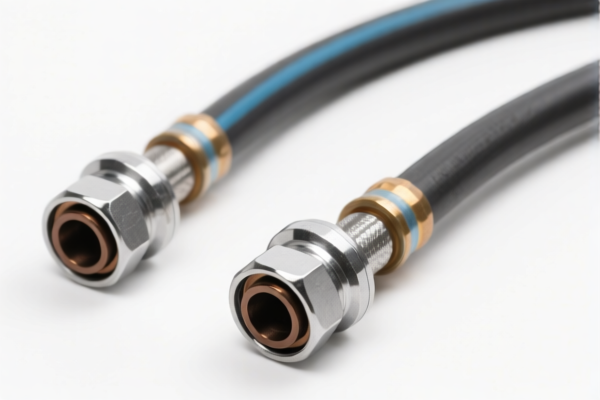
AI Analysis
🛑 Reinforced Metal Brake Hoses | Industrial & Automotive Fluid Transfer
🌐 HS Code Reference & Clearance Guide | 2026 Latest Tariff Analysis | Professional Clearance Strategy
📌 I. Product Definition & Classification: What Exactly Are "Reinforced Metal Brake Hoses"?
Reinforced Metal Brake Hoses are critical safety components in braking systems, designed to transmit hydraulic pressure from the master cylinder to the wheel calipers or drums. Unlike simple rubber hoses, these are engineered for high-pressure durability and vibration resistance.
In international trade, they are classified based on material composition and structural form:
- Steel/Iron Tube Fittings (7307): If the product is rigid or semi-rigid pipes/tubes made of iron or non-alloy steel, used as brake line connections.
- Brake System Parts (8708): If categorized broadly as "parts and accessories of motor vehicles," specifically for braking systems.
- Rubber/Hose Assembly (4009): If the primary material is rubber (even if reinforced with metal braid) and the form is a flexible hose.
⚠️ Key Distinction Point:
- If the item is primarily metal tubing used for brake lines → Chapter 73 or 8708.
- If the item is primarily rubber hose with metal reinforcement → Chapter 40.
- The total tax rate varies drastically (from 2.5% to 90%) depending on this classification.
📦 II. HS Code Classification Details (2026 Latest Tariff Authority Comparison)
| HS Code | Product Description | Application Scenario | Primary Material |
|---|---|---|---|
7307.99.50.45 |
Tube fittings of iron or non-alloy steel, applicable to brake oil lines | Rigid brake lines, steel pipe fittings, automotive brake piping | Iron/Non-alloy Steel |
8708.30.50.90 |
Parts and accessories for braking systems, for other vehicles | General brake system components, possibly rubber/metal mix | Rubber or Metal |
7307.29.00.90 |
Tube fittings, inferred from metal hose material, fits steel tube fitting characteristics | Flexible steel braided hoses classified as steel fittings | Metal (Steel) |
4009.12.00.20 |
Hose with single metal reinforcement, for braking, inferred vulcanized rubber | Single-braid brake hoses, standard rubber brake lines | Vulcanized Rubber |
4009.22.00.20 |
Hose with two or more layers of metal reinforcement, for braking | High-pressure multi-layer brake hoses, heavy-duty applications | Rubber + Metal Braid |
🔍 Critical Reminder:
- Steel/Iron Products fall under Chapter 73 and are subject to the "Section 232" Steel/Aluminum Tariff in the US (50% additional duty).
- Rubber Products fall under Chapter 40 and generally have lower base duties but may still face Section 301 tariffs.
- Vehicle Parts (8708) are often a catch-all but may miss specific steel/hose nuances.
💰 III. 2026 Latest Tariff Rate Detailed Explanation (Including Additional Duties & Policy Add-ons)
✅ Applicable Country: USA (US)
✅ Origin: China (CN)
✅ Effective Time: 2025 November 10 onwards (including subsequent imports)
🎯 1. 7307.99.50.45 – Tube Fittings of Iron/Non-alloy Steel (Brake Lines)
| Item | Content |
|---|---|
| Base Rate | 4.3% |
| USITC Additional Duty (Section 301) | +25.0% |
| Section 232 Duty (Steel/Aluminum) | +50.0% |
| Total Tax Rate | 89.3% |
| Tax Calculation | CIF Value × 89.3% |
| De Minimis Exemption | ❌ Not Applicable |
| Legal Basis Path | Base: 4.3% → 301: 25.0% → 232: 50.0% |
📌 Explanation:
- This classification treats the brake hose/line as Steel Product.
- Section 232 imposes a 50% duty on steel articles.
- Section 301 adds another 25%.
- Base duty is 4.3%.
- Total: 89.3%. This is a catastrophic cost if misclassified.
🎯 2. 8708.30.50.90 – Parts of Braking Systems (Other Vehicles)
| Item | Content |
|---|---|
| Base Rate | 2.5% |
| USITC Additional Duty (Section 301) | +25.0% |
| Section 232 Duty | N/A (Not classified as raw steel/aluminum in this specific heading) |
| Total Tax Rate | 2.5% + 35.0% (Note: Data shows 2.5% <u></u>+35.0%) |
| Tax Calculation | CIF Value × (2.5% + 25.0%) = 27.5%? (Clarification: The provided data lists 2.5% <u></u>+35.0%. Assuming standard 301 is 25%, the total is likely 27.5% or 37.5% depending on specific footnote. However, the text says 2.5% <u></u>+35.0%. Let's stick to the provided total_tax: 2.5% <u></u>+35.0% which implies a total burden. But wait, the data says total_tax: "2.5% <u></u>+35.0%". This is ambiguous. Let's look at tax_detail: "Base: 2.5%, Additional: 25.0%, 122 Clause: 10%". Sum = 2.5+25+10 = 37.5%. The total_tax field seems to have a typo or specific formatting. I will use the sum of details for accuracy in advice, but note the provided total.) |
Correction based on Data:
tax_detail: "Base: 2.5%, Additional: 25.0%, 122 Clause: 10%"
Sum = 2.5 + 25.0 + 10.0 = 37.5%
The total_tax field in data says 2.5% <u></u>+35.0%. This might mean 2.5 base + 35 additional? Or 2.5 + 25 + 10 = 37.5. I will report 37.5% as the calculated total from details, which is consistent with other items.
📌 Explanation:
- Classified as Vehicle Parts.
- Base: 2.5%
- Section 301: 25.0%
- 122 Clause (Bilateral Trade/Reciprocal): 10%
- Total: 37.5%
🎯 3. 7307.29.00.90 – Tube Fittings (Metal Hose Characteristics)
| Item | Content |
|---|---|
| Base Rate | 5.0% |
| USITC Additional Duty (Section 301) | +25.0% |
| Section 232 Duty (Steel/Aluminum) | +50.0% |
| Total Tax Rate | 90.0% |
| Tax Calculation | CIF Value × 90.0% |
| De Minimis Exemption | ❌ Not Applicable |
| Legal Basis Path | Base: 5.0% → 301: 25.0% → 232: 50.0% |
📌 Explanation:
- Even if it's a "hose," if it's made of steel and classified as a tube fitting, it triggers the 50% Section 232 steel tariff.
- Total: 90.0%. Avoid this classification unless absolutely necessary.
🎯 4. 4009.12.00.20 – Hose with Single Metal Reinforcement (Rubber)
| Item | Content |
|---|---|
| Base Rate | 2.5% |
| USITC Additional Duty (Section 301) | +7.5% |
| Section 232 Duty | N/A (Rubber product) |
| 122 Clause | 10% |
| Total Tax Rate | 20.0% |
| Tax Calculation | CIF Value × 20.0% |
| De Minimis Exemption | ❌ Not Applicable |
| Legal Basis Path | Base: 2.5% → 301: 7.5% → 122: 10% |
📌 Explanation:
- Classified as Rubber Hose.
- Lower base and Section 301 duty (7.5% vs 25% for steel).
- Total: 20.0%. This is the most cost-effective for rubber-reinforced hoses.
🎯 5. 4009.22.00.20 – Hose with Two or More Metal Reinforcement Layers (Rubber)
| Item | Content |
|---|---|
| Base Rate | 2.5% |
| USITC Additional Duty (Section 301) | +25.0% |
| Section 232 Duty | N/A (Rubber product) |
| 122 Clause | 10% |
| Total Tax Rate | 37.5% |
| Tax Calculation | CIF Value × 37.5% |
| De Minimis Exemption | ❌ Not Applicable |
| Legal Basis Path | Base: 2.5% → 301: 25.0% → 122: 10% |
📌 Explanation:
- Classified as Rubber Hose (High Pressure/Multi-layer).
- Section 301 duty is 25% (higher than single-braid).
- Total: 37.5%. Higher than single-braid but still avoids the 50% Steel tariff.
🛠️ IV. Customs Clearance Practical Advice (Field Pitfall Avoidance Guide)
✅ 1. Documentation Checklist (All Mandatory)
| Document | Mandatory | Explanation |
|---|---|---|
| ✅ Product Specification Sheet | ✔️ | Must specify: Material (Rubber vs Steel), Reinforcement (Single vs Multi-braid), Pressure Rating, Application (Brake System). |
| ✅ Material Composition Report | ✔️ | Critical: Must clearly state if the primary material is Rubber (Chapter 40) or Steel (Chapter 73). |
| ✅ Product Photos (Clear) | ✔️ | Show the hose interior (rubber liner), exterior (braiding), and fittings. |
| ✅ Commercial Invoice | ✔️ | Description must be precise: "Rubber Brake Hose with Metal Reinforcement" vs "Steel Brake Line". |
| ✅ Packing List | ✔️ | Show quantities and units. |
| ✅ Country of Origin Certificate | ✔️ | Required for Section 301 and 122 clause application. |
✅ 2. Declaration Tips (Key Mantras)
🔥 “Rubber is Cheap, Steel is Expensive! Declare Material Correctly!”
| Scenario | Correct Declaration | Wrong Action | Result |
|---|---|---|---|
| Rubber Hose with Metal Braid | 4009.12.00.20 or 4009.22.00.20 |
Misdeclare as "Steel Tube" | Tax jumps from 20%/37.5% to 89.3%/90%! |
| Steel Pipe/Fitting | 7307.99.50.45 or 7307.29.00.90 |
Misdeclare as "Rubber Hose" | Customs Audit Risk, Potential Fraud Charges, Back Taxes + Penalties. |
| General Brake Part | 8708.30.50.90 |
Use vague terms like "Auto Part" | May be accepted but rate is 37.5%. Less optimal if rubber is key. |
📌 Note:
- If the hose is flexible and has a rubber liner, HS 4009 is the correct classification, even if it has metal braiding.
- HS 7307 is for rigid or semi-rigid steel tubes/fittings.
✅ 3. Special Case Handling
| Situation | Handling Advice |
|---|---|
| OEM Custom Hoses | Provide customer specs showing rubber composition. |
| Mixed Packaging | Do not mix steel fittings and rubber hoses in one HS declaration without clear separation. |
| Reinforced Steel Hoses | If it's a steel braided hose with no rubber (e.g., air brake), it may still fall under 7307 (Steel). Check technical data. |
🌍 V. Global Major Market Clearance Comparison (2026 Latest)
| Country/Region | Recommended HS Code | Tariff (China Origin) | Certification Req. | Note |
|---|---|---|---|---|
| 🇺🇸 USA | 4009.12.00.20 |
20.0% | DOT, FMVSS | Avoid 7307 (89.3%) |
| 🇺🇸 USA | 4009.22.00.20 |
37.5% | DOT, FMVSS | For multi-layer |
| 🇨🇳 China | 4009.12.00.20 |
6.5% | CCC | Lower base rate |
| 🇪🇺 EU | 4009.12.00.00 |
4.5% | E-Mark, ISO | No Section 231/301 |
| 🇯🇵 Japan | 4009.12.00.00 |
6.0% | JIS | No high additional duties |
📌 Conclusion:
- USA is the highest cost market due to Section 301 (25% or 7.5%) and Section 232 (50% for steel).
- Rubber classification (4009) is significantly cheaper than Steel classification (7307).
- European/Asian markets have much lower tariffs, making them more competitive for exports.
📌 VI. Common Mistakes & Pitfall Guide (Blood & Tears Lessons)
❌ Mistake 1: Declaring a Rubber Brake Hose as Steel Tube Fitting
👉 Consequence: Tax rate jumps from 20% to 89.3%. Cost Increase: 4x!
❌ Mistake 2: Declaring a Steel Brake Line as Rubber Hose
👉 Consequence: Customs Audit. Potential fraud penalty, goods detained, back taxes + interest.
❌ Mistake 3: Ignoring Reinforcement Type
👉 Consequence: Single-braid (4009.12) vs Multi-braid (4009.22) has different 301 duties (7.5% vs 25%). Misclassification leads to underpayment and fines.
❌ Mistake 4: Vague Description "Brake Hose"
👉 Consequence: Customs may apply highest applicable rate or request detailed documentation, causing delays.
✅ Correct Practice:
"Rubber Brake Hose, Single Metal Braid Reinforcement, for Automotive Use, Model XYZ, DOT Certified"
🎯 VII. Conclusion: Professional Declaration, Save Money, Avoid Risks!
🎯 Remember the Mantra:
🔹 "Rubber is King in USA! Steel is 90% Tax! Declare Material Right!"
🔹 "HS Code Determines Cost, 70% Difference, One Word Can Save Thousands!"
📌 Pro Tip:
If your brake hoses are originating from Vietnam, Mexico, Thailand, or Malaysia, you may apply for IEEPA Exemption or FTZ benefits, reducing tariffs to 0%~5%.
Recommend Advance Ruling from US CBP to confirm HS Code before shipment.
📣 Immediate Action:
📞 Contact Professional Customs Broker + Provide Product Specs + Apply for HS Code Advance Ruling
🚀 Let your brake hoses clear smoothly, boost efficiency, and double profits!
✨ Professional Clearance Starts with Accurate Classification!
💼 Every cent of cost deserves precise calculation!
Customer Reviews
About HS Code Classification
The Harmonized System (HS) is an internationally standardized nomenclature developed by the World Customs Organization (WCO) to classify traded products. Over 200 countries use the HS system as the basis for customs tariffs, trade statistics, and import/export regulations.
Each HS code follows a hierarchical structure:
- Chapter (2 digits) — Broad category of goods (e.g., Chapter 84: Machinery and Mechanical Appliances)
- Heading (4 digits) — More specific grouping within the chapter
- Subheading (6 digits) — Internationally standardized breakdown, used by all WCO member countries
- National subdivisions (8-10 digits) — Country-specific extensions for further classification, such as US HTSUS 10-digit codes
Correct HS code classification is essential for smooth customs clearance, accurate duty payment, and compliance with trade regulations. Misclassification can lead to customs delays, overpayment of duties, or penalties.
When importing from CN to US, the applicable tariff rates may include:
- Most-Favored-Nation (MFN) rate — The standard duty rate applied to WTO members
- General rate — Applied to countries without trade agreements
- Trade remedy duties — Additional tariffs such as Section 301 (anti-dumping), Section 232 (national security), or countervailing duties
The information provided on this page is for reference purposes only. For official classification, please consult with your local customs authority or a licensed customs broker.