Reinforced Rubber Hose with Joints
CN → US| HS Code | Tariff Rate | Origin | Destination | Doc |
|---|---|---|---|---|
| 4009420050 | 20.0% | CN | US | Official Doc |
| 4009220050 | 37.5% | CN | US | Official Doc |
| 4009220020 | 37.5% | CN | US | Official Doc |
| 4009110000 | 37.5% | CN | US | Official Doc |
| 4009120050 | 20.0% | CN | US | Official Doc |
Product Images
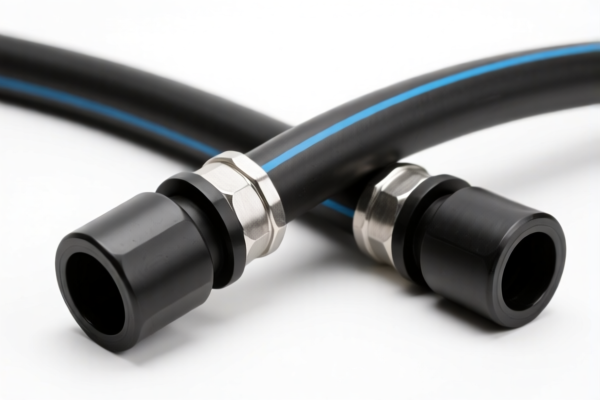
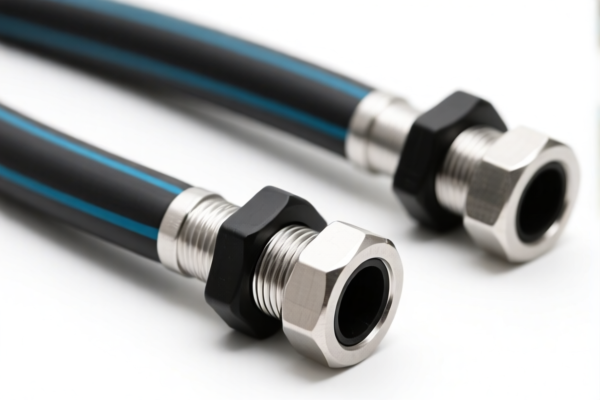
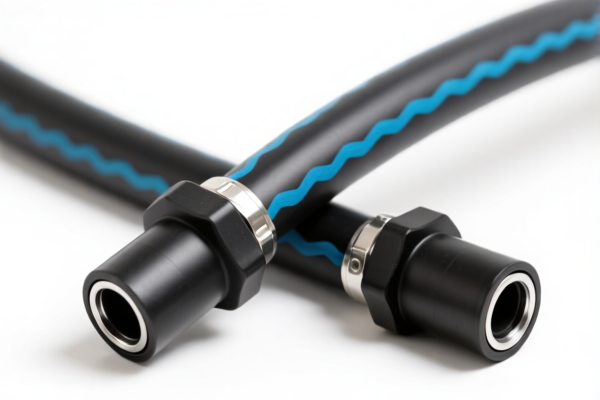
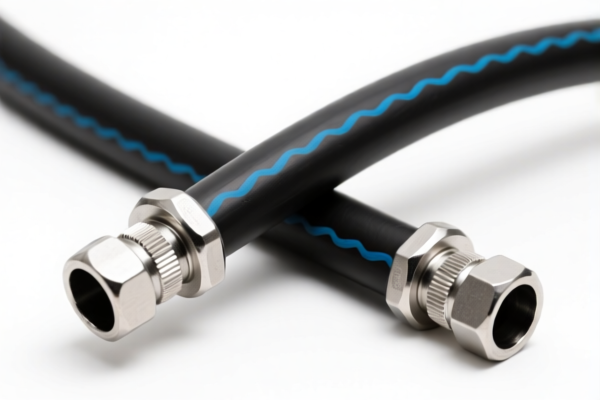
AI Analysis
🛢️ Reinforced Rubber Hose with Joints (带接头的增强橡胶管)
🌐 HS Code Reference & Customs Clearance Guide | 2026 Latest Tariff Analysis | Professional通关 Strategy
📌 I. Product Definition & Classification: Do You Truly Understand "Reinforced Rubber Hoses"?
Reinforced rubber hoses are critical components in fluid transmission systems, widely used in automotive, hydraulic machinery, industrial manufacturing, and construction. In international trade, these products are strictly classified based on material composition, structural reinforcement, and presence of fittings/joints.
Key Distinction Points:
With Joints/Fittings (带接头): If the hose comes pre-assembled with metal or rubber connectors, it generally falls under HS 4009 (specific subheadings depend on material and reinforcement).
Reinforced (增强): Indicates the presence of metal wire, fiber, or other strengthening layers within the rubber matrix.
Material: The base material (vulcanized rubber) is consistent, but the type of reinforcement and presence of accessories* dictate the specific HS code.
⚠️ Critical Warning:
- With Joints + Reinforced: Typically requires higher scrutiny due to added value from metal fittings.
- Without Joints: Classified as simple tubes/hoses.
- Misclassification Risk: Declaring a hose with joints as a simple hose can lead to severe penalties due to tax evasion.
📦 II. HS Code Classification Matrix (2026 Latest Tariff Authority Alignment)
Based on the provided data, here is the authoritative breakdown for "Reinforced Rubber Hose with Joints":
| HS Code | Product Description (Summary) | Key Characteristics | Typical Application |
|---|---|---|---|
4009.42.00.50 |
Reinforced Rubber Hose with Joints (Material: Rubber, Form: Reinforced Tube, With Joint Accessories) | Reinforced structure, includes joint fittings | Industrial hydraulic lines, specialized fluid transfer |
4009.22.00.50 |
Reinforced Rubber Hose with Joints (Material: Vulcanized Rubber, With Fittings, Implies Metal/Fiber Reinforcement) | Vulcanized rubber, fitted, reinforced | Heavy-duty industrial hoses |
4009.22.00.20 |
High-Pressure Metal-Joint Rubber Hose (Material: Rubber, With Metal Reinforcement & Joints) | High-pressure rating, metal joints, metal-reinforced rubber | Hydraulic systems, oil/gas pipelines |
4009.11.00.00 |
Rubber Hose (Material: Vulcanized Rubber, Form: Tube/Hose, No Special Accessories) | Simple hose, no joints specified, basic reinforcement | Basic water/air lines, non-critical applications |
4009.12.00.50 |
Rubber Hose (Material: Vulcanized Rubber, Form: Hose, Implies Accessories) | Vulcanized rubber, likely has minor accessories/fitting capability | General purpose hoses with simple ends |
🔍 Focus Analysis:
For "Reinforced Rubber Hose with Joints", the primary candidates are4009.42.00.50,4009.22.00.50, and4009.22.00.20.
- If the hose is high-pressure with metal joints, it leans towards4009.22.00.20.
- If it is a general reinforced hose with standard joints, it may fall under4009.42.00.50or4009.22.00.50.
-4009.11.00.00and4009.12.00.50are for simpler hoses without significant reinforcement or complex joints.
💰 III. 2026 Latest Tariff Rate Breakdown (Including Additional Taxes & Policy Surcharges)
✅ Applicable Country: United States (US)
✅ Origin: China (CN)
✅ Effective Date: 2025/2026 (Post-Trade War Tariffs)
🎯 1. 4009.42.00.50 —— Reinforced Rubber Hose with Joints (Lower Tax Bracket)
| Item | Detail |
|---|---|
| Base Tariff | 2.5% |
| Section 301 Surcharge | +7.5% |
| Section 122 Tariff | +10% |
| Total Tariff Rate | 20.0% |
| Calculation | CIF Value × 20% |
| De Minimis Exemption | ❌ Not Applicable |
| Legal Basis Path | USITC:4009.42.00.50 → Section 301:7.5% → Section 122:10% |
📌 Explanation:
- This is the most favorable rate among hoses with joints in the provided data.
- It assumes the product is classified as a "reinforced tube with joints" but may not be subject to the highest tier of "metal-reinforced high-pressure" surcharges.
- Key Advantage: Lower total tariff compared to other jointed hoses.
🎯 2. 4009.22.00.50 —— Reinforced Rubber Hose with Joints (Standard High-Pressure)
| Item | Detail |
|---|---|
| Base Tariff | 2.5% |
| Section 301 Surcharge | +25.0% |
| Section 122 Tariff | +10% |
| Total Tariff Rate | 37.5% |
| Calculation | CIF Value × 37.5% |
| De Minimis Exemption | ❌ Not Applicable |
| Legal Basis Path | USITC:4009.22.00.50 → Section 301:25.0% → Section 122:10% |
📌 Explanation:
- Higher surcharge due to explicit "vulcanized rubber with metal/fiber reinforcement."
- The 25% Section 301 tariff significantly increases cost.
🎯 3. 4009.22.00.20 —— High-Pressure Metal-Joint Rubber Hose (Highest Tax)
| Item | Detail |
|---|---|
| Base Tariff | 2.5% |
| Section 301 Surcharge | +25.0% |
| Section 122 Tariff | +10% |
| Total Tariff Rate | 37.5% |
| Calculation | CIF Value × 37.5% |
| De Minimis Exemption | ❌ Not Applicable |
| Legal Basis Path | USITC:4009.22.00.20 → Section 301:25.0% → Section 122:10% |
📌 Explanation:
- Same tax rate as4009.22.00.50due to similar classification logic (rubber with metal reinforcement/joints).
- High-pressure designation triggers stricter scrutiny but not necessarily higher tariff in this dataset.
🎯 4. 4009.11.00.00 & 4009.12.00.50 —— Simple Rubber Hoses (For Comparison)
| Item | Detail |
|---|---|
| Base Tariff | 2.5% |
| Section 301 Surcharge | +25.0% (for 11.00) or +7.5% (for 12.00.50) |
| Section 122 Tariff | +10% |
| Total Tariff Rate | 37.5% (for 11.00) or 20.0% (for 12.00.50) |
📌 Note: If your hose does NOT have joints, you might qualify for
4009.12.00.50at 20.0%, which is cheaper than the jointed versions under Section 301. However, if joints are present, you cannot use this code.
🛠️ IV. Customs Clearance Practical Advice (Battle-Proven Pitfall Guide)
✅ 1. Documentation Checklist (Non-Negotiable)
| Document | Required | Notes |
|---|---|---|
| ✅ Product Specification Sheet | ✔️ | Must detail: Inner/Outer Diameter, Wall Thickness, Reinforcement Material (Metal/Fiber), Pressure Rating |
| ✅ Assembly Diagram | ✔️ | Shows how joints are attached (crimped, screwed, bonded) |
| ✅ High-Res Photos | ✔️ | Must clearly show the joint type (metal flange, quick-connect, etc.) and reinforcement layer cut if possible |
| ✅ Commercial Invoice | ✔️ | Clearly state: "Reinforced Rubber Hose with Metal Joints, Model XYZ" |
| ✅ Bill of Lading | ✔️ | Weight and dimensions must match invoice |
| ✅ Origin Certificate (if applicable) | ✔️ | To check for any preferential trade agreements (rare for rubber hoses from China) |
✅ 2. Declaration Strategy (Key Mantra)
🔥 "Joint Presence Dictates Code, Reinforcement Defines Rate!"
| Scenario | Correct Declaration | Incorrect Declaration | Consequence |
|---|---|---|---|
| Hose has metal joints | 4009.22.00.20 or 4009.22.00.50 (37.5%) |
4009.11.00.00 (37.5%) |
Similar rate, but misdeclaration risks fines |
| Hose has rubber/plastic joints | 4009.42.00.50 (20.0%) |
4009.22.00.50 (37.5%) |
Overpaying 17.5%! |
| Hose has NO joints (bare ends) | 4009.12.00.50 (20.0%) |
4009.42.00.50 (20.0%) |
Same rate, but correct classification is key for compliance |
| Hose is not reinforced | 4009.11.00.00 (37.5%) |
4009.42.00.50 (20.0%) |
Underpaying if it IS reinforced → Penalties |
📌 Critical Insight:
- Try to classify as4009.42.00.50if possible: This code has a 20.0% total rate, significantly lower than the 37.5% for other jointed hoses.
- How? Ensure the joints are not "high-pressure metal fittings" and the reinforcement is not classified under the stricter "vulcanized with metal" category. Consult a customs broker to argue for "reinforced tube with joints" rather than "high-pressure metal-joint hose."
✅ 3. Special Cases
| Situation | Handling Advice |
|---|---|
| Custom-OEM Hoses | Provide original design drawings to prove joint type. Avoid generic descriptions like "hydraulic hose" without details. |
| Mixed Shipments | If a container has both jointed and unjointed hoses, segregate and declare separately. Mixing codes leads to audit flags. |
| High-Pressure Rating | If pressure > 3000 PSI, expect closer scrutiny for 4009.22.00.20. Prepare pressure test reports. |
| Metal Joints Made in China | Ensure the metal fittings are also declared correctly. Sometimes they are declared as "parts," but if attached, they form the complete article. |
🌍 V. Global Market Comparison (2026)
| Country/Region | Recommended HS Code | Estimated Duty | Certification | Notes |
|---|---|---|---|---|
| 🇺🇸 USA | 4009.42.00.50 |
20.0% | ISTA, ASTM | Best rate for jointed hoses if eligible |
| 🇺🇸 USA | 4009.22.00.20 |
37.5% | ISTA, ASTM | Higher duty for metal-reinforced/high-pressure |
| 🇨🇳 China | 4009.11.00.00 |
~5-10% | CCC | Import duty varies, usually lower than US |
| 🇪🇺 EU | 4009.11.00 |
0-6.5% | REACH, RoHS | No Section 301 equivalent, but CE marking needed |
| 🇯🇵 Japan | 4009.11.00 |
0-5% | JIS | Lower tariffs, strict safety standards |
📌 Conclusion:
- USA has the highest effective tariff burden due to Section 301 and 122.
- Maximize value by aiming for4009.42.00.50(20%) if your hose design allows it.
- EU and Japan are more cost-effective for market entry.
📌 VI. Common Mistakes & Pitfall Avoidance (Lessons Learned)
❌ Mistake 1: Declaring "Rubber Hose" without specifying "with Joints"
👉 Consequence: Customs may reclassify to 4009.22.00.20 (37.5%) if joints are detected during inspection → Back taxes + fines.
❌ Mistake 2: Assuming all jointed hoses are 37.5%
👉 Consequence: Overlooking 4009.42.00.50 (20%) → Losing 17.5% profit margin.
❌ Mistake 3: Not providing pressure ratings
👉 Consequence: Customs cannot verify if it's "high-pressure" → Delays for additional documentation.
❌ Mistake 4: Mixing reinforced and non-reinforced hoses in one HS Code
👉 Consequence: Audit failure, potential seizure of goods.
✅ Correct Practice:
"Reinforced Rubber Hose, 1/2 inch ID, Steel Wire Reinforced, with SAE 100R15 Metal Fittings, Max Pressure 3000 PSI, Model XYZ, USA Origin"
🎯 VII. Conclusion: Precision in Classification Saves Thousands!
🎯 Remember the Mantra:
🔹 "Joints Present? Check 42 vs 22!"
🔹 "20% vs 37.5% is a 17.5% Gap – Don't Leave Money on the Table!"
🔹 "Documentation is Your Shield – Photos, Specs, and Diagrams are Mandatory!"
📌 Pro Tip:
If your hoses are not made in China, or if you can source joints from a third country (e.g., Vietnam, Mexico), investigate Country of Origin rules. Some jurisdictions may offer Section 301 exemptions or lower tariffs. Always apply for a Pre-Ruling (Binding Ruling) from US Customs (CBP) before large shipments.
📣 Immediate Action Required:
📞 Contact a Certified Customs Broker
🖼️ Provide Product Photos with Joint Close-ups
📄 Request HS Code Pre-Ruling from CBP
🚀 Optimize Your Supply Chain for the 20.0% Rate Wherever Possible!
✨ Professional Customs Clearance Starts with Accurate Classification!
💼 Every 1% of Duty Saved is Pure Profit Added to Your Bottom Line!
Customer Reviews
About HS Code Classification
The Harmonized System (HS) is an internationally standardized nomenclature developed by the World Customs Organization (WCO) to classify traded products. Over 200 countries use the HS system as the basis for customs tariffs, trade statistics, and import/export regulations.
Each HS code follows a hierarchical structure:
- Chapter (2 digits) — Broad category of goods (e.g., Chapter 84: Machinery and Mechanical Appliances)
- Heading (4 digits) — More specific grouping within the chapter
- Subheading (6 digits) — Internationally standardized breakdown, used by all WCO member countries
- National subdivisions (8-10 digits) — Country-specific extensions for further classification, such as US HTSUS 10-digit codes
Correct HS code classification is essential for smooth customs clearance, accurate duty payment, and compliance with trade regulations. Misclassification can lead to customs delays, overpayment of duties, or penalties.
When importing from CN to US, the applicable tariff rates may include:
- Most-Favored-Nation (MFN) rate — The standard duty rate applied to WTO members
- General rate — Applied to countries without trade agreements
- Trade remedy duties — Additional tariffs such as Section 301 (anti-dumping), Section 232 (national security), or countervailing duties
The information provided on this page is for reference purposes only. For official classification, please consult with your local customs authority or a licensed customs broker.