Relay Tester
CN → US| HS Code | Tariff Rate | Origin | Destination | Doc |
|---|---|---|---|---|
| 9031808060 | 35.0% | CN | US | Official Doc |
| 9030390100 | 35.0% | CN | US | Official Doc |
| 9030333800 | 35.0% | CN | US | Official Doc |
| 9031808085 | 35.0% | CN | US | Official Doc |
| 9032896085 | 36.7% | CN | US | Official Doc |
Product Images
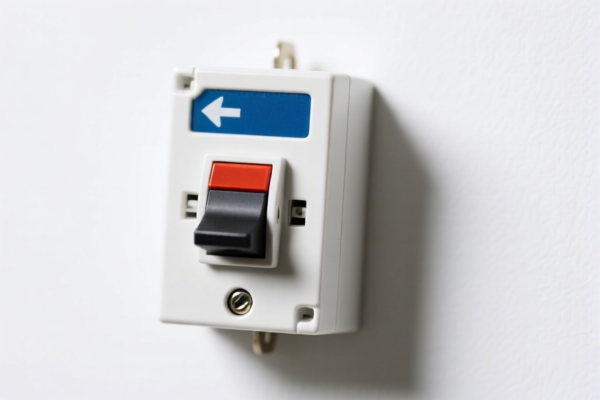
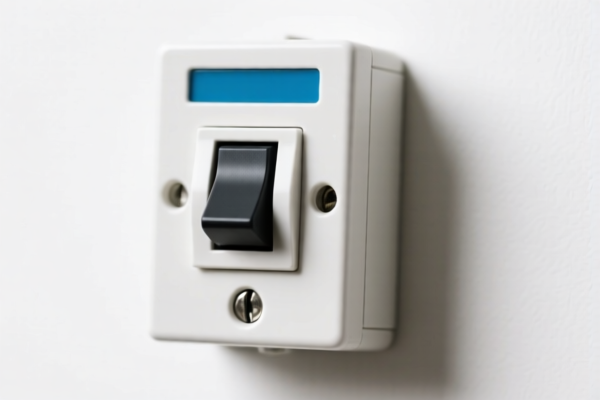
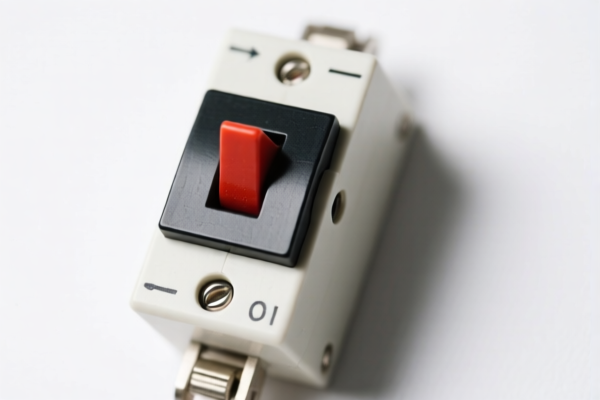
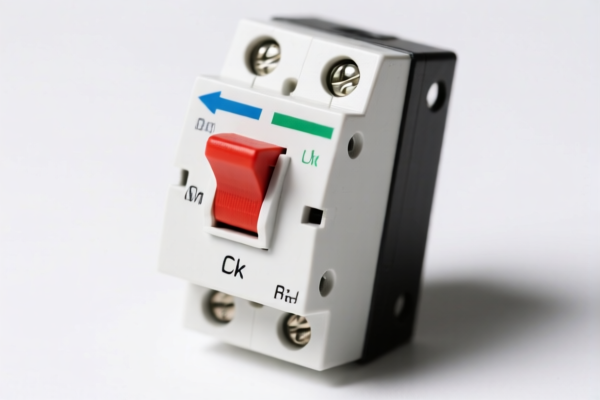
AI Analysis
⚡ Relay Tester (Electrical Testing Equipment)
🌐 HS Code Reference & Customs Clearance Guide | 2026 Latest Tariff Analysis | Professional Strategy for US Import
📌 I. Product Definition & Classification: What Exactly is a "Relay Tester"?
A Relay Tester is a specialized electronic instrument used to verify the performance, timing, voltage, current, and resistance characteristics of electrical relays. In international trade, these devices fall under the broad category of Electricity Measurement or Check Instruments. However, the specific HS Code classification depends heavily on whether the device has recording capabilities, its specific function (control vs. pure measurement), and its physical integration.
⚠️ Critical Distinction Points:
- With Recording/Display: If the device measures electrical parameters and includes a screen, printer, or data output, it falls under Chapter 90 (Optical, Photographic, Cinematographic, Measuring, Checking, Precision... Instruments).
- As a Component/System: If the "tester" is actually part of an automated control system or is classified as the relay itself, it might fall under 9032.
- No Recording: Simple meters without data logging functions fall into specific sub-headings under 9030.
📦 II. HS Code Classification Matrix (Based on Provided Data)
The following table maps the potential HS Codes for Relay Testers based on the provided dataset, detailing the rationale and tax implications.
| HS Code | Product Description | Application Scenario | Key Classification Criteria |
|---|---|---|---|
9031.80.80.60 |
Testing Equipment for Electrical Characteristics | General electrical testing of relays | Categorized as equipment for testing electrical characteristics of internal combustion engines or related electrical components. |
9030.39.01.00 |
Relay Tester with Recording/Display | Professional lab-grade testers | Measures/Checks electrical performance (Voltage, Current, Resistance) AND includes recording or data display devices. |
9030.33.38.00 |
Basic Relay Tester (No Recording) | Handheld/simple benchtop testers | Measures/Checks current, voltage, etc., BUT lacks recording functionality. |
9031.80.80.85 |
General Electrical Testing Instrument | Multi-purpose testing devices | Classified as "Other measuring or checking instruments"; no material or form conflicts with this category. |
9032.89.60.85 |
Auto-Control System Component / Relay Unit | Integrated control relays | Classified as an automatic control instrument/device; material is metal/plastic; functions as a key electronic control element. |
🔍 Key Insight:
- Codes 9030 generally apply to measurement instruments.
- Code 9031 applies to other measuring/checking instruments (often broader or specific testing setups).
- Code 9032 applies if the item is viewed more as a control device or part of an automated system rather than just a test tool.
💰 III. 2026 Tariff Rate Breakdown (US Import from China)
✅ Applicable Country: United States (US)
✅ Origin: China (CN)
✅ Effective Date: Current rates apply (including Section 301 and IEEPA tariffs)
🎯 1. Measurement & Testing Instruments (HS Codes: 9030.39, 9030.33, 9031.80)
These codes cover the actual testers that measure voltage, current, or electrical characteristics.
| Item | Content |
|---|---|
| Base Tariff | 0.0% (ad valorem) |
| Section 301 Tariff | +25.0% (USITC Footnote 9903.88.01 / 301 List 3/4) |
| IEEPA Tariff (Section 122/301 Var) | +10.0% (Specific clause for certain Chinese products) |
| Total Tax Rate | 35.0% |
| Tax Calculation | CIF Value × 35% |
| De Minimis Exemption? | ❌ NO (Denied) |
| Legal Basis Path | Base: 0% → Section 301: 25% → IEEPA: 10% → Total: 35% |
📌 Explanation:
- The 25% is the standard Section 301 tariff on most Chinese electronics and testing equipment.
- The 10% is an additional punitive tariff (often referred to as "122 Clause" or specific IEEPA provisions in recent updates) applicable to these goods.
- Total Burden: 35%. This is a significant cost factor that must be priced into the product.
🎯 2. Automatic Control Components / Integrated Relays (HS Code: 9032.89.60.85)
This code applies if the item is classified not just as a "tester" but as an automatic control device or a relay unit with control functions.
| Item | Content |
|---|---|
| Base Tariff | 1.7% |
| Section 301 Tariff | +25.0% |
| IEEPA Tariff | +10.0% |
| Total Tax Rate | 36.7% |
| Tax Calculation | CIF Value × 36.7% |
| De Minimis Exemption? | ❌ NO (Denied) |
| Legal Basis Path | Base: 1.7% → Section 301: 25% → IEEPA: 10% → Total: 36.7% |
📌 Explanation:
- The base tariff is slightly higher (1.7%) because it is classified under Automatic Control Instruments (9032) rather than pure measurement (9030/9031).
- The additional tariffs remain the same (+35% total surcharge).
- Total Burden: 36.7%. This is the highest possible rate among the options provided.
🛠️ IV. Customs Clearance Practical Advice (Avoid Pitfalls)
✅ 1. Documentation Checklist (Non-Negotiable)
| Document | Mandatory? | Purpose |
|---|---|---|
| Product Specification Sheet | ✔️ | Must detail: Measured parameters (V, I, R), Accuracy, Protocol (Modbus, CAN, etc.). |
| User Manual / Circuit Diagram | ✔️ | Crucial to distinguish between "Measurement Device" (9030) and "Control Device" (9032). |
| Product Photos (Front/Rear/Label) | ✔️ | Show serial number, model, and input/output ports. |
| Commercial Invoice | ✔️ | Description must match HS Code rationale (e.g., "Relay Testing Instrument" vs. "Automatic Control Relay"). |
| Packing List | ✔️ | Clear weight/volume dimensions. |
✅ 2. Classification Strategy & Tips
🔥 Golden Rule: "Function Dictates Code, Recording Dictates Sub-Code!"
| Scenario | Recommended HS Code | Why? |
|---|---|---|
| High-End Tester with screen, printer, or USB data export | 9030.39.01.00 |
Explicitly "equipped with recording or data display devices." |
| Basic Tester with only analog/digital display, no data logging | 9030.33.38.00 |
"Lacks recording functionality." |
| Generic Electrical Tester for engine/electrical system testing | 9031.80.80.60 |
Broad category for electrical characteristic testing. |
| Integrated Relay Unit functioning as a control node | 9032.89.60.85 |
Classified as an "automatic control instrument." |
✅ 3. Common Mistakes to Avoid
❌ Mistake 1: Labeling a "Tester" as a "Relay Component" to avoid higher tariffs.
👉 Consequence: If customs determines it is a testing instrument (has measurement function, not just control), they will reclassify it. Misdeclaration can lead to penalties and delays.
❌ Mistake 2: Ignoring the "Recording" feature.
👉 Consequence: A tester with a USB port or SD card slot is likely 9030.39 (with recording), not 9030.33 (without). While the tariff is the same in this dataset, the classification must be accurate for compliance.
❌ Mistake 3: Assuming "35%" is the only cost.
👉 Consequence: For code 9032, the base rate is 1.7%, making the total 36.7%. Always calculate the Total Landed Cost including the 1.7% base + 35% surcharges.
🌍 V. Global Market Comparison (Quick Reference)
| Market | Likely HS Code | Est. Duty Burden | Notes |
|---|---|---|---|
| 🇺🇸 USA | 9030.39.01.00 |
35.0% | Heavy Section 301 + IEEPA tariffs. |
| 🇪🇺 EU | 9030.39 |
~4-5% | No Section 301. Lower base duty. |
| 🇨🇳 China | 9030.39 |
~0-5% | Varies by specific tariff line; no punitive tariffs. |
| 🇨🇦 Canada | 9030.39 |
~0% (USMCA eligible if qualified) | Check Rules of Origin for duty-free status. |
📌 Conclusion for US Importers:
The 35% additional tariff is unavoidable for Chinese-manufactured relay testers under the 9030/9031 headings.
Strategy: Ensure the Commercial Invoice explicitly states the technical function ("Relay Testing Instrument") to support the9030.39.01.00classification, which is the most standard for professional testers.
📌 VI. Final Clearance Checklist
- [ ] Confirm Technical Specs: Does the device record data? (Yes →
9030.39; No →9030.33) - [ ] Check Base Rate: Is it 0% (9030/9031) or 1.7% (9032)?
- [ ] Calculate Total Landed Cost: CIF + (CIF × 35% or 36.7%).
- [ ] Prepare Technical Docs: Circuit diagram and manual ready for CBP examination.
- [ ] Mark Origin: "Made in China" must be clearly marked on product/packaging.
🎯 Pro Tip:
If you are importing high-volume relay testers, consider applying for an HTS Exclusion under the Section 301 tariff program if available, or explore third-country assembly (e.g., Vietnam, Malaysia) to mitigate the 35% surcharge.
💼 Professional Advice:
Always request an Advance Ruling from US Customs and Border Protection (CBP) if the product’s function is ambiguous (e.g., is it a test tool or a control unit?). This provides legal certainty and prevents surprise duties at the port.
✨ Precise Classification = Predictable Costs.
🚀 Clear the Customs Hurdle with Confidence!
Customer Reviews
About HS Code Classification
The Harmonized System (HS) is an internationally standardized nomenclature developed by the World Customs Organization (WCO) to classify traded products. Over 200 countries use the HS system as the basis for customs tariffs, trade statistics, and import/export regulations.
Each HS code follows a hierarchical structure:
- Chapter (2 digits) — Broad category of goods (e.g., Chapter 84: Machinery and Mechanical Appliances)
- Heading (4 digits) — More specific grouping within the chapter
- Subheading (6 digits) — Internationally standardized breakdown, used by all WCO member countries
- National subdivisions (8-10 digits) — Country-specific extensions for further classification, such as US HTSUS 10-digit codes
Correct HS code classification is essential for smooth customs clearance, accurate duty payment, and compliance with trade regulations. Misclassification can lead to customs delays, overpayment of duties, or penalties.
When importing from CN to US, the applicable tariff rates may include:
- Most-Favored-Nation (MFN) rate — The standard duty rate applied to WTO members
- General rate — Applied to countries without trade agreements
- Trade remedy duties — Additional tariffs such as Section 301 (anti-dumping), Section 232 (national security), or countervailing duties
The information provided on this page is for reference purposes only. For official classification, please consult with your local customs authority or a licensed customs broker.