Release Button Rubber
CN → US| HS Code | Tariff Rate | Origin | Destination | Doc |
|---|---|---|---|---|
| 8487900080 | 88.9% | CN | US | Official Doc |
| 8487900040 | 38.9% | CN | US | Official Doc |
| 3926906520 | 14.2% | CN | US | Official Doc |
| 4016991000 | 20.8% | CN | US | Official Doc |
| 3926904510 | 38.5% | CN | US | Official Doc |
Product Images
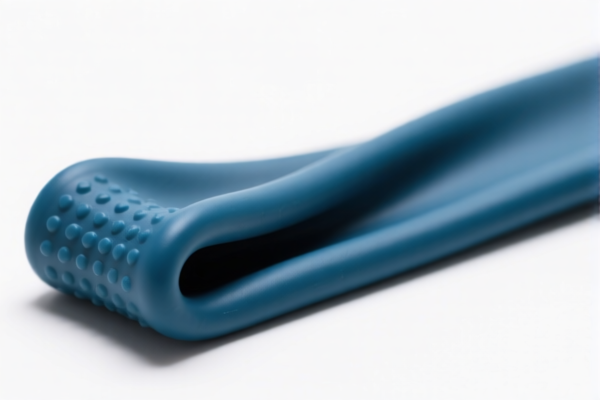
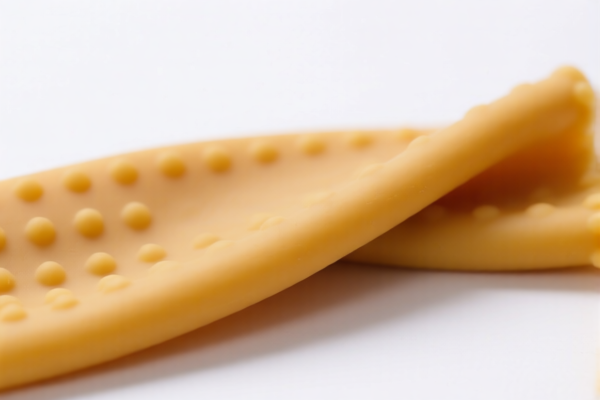
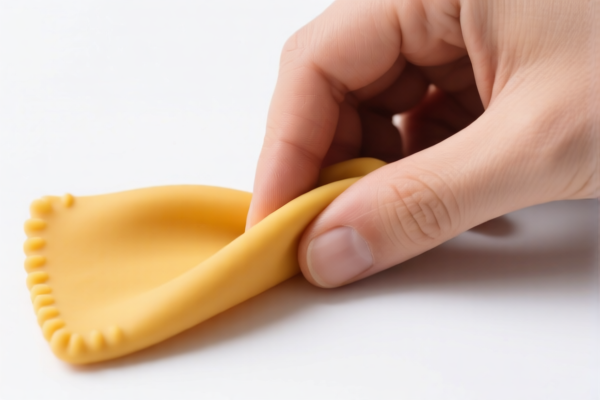
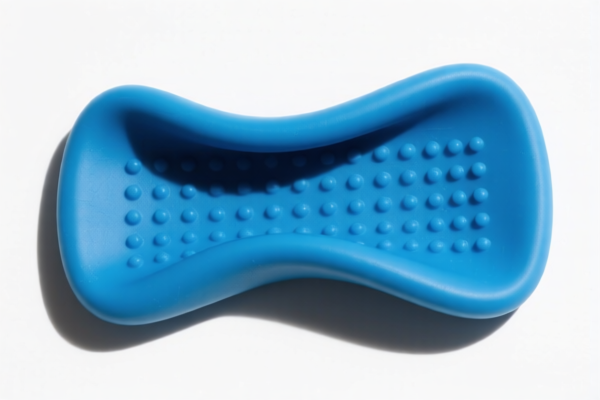
AI Analysis
🛠️ Release Button Rubber (Rubber Push Buttons / Actuators)
🌐 HS Code Reference & Customs Clearance Guide | 2026 Latest Tariff Analysis | Professional Clearance Strategy
📌 I. Product Definition & Classification: What Exactly is a "Release Button Rubber"?
In international trade, "Release Button Rubber" is not a single unified product. Its classification depends entirely on material, function, and component nature. It generally falls into one of two main categories:
- Rubber Actuators/Buttons: Used as manual push buttons for machinery, industrial equipment, or consumer goods.
- Seals/Gaskets: If the "button" is actually a flexible sealing element or part of a sealing assembly.
⚠️ Key Distinction Point:
- If it is a machinery part (e.g., a button on an industrial machine) and contains no electrical components → It falls under Chapter 84 (Machinery Parts).
- If it is a general rubber article (e.g., a simple rubber knob, household item, or non-electrical handle) → It falls under Chapter 40 (Rubber Articles).
- If it is a plastic seal/O-ring mislabeled as rubber → It falls under Chapter 39 (Plastics).
📦 II. HS Code Classification Details (2026 Latest Tariff Reference)
Based on the provided , here are the possible HS Codes for "Release Button Rubber":
| HS Code | Product Description | Applicable Scenario | Material/Feature |
|---|---|---|---|
8487.90.00.40 |
Machinery parts: Other Oil seals | Industrial release buttons that function as oil seals or are integrated into hydraulic/pneumatic systems | Rubber |
8487.90.00.80 |
Machinery parts: Other Other | Generic machinery parts (buttons, knobs, levers) not specified elsewhere, non-electrical | Rubber/Plastic/Metal |
4016.99.10.00 |
Articles of vulcanized rubber: Handles and knobs | Simple rubber buttons/knobs used as handles or manual actuators, not classified as machinery parts | Rubber |
4016.99.05.00 |
Articles of vulcanized rubber: Household articles | Rubber release buttons used in household appliances (e.g., washing machine, vacuum) | Rubber |
3926.90.45.10 |
Articles of plastics: Gaskets, washers and other seals O-Rings | Critical Warning: If the product is actually a plastic O-ring or seal misidentified as rubber | Plastic |
3926.90.65.20 |
Articles of plastics: Clothespins: Spring type | Note: This code is highly specific to spring-type clothespins. Unlikely for industrial buttons unless specified. | Plastic |
🔍 Focus Recommendation:
For most industrial "release buttons," the competition is primarily between8487.90.00.80(Machinery Parts) and4016.99.10.00(Rubber Knobs/Handles).
💰 III. 2026 Latest Tariff Rate Detailed Analysis (Including Surtaxes)
✅ Applicable Country: United States (US)
✅ Origin: China (CN)
✅ Effective Time: 2025/2026 (Current Trade Policies)
🎯 1. 8487.90.00.40 —— Other Oil Seals (Rubber Machinery Parts)
| Item | Content |
|---|---|
| Base Tariff | 3.9% (ad valorem) |
| Surtax (Section 301) | +25.0% |
| Total Tariff | 28.9% |
| Tax Calculation | CIF Value × 28.9% |
| Special Note | If the seal contains steel/aluminum components, an additional 50% surtax may apply (Total: 78.9%). Pure rubber seals usually avoid this. |
📌 Explanation:
- This code is specific if the "button" functions as an oil seal or is classified under "other oil seals."
- 28.9% is a significant cost. Ensure the product is indeed an "oil seal" or can be argued as such to avoid being lumped into higher categories.
🎯 2. 8487.90.00.80 —— Other Machinery Parts (Generic)
| Item | Content |
|---|---|
| Base Tariff | 3.9% (ad valorem) |
| Surtax (Section 301) | +25.0% |
| Steel/Aluminum Surtax | +50.0% (If applicable) |
| Total Tariff (Standard) | 28.9% |
| Total Tariff (Metal-Infused) | 78.9% |
| Tax Calculation | CIF Value × Total Rate |
📌 Explanation:
- This is the "catch-all" for machinery parts not specified elsewhere.
- ⚠️ Critical Risk: If the release button has any steel or aluminum components (e.g., metal inserts, screws, or reinforcements), the 50% surtax triggers, pushing the total tax to 78.9%.
- Pure rubber buttons should aim to prove they contain no steel/aluminum to stay at 28.9%.
🎯 3. 4016.99.10.00 —— Rubber Handles and Knobs
| Item | Content |
|---|---|
| Base Tariff | 0.0% |
| Surtax | 0.0% |
| Total Tariff | 0.0% |
| Tax Calculation | Free |
| Eligibility | Must be classified as a "handle" or "knob," not a machinery part. |
📌 Explanation:
- This is the lowest cost option.
- To qualify, you must argue that the item is a general-purpose rubber knob/handle, not a specialized "machine part."
- If the button is part of a specific industrial machine with a specific function, Customs may reject this classification and reclassify it to Chapter 84.
🎯 4. 4016.99.05.00 —— Rubber Household Articles
| Item | Content |
|---|---|
| Base Tariff | 0.0% |
| Surtax | 0.0% |
| Total Tariff | 0.0% |
| Eligibility | Must be used in household appliances (e.g., home washing machines, kitchen devices). |
📌 Explanation:
- Only applicable if the end-use is clearly household.
- Industrial release buttons cannot use this code.
🎯 5. 3926.90.45.10 —— Plastic O-Rings/Seals
| Item | Content |
|---|---|
| Base Tariff | 0.0% |
| Surtax | 0.0% |
| Total Tariff | 0.0% |
| Eligibility | Must be plastic, not rubber. |
📌 Explanation:
- If the product is actually plastic (e.g., PTFE, Nylon) but labeled as "rubber," this 0% rate applies.
- ⚠️ Fraud Risk: Misdeclaring rubber as plastic to avoid tariffs is customs fraud. Only use if material is genuinely plastic.
🛠️ IV. Customs Clearance Practical Advice (Pitfall Avoidance Guide)
✅ 1. Preparation Checklist (Mandatory)
| Document | Required | Description |
|---|---|---|
| ✅ Product Specification | ✔️ | Material (Vulcanized Rubber vs. Plastic), Hardness, Dimensions |
| ✅ Material Test Report | ✔️ | Confirm it is Rubber (not plastic) to avoid 3926 misclassification |
| ✅ Usage Description | ✔️ | "Industrial machine button" vs. "Household appliance knob" |
| ✅ Component Analysis | ✔️ | Crucial: Confirm NO steel/aluminum inserts to avoid 78.9% tax |
| ✅ Commercial Invoice | ✔️ | Clearly state "Rubber Release Button, No Metal Components" |
| ✅ Packing List | ✔️ | Show individual units, not bulk raw material |
✅ 2. Declaration Strategy (Key Mnemonics)
🔥 "Pure Rubber Zero Tax, Metal Infused High Cost, Machinery Parts 29, Household Free!"
| Scenario | Correct HS Code | Tax Rate | Risk |
|---|---|---|---|
| Industrial Machine Button (Pure Rubber) | 8487.90.00.80 |
28.9% | Low if no metal |
| Industrial Machine Button (With Metal Insert) | 8487.90.00.80 |
78.9% | High! Avoid metal inserts |
| Simple Rubber Knob/Handle (General Use) | 4016.99.10.00 |
0.0% | Risk of reclassification to Chapter 84 |
| Household Appliance Button | 4016.99.05.00 |
0.0% | Must prove household use |
| Plastic Seal/O-Ring (Mislabelled) | 3926.90.45.10 |
0.0% | Fraud risk if material is rubber |
✅ 3. Special Handling Tips
| Situation | Handling Advice |
|---|---|
| Button with Metal Core | Do not declare as 0%. Prepare for 78.9% tax or redesign to remove metal. |
| Custom Shape | Provide 3D drawings to prove it is a "knob" or "handle" to support 4016.99.10.00. |
| Mixed Materials | If rubber covers steel, Customs may view it as a steel article. Aim for 100% rubber. |
| End-Use Evidence | For 4016.99.05.00, provide invoices showing sale to household appliance manufacturers. |
🌍 V. Global Market Comparison (2026)
| Country/Region | Recommended HS Code | Tariff (CN Origin) | Certification | Note |
|---|---|---|---|---|
| 🇺🇸 USA | 4016.99.10.00 |
0% | None | If possible, classify as knob. Else 28.9% (8487). |
| 🇺🇸 USA | 8487.90.00.80 |
28.9% - 78.9% | None | High risk if metal components exist. |
| 🇨🇳 China | 4016.99.10.00 |
0% | None | Standard rubber goods. |
| 🇪🇺 EU | 4016.99.90 |
~2% - 4.5% | REACH/RoHS | Generally lower tariffs than US. |
| 🇯🇵 Japan | 4016.99.90 |
~2.5% | JIS | Moderate tariffs. |
📌 Conclusion:
- USA is the most challenging market due to Section 301 surtaxes.
- Goal: Classify as4016.99.10.00(Rubber Knob) for 0% tax.
- Fallback: If classified as machinery part, expect 28.9% tax, and avoid metal to prevent 78.9%.
📌 VI. Common Errors & Pitfalls (Lessons Learned)
❌ Error 1: Declaring an industrial machine button as a "Household Article" (4016.99.05.00)
👉 Consequence: Customs rejects the declaration, reclassifies to 8487.90.00.80 (28.9%), plus penalties.
❌ Error 2: Ignoring metal inserts in rubber buttons
👉 Consequence: Tax jumps from 28.9% to 78.9% due to the 50% steel/aluminum surtax.
❌ Error 3: Confusing Rubber with Plastic (3926)
👉 Consequence: Material mismatch leads to fraud investigation. Use accurate material tests.
✅ Correct Approach:
"Vulcanized Rubber Release Button, No Metal Components, For Industrial Use.
HS Code:8487.90.00.80(If machinery part) OR4016.99.10.00(If general knob).
Tariff: 28.9% or 0.0% respectively."
🎯 VII. Conclusion: Professional Declaration, Cost Optimization!
🎯 Remember the Rules:
🔹 "Pure Rubber Knob = 0% (Chapter 40)"
🔹 "Machinery Part + No Metal = 28.9% (Chapter 84)"
🔹 "Machinery Part + Metal = 78.9% (Chapter 84 + Surtax)"
🔹 "Plastic Mislabel = Fraud Risk"
📌 Pro Tip:
If your product is a simple rubber button, argue for classification as a "Handle/Knob" (4016.99.10.00) to save 28.9% in tariffs. Provide clear photos and specifications showing it is not a complex mechanical part.
📣 Immediate Action:
📞 Consult with a customs broker to verify the metal content of your buttons.
🚀 Optimize your supply chain to minimize metal components if exporting to the US.
💼 Accurate classification saves money!
Customer Reviews
About HS Code Classification
The Harmonized System (HS) is an internationally standardized nomenclature developed by the World Customs Organization (WCO) to classify traded products. Over 200 countries use the HS system as the basis for customs tariffs, trade statistics, and import/export regulations.
Each HS code follows a hierarchical structure:
- Chapter (2 digits) — Broad category of goods (e.g., Chapter 84: Machinery and Mechanical Appliances)
- Heading (4 digits) — More specific grouping within the chapter
- Subheading (6 digits) — Internationally standardized breakdown, used by all WCO member countries
- National subdivisions (8-10 digits) — Country-specific extensions for further classification, such as US HTSUS 10-digit codes
Correct HS code classification is essential for smooth customs clearance, accurate duty payment, and compliance with trade regulations. Misclassification can lead to customs delays, overpayment of duties, or penalties.
When importing from CN to US, the applicable tariff rates may include:
- Most-Favored-Nation (MFN) rate — The standard duty rate applied to WTO members
- General rate — Applied to countries without trade agreements
- Trade remedy duties — Additional tariffs such as Section 301 (anti-dumping), Section 232 (national security), or countervailing duties
The information provided on this page is for reference purposes only. For official classification, please consult with your local customs authority or a licensed customs broker.