Remote Control Airplane Model
CN → US| HS Code | Tariff Rate | Origin | Destination | Doc |
|---|---|---|---|---|
| 8526921000 | 10.0% | CN | US | Official Doc |
| 8526925000 | 35.0% | CN | US | Official Doc |
| 9503000073 | 10.0% | CN | US | Official Doc |
| 9503000090 | 10.0% | CN | US | Official Doc |
| 8802200160 | 35.0% | CN | US | Official Doc |
Product Images
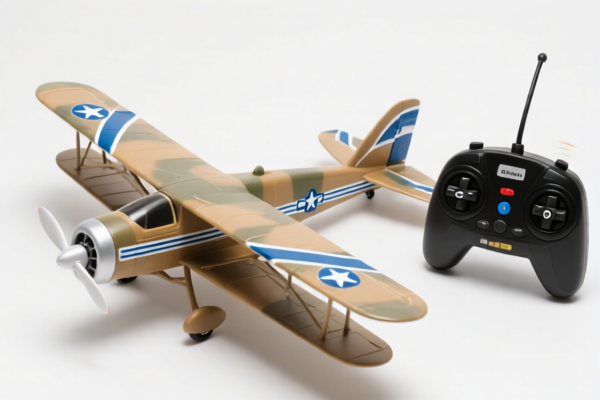
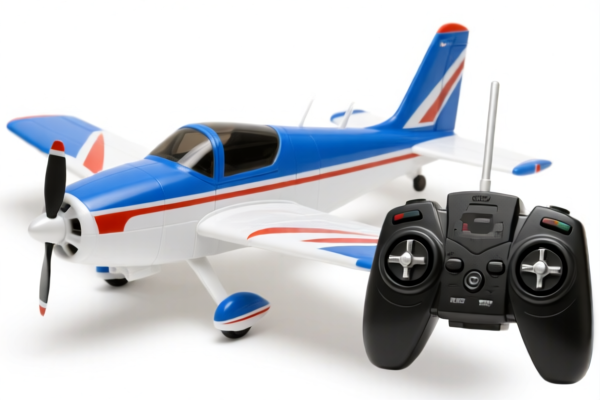
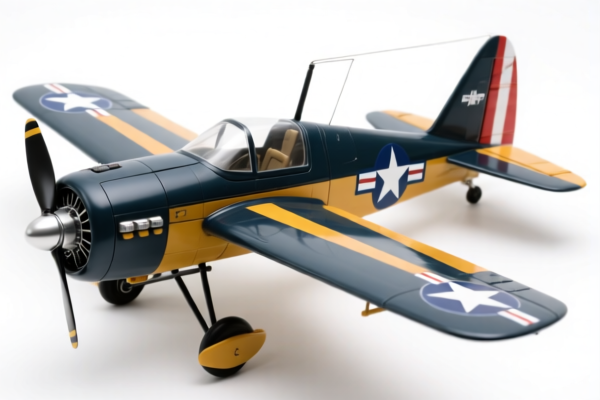
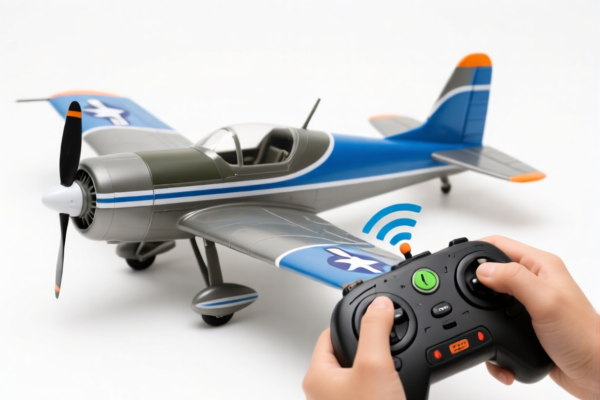
AI Analysis
✈️ Remote Control Airplane Model (RC Airplane)
🌐 HS Code Reference & Customs Clearance Guide | 2026 Latest Tariff Analysis | Professional Clearance Strategy
📌 I. Product Definition: What is an "RC Airplane"?
A Remote Control (RC) Airplane Model is a toy or hobbyist device that mimics the appearance and flight characteristics of an aircraft, controlled via a radio signal from a handheld transmitter. In international trade, classification depends heavily on whether it is treated as a "Toy/Model" or an "Aviation Device/Control System."
⚠️ Key Classification Dilemma:
- Is it a Toy/Model (under Chapter 95)? → Generally lower duty (10%).
- Is it a Radio Control Device (under Chapter 85)? → Potentially high duty (35%) due to Section 301/122 tariffs.
- Is it an Aviation Article (under Chapter 88)? → High duty (35%) as a generic aircraft category.
📦 II. HS Code Classification Details (2026 Latest Tariff Alignment)
Based on the provided data, there are five potential HS Code classifications, falling into three logical groups:
Group A: Toy & Model Categories (Lower Duty)
| HS Code | Product Description | Tax Rate | Summary |
|---|---|---|---|
| 9503.00.00.73 | Toys: Scale Models / Other | 10% | Fits "reduced-scale models." Material assumed plastic/metal. Lowest Risk. |
| 9503.00.00.90 | Toys: Other (incl. Scale Models) | 10% | Fits "Scale Model" definition. No material conflict. Lowest Risk. |
Group B: Radio Control Devices (Higher Duty)
| HS Code | Product Description | Tax Rate | Summary |
|---|---|---|---|
| 8526.92.10.00 | Radio Remote Control Apparatus | 10% | Focuses on the "Remote Control" function. No Section 301 surcharge. |
| 8526.92.50.00 | Other Radio Remote Control Apparatus | 35% | Focuses on "Other" radio devices. Subject to 25% Section 301 + 10% IEEPA. |
Group C: Aviation Category (Higher Duty)
| HS Code | Product Description | Tax Rate | Summary |
|---|---|---|---|
| 8802.20.01.60 | Other Aircraft | 35% | Treated as a generic "Aircraft." Subject to 25% Section 301 + 10% IEEPA. |
🔍 Critical Insight:
- Group A (9503) and Group B-1 (8526.92.10) offer the lowest duty (10%).
- Group B-2 (8526.92.50) and Group C (8802) incur 35% duty due to additional tariffs.
- The choice between 9503 (Toy) and 8526 (Control Device) depends on how the product is marketed (as a toy vs. technical equipment) and the specific customs officer’s interpretation.
💰 III. 2026 Latest Tariff Rate Breakdown
✅ Applicable Country: United States (US)
✅ Origin: China (CN)
✅ Effective Date: Post-2025 (Current Policy)
🎯 1. The "Safe Harbor" Codes (10% Total Duty)
These codes attract the lowest duty because they either fall under general toy rates or specific remote control exclusions without the full Section 301 burden.
A. 9503.00.00.73 / 9503.00.00.90 (Toy Models)
| Item | Content |
|---|---|
| Base Duty | 0% (ad valorem) |
| USITC Surcharge | 0% |
| IEEPA Surcharge | +10% (Section 122 / Specific China Tariff) |
| Total Rate | 10% |
| De Minimis Exemption | ❌ No (Not eligible for $800 de minimis) |
| Logic | Classified as a "Toy/Model." Material (plastic/metal) is standard for toys. |
B. 8526.92.10.00 (Radio Remote Control Device)
| Item | Content |
|---|---|
| Base Duty | 0% |
| USITC Surcharge | 0% |
| IEEPA Surcharge | +10% |
| Total Rate | 10% |
| De Minimis Exemption | ❌ No |
| Logic | Classified primarily as the "Remote Control Apparatus" itself, not the aircraft. Some interpretations exclude specific consumer RC toys from the 301 surcharge. |
📌 Note:
- The 10% rate is significantly better than the 35% rate.
- Risk: Customs may reclassify a flying toy as an "Aircraft" (8802) or a "Control Device" (8526.92.50) if the product documentation emphasizes technical specifications over toy-like features.
🎯 2. The "High Risk" Codes (35% Total Duty)
These codes trigger both the 25% Section 301 tariff and the 10% IEEPA tariff.
C. 8526.92.50.00 (Other Radio Remote Control Devices)
| Item | Content |
|---|---|
| Base Duty | 0% |
| USITC Surcharge | +25% (Section 301) |
| IEEPA Surcharge | +10% |
| Total Rate | 35% |
| De Minimis Exemption | ❌ No |
| Logic | Classified as "Other" radio devices, attracting the full trade war surcharge. |
D. 8802.20.01.60 (Other Aircraft)
| Item | Content |
|---|---|
| Base Duty | 0% |
| USITC Surcharge | +25% (Section 301) |
| IEEPA Surcharge | +10% |
| Total Rate | 35% |
| De Minimis Exemption | ❌ No |
| Logic | Classified as an "Aircraft." Even if it’s a small model, if it’s deemed an aviation article, it falls here. |
📌 Warning:
- 35% is a heavy cost burden.
- Misclassifying a toy model (9503) as an aircraft (8802) or general control device (8526.92.50) can lead to massive duty overpayment or audits.
🛠️ IV. Customs Clearance Practical Advice (Step-by-Step)
✅ 1. Documentation Checklist (Essential for 10% Duty)
| Document | Requirement | Why It Matters |
|---|---|---|
| ✅ Product Photos | Show the toy/model clearly. Include branding (e.g., "Toy Brand"). | Proves it’s a consumer product, not industrial aviation. |
| ✅ User Manual | Must label it as a "Toy" or "Hobby Model." Avoid terms like "Military Grade Aircraft." | Supports classification under 9503 (Toys). |
| ✅ Battery Info | Li-ion battery details (UN38.3 certification). | RC planes always contain batteries; required for safety clearance. |
| ✅ FCC ID | If it has a radio transmitter (which it must). | Mandatory for electronic imports to the US. |
| ✅ Commercial Invoice | Describe as "RC Toy Airplane Model" or "Scale Model Aircraft (Toy)." | CRITICAL: Use the word "Toy" or "Model" to anchor 9503. Avoid just "Aircraft." |
✅ 2. Declaration Strategy (How to Claim 10%)
🔥 "Declare as Toy, Not as Tech or Aircraft!"
| Scenario | Recommended HS Code | Declaration Description | Expected Duty |
|---|---|---|---|
| Best Case | 9503.00.00.73 or .90 |
"Plastic RC Toy Airplane, 4-Servo, 2.4GHz, for Hobby Use" | 10% |
| Alternative | 8526.92.10.00 |
"Radio Remote Control System for Hobby Models" | 10% |
| High Risk | 8802.20.01.60 |
"Electric Model Aircraft" | 35% |
| High Risk | 8526.92.50.00 |
"Radio Control Device for Aircraft" | 35% |
📌 Tip:
- If you declare 9503, ensure the product looks like a toy (bright colors, simple design).
- If it looks highly technical, carbon-fiber, and professional, customs may push it to 8526.92.50 or 8802.
✅ 3. Special Considerations
| Issue | Solution |
|---|---|
| Batteries | Ensure Li-ion batteries are UN38.3 certified. Ship separately if required by airline. |
| Propellers | If detached, declare as parts. If attached, declare as part of the model. |
| FCC Compliance | All RC planes with transmitters must have an FCC ID. No ID = Rejection. |
| Age Restrictions | If marked "Not for children under 3," ensure safety warnings are clear. |
🌍 V. Global Market Comparison (2026)
| Region | Recommended HS Code | Duty Rate | Key Requirement |
|---|---|---|---|
| 🇺🇸 USA | 9503.00.00.73 / .90 |
10% | FCC ID, Toy Safety Label |
| 🇪🇺 EU | 9503.00 (Toy) |
0% | CE Mark, EN71 Safety Standard |
| 🇨🇳 China | 9503.00 |
5-15% | CCC Certification (if battery included) |
| 🇬🇧 UK | 9503.00 |
0% | UKCA Mark, CE Equivalent |
| 🇯🇵 Japan | 9503.00 |
0-8% | PSE Mark (for battery/plastic) |
📌 Conclusion:
- The US is the most tariff-sensitive market due to Section 301/122.
- EU/UK are friendly (0% duty) if classified as toys.
- Avoid US Classification as "Aircraft" (8802) unless you are prepared to pay 35%.
📌 VI. Common Mistakes & Pitfalls (Learn from Others' Losses)
❌ Mistake 1: Describing the item as "Mini Drone" or "UAV" (Unmanned Aerial Vehicle).
👉 Consequence: Customs may classify it as a drone/UAV subject to FAA registration and higher scrutiny, potentially pushing it to 8802 or even 8517 (Telephone/Communication devices) with different duties.
❌ Mistake 2: Omitting "Toy" or "Model" in the description.
👉 Consequence: If you just say "RC Plane," customs might default to 8802 (Aircraft) or 8526.92.50 (Other Radio Device), hitting you with 35%.
❌ Mistake 3: Claiming De Minimis ($800 exemption).
👉 Consequence: All HS codes listed above are NOT eligible for de minimis. You must pay duties on the first unit.
❌ Mistake 4: Ignoring FCC ID.
👉 Consequence: Seizure or Return. The US CBP strictly checks for FCC IDs on electronic devices.
✅ Correct Approach:
"RC Toy Airplane Model, Plastic, 2.4GHz Remote Control, with Li-ion Battery, FCC ID: XYZ123, Not for Military Use."
🎯 VII. Conclusion: Smart Classification Saves Money!
🎯 Key Takeaway:
🔹 Target
9503(Toys/Models) or8526.92.10(Control Device).
🔹 Avoid8802(Aircraft) and8526.92.50(Other Control Device).
🔹 10% vs. 35% Duty = Massive Profit Difference!📌 Pro Tip:
- If your RC plane is high-end, professional, or drone-like, consider the 35% duty risk.
- If it’s a consumer toy/hobby model, fight for 9503 with strong "Toy" documentation.
📣 Immediate Action:
📞 Contact your freight forwarder to confirm if they support 9503.00.00.73/.90 for RC planes.
📝 Prepare your FCC ID and Toy Safety Warnings before shipping.
🚀 Clear customs smoothly, avoid 35% traps, and maximize your profit!
✨ Professional Clearance Starts with Precise Classification!
💼 Don’t Let Classification Cost You 25% of Your Margin!
Customer Reviews
About HS Code Classification
The Harmonized System (HS) is an internationally standardized nomenclature developed by the World Customs Organization (WCO) to classify traded products. Over 200 countries use the HS system as the basis for customs tariffs, trade statistics, and import/export regulations.
Each HS code follows a hierarchical structure:
- Chapter (2 digits) — Broad category of goods (e.g., Chapter 84: Machinery and Mechanical Appliances)
- Heading (4 digits) — More specific grouping within the chapter
- Subheading (6 digits) — Internationally standardized breakdown, used by all WCO member countries
- National subdivisions (8-10 digits) — Country-specific extensions for further classification, such as US HTSUS 10-digit codes
Correct HS code classification is essential for smooth customs clearance, accurate duty payment, and compliance with trade regulations. Misclassification can lead to customs delays, overpayment of duties, or penalties.
When importing from CN to US, the applicable tariff rates may include:
- Most-Favored-Nation (MFN) rate — The standard duty rate applied to WTO members
- General rate — Applied to countries without trade agreements
- Trade remedy duties — Additional tariffs such as Section 301 (anti-dumping), Section 232 (national security), or countervailing duties
The information provided on this page is for reference purposes only. For official classification, please consult with your local customs authority or a licensed customs broker.