Remote Control Car Display Model
CN → US| HS Code | Tariff Rate | Origin | Destination | Doc |
|---|---|---|---|---|
| 9503000071 | 10.0% | CN | US | Official Doc |
| 8526925000 | 35.0% | CN | US | Official Doc |
| 8703210150 | 37.5% | CN | US | Official Doc |
| 9503000073 | 10.0% | CN | US | Official Doc |
| 8703105060 | 20.0% | CN | US | Official Doc |
Product Images
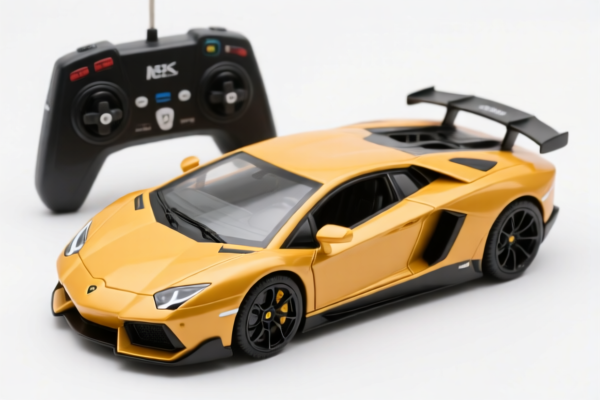
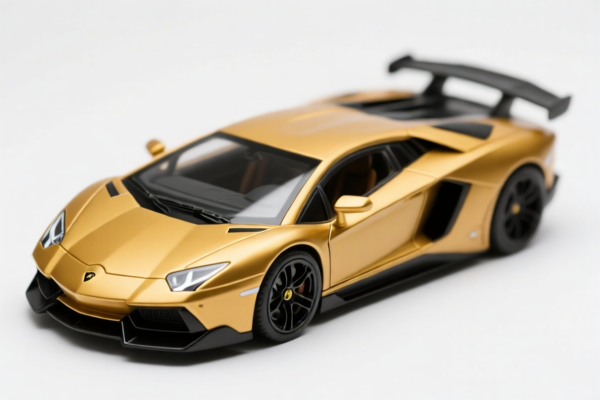
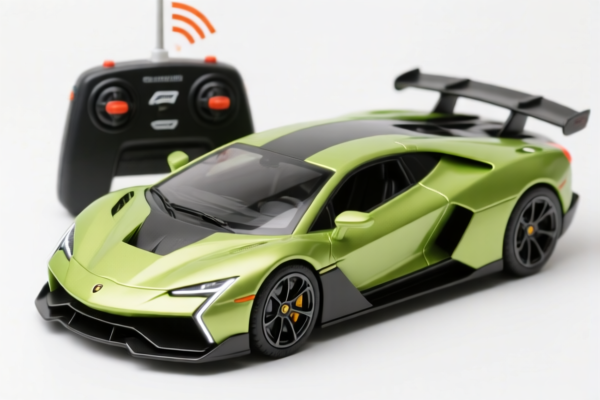
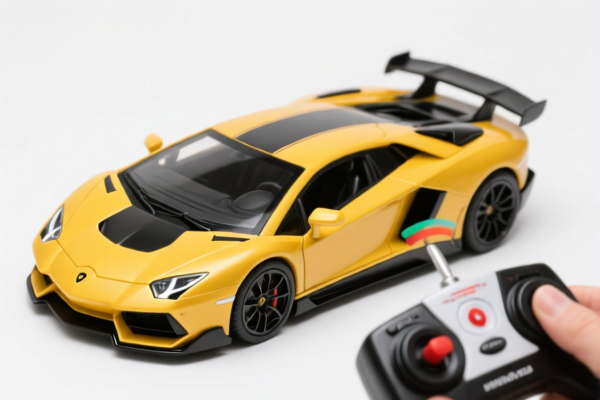
AI Analysis
🚗 Remote Control Car Display Model – HS Code & Tariff Guide (2026 Edition)
🌐 HS Code Classification & Duty Breakdown | 2026 Updated Tariff Rules | Expert Customs Clearance Strategy
📌 1. Product Definition & Classification: What Is a "Remote Control Car Display Model"?
A Remote Control Car Display Model is a scale-model vehicle designed primarily for entertainment and display purposes, often featuring:
- Remote control functionality via radio signals
- Plastic or metal construction
- Realistic car design (e.g., sports car, off-road truck, military vehicle)
- Used in hobbies, collections, or as decorative items
⚠️ Key Distinction:
- If it only functions as a toy and lacks actual drivetrain or mobility, it's classified as a model toy.
- If it has working motors, wheels, and remote control, it falls under radio-controlled vehicles.
📦 2. HS Code Classification Breakdown (2026 Tariff Authority)
| HS Code | Product Description | Classification Logic | Tax Rate |
|---|---|---|---|
9503.00.00.71 |
Model, not powered, for entertainment (plastic/metal) | Toy category, non-functional model, used for display | 10.0% |
8526.92.50.00 |
Radio remote control device with electronic control components | Contains transmitter, receiver, and control circuitry | 35.0% |
8703.21.01.50 |
Motor vehicles, for passengers, with internal combustion engine | If fully functional, self-propelled, and designed for transport | 37.5% |
9503.00.00.73 |
Model of a vehicle, scaled-down, for entertainment or display | Matches "toy model" definition under 9503 | 10.0% |
8703.10.50.60 |
Other vehicles, not elsewhere specified, for transport | Used when no better fit exists; includes model vehicles with remote control | 20.0% |
🔍 Critical Insight:
- The same physical item can be classified differently based on intended use, functionality, and declaration. - A non-functional display model ≠ a working remote control car.
💰 3. 2026 Tariff Breakdown (U.S. Market | China Origin)
✅ Applicable Country: United States (US)
✅ Origin: China (CN)
✅ Effective Date: November 10, 2025 (inclusive)
🎯 1. 9503.00.00.71 – Display Model (Non-Functional Toy)
| Item | Detail |
|---|---|
| Base Duty | 0.0% |
| Additional Tariff (USITC 301) | 0.0% |
| Section 122 Tariff (IEEPA) | 10.0% |
| Total Duty | 10.0% |
| Tax Calculation | CIF Value × 10% |
| De Minimis Threshold | ✅ Yes (under $800) |
| Legal Basis Path | IEEPA:9903.01.25 → 9503.00.00.71 |
📌 Explanation:
- This is a pure toy model, no motors, no remote control function. - Only 122条款 (IEEPA) applies — 10% on Chinese-origin goods. - No USITC 301 tariff (25%) applies because it’s not a functional electronic device.
🎯 2. 8526.92.50.00 – Radio Remote Control Device (With Electronics)
| Item | Detail |
|---|---|
| Base Duty | 0.0% |
| Additional Tariff (USITC 301) | 25.0% |
| Section 122 Tariff (IEEPA) | 10.0% |
| Total Duty | 35.0% |
| Tax Calculation | CIF Value × 35% |
| De Minimis Threshold | ❌ No (exceeds de minimis) |
| Legal Basis Path | IEEPA:9903.01.24 → USITC:8526.92.50.00 → FOOTNOTE:9903.88.01 |
📌 Explanation:
- This applies if the model includes a working remote control unit with transmitter/receiver, circuit board, and signal processing. - 25% USITC 301 + 10% IEEPA = 35% total. - No de minimis relief — even small shipments face full duty.
🎯 3. 8703.21.01.50 – Motor Vehicle for Passengers (Functional RC Car)
| Item | Detail |
|---|---|
| Base Duty | 2.5% |
| Additional Tariff (USITC 301) | 25.0% |
| Section 122 Tariff (IEEPA) | 10.0% |
| Total Duty | 37.5% |
| Tax Calculation | CIF Value × 37.5% |
| De Minimis Threshold | ❌ No |
| Legal Basis Path | IEEPA:9903.01.24 → USITC:8703.21.01.50 → FOOTNOTE:9903.88.01 |
📌 Explanation:
- Applies only if the model is fully functional, with engine, wheels, steering, and remote control. - Even if small, it’s treated as a motor vehicle under U.S. customs rules. - Highest tariff due to combined 301 + IEEPA + base duty.
🎯 4. 9503.00.00.73 – Model Vehicle for Entertainment (Toy Category)
| Item | Detail |
|---|---|
| Base Duty | 0.0% |
| Additional Tariff (USITC 301) | 0.0% |
| Section 122 Tariff (IEEPA) | 10.0% |
| Total Duty | 10.0% |
| Tax Calculation | CIF Value × 10% |
| De Minimis Threshold | ✅ Yes |
| Legal Basis Path | IEEPA:9903.01.25 → 9503.00.00.73 |
📌 Explanation:
- This is the same as 9503.00.00.71, but with explicit reference to "model" and "entertainment". - Used when the item is clearly a non-functional display model. - Only 10% IEEPA applies — lowest possible tariff.
🎯 5. 8703.10.50.60 – Other Vehicles (General Catch-All)
| Item | Detail |
|---|---|
| Base Duty | 2.5% |
| Additional Tariff (USITC 301) | 7.5% |
| Section 122 Tariff (IEEPA) | 10.0% |
| Total Duty | 20.0% |
| Tax Calculation | CIF Value × 20% |
| De Minimis Threshold | ❌ No |
| Legal Basis Path | IEEPA:9903.01.24 → USITC:8703.10.50.60 → FOOTNOTE:9903.88.01 |
📌 Explanation:
- Used when no better HS code fits, such as hybrid models with partial functionality. - Lower than full vehicle, but higher than pure toy. - 20% total — a middle-ground option if classification is uncertain.
🛠️ 4. Customs Clearance Best Practices (Pro Tips to Avoid Penalties)
✅ 1. Required Documentation (Must-Have Checklist)
| Document | Required? | Why It Matters |
|---|---|---|
| ✅ Product Specification Sheet | ✔️ | Shows materials, dimensions, power source, control type |
| ✅ Circuit Diagram / PCB Layout | ✔️ | Proves presence/absence of electronic control |
| ✅ High-Res Product Photos (with labels) | ✔️ | Helps customs verify function and model type |
| ✅ Commercial Invoice | ✔️ | Must state exact product name, e.g., "Remote Control Car Display Model, Plastic, Non-Functional, for Display Only" |
| ✅ Certificate of Origin (CO) | ✔️ | Needed for tariff eligibility; can reduce IEEPA if from non-China origin |
| ✅ Test Report (FCC, CE, RoHS) | ✔️ | If electronics are present |
| ✅ Packing List | ✔️ | Shows if remote control is included |
✅ 2.申报技巧(Key Tips)
🔥 “Function Defines Code, Electronics Drive Duty, Name Matters!”
| Scenario | Correct HS Code | Wrong Code | Risk |
|---|---|---|---|
| Non-functional plastic model (display only) | 9503.00.00.71 or 9503.00.00.73 |
8526.92.50.00 |
Overpay 25% |
| Functional RC car with remote control | 8703.21.01.50 |
9503.00.00.73 |
Underpaid → penalty + seizure |
| Remote control unit only (no car) | 8526.92.50.00 |
9503.00.00.71 |
35% duty vs 10% |
| Uncertain function → use catch-all | 8703.10.50.60 |
8703.21.01.50 |
Avoid overpayment |
✅ 3. Special Cases & Mitigation
| Situation | Recommended Action |
|---|---|
| Model with remote but no motor | Use 9503.00.00.73 — only 10% duty |
| Model with motor but no steering | Still 8703.21.01.50 if self-propelled — 37.5% |
| Sold as a set (car + remote + battery) | Do NOT split — declare as one unit; use 8703.21.01.50 if functional |
| From Vietnam/Mexico (non-China origin) | Apply for IEEPA exemption — 0% duty |
| Pre-shipment uncertainty | Request Advance Ruling (Pre-Clearance) from U.S. CBP |
🌍 5. Global Market Comparison (2026)
| Country | Recommended HS Code | Duty Rate | Certification | Notes |
|---|---|---|---|---|
| 🇺🇸 USA | 9503.00.00.73 / 8703.21.01.50 |
10% – 37.5% | FCC, RoHS | Highest tariffs |
| 🇨🇳 China | 9503.00.00.73 |
5% | CCC | No IEEPA |
| 🇪🇺 EU | 9503.00.00.73 |
0% (if CE) | CE, RoHS | No 301/IEEPA |
| 🇦🇺 Australia | 9503.00.00.73 |
5% | RCM | No extra tariffs |
| 🇯🇵 Japan | 9503.00.00.73 |
0% | PSE | No extra tariffs |
📌 Insight:
- U.S. is the only market with 301 + IEEPA tariffs on Chinese-origin RC models. - Non-China origin goods can avoid IEEPA 10%.
🚨 6. Common Mistakes & How to Avoid Them
❌ Mistake 1: Declaring a working RC car as 9503.00.00.73
👉 Result: Underpaid duty → penalties, fines, seizure
❌ Mistake 2: Splitting a car + remote + battery into 3 shipments
👉 Result: Each item taxed at up to 35% → Total 105%+
❌ Mistake 3: Using vague name like “RC Car Model” without specifying functionality
👉 Result: Customs may assume functional vehicle → 37.5% duty
✅ Best Practice:
"Plastic Remote Control Car Display Model, Non-Functional, for Collectors, Includes Remote Control Unit (Non-Operational), 1:24 Scale, Display Only"
🎯 7. Final Verdict: How to Minimize Risk & Cost
🔹 If it doesn’t move → Use
9503.00.00.73→ 10% duty, de minimis eligible
🔹 If it has remote control with electronics → Use8526.92.50.00→ 35% duty, no de minimis
🔹 If it drives and steers → Use8703.21.01.50→ 37.5% duty, no de minimis
🔹 If uncertain → Use8703.10.50.60→ 20% duty, safer fallback
📌 8. Pro Tips for Exporters & Importers
- ✅ Pre-approve your HS Code via CBP Advance Ruling (cost: $200–$500)
- ✅ Use non-China origin (e.g., Vietnam, Mexico) to avoid IEEPA 10%
- ✅ Label clearly: "Display Model – Not for Operation"
- ✅ Avoid “RC Car” in name if it’s not functional — use "Model Car" or "Display Model"
- ✅ Train your team on function vs. form — one word can change your duty
🚀 Call to Action: Get Ahead of the Curve!
📞 Contact a U.S. Customs Broker + Request HS Code Pre-Ruling
🚨 Avoid costly penalties, delays, and seizures
💼 Save thousands in duty with accurate classification
✨ Remember:
🔹 "Function determines duty, not appearance."
🔹 "A toy with a remote is not a toy — it’s a device."
🔹 "One misclassified item can cost 3x more in duty!"
📣 Your Model. Your Duty. Your Risk.
✅ Classify Right. Pay Less. Ship Faster.
💼 Smart Customs = Profitable Export!
Customer Reviews
About HS Code Classification
The Harmonized System (HS) is an internationally standardized nomenclature developed by the World Customs Organization (WCO) to classify traded products. Over 200 countries use the HS system as the basis for customs tariffs, trade statistics, and import/export regulations.
Each HS code follows a hierarchical structure:
- Chapter (2 digits) — Broad category of goods (e.g., Chapter 84: Machinery and Mechanical Appliances)
- Heading (4 digits) — More specific grouping within the chapter
- Subheading (6 digits) — Internationally standardized breakdown, used by all WCO member countries
- National subdivisions (8-10 digits) — Country-specific extensions for further classification, such as US HTSUS 10-digit codes
Correct HS code classification is essential for smooth customs clearance, accurate duty payment, and compliance with trade regulations. Misclassification can lead to customs delays, overpayment of duties, or penalties.
When importing from CN to US, the applicable tariff rates may include:
- Most-Favored-Nation (MFN) rate — The standard duty rate applied to WTO members
- General rate — Applied to countries without trade agreements
- Trade remedy duties — Additional tariffs such as Section 301 (anti-dumping), Section 232 (national security), or countervailing duties
The information provided on this page is for reference purposes only. For official classification, please consult with your local customs authority or a licensed customs broker.