Remote Control Car Model
CN → US| HS Code | Tariff Rate | Origin | Destination | Doc |
|---|---|---|---|---|
| 9503000071 | 10.0% | CN | US | Official Doc |
| 8526925000 | 35.0% | CN | US | Official Doc |
| 8703210150 | 37.5% | CN | US | Official Doc |
| 9503000073 | 10.0% | CN | US | Official Doc |
| 8703105060 | 20.0% | CN | US | Official Doc |
Product Images
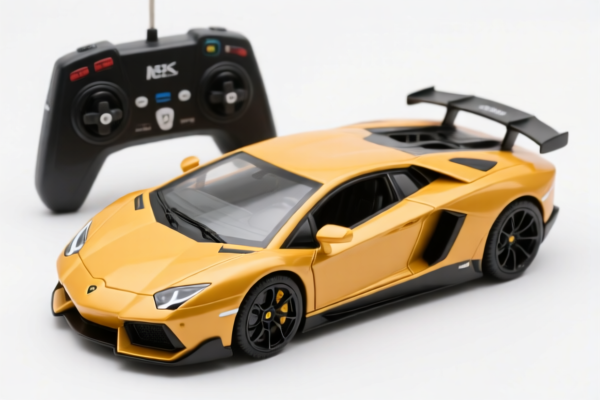
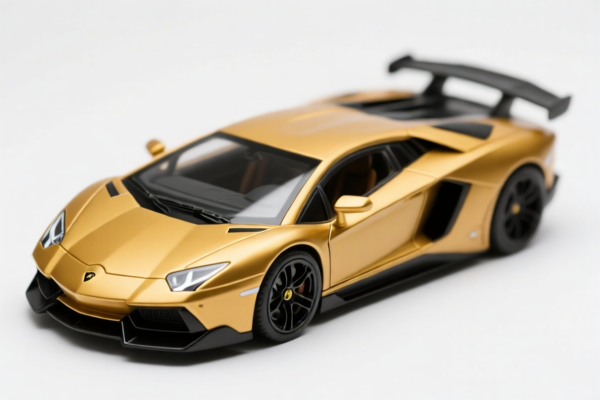
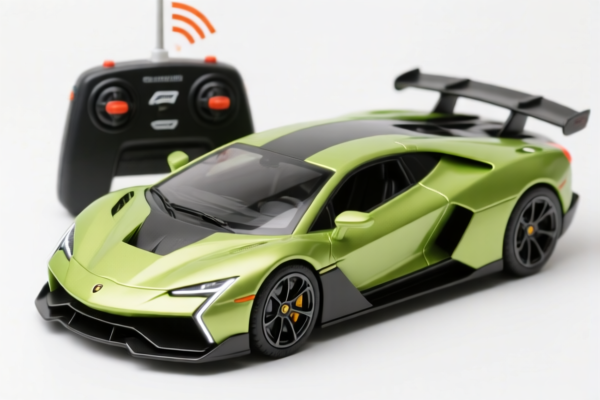
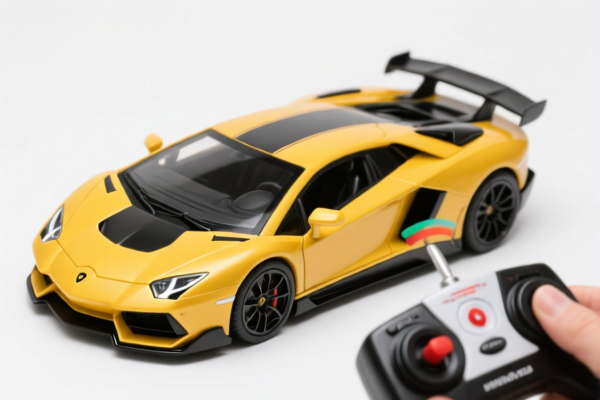
AI Analysis
🚗 Remote Control Car Model (RC Cars & Toys)
🌐 HS Code Reference & Customs Clearance Guide | 2026 Latest Tariff Analysis | Professional Strategy for US Imports
📌 1. Product Definition & Classification: What Exactly Is It?
A "Remote Control Car Model" is a broad category that spans two distinct international trade classifications depending on its primary purpose and physical nature:
A. Toy/Entertainment Models (Plastic/Metal Miniatures):
Intended primarily for play, collection, or decorative entertainment. These are often scaled-down replicas (1:18, 1:24, etc.) made of plastic, alloy, or die-cast metal. They fall under Chapter 95 (Toys).
B. Radio-Controlled Apparatus (Electronics/Functional Vehicles):
Intended for functional control via radio waves. If the product is classified as a "vehicle" carrying passengers/cargo (even small ones) or strictly defined by its electronic control function without the "toy" intent, it falls under Chapter 87 (Vehicles) or Chapter 85 (Electrical Machinery).
⚠️ Critical Distinction Point:
- If it is a static display model or playtoy → Classify under 9503 (Toys).
- If it is a functional RC vehicle with electronic control components → Classify under 8526 (Radio Control Apparatus) or 8703 (Motor Vehicles).
- Risk: Misclassifying a functional RC car as a "toy" can lead to severe penalties if customs determines it is primarily a vehicle.
📦 2. HS Code Classification Matrix (2026 Latest Tariff Data)
| HS Code | Product Description | Applicable Scenario | Primary Category |
|---|---|---|---|
9503.00.00.71 |
Scaled models, primarily for entertainment, plastic/metal materials | Die-cast cars, plastic kits, display models, static replicas | Toy/Model |
9503.00.00.73 |
Other models, scaled or full-size, for entertainment | General toy models, plastic toy cars, non-functional replicas | Toy/Model |
8526.92.50.00 |
Radio control apparatus, including electronic control components | Functional RC cars, drones, RC boats, remote-controlled devices | Electronics/Control |
8703.21.01.50 |
Motor vehicles for transport of persons, spark-ignition engine < 1000cc | Functional RC "cars" that are legally classified as small vehicles/carts | Vehicle |
8703.10.50.60 |
Other vehicles, fallback category for vehicle models | RC cars with unclear engine type but definite vehicle structure | Vehicle |
🔍 Key Insight:
- 9503.71/73: Lowest tax risk for simple toys, but highest scrutiny on "toy vs. vehicle" intent.
- 8526.92.50: Best for functional RC kits where the focus is on the remote control technology.
- 8703.x.x: Highest tax burden. Only use if the product is legally considered a "motor vehicle" (rare for small RC toys, but possible for large RC go-karts or utility carts).
💰 3. 2026 Latest Tariff Rate Breakdown (US Imports from China)
✅ Country of Origin: China (CN)
✅ Destination: United States (US)
✅ Effective Date: Post-November 10, 2025 (Including all subsequent imports)
🎯 1. 9503.00.00.71 & 9503.00.00.73 —— Toy Models (Plastic/Metal)
| Item | Details |
|---|---|
| Base Tariff | 0% |
| USITC Additional Tariff (Section 301) | 0% |
| IEEPA Additional Tariff (Section 122/9903) | +10% |
| Total Tariff Rate | 10.0% |
| De Minimis Eligibility | ❌ No (Section 301 and IEEPA tariffs are not exempted by de minimis) |
| Legal Path | IEEPA:9903.01.24 → USITC:9503.00.00.71/73 → FOOTNOTE:9903.88.01 |
📌 Explanation:
- While the base rate for toys is 0%, the 10% IEEPA tariff applies to most Chinese-origin consumer goods, including toys.
- There is no 25% Section 301 tariff for these specific toy model subheadings (9503.71/73), making them significantly cheaper than other categories.
- Advantage: This is the lowest cost option if your product qualifies as a "toy" or "model."
🎯 2. 8526.92.50.00 —— Radio Control Apparatus
| Item | Details |
|---|---|
| Base Tariff | 0% |
| USITC Additional Tariff (Section 301) | +25% |
| IEEPA Additional Tariff (Section 122/9903) | +10% |
| Total Tariff Rate | 35.0% |
| De Minimis Eligibility | ❌ No |
| Legal Path | IEEPA:9903.01.24 → USITC:8526.92.50.00 → FOOTNOTE:9903.88.01 |
📌 Explanation:
- Classified under Chapter 85 (Electrical Machinery).
- Subject to the full 25% Section 301 tariff plus 10% IEEPA tariff.
- Risk: If customs decides your "RC Car" is not a "toy" but a "radio control apparatus," you face a 25% higher tax than the toy classification.
🎯 3. 8703.21.01.50 & 8703.10.50.60 —— Vehicle Classifications
| Item | Details |
|---|---|
| Base Tariff | 2.5% |
| USITC Additional Tariff (Section 301) | +25% (for 8703.21) / +7.5% (for 8703.10 fallback) |
| IEEPA Additional Tariff (Section 122/9903) | +10% |
| Total Tariff Rate | 37.5% (for 8703.21) / 20.0% (for 8703.10) |
| De Minimis Eligibility | ❌ No |
| Legal Path | IEEPA:9903.01.24 → USITC:8703.21.01.50 → FOOTNOTE:9903.88.01 |
📌 Explanation:
- 8703.21: High-end RC vehicles resembling real cars with engines. Faces 37.5% total tariff.
- 8703.10: Fallback category. Faces 20.0% total tariff.
- Warning: Importing a small plastic RC toy under Chapter 87 is often challenged by customs as "over-classification" to avoid toy tariffs, or under-classification to avoid vehicle tariffs. Use only for large-scale functional vehicles.
🛠️ 4. Customs Clearance Practical Advice (Avoiding Pitfalls)
✅ 1. Documentation Checklist (Non-Negotiable)
| Document | Required? | Description |
|---|---|---|
| ✅ Product Specification Sheet | ✔️ | Must clearly state: Material (Plastic/Metal), Function (Static Display vs. Remote Control), Scale (1:10, 1:18). |
| ✅ Product Photos (High-Res) | ✔️ | Show controls, battery compartment, branding. Prove it looks like a toy. |
| ✅ Commercial Invoice | ✔️ | Description must match HS Code. Use terms like "Plastic Toy Model" for 9503, or "Radio Control Apparatus" for 8526. |
| ✅ Declaration of Intent | ✔️ | Explicitly state: "Primary purpose is entertainment/play," not "transportation" or "professional equipment." |
| ✅ Certificate of Origin | ✔️ | Required for IEEPA and Section 301 tariff determination. |
✅ 2. Classification Strategy (The "Golden Rule")
🔥 "Toy Status Wins: Emphasize Play, Not Function!"
| Scenario | Recommended HS Code | Why? |
|---|---|---|
| Plastic/Metal Toy Car | 9503.00.00.71 or 9503.00.00.73 |
Lowest tax (10%). Proven as "model/toy." |
| RC Car with Basic Controls | 9503.00.00.71/73 |
If marketed as a "toy," even with remote control, it often stays in Ch. 95. |
| Professional RC Hobby Car | 8526.92.50.00 |
If sold in hobby shops, with complex electronics, no "toy" warning labels. |
| Large RC Utility Cart | 8703.x.x |
If it can carry cargo/persons and resembles a vehicle. |
📌 Critical Note:
- If you classify an RC car under9503, ensure it has no complex engine and is marketed to children.
- If you classify under8526, be prepared for 35% tax.
- Avoid8703unless you are importing large-scale, vehicle-like RC units.
✅ 3. Special Cases & Handling
| Case | Handling Advice |
|---|---|
| Hybrid Products (Toy + Tech) | Declare as "Toy" under 9503. Highlight "Remote Control" as a feature of the toy, not the primary function. |
| Batteries Included | Ensure MSDS and UN38.3 testing reports are ready. Batteries may trigger additional safety inspections. |
| OEM/White Label | Provide design drawings showing toy-like features (rounded edges, non-functional engine). |
| Pre-shipment Inspection | Use SGS/BV to verify product matches "Toy" description in invoices. |
🌍 5. Global Market Comparison (2026)
| Country | Recommended HS Code | Tariff (China Origin) | Key Requirement |
|---|---|---|---|
| 🇺🇸 USA | 9503.00.00.71 |
10.0% | IEEPA + Section 301. Avoid 8526/8703. |
| 🇪🇺 EU | 9503.00.00.39 |
0% | CE Marking, EN71 Safety Standards. |
| 🇨🇳 China | 9503.00.00.71 |
0% | CCC Certification for electronics/toys. |
| 🇬🇧 UK | 9503.00.00.39 |
0% | UKCA Marking, Safety Standards. |
| 🇯🇵 Japan | 9503.00.00.00 |
0% | PSE Marking for electronics. |
📌 Conclusion:
- USA is the most challenging market due to layered tariffs (Base + Section 301 + IEEPA).
- China Origin toys face 10% IEEPA tariff but are exempt from 25% Section 301.
- Other markets often have lower or zero tariffs, but strict safety certifications (CE, CCC, PSE) apply.
📌 6. Common Mistakes & Pitfalls (Blood & Tears Lessons)
❌ Mistake 1: Classifying an RC Car as 9503 when it is a high-end hobby model with metal gears and programmable controllers.
👉 Consequence: Customs reclassifies to 8526 or 8703, leading to back taxes (25%-37.5%) + penalties.
❌ Mistake 2: Classifying a simple plastic toy as 8526 because it has a remote.
👉 Consequence: Paying 35% tariff instead of 10%. Unnecessary cost increase.
❌ Mistake 3: Failing to declare "Remote Control" on the invoice.
👉 Consequence: Suspicion of hidden electronics, leading to random inspections and delays.
❌ Mistake 4: Using "Model Car" for a product that clearly functions as a vehicle (large, heavy, engine-like).
👉 Consequence: Customs rejects "Toy" classification, moves to 8703, increasing tax to 37.5%.
✅ Best Practice:
"Plastic Toy, Remote Control, 1:18 Scale, For Ages 8+"
Use this description for9503.00.00.71. It clearly signals "Toy" intent.
🎯 7. Conclusion: Professional Classification Saves Money
🎯 Remember the Mantra:
🔹 "Toy First, Tech Second: 10% Tax Wins!"
🔹 "RC Car is a Toy, Not a Vehicle: Avoid the 35% Trap!"
🔹 "HS Code Determines Profit: 25% Difference is Huge!"
📌 Pro Tip:
If your product is marginal (e.g., a small RC car that looks like a toy), apply for an Advance Ruling (AMA) with US Customs (CBP).
Provide product specs, photos, and marketing materials. A pre-approved classification protects you from audits and back-taxes.
📣 Take Action Now:
📞 Consult a licensed customs broker.
🖼️ Submit product photos for pre-classification review.
🚀 Ensure your RC Car models clear US customs smoothly, affordably, and legally!
✨ Professional Customs Clearance Starts with Accurate Classification!
💼 Every Dollar Saved in Tariffs is Pure Profit!
Customer Reviews
About HS Code Classification
The Harmonized System (HS) is an internationally standardized nomenclature developed by the World Customs Organization (WCO) to classify traded products. Over 200 countries use the HS system as the basis for customs tariffs, trade statistics, and import/export regulations.
Each HS code follows a hierarchical structure:
- Chapter (2 digits) — Broad category of goods (e.g., Chapter 84: Machinery and Mechanical Appliances)
- Heading (4 digits) — More specific grouping within the chapter
- Subheading (6 digits) — Internationally standardized breakdown, used by all WCO member countries
- National subdivisions (8-10 digits) — Country-specific extensions for further classification, such as US HTSUS 10-digit codes
Correct HS code classification is essential for smooth customs clearance, accurate duty payment, and compliance with trade regulations. Misclassification can lead to customs delays, overpayment of duties, or penalties.
When importing from CN to US, the applicable tariff rates may include:
- Most-Favored-Nation (MFN) rate — The standard duty rate applied to WTO members
- General rate — Applied to countries without trade agreements
- Trade remedy duties — Additional tariffs such as Section 301 (anti-dumping), Section 232 (national security), or countervailing duties
The information provided on this page is for reference purposes only. For official classification, please consult with your local customs authority or a licensed customs broker.