Remote Control Smart Device
CN → US| HS Code | Tariff Rate | Origin | Destination | Doc |
|---|---|---|---|---|
| 8542310030 | 60.0% | CN | US | Official Doc |
| 8542310015 | 60.0% | CN | US | Official Doc |
| 9032896075 | 36.7% | CN | US | Official Doc |
| 8537109160 | 37.7% | CN | US | Official Doc |
| 8537109170 | 37.7% | CN | US | Official Doc |
Product Images
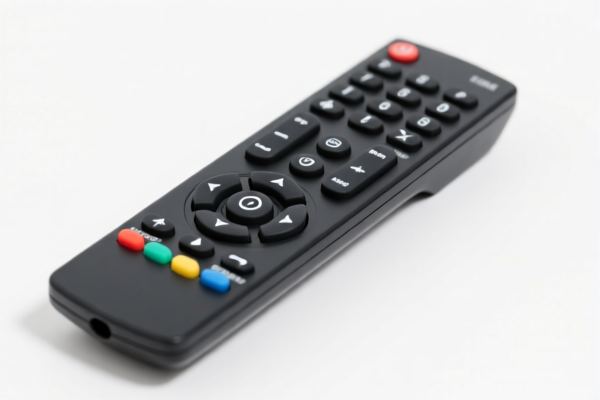
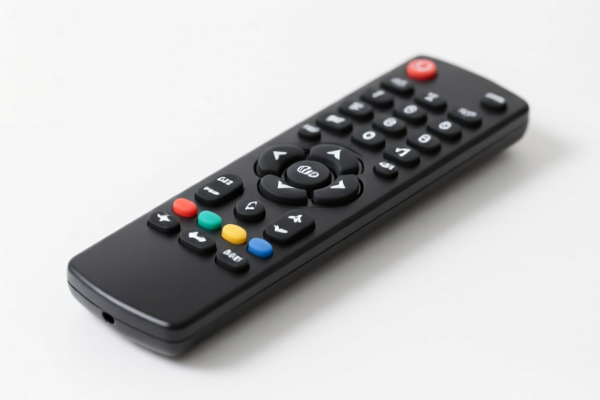
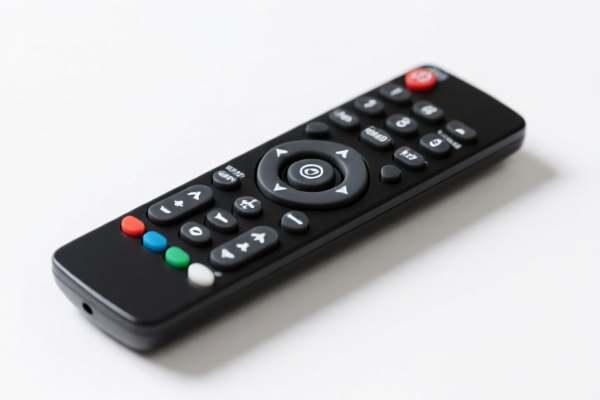
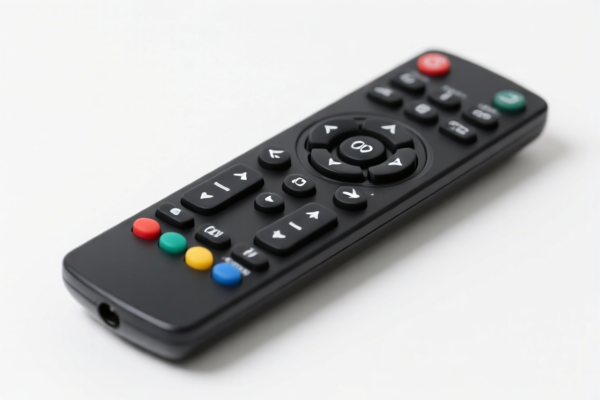
AI Analysis
🎮 Remote Control Smart Device (Intelligent Controller)
🌐 HS Code Reference & Customs Clearance Guide | 2026 Latest Tariff Analysis | Professional Strategy for Smart Controllers
📌 I. Product Definition & Classification: What is a "Smart Controller"?
A Remote Control Smart Device (often referred to as an Intelligent Controller or Smart Controller) is a core component in modern automation, IoT (Internet of Things), and industrial control systems. It receives signals (wireless, wired, or software-based) and processes them to control other devices or machinery.
In international trade, its classification is critical and often disputed because it sits at the intersection of semiconductors/microcontrollers and electrical control equipment.
⚠️ Key Distinction Point:
- If the device is a pure microcontroller chip/module (IC) without housing or peripheral interfaces → Often falls under Chapter 85 (Electrical Machinery & Equipment, specifically 8542).
- If the device is a complete assembly with housing, connectors, and interface ports (PLC-like) → Often falls under Chapter 85 or 90 (Electrical Control Boards or Instruments).
📦 II. HS Code Classification Matrix (2026 Latest Tariff Authority对照)
Based on the provided data, here are the 5 most likely HS Codes for "Remote Control Smart Devices," ranked by logical fit and tax impact.
| HS Code | Product Description | Logic & Summary | Total Tax Rate |
|---|---|---|---|
| 8542.31.00.30 | Smart Controller (Other Category) | Fallback/General Fit. Fits the general "controller" category. No material conflict. Matches the "other" fallback principle for smart controllers. | 60.0% |
| 8542.31.00.15 | Smart Controller (Microcontroller Definition) | Functional Fit. Perfectly matches the definition of "controller (including microcontrollers)." No specific bit-width provided, no material/conflict issues. | 60.0% |
| 8537.10.91.60 | Controller (Process Control Instrument) | Instrument Fit. Matches "control instruments and apparatus." Material/process control attributes are consistent. General fallback for instruments. | 36.7% |
| 8537.10.91.70 | Electrical Control Equipment (<1000V) | Voltage/Component Fit. Matches "electrical control equipment ≤1,000V." Assumes electronic integrated circuit material. Consistent with general fallback logic. | 37.7% |
| 9032.89.60.75 | Control Instrument (General Apparatus) | Apparatus Fit. Matches "control instruments and apparatus." No conflict with general attributes of process control instruments. General fallback. | 36.7% |
🔍 Critical Insight:
- Ch 8542 (Microcontrollers/ICs) carries the highest tax burden (60%). If your device is a bare chip or core computing module, this is likely the correct code.
- Ch 8537/9032 (Control Boards/Instruments) carries a lower tax burden (~36-38%). If your device is a finished controller unit (with housing, ports, PCB assembly), these codes are more appropriate and cost-effective.
- Do NOT assume all "smart" devices fall under 8542. Physical form factor and integration level dictate the code.
💰 III. 2026 Tariff Rate Breakdown (US Import from China)
✅ Applicable Country: United States (US)
✅ Origin: China (CN)
✅ Effective Date: November 10, 2025 (and subsequent imports)
🎯 1. High-Tax Category: 8542.31.00.15 & 8542.31.00.30
| Item | Detail |
|---|---|
| Base Tariff | 0.0% |
| Section 301 Tariff | +50.0% |
| IEEPA Section 122 Tariff | +10.0% |
| Total Tax Rate | 60.0% |
| Calculation | CIF Value × 60% |
| De Minimis Exemption | ❌ NOT Eligible (deny_de_minimis) |
| Legal Path | IEEPA:9903.01.25 → USITC:8542.31.00.15 → FOOTNOTE:301 |
📌 Explanation:
- Base 0%: Standard MFN rate for microcontrollers.
- 301 Tariff 50%: Significant escalation under Section 301 investigations targeting advanced electronics.
- IEEPA 10%: Additional levy under the International Emergency Economic Powers Act.
- Total 60%: This is an extremely high tariff. It effectively erodes most profit margins for high-value smart devices.
🎯 2. Mid-Low Tax Category: 8537.10.91.60 & 9032.89.60.75
| Item | Detail |
|---|---|
| Base Tariff | 1.7% (for 8537) / 1.7% (for 9032) |
| Section 301 Tariff | +25.0% |
| IEEPA Section 122 Tariff | +10.0% |
| Total Tax Rate | 36.7% |
| Calculation | CIF Value × 36.7% |
| De Minimis Exemption | ❌ NOT Eligible (deny_de_minimis) |
| Legal Path | IEEPA:9903.01.24 → USITC:8537.10.91.60 → FOOTNOTE:301 |
📌 Explanation:
- Base 1.7%: Standard rate for electrical control boards/instruments.
- 301 Tariff 25%: Lower than the 50% for microcontrollers, reflecting different trade policy targets.
- IEEPA 10%: Same additional levy.
- Total 36.7%: Significantly cheaper than the 8542 category. Strategic Goal: Classify as a "Control Board/Instrument" (8537/9032) rather than a "Microcontroller" (8542) if technically justifiable.
🎯 3. Mid-Low Tax Category: 8537.10.91.70
| Item | Detail |
|---|---|
| Base Tariff | 2.7% |
| Section 301 Tariff | +25.0% |
| IEEPA Section 122 Tariff | +10.0% |
| Total Tax Rate | 37.7% |
| Calculation | CIF Value × 37.7% |
| De Minimis Exemption | ❌ NOT Eligible (deny_de_minimis) |
📌 Explanation:
- Similar to above, slightly higher base rate (2.7%) but same add-ons. Total 37.7%.
🛠️ IV. Customs Clearance Practical Advice (Avoiding Pitfalls)
✅ 1. Documentation Checklist (Mandatory)
| Document | Required? | Purpose |
|---|---|---|
| ✅ Product Specification Sheet | ✔️ | Must detail: Interface types (USB, Ethernet, etc.), Voltage, Processor type, Function (Control vs. Compute). |
| ✅ Circuit Diagram / Block Diagram | ✔️ | CRITICAL. Proves if it's a "chip" (8542) or a "board/instrument" (8537/9032). |
| ✅ Product Photos | ✔️ | Clear shots of ports, housing, labels, and internal PCB (if possible). |
| ✅ Commercial Invoice | ✔️ | Description must match HS Code logic (e.g., "Smart Control Unit" vs. "Microcontroller Module"). |
| ✅ Origin Certificate | ✔️ | Confirms CN origin (triggers tariffs). |
| ✅ Third-Party Certifications | ✔️ | FCC, CE, UL (shows compliance, supports classification as finished equipment). |
✅ 2. Classification Strategy (The "Tax Saving" Logic)
🔥 Golden Rule: "Function dictates Form, Form dictates Tariff."
| Scenario | Recommended HS Code | Reasoning | Tax Rate |
|---|---|---|---|
| Bare Chip / IC Module | 8542.31.00.15 |
Pure microcontroller functionality. No housing/ports. | 60.0% |
| Smart Controller Board (with ports) | 8537.10.91.60 / .70 |
Complete control unit. Interfaces with other machines. | 36.7-37.7% |
| General Control Apparatus | 9032.89.60.75 |
If it acts as a sensor/actuator controller. | 36.7% |
| "Smart Home Hub" | 8542.31.00.30 |
Fallback for complex smart devices not fitting 8537. | 60.0% |
📌 Actionable Tip:
If your device has physical connectors (HDMI, USB, RJ45) and a housing, argue for 8537 or 9032. This saves ~23-24% in taxes compared to 8542.
Justification: "The device is an assembled control board with integrated interfaces, functioning as a process control instrument, not a bare semiconductor."
✅ 3. Common Mistakes & Red Flags
❌ Mistake 1: Declaring a "Smart Hub" with ports as 8542 (Microcontroller).
👉 Result: You pay 60% tax unnecessarily.
👉 Fix: Reclassify to 8537 or 8543 (if applicable) with proof of interface integration.
❌ Mistake 2: Using vague terms like "Electronics" or "Device" on Invoice.
👉 Result: Customs delays, audits, and potential penalties.
👉 Fix: Use precise terms: "Intelligent Controller Unit, Model XYZ, with Ethernet/USB Interfaces."
❌ Mistake 3: Ignoring IEEPA 122 Clause.
👉 Result: Unexpected 10% surcharge at border.
👉 Fix: Budget for IEEPA 10% in all cost models for CN-origin goods.
🌍 V. Global Market Comparison (2026)
| Market | Likely HS Code | Base Tariff | Add-on Tariffs | Total Est. | Notes |
|---|---|---|---|---|---|
| 🇺🇸 USA | 8542.31.00.15 |
0% | 301: 50% + IEEPA: 10% | 60.0% | Highest risk. Aggressive enforcement on "smart" electronics. |
| 🇺🇸 USA | 8537.10.91.60 |
1.7% | 301: 25% + IEEPA: 10% | 36.7% | Preferred for assembled controllers. |
| 🇪🇺 EU | 8537.10.90.90 |
~0-4% | None | ~4% | No Section 301. No IEEPA. Friendly market. |
| 🇨🇳 China | 8542.31.00.30 |
0% | None | 0% | Import into China is tariff-free. |
📌 Conclusion:
- USA Market: Classification strategy is profit-critical. A 23% tax difference can make or break a deal.
- EU/Other Markets: Focus on CE/RoHS compliance, not tariff avoidance.
📌 VI. Final Recommendations & Pro Tips
-
Pre-Ruling Application:
Submit an Advance Ruling to CBP with your circuit diagrams and physical samples. Explicitly ask for classification under8537if your device is an assembled controller. -
Supplier Communication:
Ensure your manufacturer provides detailed BOMs (Bill of Materials) and schematic diagrams. These are your best defense in customs audits. -
Packaging & Labeling:
- Label clearly: "Intelligent Control Unit", "Not a Microcontroller".
-
Include model number, voltage, and interface types on the product body.
-
Alternative Supply Chain:
If 60% tax is unavoidable (e.g., pure chip), consider substantial transformation in a third country (e.g., Malaysia, Vietnam) to change origin, though this requires significant value-add processing.
🎯 VII. Summary Table for Quick Reference
| HS Code | Description | Total Tax (US/CN) | Savings vs. 8542 |
|---|---|---|---|
8542.31.00.15 |
Smart Controller (Microcontroller) | 60.0% | Baseline |
8542.31.00.30 |
Smart Controller (Other) | 60.0% | Baseline |
8537.10.91.60 |
Control Instrument | 36.7% | Save 23.3% |
8537.10.91.70 |
Electrical Control (<1000V) | 37.7% | Save 22.3% |
9032.89.60.75 |
Control Apparatus | 36.7% | Save 23.3% |
📣 Immediate Action:
📞 Consult a Licensed Customs Broker with your product specs.
📄 Request Advance Ruling from CBP.
📊 Recalculate Landed Cost using 36.7% vs. 60% scenarios.
✨ Smart Classification = Higher Margins.
💼 Don't Let 60% Taxes Eat Your Profits. Optimize Your HS Code Today!
Customer Reviews
About HS Code Classification
The Harmonized System (HS) is an internationally standardized nomenclature developed by the World Customs Organization (WCO) to classify traded products. Over 200 countries use the HS system as the basis for customs tariffs, trade statistics, and import/export regulations.
Each HS code follows a hierarchical structure:
- Chapter (2 digits) — Broad category of goods (e.g., Chapter 84: Machinery and Mechanical Appliances)
- Heading (4 digits) — More specific grouping within the chapter
- Subheading (6 digits) — Internationally standardized breakdown, used by all WCO member countries
- National subdivisions (8-10 digits) — Country-specific extensions for further classification, such as US HTSUS 10-digit codes
Correct HS code classification is essential for smooth customs clearance, accurate duty payment, and compliance with trade regulations. Misclassification can lead to customs delays, overpayment of duties, or penalties.
When importing from CN to US, the applicable tariff rates may include:
- Most-Favored-Nation (MFN) rate — The standard duty rate applied to WTO members
- General rate — Applied to countries without trade agreements
- Trade remedy duties — Additional tariffs such as Section 301 (anti-dumping), Section 232 (national security), or countervailing duties
The information provided on this page is for reference purposes only. For official classification, please consult with your local customs authority or a licensed customs broker.