Removable Label Paper
CN → US| HS Code | Tariff Rate | Origin | Destination | Doc |
|---|---|---|---|---|
| 4911996000 | 17.5% | CN | US | Official Doc |
| 4911998000 | 17.5% | CN | US | Official Doc |
| 4821902000 | 35.0% | CN | US | Official Doc |
| 4821904000 | 35.0% | CN | US | Official Doc |
Product Images
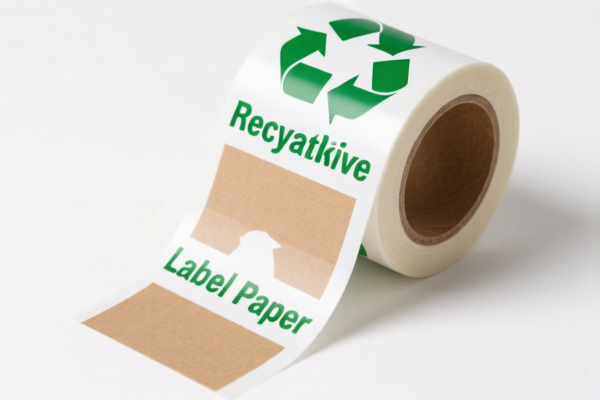

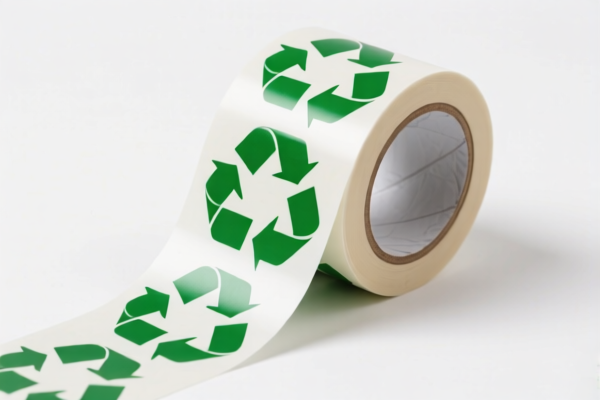
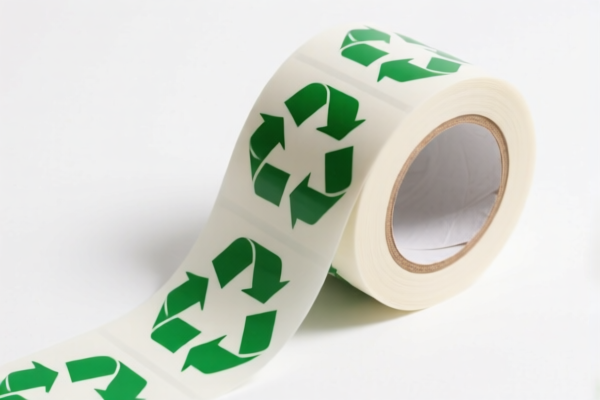
AI Analysis
🏷️ Removable Label Paper (可移除纸标签)
🌐 HS Code Reference & Customs Clearance Guide | 2026 Latest Tariff Analysis | Professional-Level Entry Strategy
📌 I. Product Definition & Classification: What Exactly Is "Removable Label Paper"?
Removable Label Paper refers to adhesive-backed paper products designed to stick temporarily to surfaces and be removed cleanly without leaving residue. In international trade, its classification depends heavily on manufacturing process vs. material/usage attributes.
Key Distinction: * Printing Process Focus: If classified primarily by the printing method (e.g., lithographic printing on paper), it may fall under Chapter 49 (Printed Books/Newspapers/Other Printed Matter). * Material/Usage Focus: If classified primarily by the material (paper) and specific use (labels), it may fall under Chapter 48 (Paper & Paperboard) and specifically Heading 4821 (Paper Labels).
⚠️ Critical Classification Point:
- If the product is viewed as a printed paper item where the label aspect is secondary to the printing process → HS 4911.
- If the product is viewed as a specific industrial/consumer label made of paper → HS 4821.
📦 II. HS Code Classification Details (2026 Latest Tariff Authority对照)
| HS Code | Product Description | Classification Logic | Tax Rate (Total) |
|---|---|---|---|
4911.99.60.00 |
Removable Paper Labels; Material: Paper; Meets requirements for printing on paper; Belongs to lithographic printed paper products. | Focus on Printing Process: Classified as a "printed article" under Chapter 49 because it conforms to the attributes of items printed on paper using planographic (lithographic) processes. | 17.5% |
4911.99.80.00 |
Removable Paper Labels; Material: Paper; Fits the attribute of other printed matter regarding printing material/medium. | Focus on Printing Medium: Classified under "Other Printed Matter" in Chapter 49 because it aligns with the general category of printed media/materials. | 17.5% |
4821.90.20.00 |
Removable Paper Labels; Matches material (paper) and usage (labels); Belongs to the category of paper labels. | Focus on Material & Usage: Classified under Chapter 48 (Paper Products) specifically as "Paper Labels." The primary attribute is the label function and paper material. | 35.0% |
4821.90.40.00 |
Removable Paper Labels; The "Paper Labels" in the product name matches the material of "Paper/Cardboard Labels" in the classification. | Focus on Material Consistency: Classified under Chapter 48 because the product name explicitly identifies it as "Paper Labels," matching the HS heading for paper/cardboard labels. | 35.0% |
🔍 Key Takeaway:
- HS 4911 variants carry a lower total tax (17.5%) but require justification based on printing characteristics.
- HS 4821 variants carry a higher total tax (35.0%) as they are classified strictly as paper goods/labels.
- Misclassification Risk: Declaring as HS 4821 when printing features are dominant could lead to audits; declaring as HS 4911 when it's a standard industrial label might raise questions about "printed matter" status.
💰 III. 2026 Latest Tariff Rate Breakdown (Including Surtaxes & Policy Add-ons)
✅ Applicable Country: USA (US)
✅ Country of Origin: China (CN)
✅ Effective Date: November 10, 2025 onwards (including subsequent imports)
🎯 1. 4911.99.60.00 & 4911.99.80.00 —— Removable Paper Labels (Printed Matter Category)
| Item | Content |
|---|---|
| Base Tariff | 0.0% (ad valorem) |
| Section 301 Surtax | +7.5% |
| Section 122 Tariff | +10% |
| Total Tax Rate | 17.5% |
| Tax Calculation | CIF Value × 17.5% |
| De Minimis Eligibility | ❌ Not Eligible (deny_de_minimis) |
| Legal Basis Path | Section 301: 4911.99 → Section 122: 4911.99 → USITC: 4911.99.60/80 |
📌 Explanation:
- Base Rate 0%: General duty for this printed matter category is zero.
- Section 301 (7.5%): Additional tariff imposed on Chinese goods under USTR Section 301.
- Section 122 (10%): Specific additional tariff applicable to certain Chinese imports.
- Total 17.5%: Significantly lower than the Chapter 48 alternative.
🎯 2. 4821.90.20.00 & 4821.90.40.00 —— Removable Paper Labels (Paper Label Category)
| Item | Content |
|---|---|
| Base Tariff | 0.0% (ad valorem) |
| Section 301 Surtax | +25.0% |
| Section 122 Tariff | +10% |
| Total Tax Rate | 35.0% |
| Tax Calculation | CIF Value × 35.0% |
| De Minimis Eligibility | ❌ Not Eligible (deny_de_minimis) |
| Legal Basis Path | Section 301: 4821.90 → Section 122: 4821.90 → USITC: 4821.90.20/40 |
📌 Explanation:
- Base Rate 0%: Standard duty for paper labels.
- Section 301 (25.0%): Higher surtax applied to Chapter 48 paper products.
- Section 122 (10%): Same additional tariff.
- Total 35.0%: Double the cost of the HS 4911 classification. This highlights the massive financial impact of choosing the correct HS Code.
🛠️ IV. Customs Clearance Practical Advice (Battle-Proven Pitfall Avoidance)
✅ 1. Preparation Checklist (Missing Items = Delays)
| Document | Required | Explanation |
|---|---|---|
| ✅ Product Spec Sheet | ✔️ | Must detail: Paper type, adhesive type, removal properties, printing method (litho/digital). |
| ✅ Printing Process Description | ✔️ | Crucial for HS 4911. Explain if it uses planographic/lithographic processes to justify Chapter 49. |
| ✅ Product Photos (Label & Roll) | ✔️ | Show the label, backing, and any branding/text to prove it's a "label" and not just loose paper. |
| ✅ Commercial Invoice | ✔️ | Clearly state: "Removable Paper Labels, Lithographically Printed" (if using HS 4911) OR "Paper Labels, Unprinted/Other" (if using HS 4821). |
| ✅ Packing List | ✔️ | Indicate net weight, number of rolls/sheets, and dimensions. |
| ✅ Certificate of Origin (CO) | ✔️ | Required for origin verification to apply correct Section 301/122 rates. |
✅ 2. Declaration Strategy (Key Mantra)
🔥 "Process Determines Chapter 49, Material Determines Chapter 48!"
| Scenario | Recommended HS Code | Risk if Misdeclared |
|---|---|---|
| Lithographically printed labels with detailed graphic art | 4911.99.60.00 (17.5%) |
Declaring as 4821 → Overpay 17.5% |
| Simple text stamps or unprinted stock | 4821.90.20.00 (35.0%) |
Declaring as 4911 → Audit Risk (may not qualify as "printed matter") |
| Multi-layer removable labels | 4911.99.80.00 (17.5%) |
Must prove "printed matter" attribute |
| Blank paper labels (for later printing) | 4821.90.40.00 (35.0%) |
Cannot use HS 4911 if not yet printed |
✅ 3. Special Cases Handling
| Case | Handling Advice |
|---|---|
| OEM Custom Labels | Provide print plates/digital files to prove printing process → Supports HS 4911 |
| Removable vs. Permanent | Emphasize "Removable" in description to avoid confusion with permanent adhesive tapes (different HS). |
| Small Shipments (De Minimis) | ❌ Do NOT use Section 321 (De Minimis). Both HS 4911 and 4821 for Chinese origin are explicitly excluded from de minimis. Must file formal entry. |
| Mixed Shipments | If shipping both printed (4911) and blank (4821) labels, separate bills of lading or clear line items to avoid classification disputes. |
🌍 V. Global Market Comparison (2026 Update)
| Country/Region | Recommended HS Code | Total Tax (China Origin) | Key Certification | Notes |
|---|---|---|---|---|
| 🇺🇸 USA | 4911.99.60.00 (Optimal) |
17.5% | None Specific | HS 4821 costs 35%. Strategic choice is critical. |
| 🇨🇳 China | 4821.90.20.00 |
5% | None | Lower import duty, no Section 301/122. |
| 🇪🇺 EU | 4821.90.20.00 |
0% | CE (if self-adhesive) | Often classified under paper articles; check specific member state rules. |
| 🇬🇧 UK | 4821.90.20.00 |
0% | UKCA | Post-Brexit, similar to EU. |
| 🇯🇵 Japan | 4821.90.20.00 |
5% | JIS | Generally lower tariffs. |
📌 Conclusion:
- USA is the high-cost market due to Section 301 and 122 tariffs.
- Strategic Implication: If your product qualifies as "printed matter" (HS 4911), you save 17.5% in duties compared to "paper labels" (HS 4821).
- Action: Ensure your marketing materials and invoices highlight the printing process to support the lower-duty classification.
📌 VI. Common Errors & Pitfall Guide (Blood Lessons)
❌ Error 1: Declaring all paper labels as 4821.90.20.00 (35%)
👉 Consequence: Overpayment of 17.5% tax. If you can prove lithographic printing, you are leaving money on the table.
❌ Error 2: Declaring simple stamped labels as 4911.99.60.00 (17.5%)
👉 Consequence: Customs may reject the classification, reclassify to 4821, and charge back taxes + penalties. Ensure the "printed matter" definition is met.
❌ Error 3: Assuming De Minimis ($800) applies
👉 Consequence: Shipment seized or delayed. Chinese origin removable labels are excluded from de minimis. Must file formal entry.
❌ Error 4: Ignoring Section 122 Tariff
👉 Consequence: Underpayment. Both classifications attract a 10% Section 122 tariff. Total tax is not just Section 301.
✅ Correct Practice:
"Removable Paper Labels, Lithographically Printed with Multi-Color Graphics, 12" x 12", Self-Adhesive, Model XYZ, Origin: China"
→ Supports HS 4911.99.60.00 → 17.5% Total Tax.
🎯 VII. Conclusion: Precision Classification, Maximum Savings!
🎯 Remember the Mantra:
🔹 "Printed? Go Chapter 49 (17.5%). Pure Paper? Chapter 48 (35.0%). No De Minimis for China!"
🔹 "HS Code Determines Profit Margin, 17.5% vs 35% is a huge difference!"
📌 Pro Tip:
- For high-value graphic labels, always lean towards HS 4911 and provide printing proofs.
- For simple text or blank labels, HS 4821 is the only valid option.
- Always file a Formal Entry for Chinese origin. Do not risk De Minimis.
📣 Immediate Action:
📞 Contact your customs broker with:
1. Product photos showing printing details.
2. Invoice highlighting "Lithographically Printed" if applicable.
3. Request Advance Ruling for your specific product batch.
🚀 Clear Customs Smoothly, Save 17.5% Tax, Boost Your Profit!
✨ Professional Customs Clearance Starts with Accurate Classification!
💼 Every Percent of Tax Saved is Pure Profit!
Customer Reviews
About HS Code Classification
The Harmonized System (HS) is an internationally standardized nomenclature developed by the World Customs Organization (WCO) to classify traded products. Over 200 countries use the HS system as the basis for customs tariffs, trade statistics, and import/export regulations.
Each HS code follows a hierarchical structure:
- Chapter (2 digits) — Broad category of goods (e.g., Chapter 84: Machinery and Mechanical Appliances)
- Heading (4 digits) — More specific grouping within the chapter
- Subheading (6 digits) — Internationally standardized breakdown, used by all WCO member countries
- National subdivisions (8-10 digits) — Country-specific extensions for further classification, such as US HTSUS 10-digit codes
Correct HS code classification is essential for smooth customs clearance, accurate duty payment, and compliance with trade regulations. Misclassification can lead to customs delays, overpayment of duties, or penalties.
When importing from CN to US, the applicable tariff rates may include:
- Most-Favored-Nation (MFN) rate — The standard duty rate applied to WTO members
- General rate — Applied to countries without trade agreements
- Trade remedy duties — Additional tariffs such as Section 301 (anti-dumping), Section 232 (national security), or countervailing duties
The information provided on this page is for reference purposes only. For official classification, please consult with your local customs authority or a licensed customs broker.